
- 科目一考试
- 顺序练习
- 随机练习
- 强化练习
- 模拟考试
- 科目四考试
- 顺序练习
- 随机练习
- 强化练习
- 模拟考试
- 外国语言版题库
- 英语题库
- 德语题库
- 韩语题库
- 日语题库
- 俄语题库
- 法语题库
- 西班牙语题库
- 阿拉伯语题库
- 摩托车英文题
宁夏2025英文驾考PDF题库
-
1、When driving on an expressway, what should the driver do if he/she has missed an exit but the next exit is far away?
A、Reverse along the road shoulder
B、Continue on
C、Stop immediately
D、Make a U-turn at the current location
Answer:B
2、When a motor vehicle enters an expressway from the ramp, which of the following lamps should be turned on?
A、The left-turn indicator
B、The right-turn indicator
C、The hazard warning lamp
D、The headlamp
Answer:A
3、Motor vehicle drivers may make a U-turn in this area as long as it will not affect the passing of pedestrians.
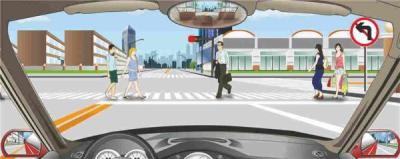
Answer:N
4、What should the driver do when seeing these hand signals?
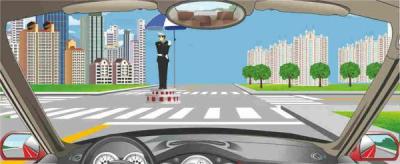
A、Turn left at the intersection
B、Stop and wait
C、Go straight at the intersection
D、Drive to the waiting area for turning left
Answer:B
5、When an erosive material catches fire, it should not be put out with water cannon.
Answer:Y
6、When a motor vehicle moves through water, the driver should try to maintain a constant speed and sufficient power and pass through without stopping.
Answer:Y
7、As shown in the flash, what should the driver do when the motor vehicle encounters this situation?
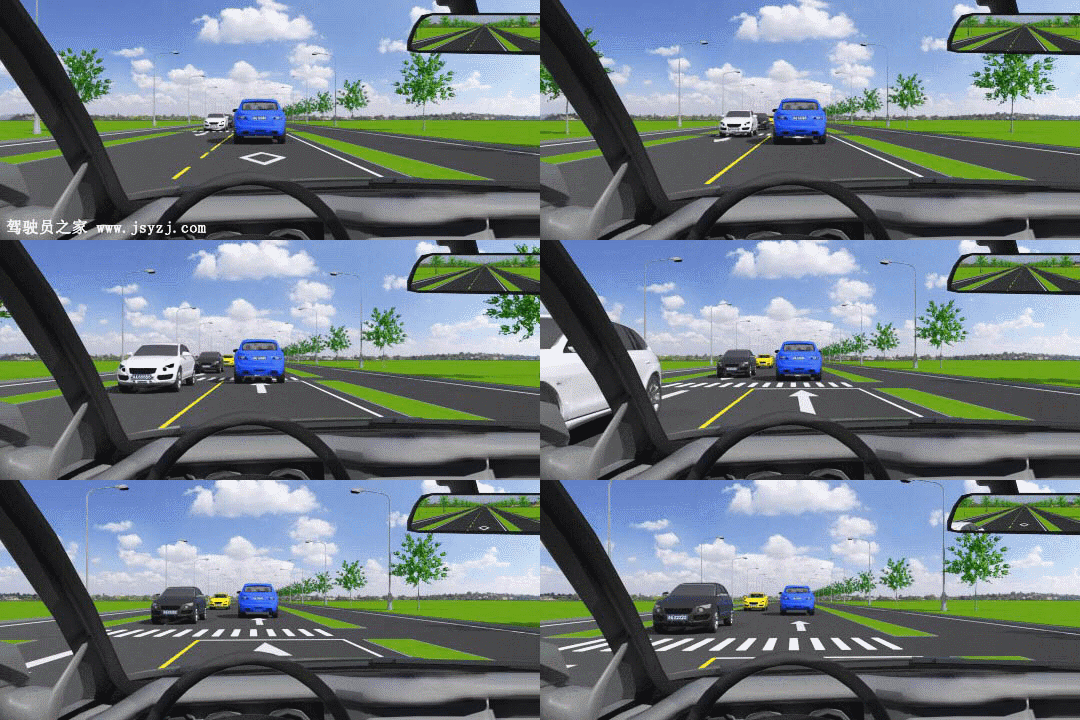
A、Speed up and pass rapidl
B、Stop immediately
C、Sound the horn to indicate the pedestrians to yield
D、Observe the movement of pedestrians and non-motor vehicles before passing
Answer:D
8、When driving on a road covered with ice and snow, drivers tend to encounter glare caused by reflection of light rays from the road surface.
Answer:Y
9、Motor vehicle drivers may borrow a special lane for other vehicle types, if one exists, to overtake.
Answer:N
10、What should be done by motor vehicle drivers in order to yield politely to such pedestrians?
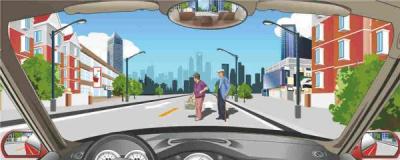
A、Speed up and bypass in front of the pedestrians
B、Speed up and bypass from behind the pedestrians
C、Reduce speed or stop to yield
D、Continuously sound the horn to alert the pedestrians
Answer:C
11、This road marker indicates that the minimum speed for this road section is 60 km/hour.
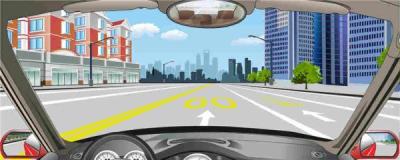
Answer:N
12、When driving in a strong wind, drivers should abruptly turn the steering wheel to return to the original direction if they feel the vehicle deviates horizontally due to a strong gale.
Answer:N
13、If a fast moving vehicle has a steering failure, using emergency braking can easily cause an overturn.
Answer:Y
14、What does this sign on the fly-over junction indicate?
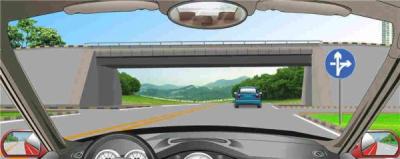
A、Turn right
B、Drive straight or turn left
C、Drive straight or turn right
D、Take a U-turn under bridge
Answer:C
15、Under such circumstances, what should be done by a motor vehicle driver in order to yield out of courtesy?
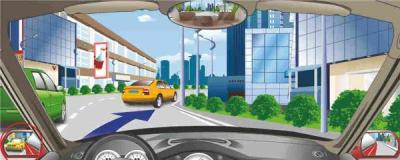
A、Driving at a higher speed
B、Closely following the vehicle in front
C、Driving at a higher speed by the right side
D、Driving at a lower speed by the right side
Answer:D
16、Under such circumstances, what should motor vehicle drivers do?
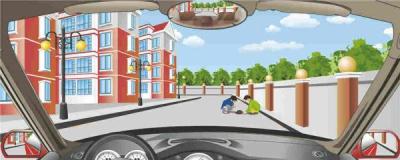
A、Continuously sound the horn
B、Pass quickly
C、Pass at a lower speed
D、Bypass from either side
Answer:C
17、In the condition of low visibility, drivers should turn on the low-beam when setting off
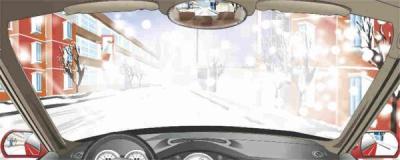
Answer:Y
18、If a motor vehicle breaks down or causes a traffic accident on the expressway and cannot run normally the vehicle may be towed by any accompanying motor vehicles.
Answer:N
19、Rescue personnel should check the breath of the unconscious person before applying any other emergency treatment.
Answer:Y
20、The right-front sign indicates a time-regulated pedestrian area.
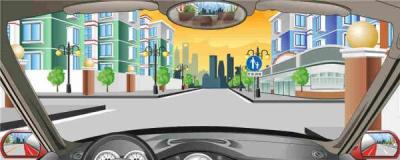
Answer:Y
21、After a motor vehicle enters the ramp from an expressway, it should reduce its speed below the prescribed speed limit.
Answer:Y
22、Mr. Zhou drove a light van (with 22 passengers) on the Bingcha Highway. At the spot of 79 kilometers mark by 150 meters of the highway, the van fell into the valley on one side, killing 12 people and injuring 10. What's the main illegal act committed by Mr.Zhou?
A、Driving a motor vehicle having failed to accept inspection in time
B、Carrying passengers on a freight motor vehicle
C、Speeding
D、Fatigued driving
Answer:B
23、The sign on the left warns of no passing on the right-hand road ahead.
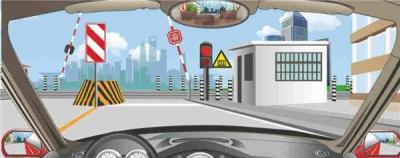
Answer:N
24、The sign on the right indicates a 200-meter distance from the gas station ahead.
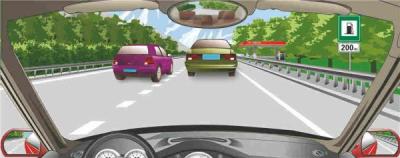
Answer:Y
25、When encountering a school bus which stops at the right roadside and students are embarking or disembarking, and there are three motor vehicle lanes in each direction, motor vehicle drivers on the left lane behind the bus should stop and wait.
Answer:N
26、The sign above the tunnel indicates a height limit of 3.5 meters on the road ahead.
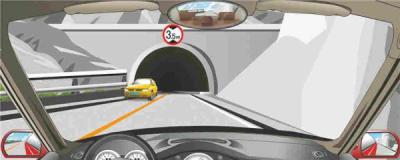
Answer:Y
27、The sign in front indicates that vehicles except large passenger vehicles are not allowed to drive on the right lane.
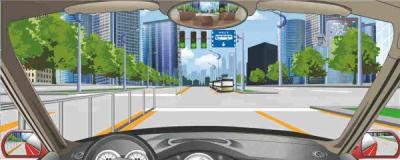
Answer:N
28、The motor vehicle should speed up and pass rapidly under this situation.
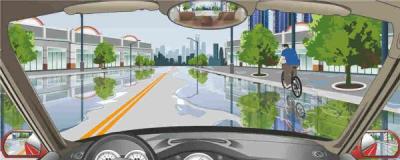
Answer:N
29、Under such circumstances, motor vehicle drivers lould follow the vehicle in front and drive into the Intersection to wait.
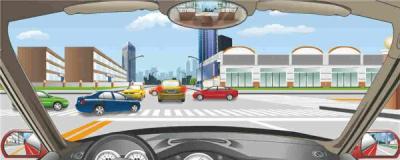
Answer:N
30、The sign on the left indicates that drivers should stop to take a pass card at the toll station ahead.
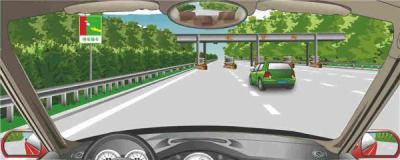
Answer:Y
31、Which of the following materials should not be used to stop bleeding?
A、Bandage
B、Sling
C、Tourniquet
D、Hemp rope
Answer:D
32、Motor vehicles should accelerate when driving into an intersection with this traffic signal.
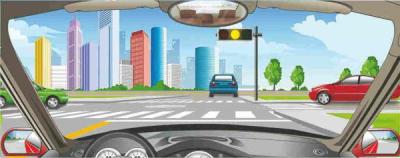
Answer:N
33、When seeing this sign, the driver should slow down promptly.
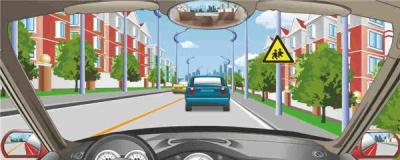
Answer:Y
34、Which one of the following is a safe way for motor vehicles to converge into an intersection marked with this sign?
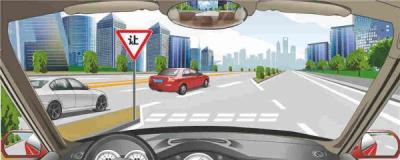
A、Speeding up and driving into the traffic flow directly
B、Driving into the traffic flow behind the gray car on the main road
C、Driving into the traffic flow from the front of the red car on the main road
D、Turning on the indicator and driving into the flow directly
Answer:B
35、When passing an intersection, vehicle motor drivers are not allowed to overtake.
Answer:Y
36、The sign on the right warns drivers to yield for oncoming motor vehicles.
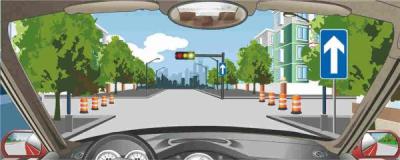
Answer:N
37、The guide arrow on the road surface of this lane indicates that only right turns are permitted at the intersection ahead.
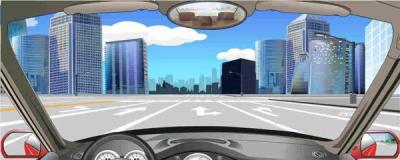
Answer:N
38、When a bus encounters an unexpected situation or an accident, the driver should do his best to minimize the loss and should never cause a secondary accident or even greater loss for the sake of avoiding danger.
Answer:Y
39、Which one of following ways is the safest when driving a motor vehicle on this road?
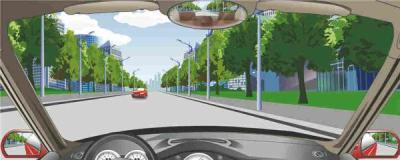
A、Driving along the central line of the road
B、Driving along the right side of the road
C、Driving at the middle of the road
D、Driving along the left side of the road
Answer:B
40、How to ensure motor vehicles have sufficient power when driving uphill?
A、Downshift before reducing speed
B、Downshift after reducing speed
C、Downshift when the speed is excessively low
D、Downshift to the fullest extent
Answer:A
41、Which one of the following measures is correct when a motor vehicle intends to overtake but the vehicle infront refuses to yield?
A、Use a long-sounding horn
B、Follow the vehicle in front while turning high-beam
C、Wait for it to yield while keeping a safe distance
D、Use high-beam and low-beam alternatively
Answer:C
42、Mr Hao drove a heavy dump truck with 84.84 tons of cargo (truck allowing for 15.58 tons). When he drove on the No 262 provincial highway in Luanxian County, at the spot of 34 kilometers mark by 623 meters, his truck overturned onto the sideway after a rear-end collision with another truck in front carrying 45.85 tons of cargo(a truck allowing for 1. 71 tons). As a result of this accident, 19 people were killed and 17 injured. What's the common illegal act of the two drivers?
A、Speeding
B、Overloaded
C、Fatigued driving
D、Driving after drinking
Answer:B
43、The sign on the right warns of an embankment road 200 meters ahead.
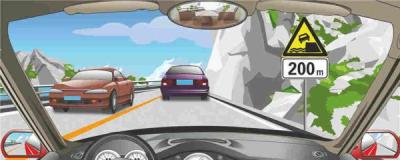
Answer:Y
44、The driver should turn left by the left side of the intersection central point.
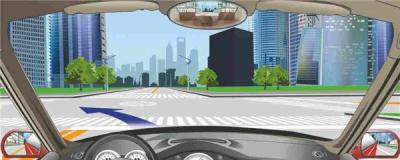
Answer:Y
45、When a motor vehicle encounters an emergency on an expressway, the driver should not swiftly turn the steering wheel to evade.
Answer:Y
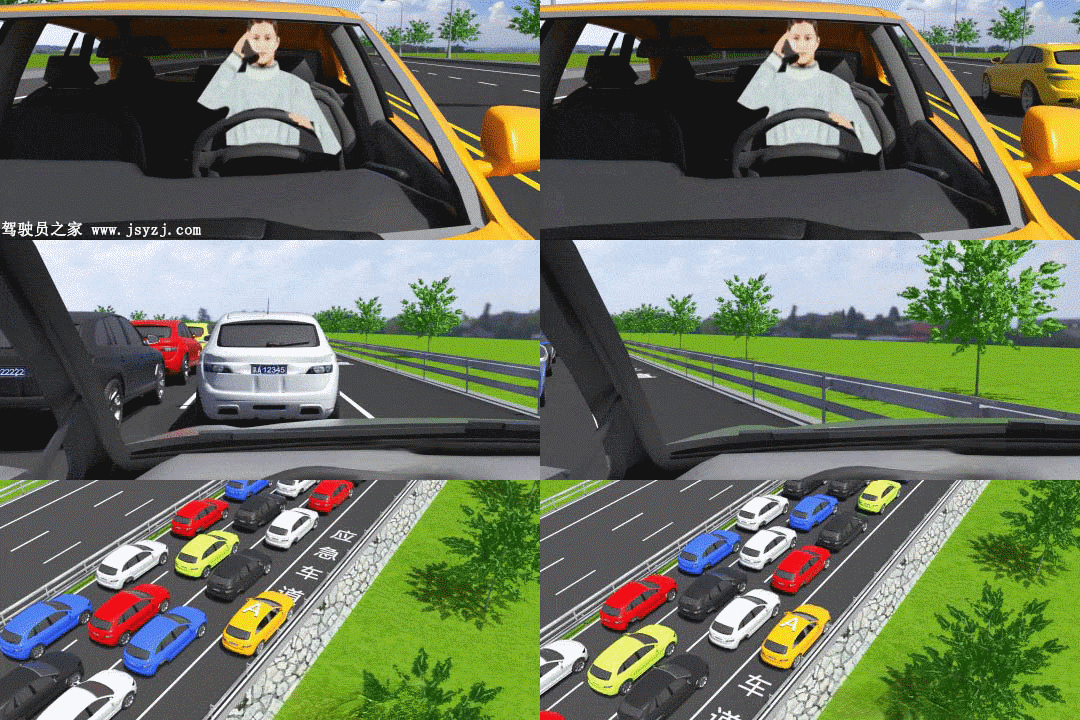
46、How many kinds of law-breaking acts are displayed in flash 6?
A、One
B、Two
C、Three
D、Four
Answer:C
47、Drivers may turn left when traffic police give these hand signals.
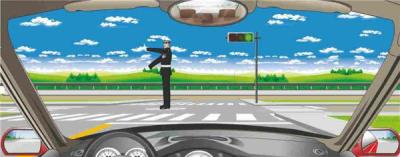
Answer:Y
48、The sign on the right indicates a bypass route at the intersection ahead.
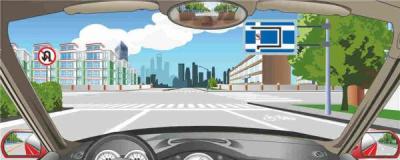
Answer:Y
49、What should the driver do when the motor vehicle encounters this situation?
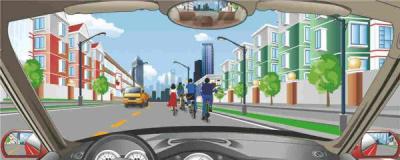
A、Overtake immediatel
B、Sound the horn continuously to warn
C、Maintain safety distance and overtake
D、Sound horn and speed up to overtake
Answer:C
50、Under such circumstances, what should be done by the motor vehicle driver who has been overtaken?
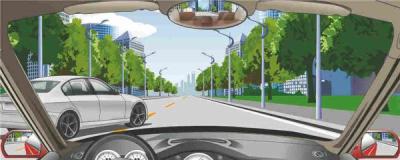
A、Sounding the horn to warn the vehicle that overtook
B、Reducing speed or pulling over by the right side
C、Protesting by turning on the high-beam
D、Catching up with and overtaking the vehicle that overtook, and offering admonitions
Answer:B
- 宁夏2025英文驾考PDF题库 相关内容
- 北京2025科目四考试英文 北京驾考科目一英文版题库 黑龙江驾照考试科目四英文版 云南驾照考试科目四英文版 天津科目四英文版在哪里找 重庆只认识英文可以考科目一吗 陕西外国人考驾照科目四 北京关于考驾照的英语 宁夏2025科目一考试英文 北京驾考科目一英语版PDF题库 河南2025英文驾考PDF题库 江苏英文驾考科目四题库PDF电子版 内蒙古驾考英文版题库 北京英文版考驾照 福建科目四英文版模拟 湖北驾考科目四英语
Copyright © 2025 驾考 版权所有