
- 科目一考试
- 顺序练习
- 随机练习
- 强化练习
- 模拟考试
- 科目四考试
- 顺序练习
- 随机练习
- 强化练习
- 模拟考试
- 外国语言版题库
- 英语题库
- 德语题库
- 韩语题库
- 日语题库
- 俄语题库
- 法语题库
- 西班牙语题库
- 阿拉伯语题库
- 摩托车英文题
重庆只认识英文可以考科目四吗
-
1、What should motor vehicle drivers do when parking temporarily on a rainy day?
A、Turn on hazard lamp
B、Turn on front and back fog lamp
C、Turn on low-beam
D、Set up warning sign at the back of the vehicle
Answer:A
2、The sign on the left indicates vehicles are allowed to drive on the section ahead.
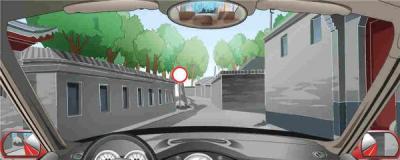
Answer:N
3、Mr. Tao drove a midsize bus with 33 passengers. At the spot of 163 kilometers on the South Xuping Expressway, the bus clashed at a speed of 120 kilometers per hour with Mr. Ans minibus parked without any warning signs on the inside lane, due to breakdown after an accident. The midsize bus overturned after collided with the guardrail on the right-hand side. As a result of the accident, 16 people were killed and 15 injured. What are the main illega acts of the two drivers?
A、Mr. Tao carried more passengers than permitted
B、Mr. Tao exceeded speed limit
C、Mr. An failed to place any warning signs in accordance with relevant stipulations
D、Mr. An was illegally parked
Answer:ABC
4、The right-front sign indicates a time-regulated pedestrian area.
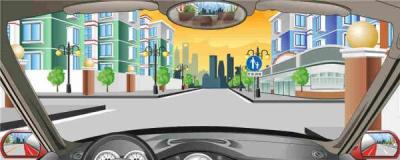
Answer:Y
5、When parking temporarily in this situation, motor vehicle drivers are allowed to turn the steering wheel left to avoid sliding.
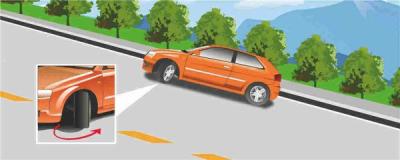
Answer:Y
6、The sign on the right indicates that the number of the lanes ahead will increase.
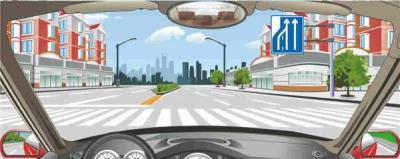
Answer:N
7、When a motor vehicle stops temporarily in a rainy day,which lamp should be turned on?
A、Front and rear fog lamps
B、Hazard lamps
C、Headlamps
D、Reverse lamps
Answer:B
8、The sign on the right indicates an ETC lane at toll station ahead.
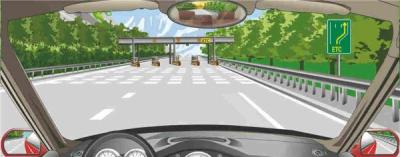
Answer:Y
9、The sign on the right warns of low-lying road ahead.
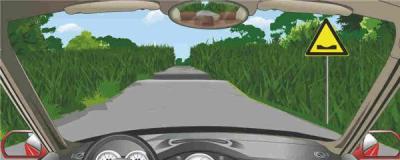
Answer:Y
10、The sign on the left warns of no passing on the right-hand road ahead.
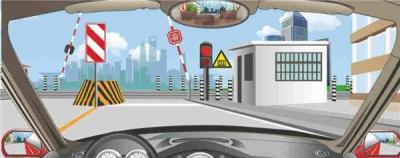
Answer:N
11、The broken yellow line in the center of the road indicates that bypassing by crossing the line is prohibited in any condition.
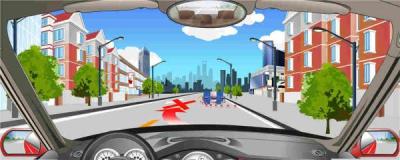
Answer:N
12、Mr. Qian drove a large sleeper coach with 45 passengers (capacity 40 people) at a speed of more than 40 kilometers per hour. On a long slope with sharp curves in Basu County, the coach fell into a 100-meter-deep valley, killing 17 people and injuring 20. What's the main illegal act committed by MrQian?
A、Making a cellphone call while driving
B、Speeding
C、Carrying more people than permitted
D、Fatigued driving
Answer:BC
13、Motor vehicles are not allowed to stop in this area for a long time.
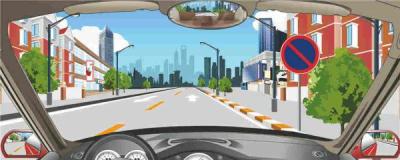
Answer:Y
14、Motor vehicles can turn right when driving into an intersection with this traffic signal.
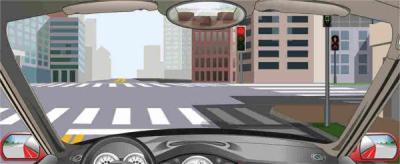
Answer:Y
15、The guide arrow on the road surface of this lane indicates that only left turns are permitted at the intersection ahead.
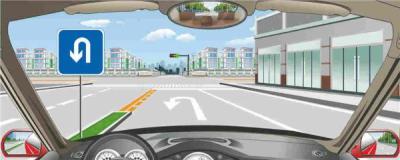
Answer:N
16、The sign on the right warns of a non-motor vehicle lane.
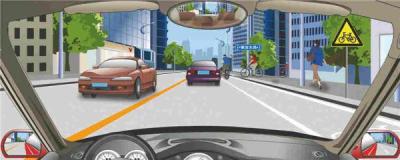
Answer:N
17、The sign on the right indicates a section for ascertaining the distance between the vehicles 200 meters ahead.
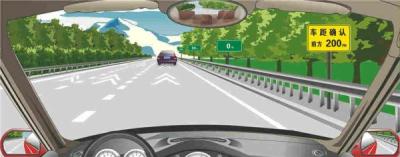
Answer:Y
18、When driving in rain and encountering pedestrians with umbrellas or wearing raincoats, what should be done by motor vehicle drivers in order to yield?
A、Drive at a normal speed
B、Sound the horn to alert when approaching the pedestrians
C、Speed up and bypass on the left
D、Reduce speed and sound the horn in advance
Answer:D
19、At 3: 40 a.m. one day, Mr. Sun drove a large bus with 54 passengers(capacity 55 people). At the spot of 229 kilometers mark by 300 meters on Suiyue Expressway, the bus had a rear-end collision with a heavy semi-trailer driven by Mr. Li when passengers were getting off from the bus. As a result of the accident, 26 people were killed and 29 injured. According to the investigation afterwards, Mr. Li had been driving the bus since he left the place of departure at 6 p.m. the day before without any rest. What are the main illegal acts of the two drivers?
A、Mr. Sun illegally parked
B、Mr. Sun carried more passengers than permitted
C、Mr. Li exceeded speed limit
D、Mr. Li kept driving when tired
Answer:AD
20、This sign warns to bypass from either side to avoid roadblock.
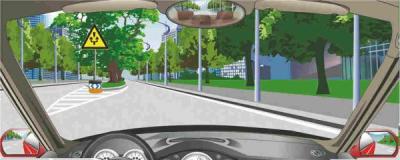
Answer:Y
21、The sign in the red circle indicates that the left road is only for small vehicles.
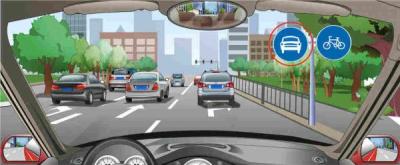
Answer:N
22、The sign on the left indicates the destinations of two highway directions
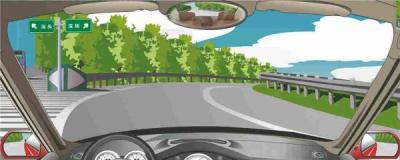
Answer:Y
23、The sign on the right indicates the location of the highway emergency phone.
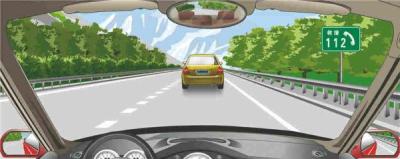
Answer:N
24、Drivers are allowed to cross the broken and solid white line on the road when changing lanes or pulling over.
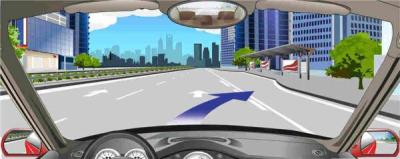
Answer:Y
25、When a motor vehicle equipped with ABS makes an emergency brake, the driver can tread the brake pedal heavily.
Answer:Y
26、When driving on a road covered with ice and snow, the motor vehicle may spin or slide when increasing the speed urgently, due to the loss of vehicle stability.
Answer:Y
27、After a traffic accident, what is the most effective measure to prevent secondary accidents?
A、Evacuate all passengers
B、Turn on the hazard lamps
C、Mark the original place of the injured persons
D、Properly place the danger warning sign
Answer:ABD
28、A motor vehicle may stop and yield if it encounters any problem when changing to the driving lane from an acceleration lane.
Answer:N
29、The broken white line rectangle area on the right side of the road indicates that long stopping is permitted here.
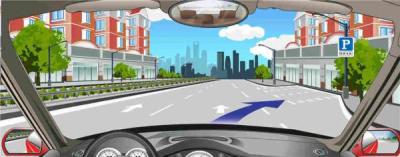
Answer:N
30、The sign in front indicates an open-air parking lot with rest area is 200 meters ahead.
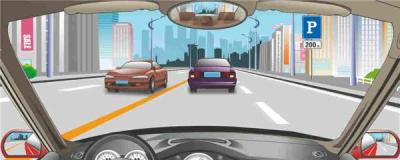
Answer:Y
31、Under such circumstances, the driver should stop the vehicle and yield to pedestrians.
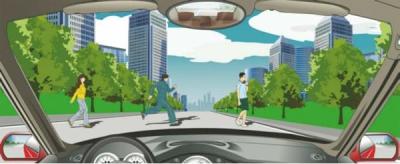
Answer:Y
32、Under such circumstances, what should motor vehicle drivers do?
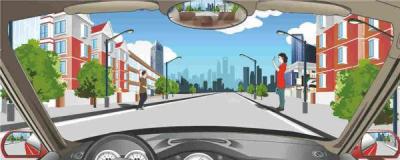
A、Guard against the sideslip of motor vehicles
B、Guard against the crossing of pedestrians
C、Speed up and pass through as quickly as possible
D、Continuously sound the horn
Answer:B
33、The slanted filled-in yellow marking in the middle of the road warns that there is a stationary obstacle ahead.
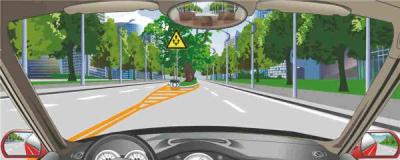
Answer:Y
34、When approaching another vehicle at night, why should the driver alternate between high-and-low-beam at a distance more than 150 meters?
A、Warn each other before passing
B、Driving habit
C、Easy to observe the situation ahead from either side
D、Courtesy
Answer:C
35、When driving on a foggy day, what kind of lamps should the driver turn on?
A、Fog lamp and hazard lamp
B、Fog lamp and indicator
C、Fog lamp and high-beam
D、Fog lamp and low-beam
Answer:A
36、What should the driver pay attention to when the motor vehicle passes a school?
A、Observe the traffic signs and markings
B、Slow down and pass slowly
C、Prohibited from sounding the horn
D、Pass rapidly
Answer:ABC
37、When a motor vehicle breaks down and cannot be moved away from the expressway, the driver and all passengers should stay in the vehicle and wait for the rescue personnel.
Answer:N
38、The guide arrow on the road surface of this lane indicates that U-turns and left turns are permitted at the intersection ahead.
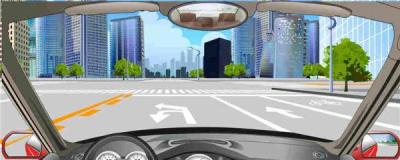
Answer:Y
39、Under the circumstances shown in the flash, what should the driver do?
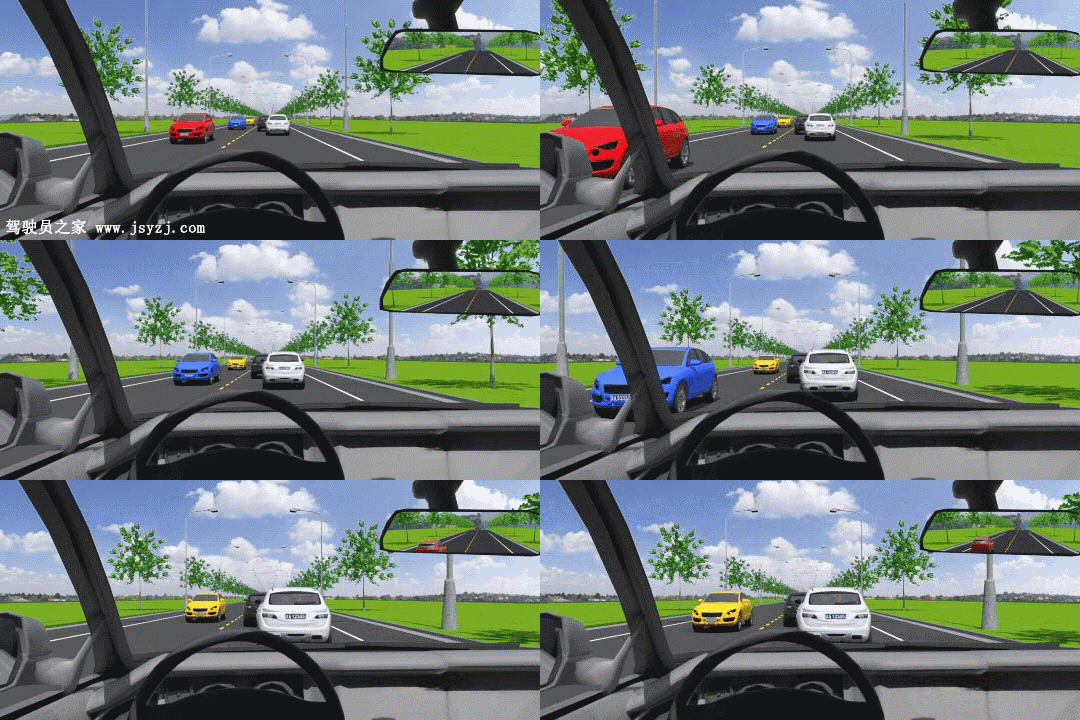
A、Find a chance to overtake the vehicle in front
B、Weave through motor vehicles ahead and pass
C、Reduce speed, stop, and wait in line
D、Sound the horn to urge vehicles in front
Answer:C
40、Rescue personnel should check the breath of the unconscious person before applying any other emergency treatment.
Answer:Y
41、What should the driver do when the motor vehicle passes the level crossing?
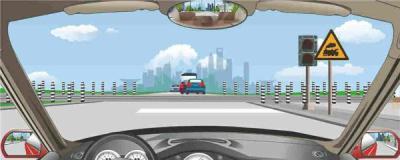
A、Change to neutral gear and slide over
B、Stop, look and pass
C、Speed up, look and pass rapidly
D、Slow down, look and pass slowly
Answer:B
42、What should drivers keep in mind when driving on amountainous road?
A、Keep a safe distance
B、Avoid occupancy of another lane when making a turn
C、Downshift in advance when ascending an abrupt slope
D、Taking full advantage of engine braking when descending a long slope
Answer:ABCD
43、When driving on an expressway, where should the driver park?
A、The service area
B、The acceleration lane
C、The deceleration lane
D、On the ramp
Answer:A
44、The sign on the right warns of a road section ahead under construction.
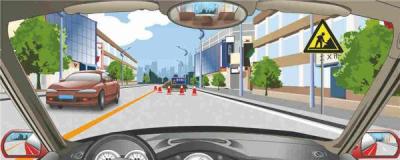
Answer:Y
45、How should lamps be used when motor vehicle drivers pass through a two-way tunnel?
A、Turn on the hazard lamps
B、Turn on the high-beam
C、Turn on the fog lamp
D、Turn on the low-beam
Answer:D
46、When the wounded person is suffering main artery bleeding, where should the rescue personnel press by thumb to stop the bleeding?
A、The artery near the heart
B、The artery lower to the wound
C、The artery further from the heart
D、The artery in the center of the wound
Answer:A
47、The yellow broken line on the curb indicates that vehicles are not allowed to stop and let passengers embark or disembark or load and unload freight at the roadside.
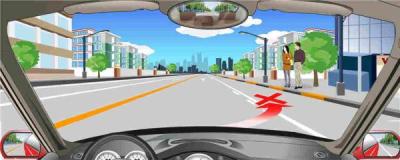
Answer:N
48、What should motor vehicle drivers do under the circumstance shown in the flash?

A、Drive by borrowing the opposite lane
B、Brake suddenly and pass through at a lower speed
C、Drive by the outer side of the curve
D、Reduce speed fully and drive by the right side
Answer:D
49、Drivers may go ahead when traffic polices posture is like this.
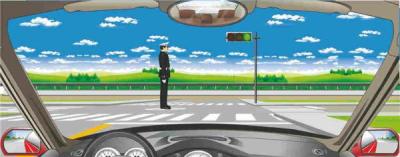
Answer:Y
50、When the windscreen of a motor vehicle on the highway is cracked by flying rocks or debris which makes visibility poor, the driver should reduce speed gradually, turn on the hazardlamps, drive to a place where it will not obstruct the traffic flow and stop there.
Answer:Y
- 重庆只认识英文可以考科目四吗 相关内容
- 河南外国人考驾照英文模拟试题 广东科目四考题英文版 上海英文驾考题库PDF电子版 辽宁驾考英文版题库 浙江英文版驾考 河北科目四有英文版吗 福建外国人考驾照科目四 安徽关于考驾照的英语 外国人可以考取中国驾照吗 外国怎么考驾照 云南英文驾考app 云南英文版驾考 山东外国人考驾照英文模拟试题
Copyright © 2025 驾考 版权所有