
- 科目一考试
- 顺序练习
- 随机练习
- 强化练习
- 模拟考试
- 科目四考试
- 顺序练习
- 随机练习
- 强化练习
- 模拟考试
- 外国语言版题库
- 英语题库
- 德语题库
- 韩语题库
- 日语题库
- 俄语题库
- 法语题库
- 西班牙语题库
- 阿拉伯语题库
- 摩托车英文题
安徽2025科目四英文版
-
1、When driving on a muddy road, what should drivers do if the wheels spin and slide?
A、Cover the ground under the wheels with gravels
B、Change to a high gear and speed out
C、Cover the ground under the driving wheels with gravels
D、Violently turn the steering wheel and suddenly leed up
Answer:C
2、Motor vehicles drivers may overtake by borrowing the opposite lane on this kind of road.
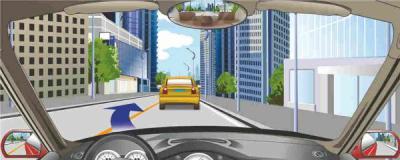
Answer:N
3、The sign on the right warns of a sharp winding road ahead.

Answer:N
4、When a wounded person suffering burns is thirsty, he should only drink plain boiled water.
Answer:N
5、What should the driver do upon finding that one of the left tires is leaking while driving?
A、Brake slowly to slow down
B、Brake swiftly to slow down
C、Turn to the right side swiftly
D、Apply emergency braking
Answer:A
6、The sign on the right warns of right-hand S-shaped bend ahead.
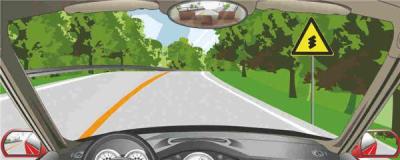
Answer:N
7、A driver should accelerate in advance to overtake then it is likely to meet with oncoming vehicles.
Answer:N
8、What should the driver do when the motor vehicle passes a flyover?
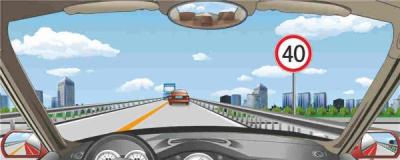
A、Speed up and pass rapidly
B、Keep the speed under 15 km/hour
C、Drive at the speed indicated by the traffic sign
D、Drive close to the central line of the flyover
Answer:C
9、What should the driver do if the back wheel slides to the right on a muddy road?
A、Continuously speed up
B、Turn right
C、Turn left
D、Apply emergency brake
Answer:B
10、When driving on this section of the road, drivers should observe closely and prepare to yield to the animals crossing the road.
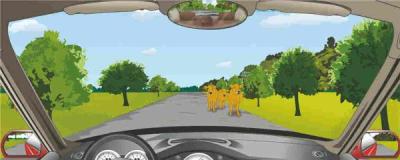
Answer:Y
11、When the wounded person is suffering main artery bleeding, where should the rescue personnel press by thumb to stop the bleeding?
A、The artery near the heart
B、The artery lower to the wound
C、The artery further from the heart
D、The artery in the center of the wound
Answer:A
12、When driving on the highway in foggy, rainy, or snowy weather with a range of visibility between 100 meters and 200 meters, what should motor vehicle drivers do?
A、Turn on the fog lamp, low-beam, clearance lamp and front and rear position lamp
B、Drive at a speed of no more than 60 km/hour
C、Keep a breaking distance of more than 100 meters from the vehicle in front in the same lane
D、Leave the highway from the nearest exit as soon as possible
Answer:ABC
13、What should the driver do when seeing these hand signals?
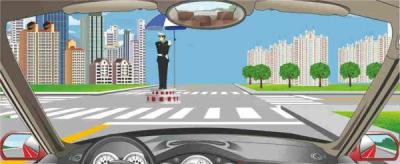
A、Turn left at the intersection
B、Stop and wait
C、Go straight at the intersection
D、Drive to the waiting area for turning left
Answer:B
14、When encountering a road like this, motor vehicle drivers may make good use of neutral gear to coast.
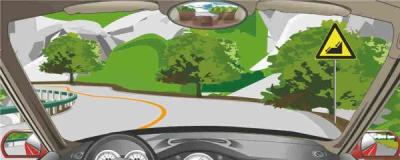
Answer:N
15、Drivers should drive at a lower speed when traffic police give these hand signals.
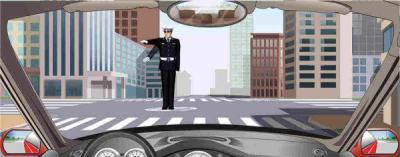
Answer:Y
16、Drivers may go straight and pass through when traffic police give these hand signals
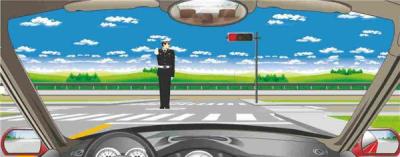
Answer:N
17、What does this sign on the fly-over junction indicate?
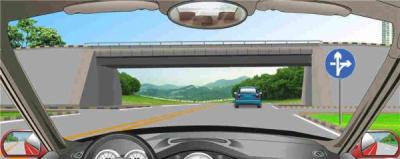
A、Turn right
B、Drive straight or turn left
C、Drive straight or turn right
D、Take a U-turn under bridge
Answer:C
18、When driving a motor vehicle not equipped with the anti-lock braking system(ABS), what should the driver do if he/she brakes on a road covered by ice and snow?
A、Gently or intermittently depress the brake pedal
B、Depress the brake pedal as on other roads
C、Violently depress the brake pedal
D、Suddenly depress the pedal with force
Answer:A
19、These traffic police signals indicate that passing is prohibited.
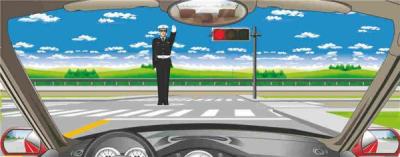
Answer:Y
20、The sign on the right side indicates that turning left is not permitted at the intersection ahead.
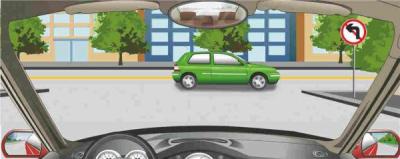
Answer:Y
21、The driver should speed up to 40 kilometers per hour when he/she sees this traffic sign.
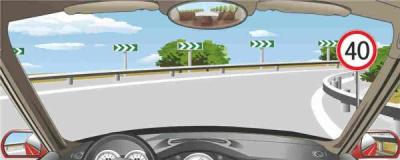
Answer:N
22、Once inflammable gas causes a fire disaster, it should be put out with water in good time.
Answer:N
23、When driving in rain and encountering pedestrians with umbrellas or wearing raincoats, what should be done by motor vehicle drivers in order to yield?
A、Drive at a normal speed
B、Sound the horn to alert when approaching the pedestrians
C、Speed up and bypass on the left
D、Reduce speed and sound the horn in advance
Answer:D
24、Under such circumstances, the driver should stop the vehicle and yield to pedestrians.
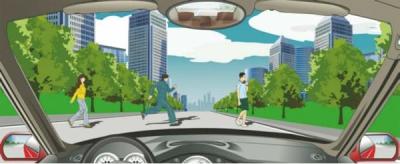
Answer:Y
25、Under the circumstances shown in the flash, what should the driver do?
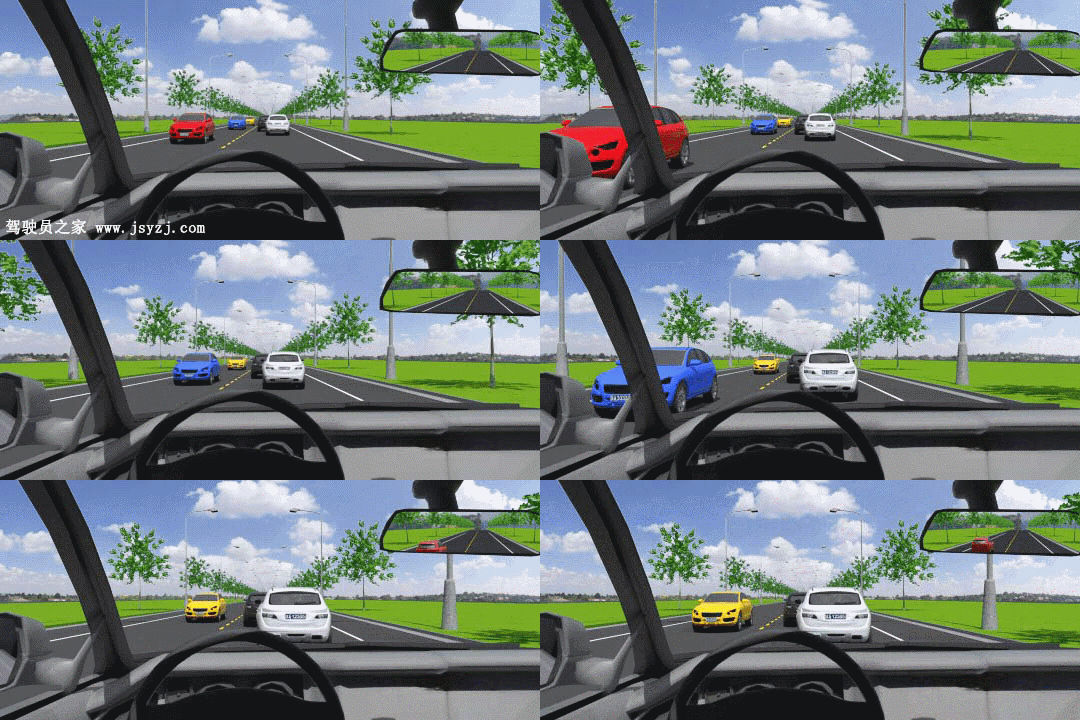
A、Find a chance to overtake the vehicle in front
B、Weave through motor vehicles ahead and pass
C、Reduce speed, stop, and wait in line
D、Sound the horn to urge vehicles in front
Answer:C
26、Which of the following materials should not be used to stop bleeding?
A、Bandage
B、Sling
C、Tourniquet
D、Hemp rope
Answer:D
27、The sign on the right warns of a narrowed road on both sides ahead.
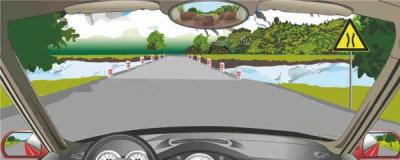
Answer:N
28、When a bus encounters an unexpected situation or an accident, the driver should do his best to minimize the loss and should never cause a secondary accident or even greater loss for the sake of avoiding danger.
Answer:Y
29、When a wounded person is unable to get off the vehicle by himself/herself, he/she should be removed from the vehicle so as to avoid a secondary injury.
Answer:Y
30、When driving on an expressway, where should the driver park?
A、The service area
B、The acceleration lane
C、The deceleration lane
D、On the ramp
Answer:A
31、The sign on the right indicates to stop and yield at the intersection ahead.
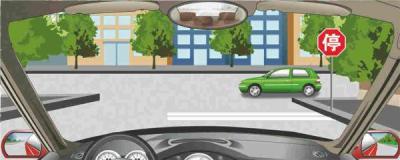
Answer:Y
32、The sign on the right indicates right-hand turn only.
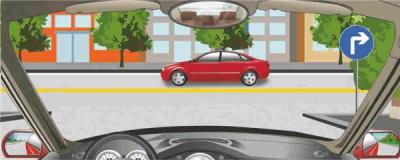
Answer:Y
33、When a motor vehicle stops in snow, which lamp should be turned on?
A、Front and rear fog lamps, clearance lamp and rear position lamp
B、Reverse lamp, clearance lamp and rear position lamp
C、Headlamp, clearance lamp and rear position lamp
D、Hazard lamps, clearance lamp and rear position lamp
Answer:D
34、The sign in front indicates a one-way lane after turning left.
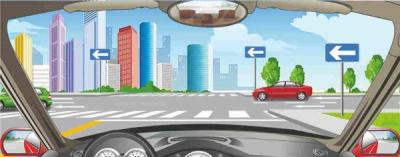
Answer:Y
35、When driving a motor vehicle equipped with power steering, the driver should firmly hold the steering wheel and drive slowly if he/she suddenly finds that steering is difficult.
Answer:N
36、When driving on a long downhill road, which is the best way to control the speed?
A、Coast in neutral gear
B、Take a low gear
C、Depress the clutch
D、Pull up the handbrake
Answer:B
37、The motor vehicle should speed up and pass rapidly under this situation.
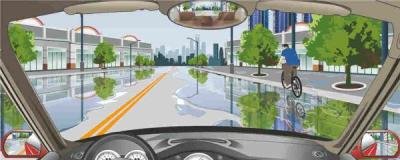
Answer:N
38、When driving, besides paying attention to keeping a safe distance from the vehicle in front, drivers should also be prudent when braking so as to avoid a rear-end collision caused by a vehicle behind.
Answer:Y
39、The driver should pay attention to the left side when the motor vehicle passes this intersection.
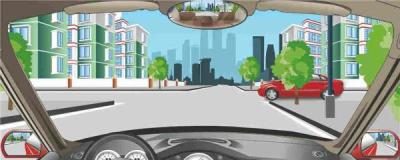
Answer:N
40、When there is a braking failure on a downhill road, if there is no other alternative, the driver may rub the vehicle body against the rocks and trees on roadside to force the vehicle to slow down and stop.
Answer:Y
41、What should the driver do when seeing these hand signals?
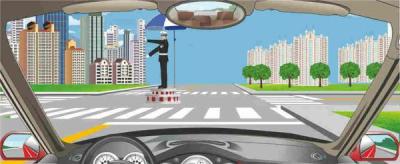
A、Go straight and pass through the intersection
B、Stop in front of the stop-line and wait
C、Turn left at the intersection
D、Drive at a lower speed at the intersection
Answer:C
42、The sign on the left indicates that drivers should stop to take a pass card at the toll station ahead.
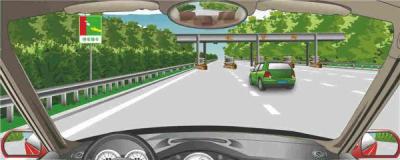
Answer:Y
43、When such circumstances happen suddenly, what should the driver do?
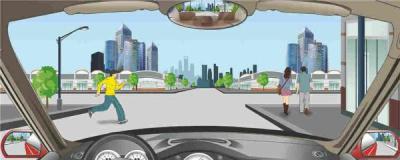
A、Reduce speed or stop to yield
B、Bypass in front of the pedestrians
C、Continuously sound the horn to alert the pedestrians
D、Bypass from behind the pedestrians
Answer:A
44、What should be done first after getting into the vehicle?
A、Observe the surrounding traffic situation
B、No need to observe the traffic situation around
C、Open the door and get in directly
D、Take note of the weather
Answer:A
45、The sign in front is an advance announcement of the directions led by this intersection.
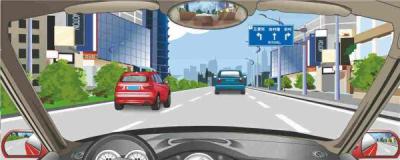
Answer:Y
46、When the tire pressure is too low, what can happen when driving at a high speed?
A、Tire pressure will be unstable
B、Tire pressure will increase
C、Driving resistance will decrease
D、The tire will burst
Answer:D
47、The sign on the right indicates an inspection station 100 meters ahead.
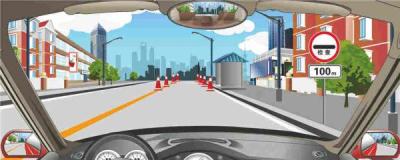
Answer:Y
48、Motor vehicles are not allowed to reverse in a tunnel.
Answer:Y
49、If a driver finds there is no vehicle behind, he/she may change lanes without turning on the indicator.
Answer:N
50、After a motor vehicle falls into water, the driver should immediately close the windows to prevent water from flowing into the compartment and to keep the air from flowing out. At the same time, he/she should make calls to tell the rescue personnel the place of the accident and wait for their arrival.
Answer:N
- 安徽2025科目四英文版 相关内容
- 海南驾考科目一英文版题库 新疆科目四考试英文版 湖北科目四有英文版吗 北京只认识英文可以考科目四吗 只认识英文可以考科目一吗 山西驾照科目四英文版题库 重庆科目一考题英文版 黑龙江驾校一点科目一英文版 北京科目一考试英文版 陕西科目一考试英文版 山西只认识英文可以考科目四吗 外国驾照考试视频大全图片 江西英文驾考科目四题库PDF电子版 浙江驾考科目三英文 四川英语c1科目四考试 中国驾驶证用英语考试
Copyright © 2025 驾考 版权所有