
- 科目一考试
- 顺序练习
- 随机练习
- 强化练习
- 模拟考试
- 科目四考试
- 顺序练习
- 随机练习
- 强化练习
- 模拟考试
- 外国语言版题库
- 英语题库
- 德语题库
- 韩语题库
- 日语题库
- 俄语题库
- 法语题库
- 西班牙语题库
- 阿拉伯语题库
- 摩托车英文题
吉林驾考科目三英文
-
1、When following a vehicle on the road, the distance from the vehicle in front is not important. As long as the driver goes forward at the same speed as the vehicle in front does, he/she can avoid a rear-end collision.
Answer:N
2、What's the meaning of the sign on the right?
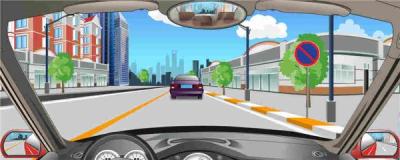
A、Long-time parking permitted
B、Temporary parking permitted
C、Long waiting for passengers permitted
D、No parking
Answer:B
3、Under such circumstances, what should be done by motor vehicle drivers in order to maintain safe driving?
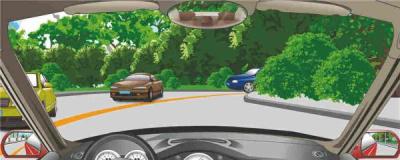
A、Sound the horn or turn on the headlamps
B、Reduce speed or drive on the right side
C、Keep to the central line as best as possible
D、Drive on the left side of the road
Answer:B
4、Under this circumstance, motor vehicle drivers should not reduce speed.
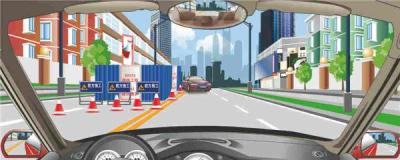
Answer:N
5、When encountering a vehicle in front ascending on a mountainous road covered with ice and snow, what should the motor vehicle driver do?
A、Ascend after the vehicle in front passes the slope
B、Overtake the vehicle in front swiftly and drive on
C、Overtake the vehicle in front with a slow speed and drive on
D、Follow the vehicle in front closely
Answer:A
6、When encountering a road like this, motor vehicle drivers should downshift in advance and- control speed by braking the engine.
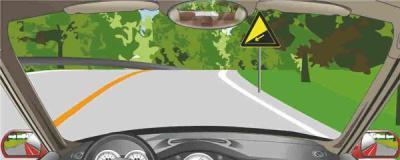
Answer:Y
7、The driver may not yield when the motor vehicle encounters this situation at the intersection.
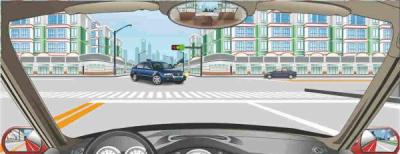
Answer:N
8、Drivers may go straight and pass through when traffic police give these hand signals
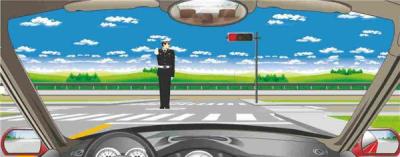
Answer:N
9、Which one of the following measures is correct when a motor vehicle intends to overtake but the vehicle infront refuses to yield?
A、Use a long-sounding horn
B、Follow the vehicle in front while turning high-beam
C、Wait for it to yield while keeping a safe distance
D、Use high-beam and low-beam alternatively
Answer:C
10、The leading cause of this accident is that the driver failed to make sure that it was safe to reverse before doing so.
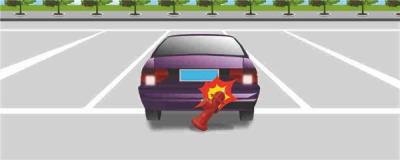
Answer:Y
11、Drivers may temporarily cross these central solid double yellow lines when overtaking.
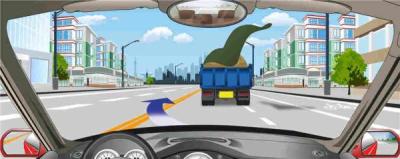
Answer:N
12、When a motor vehicle turns left at this intersection the driver should change to the left lane in advance by the guide arrow.
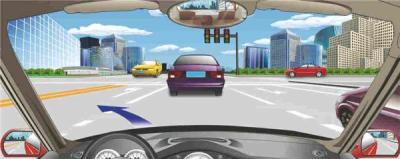
Answer:Y
13、When driving in a heavy rain, drivers should contro their speed to prevent their vehicles from sliding.
Answer:Y
14、The sign on the right warns of a wet road surface ahead.
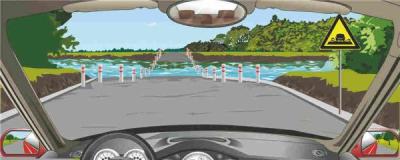
Answer:Y
15、This sign indicates that vehicles can either drive straight or turn right at the fly-over junction ahead.
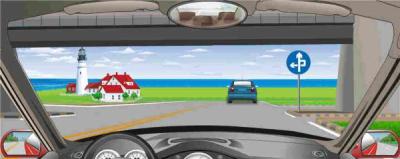
Answer:N
16、Motor vehicles are not allowed to reverse in a tunnel.
Answer:Y
17、The drivers, loaders and supercargoes responsible for dangerous chemicals transportation should all full understand the chemical characteristics, potential risks, features of the packaging containers and emergency measures for any unexpected accidents.
Answer:Y
18、When going straight or turning right, drivers are not allowed to drive on or across the guide lines on both sides of the intersection.
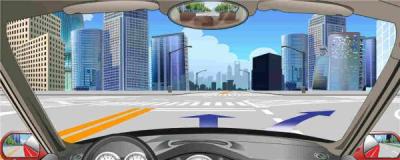
Answer:Y
19、When temporarily parking on a raining day, what kind of lamp should the driver turn on?
A、Front and back fog lamps
B、Hazard warning lamp
C、Headlamp
D、Reversing lamp
Answer:B
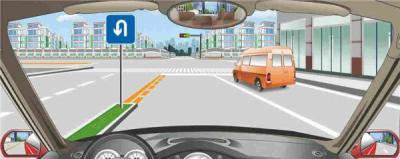
20、The sign on the left indicates U-turn is allowed here.
Answer:Y
21、Under such circumstances, what should motor vehicle drivers do?
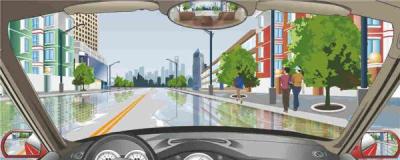
A、Pass slowly at a lower speed
B、Speed up and pass
C、Continuously sound the horn and pass
D、Pass at a normal speed
Answer:A
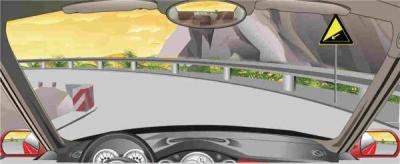
22、The sign on the right warns of a continuous downhill section ahead.
Answer:N
23、When a motor vehicle passes over an inundated road the driver should change to a low gear and pass at a constant speed.
Answer:Y
24、When a wounded person suffering burns is thirsty, he should only drink plain boiled water.
Answer:N
25、When entering an expressway ramp, which of the following statements is correct?
A、Drivers are allowed to overtake other vehicles
B、Drivers are prohibited from making U-turns
C、Drivers are allowed to stop
D、Drivers are allowed to reverse
Answer:B
26、On a mountain road, what should the driver do in this situation?
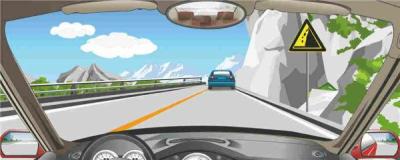
A、Drive on the left and speed up to bypass
B、Stop to observe and pass slowly
C、Observe closely and pass as soon as possible
D、Sound the horn several times and pass slowly
Answer:C
27、The sign on the right warns of an unguarded railway intersection ahead.
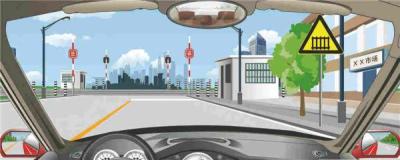
Answer:N
28、Under such circumstances, motor vehicles are not allowed to overtake.
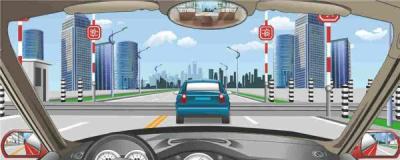
Answer:Y
29、The sign in front is an advance announcement of the directions led by the interchange.
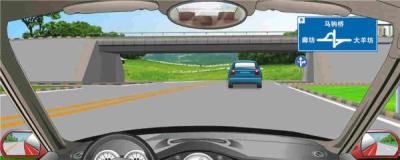
Answer:Y
30、The sign on the right warns of three or more winding roads ahead.
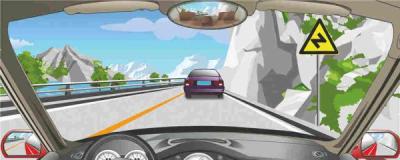
Answer:N
31、The sign on the right warns of a wildlife protection area ahead.
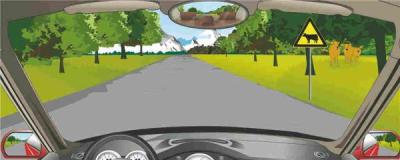
Answer:N
32、Motor vehicles on this kind of road are only allowed to overtake the vehicle in front from left.
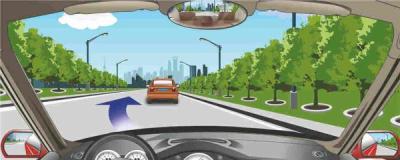
Answer:Y
33、The guide arrow on the road surface of this lane indicates that only left turns are permitted at the intersection ahead.
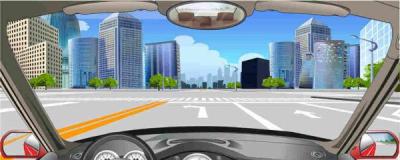
Answer:Y
34、The sign on the right indicates a bypass flow intersection ahead.
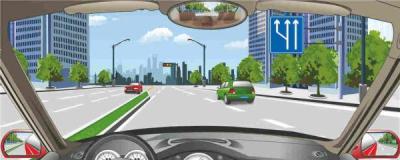
Answer:N
35、Turning on the high-beam is an effective way to improve visibility in fog weather.
Answer:N
36、What should the driver do in this situation?
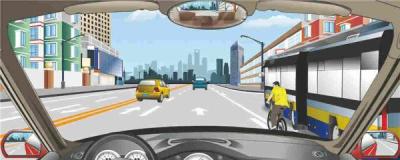
A、Speed up and overtake from the left side
B、Sound the horn continuously to warn the bicycle
C、Follow the bicycle closely
D、Slow down and yield to the bicycle
Answer:D
37、Under this circumstance, motor vehicle drivers should give the right of way to oncoming vehicle.
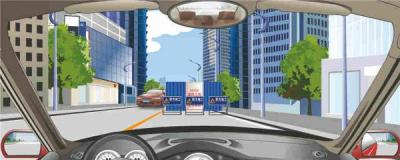
Answer:Y
38、How will the adhesive force of road change when speed increases on a damp and slippery road?
A、Increase sharply
B、increase gradually
C、decrease sharply
D、No change
Answer:C
39、The broken yellow line in the center of the road indicates that bypassing by crossing the line is prohibited in any condition.
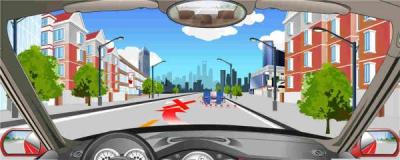
Answer:N
40、The broken yellow line in the center of the road indicates that overtaking by crossing the line is permitted in safe situations.
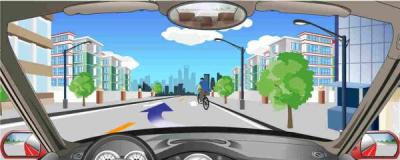
Answer:Y
41、How should lamps be used when a motor vehicle meets an oncoming bicycle on a narrow road or a narrow bridge at night?
A、Continuously change between low-beam and high-beam
B、Use clearance lamp
C、Use high-beam
D、Use low-beam
Answer:D
42、Which of the following measures should be taken first when rescuing a wounded person suffering blood loss?
A、Observe
B、Dress the wounds
C、Stop bleeding
D、Inquire
Answer:C
43、Which is the correct way to use a fire extinguisher?
A、Stand on the leeward side
B、Direct the fire extinguisher at the source of fire
C、Try to approach the source of fire as close as possible
D、Direct the fire extinguisher at the flames
Answer:B
44、What should the driver do when the motor vehicle encounters this situation in front of a school?
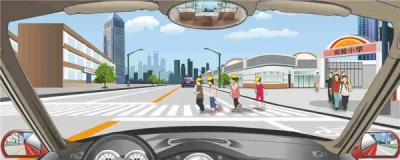
A、Bypass before the queue
B、Slow down and pass slowl
C、Stop promptly and yield
D、Go through in the spaces between the queues
Answer:C
45、When the fuel of a motor vehicle catches fire, which of the following things cannot be used to put out the fire?
A、Sandy soil on the roadside
B、Cotton-padded clothes
C、Overalls
D、Water
Answer:D
46、The sign on the left warns of no passing on the right-hand road ahead.
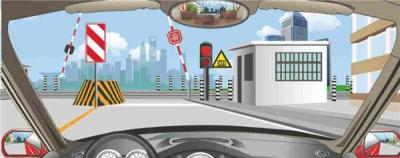
Answer:N
47、When finding a tire burst on the road, the driver should gently depress the brake pedal, reduce speed and stop the vehicle slowly.
Answer:Y
48、Sideslip happens most easily on which one of the following road surfaces?
A、Dry concrete road
B、Road surface at the beginning of rain
C、Damp concrete road surface
D、Road in heavy rain
Answer:B
49、The sign on the right warns that there are vehicles converging into the intersection on the right.
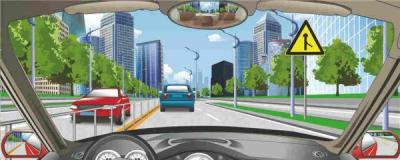
Answer:Y
50、When there is a sudden braking failure on the road, what should be done by the driver?
A、Firmly holding the steering wheel and controlling the direction
B、Immediately changing to a low gear to reduce speed
C、Using the stopping brake to reduce speed
D、Turning on the hazard lamps
Answer:ABCD
- 吉林驾考科目三英文 相关内容
- 广西驾考科目三英文 河南驾考英语版书 重庆考驾照的英文单词 广西只认识英文可以考科目四吗 黑龙江驾考英语版书 西藏驾考科目四英语版PDF 广东驾考英语版题库book 河南驾考英语版PDF题库 上海英文驾考题库PDF电子版 云南英语c1科目四考试 外国人考科一有题库吗 河南外国人考驾照科目一 西藏驾考科目四英文版题库 贵州考驾照的英文单词 天津英文驾考科目4 广西驾考英文版题库
Copyright © 2025 驾考 版权所有