
- 科目一考试
- 顺序练习
- 随机练习
- 强化练习
- 模拟考试
- 科目四考试
- 顺序练习
- 随机练习
- 强化练习
- 模拟考试
- 外国语言版题库
- 英语题库
- 德语题库
- 韩语题库
- 日语题库
- 俄语题库
- 法语题库
- 西班牙语题库
- 阿拉伯语题库
- 摩托车英文题
湖北英文驾考科目四题库PDF电子版
-
1、When passing a sharp curve, motor vehicle drivers may overtake if there are few other vehicles on the road.
Answer:N
2、A driver should accelerate in advance to overtake then it is likely to meet with oncoming vehicles.
Answer:N
3、Once inflammable gas causes a fire disaster, it should be put out with water in good time.
Answer:N
4、What should be given attention when setting off in this weather?
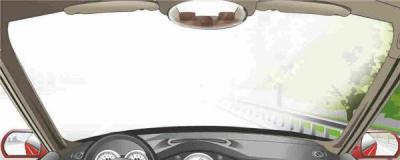
A、Turning on the high-beam
B、Turning on the front and rear fog lamps
C、Turning on the left indicator only
D、Continuously sounding the horn
Answer:B
5、When encountering an emergency on a highway, the driver should not drastically turn to evade.
Answer:Y
6、What should motor vehicle drivers do when going straight and passing through the intersection ahead?
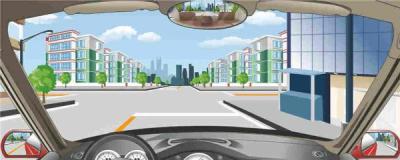
A、Reduce speed when approaching the intersection
B、Reduce speed after entering the intersection
C、May pass through the intersection without speed reduction
D、Accelerate in advance to pass through the intersection
Answer:A
7、Which one of the following ways to pass this intersection is correct?
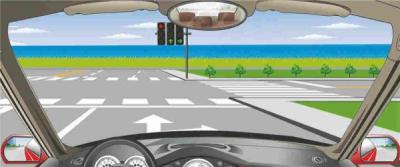
A、Turn left or right
B、Drive straight or turn left
C、Turn left
D、Drive straight or turn right
Answer:D
8、Which one of the following is the safest way to pass the oncoming vehicle on this road?
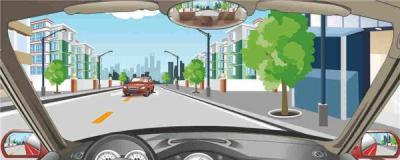
A、Driving along the central line
B、Driving with headlamp on
C、Yielding by the right side of the road
D、Yielding by the left side of the oncoming vehicle
Answer:C
9、The braking distance will be shortened greatly when the motor vehicle is equipped with ABS brakes.
Answer:N
10、Motor vehicles are prohibited from stopping on the ramp of an expressway.
Answer:Y
11、When such circumstances happen suddenly, what should the driver do?
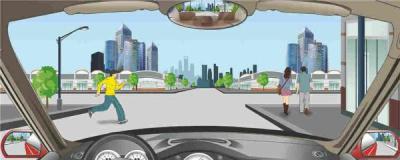
A、Reduce speed or stop to yield
B、Bypass in front of the pedestrians
C、Continuously sound the horn to alert the pedestrians
D、Bypass from behind the pedestrians
Answer:A
12、Under such circumstances, the driver should stop the vehicle and yield to pedestrians.
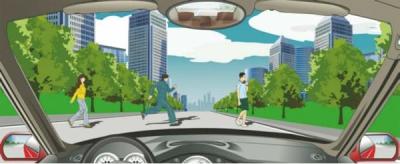
Answer:Y
13、The sign on the right indicates the location of the highway emergency phone.
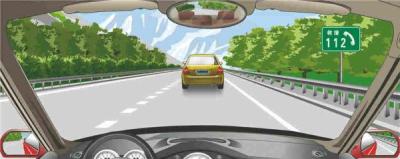
Answer:N
14、The sign on the right warns of no passing due to collapse on the road ahead.
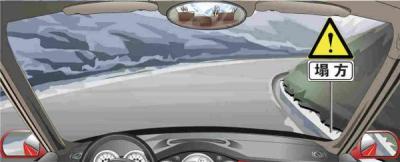
Answer:N
15、In this situation, motor vehicles are permitted to stop temporarily at bus stations.
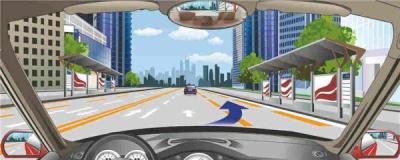
Answer:N
16、When the driver discovers a tire is leaking and steers the vehicle off the main driving lane, he/she should refrain from applying emergency braking so as to avoid a vehicle turnover or a rear-end collision arising from the late braking of the vehicle behind.
Answer:Y
17、On which of the following roads may the wheels be most easily locked when braking?
A、Concrete road
B、Dirt road
C、Road covered by ice and snow
D、Sand road
Answer:C
18、When following other vehicles on the uphill section of a mountain road, what should the driver do if the vehicle in front stops?
A、Overtake from either side of the front vehicle
B、Stop close to the vehicle in front
C、Stop with a larger space from the vehicle in front
D、Sound the horn continuously to warn the other driver
Answer:C
19、When a tire suddenly bursts on the road, the driver should violently depress the brake pedal to reduce speed and stop the vehicle.
Answer:N
20、Having driven his truck at 90km/hour on an urban road without road lamps, Mr. Zhou is passing a narrow road using the high-beam and cutting off the way of an oncoming passenger car that runs into the right guardrail as a consequence. Which of the following law-breaking acts did Mr Zhou commit?
A、Speeding
B、Approaching a vehicle not in accordance with related regulations and rules
C、Fatigued driving
D、Using lamps not in accordance with related regulations and rules
Answer:ABD
21、What should the driver do on this kind of curving mountain road?
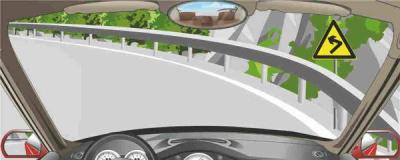
A、Borrow the opposite lane
B、Slow down and drive on the right
C、Stick to the central line of the road
D、Drive close to the right side
Answer:B
22、The sign on the right warns of a one-way tunnel ahead.
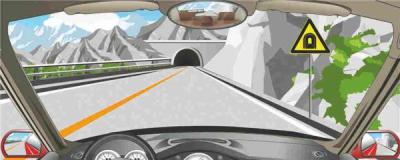
Answer:N
23、When driving on a damp and slippery road, drivers should avoid using the emergency brake to his/her best ability.
Answer:Y
24、How many kinds of law-breaking acts are displayed in flash 7?
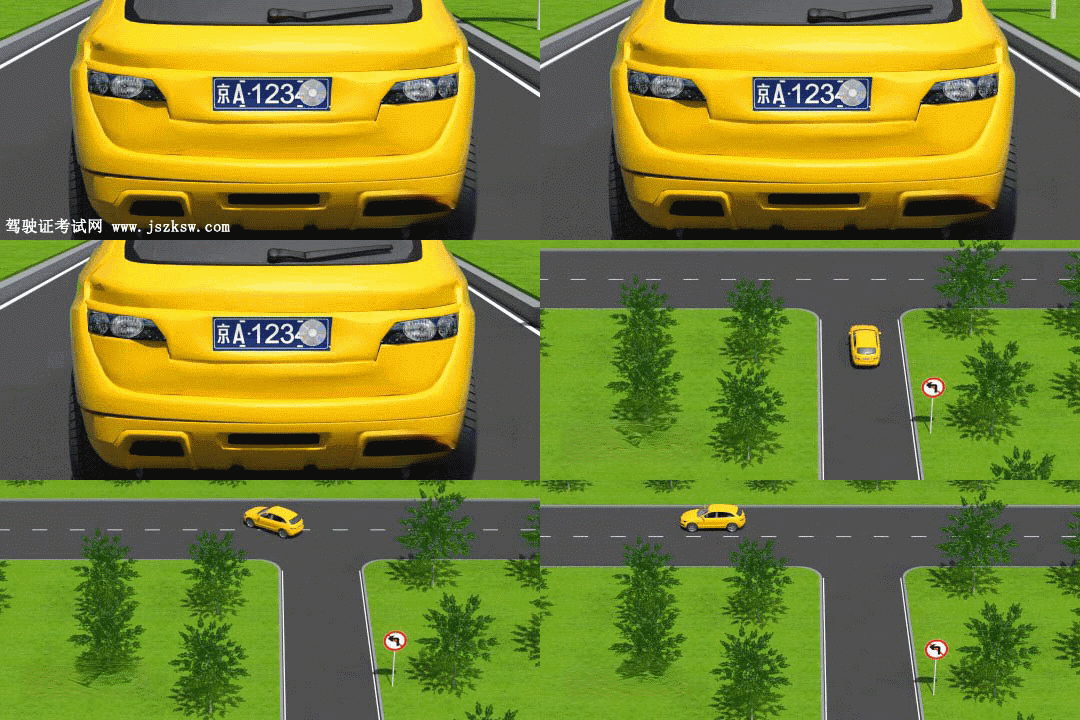
A、One
B、Two
C、Three
D、Four
Answer:B
25、When passing another vehicle on a foggy day, what should drivers do?
A、Slow down and pass slowly
B、Maintain a safety distance
C、Properly use lamps
D、Drive at a high speed
Answer:ABC
26、When finding a tire burst on the road, the driver should gently depress the brake pedal, reduce speed and stop the vehicle slowly.
Answer:Y
27、How should the driver use vehicle lights when the motor vehicle enters this intersection?
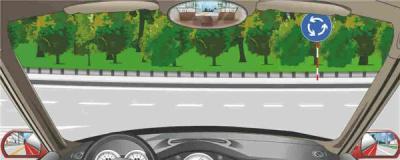
A、Turn on the right-turn indicator
B、Turn on the hazard lamps
C、No need to turn on any indicators
D、Turn on the left indicator
Answer:C
28、A motor vehicle may stop and yield if it encounters any problem when changing to the driving lane from an acceleration lane.
Answer:N
29、The sign on the right warns of entering a tunnel, and requires reduced speed.
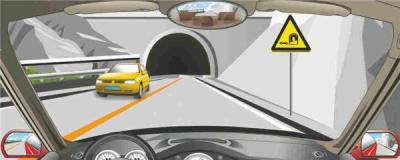
Answer:N
30、When a tire suddenly bursts on the road, what should not be done by the driver?
A、Keep calm and release the accelerator pedal slowly
B、Hold the steering wheel firmly to ensure the vehicle goes straight
C、Apply emergency braking and stop the vehicle in the shortest possible time
D、Gently depress the brake pedal after the vehicle slows down
Answer:C
31、If a driver finds there is no vehicle behind, he/she may change lanes without turning on the indicator.
Answer:N
32、The sign on the right warns that the road will narrow over the next 5 kilometers.
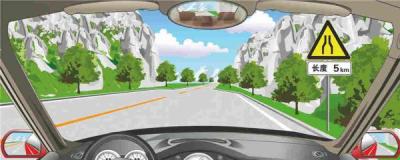
Answer:Y
33、When driving into the traffic flow on a main road from a relief road, drivers should speed up.
Answer:N
34、It is illegal to change lanes without turning on indicators.
Answer:Y
35、When a motor vehicle equipped with ABS makes an emergency brake, the driver can tread the brake pedal heavily.
Answer:Y
36、How should lamps be used when setting off in this situation?
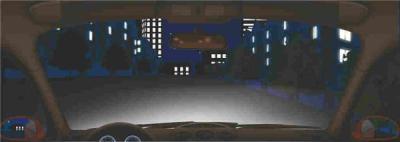
A、Turn on the high-beam
B、Turn on the left indicator only
C、Turn on the left indicator and low-beam
D、Turn on hazard lamp
Answer:C
37、When parking for a long time on a downward slope due to breakdown on the road, drivers should use this method to stop up wheels.
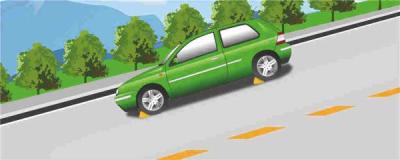
Answer:Y
38、After a motor vehicle falls into water, the driver won't be able to open the side doors or windows to escape until water nearly fills up the compartment.
Answer:Y
39、The guide arrow on the road surface of this lane indicates that only left and right turns are permitted on the lanes ahead.
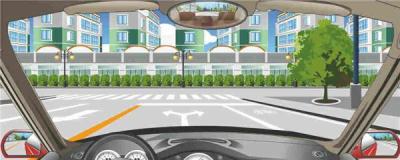
Answer:Y
40、Motor vehicle drivers are allowed to make a U-turn at this intersection.
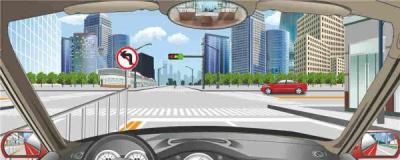
Answer:N
41、The sign in front indicates that vehicles except public buses are not allowed to drive in this lane.
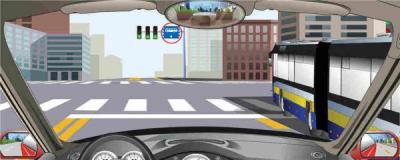
Answer:Y
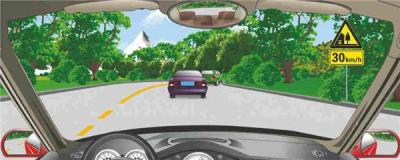
42、The sign on the right warns of a village or town ahead suggesting a 30km/hour speed.
Answer:Y
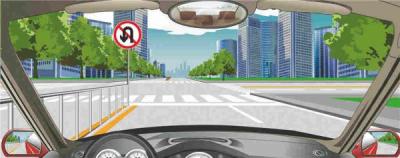
43、The sign on the left indicates no U-turn at the intersection ahead.
Answer:Y
44、Which of the following measures should be taken first when rescuing a wounded person suffering blood loss?
A、Observe
B、Dress the wounds
C、Stop bleeding
D、Inquire
Answer:C
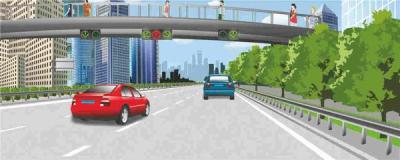
45、The red car is allowed to drive on this lane.
Answer:N
46、When leaving an expressway, drivers should enter the ramp after slowing down in the deceleration lane.
Answer:Y
47、When carrying a wounded person in a coma, rescue personnel should try to let the unconscious person remain in the supine position.
Answer:N
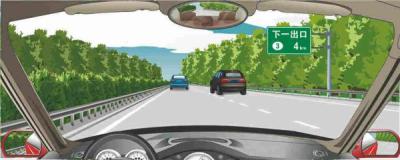
48、The sign in front indicates a 4-kilometer distance from the next exit.
Answer:Y
49、As shown in this picture, the vehicles intending to turn left are allowed to drive into the left-turn waiting area directly to wait for the green light.
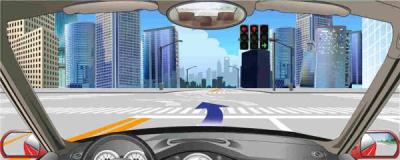
Answer:N
50、When the tire pressure is too low, what will happen if the tire changes its shape in waves and increases in temperature due to fast movement?
A、Unstable tire pressure
B、Even lower tire pressure
C、Driving resistance increases
D、Tire burst
Answer:D
- 湖北英文驾考科目四题库PDF电子版 相关内容
- 陕西外国人考驾照科目四 外国人能在中国考驾驶证吗 甘肃英文驾考题库PDF电子版 老外考驾照科三视频教程全集 北京驾考英语 内蒙古科目一英文版在哪里找 宁夏驾照考试科目四英文版 四川外国人考科目一 英文 云南驾考科目一英语 云南关于考驾照的英语 江西驾照考试科目四英文版 青海科目一英文版模拟 辽宁科目一英文版在哪里找 河北驾考科目一英语版书 天津科目四有英文版吗 海南驾考科目一英语版书
Copyright © 2025 驾考 版权所有