
- 科目一考试
- 顺序练习
- 随机练习
- 强化练习
- 模拟考试
- 科目四考试
- 顺序练习
- 随机练习
- 强化练习
- 模拟考试
- 外国语言版题库
- 英语题库
- 德语题库
- 韩语题库
- 日语题库
- 俄语题库
- 法语题库
- 西班牙语题库
- 阿拉伯语题库
- 摩托车英文题
辽宁2025科目四考题英文版
-
1、Sounding the horn on a foggy daY can arouse the attention of the opposite side. After hearing the horn from the opposite side, the driver should also sound their own horn to respond.
Answer:Y
2、The guide line of a changeable lane indicates that drivers can choose their direction at will.
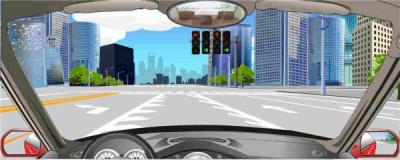
Answer:N
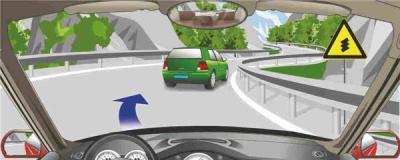
3、The sign on the right warns of a continuous downhill section ahead.
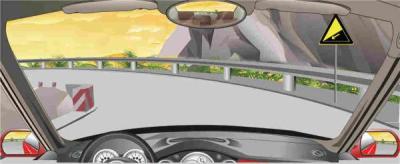
Answer:N
4、hen there is a braking failure on a downhill road the driver should immediately try to find and drive to an emergency lane; after stopping the vehicle on the emergency lane, the driver should pull up the stopping brake so as to prevent a second danger arising from the vehicle sliding.
Answer:Y
5、Which one of the following is the safest way when driving a motor vehicle on this kind of road surface?
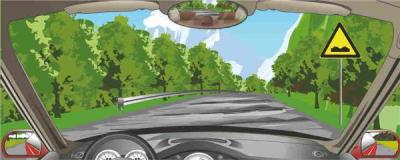
A、Slide over by using neutral gear
B、Pass with a high speed
C、Pass by speeding up
D、Pass with a low speed
Answer:D
6、When a motor vehicle deviates from the normal direction due to steering failure and an accident is unavoidable, what should the driver do?
A、Apply emergency brake
B、Immediately steer and adjust
C、Immediately steer to the side where there is no obstacle and evade
D、Immediately steer to the side where there is an obstacle and evade
Answer:A
7、When a tire suddenly bursts on the road, the driver should violently depress the brake pedal to reduce speed and stop the vehicle.
Answer:N
8、The sign on the right indicates that vehicles from the primary road have priority.
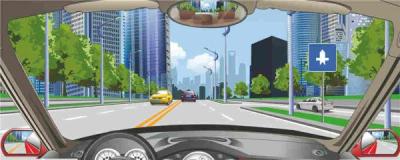
Answer:Y
9、If a motor vehicle breaks down or causes a traffic accident on the expressway and cannot run normally the vehicle may be towed by any accompanying motor vehicles.
Answer:N
10、After setting off from a roadside, motor vehicle drivers should watch both sides of the road, turn left and drive into the normal lane slowly.
Answer:Y
11、When steering failure happens suddenly, if the road condition permits straight movement, drivers should not apply emergency braking.
Answer:Y
12、When the tire pressure is too low, what can happen when driving at a high speed?
A、Tire pressure will be unstable
B、Tire pressure will increase
C、Driving resistance will decrease
D、The tire will burst
Answer:D
13、The sign on the right warns of a guarded railway intersection ahead.
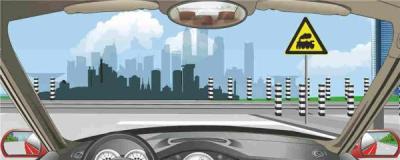
Answer:N
14、When a wounded person suffering burns is thirsty he/she may drink a small quantity of lightly salty water.
Answer:Y
15、When evading an emergency, except for being calm what principle should be held by drivers?
A、Evading people first and then objects
B、Evading objects first and then vehicles
C、Evading vehicles first and then people
D、Evading objects first and then people
Answer:A
16、When driving on a muddy road, what should drivers do if the wheels spin and slide?
A、Cover the ground under the wheels with gravels
B、Change to a high gear and speed out
C、Cover the ground under the driving wheels with gravels
D、Violently turn the steering wheel and suddenly leed up
Answer:C
17、How to ensure motor vehicles have sufficient power when driving uphill?
A、Downshift before reducing speed
B、Downshift after reducing speed
C、Downshift when the speed is excessively low
D、Downshift to the fullest extent
Answer:A
18、Drivers may cross these central solid and broken yellow lines when overtaking.
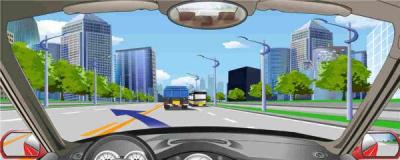
Answer:N
19、The crosswalk of the intersection warns that pedestrians have priority.
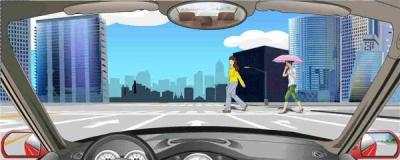
Answer:Y
20、The guide arrow on the road surface of this lane indicates that only right turns are permitted at the intersection ahead.
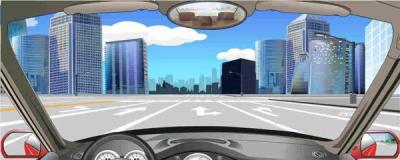
Answer:N
21、When a vehicle encounters a strong side wind, the driver should firmly hold the steering wheel and press the brake urgently if he feels the vehicle deviates horizontally from the normal direction.
Answer:N
22、Which of the following measures is correct for rescuing a person sustaining full-body burns?
A、Cover the fire with sandy soil
B、Spray cool water to his body
C、Put out the fire by extinguisher
D、Help to remove the burning clothes
Answer:B
23、When the windscreen of a motor vehicle on the highway is cracked by flying rocks or debris which makes visibility poor, the driver should reduce speed gradually, turn on the hazardlamps, drive to a place where it will not obstruct the traffic flow and stop there.
Answer:Y
24、As shown in the flash, what should the driver do when the motor vehicle encounters this situation?
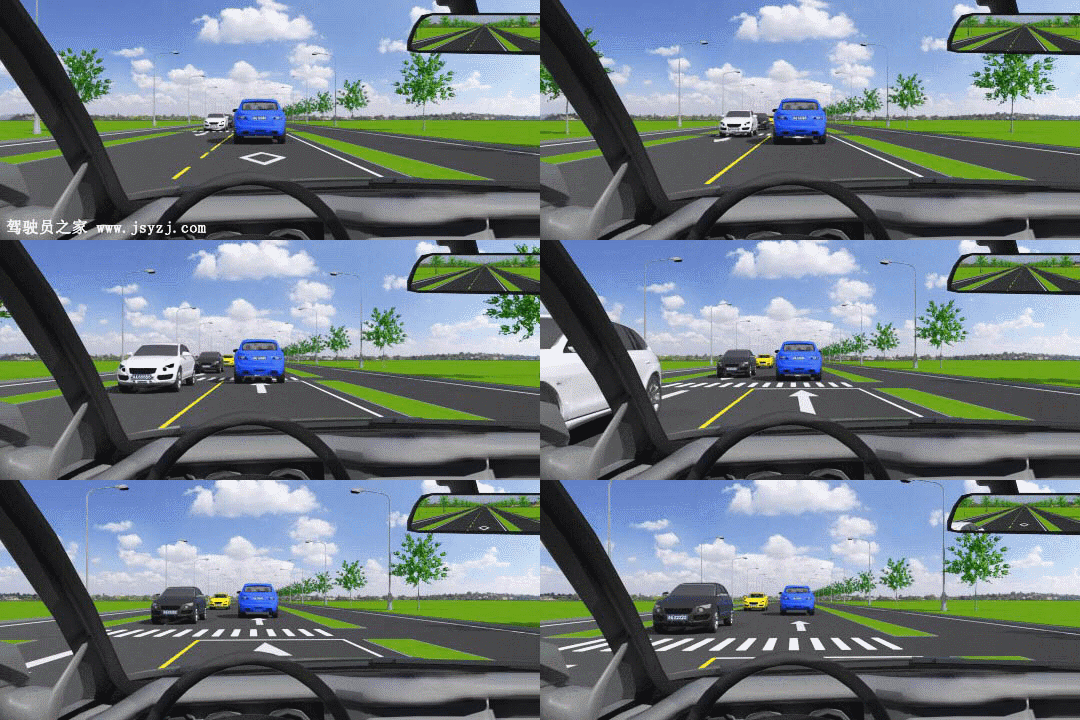
A、Speed up and pass rapidl
B、Stop immediately
C、Sound the horn to indicate the pedestrians to yield
D、Observe the movement of pedestrians and non-motor vehicles before passing
Answer:D
25、If a motor vehicle is unable to drive in heavy fog on an expressway due to an accident, what should the driver do?
A、The driver and all passengers should promptly get off the motor vehicle from the left side door
B、Set up a warning sign 100 meters behind the vehicle in the oncoming direction
C、Turn on the hazard lamp and the high-beam
D、Stand in a safe place outside the guardrail
Answer:D
26、When such circumstances happen suddenly, what should the driver do?
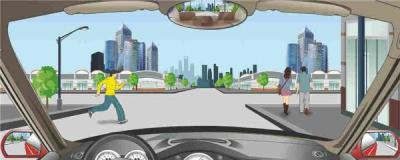
A、Reduce speed or stop to yield
B、Bypass in front of the pedestrians
C、Continuously sound the horn to alert the pedestrians
D、Bypass from behind the pedestrians
Answer:A
27、When driving on a snowy day, drivers should follow the tracks on the road before them.
Answer:Y
28、had a head-on collision at the speed of 40 kilometers per hour with Mr. Wangs three-wheeled freight motorcycle carrying 19 passengers, killing10 people nd injuring 9. What are the main illegal acts committed by the two drivers?
A、Mr Ye drove an unpermitted vehicle type
B、Mr. Wang drove a freight motorcycle to carry passengers
C、Mr Ye exceeded the speed limit
D、Mr. Wang failed to follow the guidance of the traffic signal lights
Answer:BC
29、When the motor vehicle stops on a downhill section how should the driver use the foot brake?
A、Earlier than on a level road
B、Later than on a level road
C、As timely as on a level road
D、Gently depress the foot brake pedal
Answer:A
30、When rescuing a wounded person who has been poisoned by toxic gas, which of the following measures should be taken first?
A、Prevent heat loss
B、Bring him/her to a place with fresh air
C、Give him/her artificial respiration
D、Depress the heart over the chest
Answer:B
31、How should lamps be used by the motor vehicle driver who follows a vehicle on a road section where he street light condition is good?
A、Turn off the headlamp
B、Use high-beam
C、Turn off all lamps
D、Use low-beam
Answer:D
32、When there is a braking failure, the driver should first control the direction and then try to control the speed.
Answer:Y
33、What should the driver do when he/she sees this sign on the road?
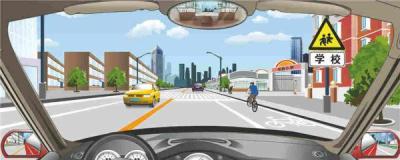
A、Use emergency braking
B、Slow down and take a look
C、Sound the horn intermittently
D、Prepare to bypass
Answer:B
34、At this intersection, motor vehicle drivers may directly make a U-turn along the U-turn turning lane.
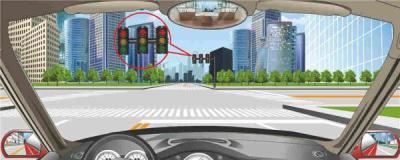
Answer:N
35、Motor vehicle drivers are allowed to overtake as long as there are no oncoming vehicles.
Answer:N
36、When driving on a road covered with ice and snow, drivers tend to encounter glare caused by reflection of light rays from the road surface.
Answer:Y
37、Which of the following is a bad driving habit?
A、Using lights in accordance with relevant rules
B、Carrying both vehicle and driving license
C、Discarding rubbish from the side window
D、Follow the guidance of the traffic signals
Answer:C
38、A driver should speed up when passing through road sections with this traffic marking.
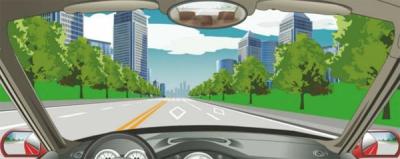
Answer:N
39、When driving in a heavy rain, drivers should contro their speed to prevent their vehicles from sliding.
Answer:Y
40、What should the driver do when the motor vehicle encounters this situation in front of a school?
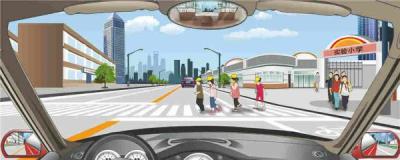
A、Bypass before the queue
B、Slow down and pass slowl
C、Stop promptly and yield
D、Go through in the spaces between the queues
Answer:C
41、A motor vehicle should not obstruct other vehicles when it enters the driving lane from an acceleration lane.
Answer:Y
42、How many kinds of law-breaking acts are displayed in flash 1?
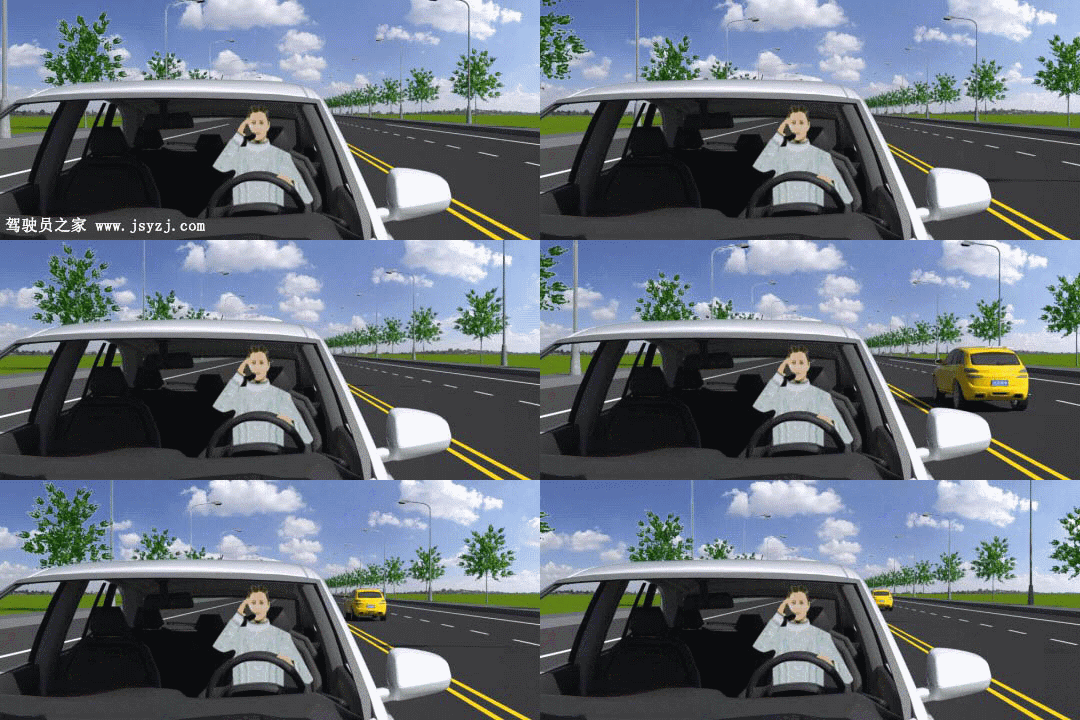
A、One
B、Two
C、Three
D、Four
Answer:B
43、When two vehicles approach each other on a foggy day, what is the best method of safe driving?
A、Turn on the high-beam
B、Slowdown and maintain a large safety distance
C、Turn on the low-beam
D、Turn on the fog lamp
Answer:B
44、Having driven his vehicle at 110km/hour on an urban road, Mr. Lin is trying to leave the scene after a rear-end collision but is held back by bystanders. The alcohol concentration in his blood, tested in an alcohol test by the traffic police, is 135.8mg per hundred milliliters. Which of the following law-breaking acts did Mr. Lin commit?
A、Drunk driving
B、Speeding
C、Fatigued driving
D、Hit-and-run driving
Answer:ABD
45、The guide arrow on the road surface of this lane indicates that drivers are only permitted to continue straight at the intersection ahead.
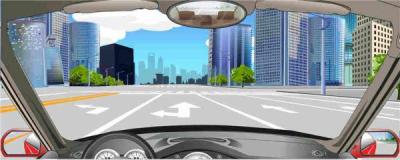
Answer:N
46、What should motor vehicle drivers do under such circumstances at night?
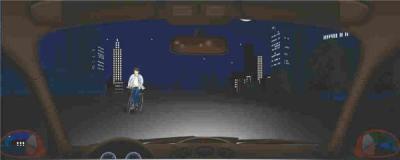
A、Turn off the headlamp when approaching
B、Use low-beam
C、Use high-beam
D、Turn off all lamps in advance
Answer:B
47、Under the circumstances shown in the flash, what should be done by the vehicle in front?
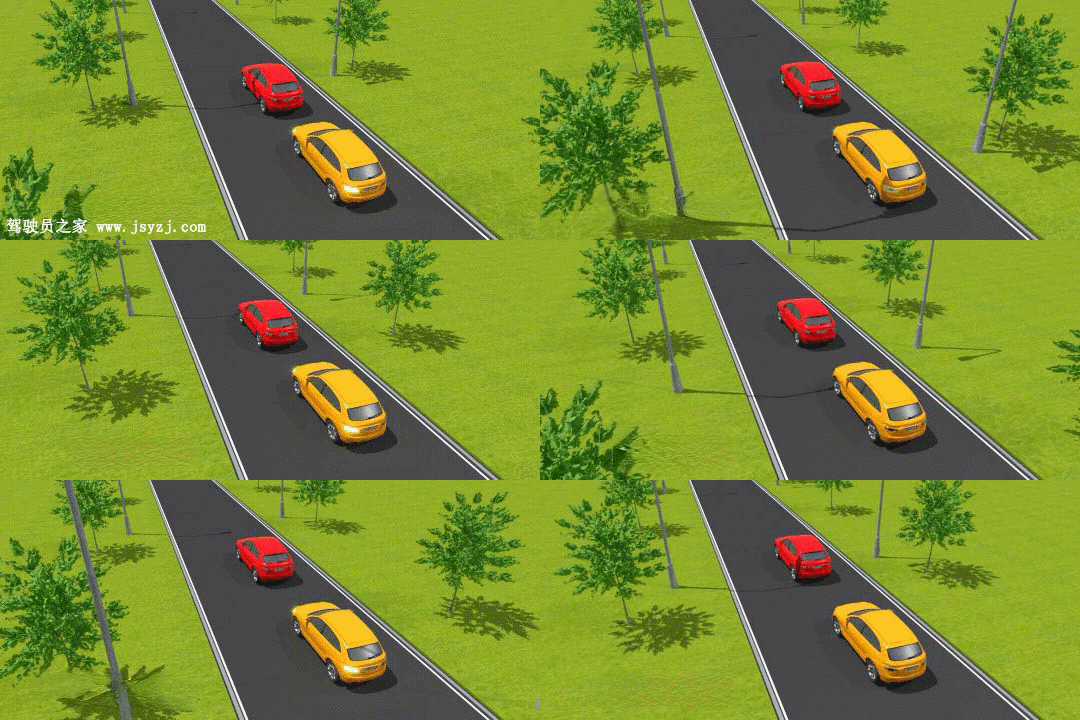
A、Reduce speed swiftly or apply emergency brake
B、Drive at a higher speed after giving a proper space
C、Reduce speed and yield by the right side of the road
D、Drive at a higher speed by the right side of the road
Answer:C
48、What should the driver pay attention to when the motor vehicle on the main road approaches a junction with a feeder road?
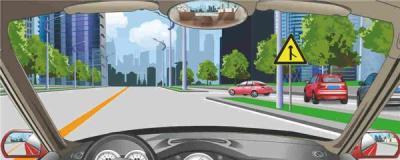
A、Slow down in advance and pay attention to other motor vehicles
B、Maintain the normal speed
C、Sound the horn and pass rapidly
D、Speed up and pass rapidly
Answer:A
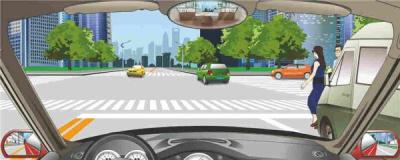
49、When a motor vehicle encounters this situation at a crosswalk, the driver must slow down and pass slowly.
Answer:N
50、When encountering a school bus which stops at the right roadside and students are embarking or disembarking, and there is only one motor vehicle lane in each direction, motor vehicle drivers behind the bus should stop and wait.
Answer:Y
- 辽宁2025科目四考题英文版 相关内容
- 福建英文驾考题库PDF电子版 辽宁英文驾考科目四题库PDF电子版 河北2025科目四考试英文 甘肃英文驾考科目4 辽宁英文驾考科目四app 山东英文驾考PDF题库 黑龙江科目一英文版模拟 陕西考驾照科目一有英文版 外国的驾照怎么考 四川驾考英语版PDF题库 内蒙古科目四有英文版吗 西藏2025科目四英文版 外籍考中国驾照体检 贵州英文版考驾照 陕西科目四英文版练习题库 重庆英文考驾照用语
Copyright © 2025 驾考 版权所有