
- 科目一考试
- 顺序练习
- 随机练习
- 强化练习
- 模拟考试
- 科目四考试
- 顺序练习
- 随机练习
- 强化练习
- 模拟考试
- 外国语言版题库
- 英语题库
- 德语题库
- 韩语题库
- 日语题库
- 俄语题库
- 法语题库
- 西班牙语题库
- 阿拉伯语题库
- 摩托车英文题
甘肃驾考科目四英语版PDF
-
1、When encountering a school bus which stops at the right roadside and students are embarking or disembarking, and there are two motor vehicle lanes in each direction, motor vehicle drivers on the left lane behind the bus should stop and wait.
Answer:Y
2、When driving on the highway in foggy, rainy, or snowy weather with a range of visibility between 100 meters and 200 meters, what should motor vehicle drivers do?
A、Turn on the fog lamp, low-beam, clearance lamp and front and rear position lamp
B、Drive at a speed of no more than 60 km/hour
C、Keep a breaking distance of more than 100 meters from the vehicle in front in the same lane
D、Leave the highway from the nearest exit as soon as possible
Answer:ABC
3、The sign on the right warns of a widened left-hand road ahead.
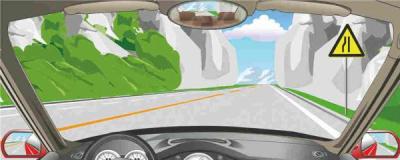
Answer:N
4、When driving on a road covered with ice and snow, the motor vehicle may spin or slide when increasing the speed urgently, due to the loss of vehicle stability.
Answer:Y
5、When the windscreen of a motor vehicle on the highway is cracked by flying rocks or debris which makes visibility poor, the driver should reduce speed gradually, turn on the hazardlamps, drive to a place where it will not obstruct the traffic flow and stop there.
Answer:Y
6、The sign on the right warns for children on the section ahead.
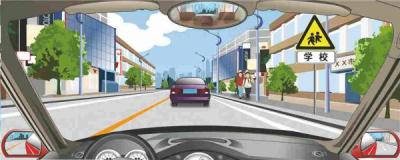
Answer:Y
7、When a motor vehicle moves through water, drivers should intermittently and gently depress the brake pedal in order to restore braking efficiency.
Answer:Y
8、What should the driver do when seeing these hand signals?
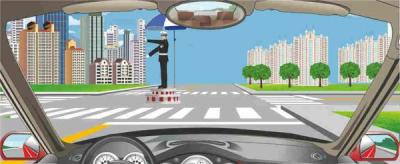
A、Go straight and pass through the intersection
B、Stop in front of the stop-line and wait
C、Turn left at the intersection
D、Drive at a lower speed at the intersection
Answer:C
9、Motor vehicle drivers may borrow a special lane for other vehicle types, if one exists, to overtake.
Answer:N
10、What should the driver do upon seeing this sign?
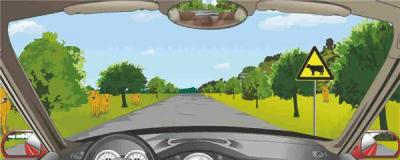
A、Slow down, look and pass slowly
B、Sound the horn to drive them away
C、Go through from the spaces between animals
D、Drive slowly and drive them away from the motor venicle
Answer:A
11、What is the intersection ahead indicated by the right sign?
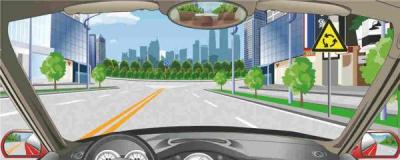
A、T-shaped intersection
B、Y-shaped intersection
C、Cross-shaped intersection
D、Roundabout
Answer:D
12、A motor vehicle should not obstruct other vehicles when it enters the driving lane from an acceleration lane.
Answer:Y
13、Motor vehicle drivers should use the windscreen wiper when setting off on a rainy day
Answer:Y
14、The motor vehicle may promptly overtake the vehicle in front from the left side in this situation.
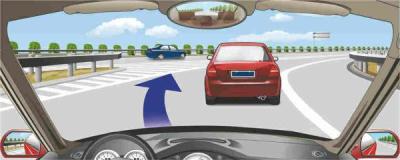
Answer:N
15、When a motor vehicle needs to stop for inspection after having an accident on an expressway, where should the driver park?
A、On the far outer lane
B、On the inner lane
C、On the emergency lane
D、In the triangle area on the ramp
Answer:C
16、After a tire bursts and before the driver can control the speed of the vehicle, he/she should not risk using the foot brake to stop the vehicle. Otherwise, a horizontal swing of the vehicle can cause greater danger.
Answer:Y
17、How should lamps be used when motor vehicle drivers pass through a two-way tunnel?
A、Turn on the hazard lamps
B、Turn on the high-beam
C、Turn on the fog lamp
D、Turn on the low-beam
Answer:D
18、Which one of the following is a safe way for motor vehicles to converge into an intersection marked with this sign?
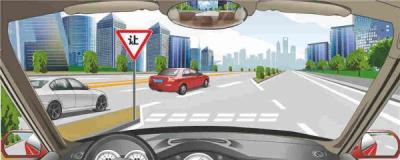
A、Speeding up and driving into the traffic flow directly
B、Driving into the traffic flow behind the gray car on the main road
C、Driving into the traffic flow from the front of the red car on the main road
D、Turning on the indicator and driving into the flow directly
Answer:B
19、The sign on the right indicates that turning right is not permitted at the intersection ahead.
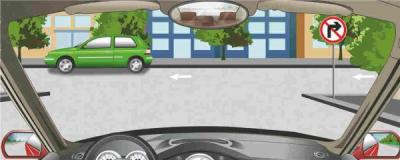
Answer:Y
20、A driver should speed up when passing through road sections with this traffic marking.
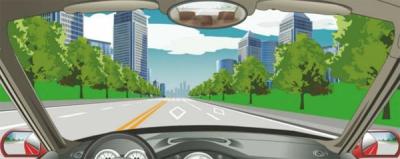
Answer:N
21、The cross-hatched marking indicates an area where vehicle drivers are allowed to stop and wait.
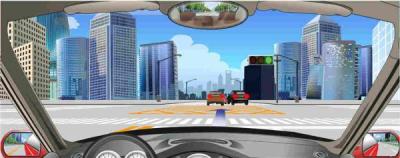
Answer:N
22、On a mountain road, what should the driver do in this situation?
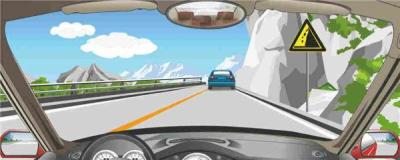
A、Drive on the left and speed up to bypass
B、Stop to observe and pass slowly
C、Observe closely and pass as soon as possible
D、Sound the horn several times and pass slowly
Answer:C
23、The sign on the right warns for disabled people ahead.
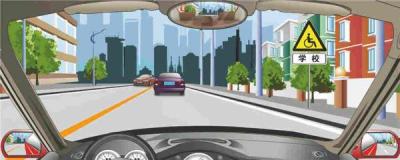
Answer:Y
24、When driving in a strong wind, drivers should abruptly turn the steering wheel to return to the original direction if they feel the vehicle deviates horizontally due to a strong gale.
Answer:N
25、A motor vehicle may stop and yield if it encounters any problem when changing to the driving lane from an acceleration lane.
Answer:N
26、When encountering a vehicle in front ascending on a mountainous road covered with ice and snow, what should the motor vehicle driver do?
A、Ascend after the vehicle in front passes the slope
B、Overtake the vehicle in front swiftly and drive on
C、Overtake the vehicle in front with a slow speed and drive on
D、Follow the vehicle in front closely
Answer:A
27、When a bicycle occupies the motor vehicle lane and obstructs the traffic, the driver should sound the horncontinuously and speed up to bypass on the left of the bicycle.
Answer:N
28、What should the driver do when the motor vehicle counters this situation?
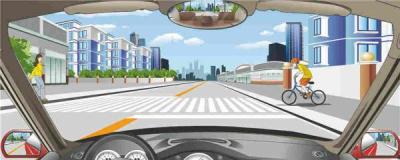
A、Sound the horn continuously to warn
B、Speed up and bypass from the front
C、Slow down when encountering any risks
D、Slow down voluntarily and yield
Answer:D
29、How to reduce speed or stop when driving on a road covered with snow and ice?
A、Take full advantage of driving brake
B、Take full advantage of the control power from engine
C、Take full advantage of parking brake
D、Take full advantage of speed retarder
Answer:B
30、The sign on the right indicates a one-kilometer distance from the ETC toll station.
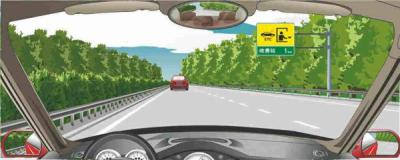
Answer:Y
31、When a motor vehicle slides sideways on a road covered by ice and snow, the driver should violently turn the steering wheel to adjust the direction.
Answer:N
32、The guide arrow on the road surface of this lane indicates that only U-turns are permitted at the intersection ahead.
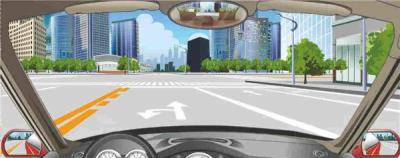
Answer:N
33、Drivers may turn left when seeing these hand signals.
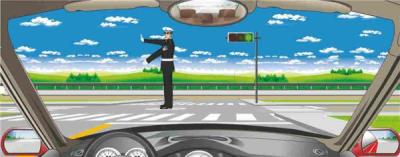
Answer:Y
34、When encountering a school bus which stops at the right roadside and students are embarking or disembarking, and there is only one motor vehicle lane in each direction, motor vehicle drivers behind the bus should stop and wait.
Answer:Y
35、Once inflammable gas causes a fire disaster, it should be put out with water in good time.
Answer:N
36、When a motor vehicle has deviated from the straight moving direction and an accident is unavoidable, the driver should decisively and continuously depress the brake pedal so as to shorten the stopping distance and reduce the impact of vehicle collision.
Answer:Y
37、When there is bleeding at the bone fracture of a wounded person, the first thing to do is to fix the wounded part in position, then stop the bleeding and dress the wound.
Answer:N
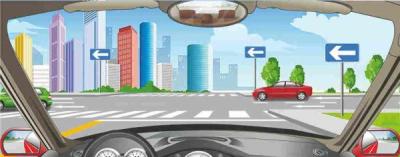
38、The sign in front indicates a one-way lane after turning left.
Answer:Y
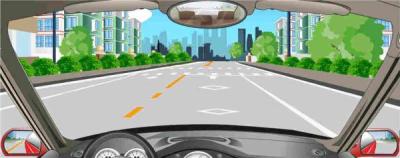
39、The diamond-shaped sign on the road indicates a crosswalk on the road ahead.
Answer:Y
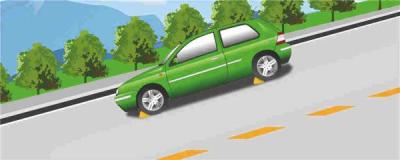
40、When parking for a long time on a downward slope due to breakdown on the road, drivers should use this method to stop up wheels.
Answer:Y
41、When driving on a muddy road, what should drivers do if the wheels spin and slide?
A、Cover the ground under the wheels with gravels
B、Change to a high gear and speed out
C、Cover the ground under the driving wheels with gravels
D、Violently turn the steering wheel and suddenly leed up
Answer:C
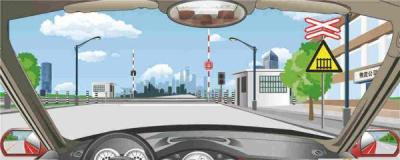
42、This sign warns of an intersection of railways and highways ahead.
Answer:Y
43、The sign on the right indicates a passing bay ahead.
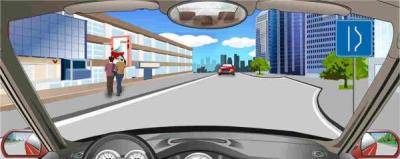
Answer:Y
44、How should motor vehicle drivers make a U-turn at the intersection ahead?
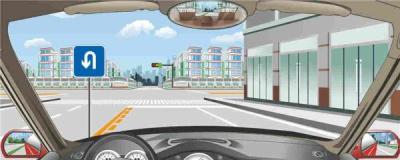
A、Make a U-turn in the waiting area for turning left
B、Make a U-turn at the broken line area of the Intersection
C、Wait until the left-turn indicator is on
D、Wait until the straight-going signal is on
Answer:B
45、As shown in this picture, the intersection guide line is designed to help drivers make turns.
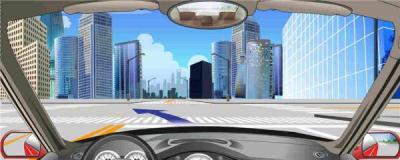
Answer:Y
46、The main impact of muddy roads on safe driving is that the wheels may easily spin and skid
Answer:Y
47、The white zig-zag line on the highway serves as a reference for the speed of a driver.
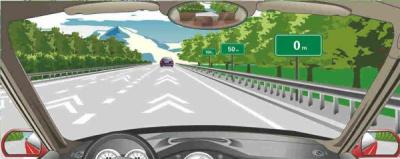
Answer:N
48、Under such circumstances, what should motor vehicle drivers do?
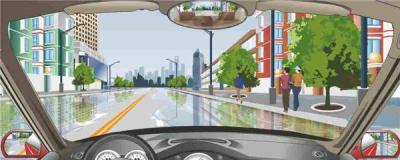
A、Pass slowly at a lower speed
B、Speed up and pass
C、Continuously sound the horn and pass
D、Pass at a normal speed
Answer:A
49、The stop-and-yield line at the intersection ahead indicates that vehicle drivers should reduce speed and give the right of way to vehicles on the trunk road.
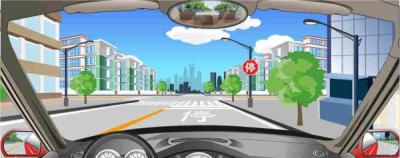
Answer:N
50、Mr. Qian drove a large sleeper coach with 45 passengers (capacity 40 people) at a speed of more than 40 kilometers per hour. On a long slope with sharp curves in Basu County, the coach fell into a 100-meter-deep valley, killing 17 people and injuring 20. What's the main illegal act committed by MrQian?
A、Making a cellphone call while driving
B、Speeding
C、Carrying more people than permitted
D、Fatigued driving
Answer:BC
- 甘肃驾考科目四英语版PDF 相关内容
- 外国人考科目一 英文 安徽只认识英文可以考科目一吗 吉林英文驾考科目4 西藏驾考科目一英文版题库 海南2025科目一考试英文 江西驾考科目四英语版书 内蒙古只认识英文可以考科目一吗 浙江英文驾考app 甘肃外国人考驾照英文模拟试题 安徽科目四考试英文版 外国驾照考试那些项目 陕西英文驾考科目4 云南驾考科目一英文版题库 北京英文驾考app 陕西英文驾考科目四app 四川驾考有英文版吗
Copyright © 2025 驾考 版权所有