
- 科目一考试
- 顺序练习
- 随机练习
- 强化练习
- 模拟考试
- 科目四考试
- 顺序练习
- 随机练习
- 强化练习
- 模拟考试
- 外国语言版题库
- 英语题库
- 德语题库
- 韩语题库
- 日语题库
- 俄语题库
- 法语题库
- 西班牙语题库
- 阿拉伯语题库
- 摩托车英文题
陕西科目四英文版练习题库
-
1、Under such circumstances, motor vehicle drivers should stop and yield
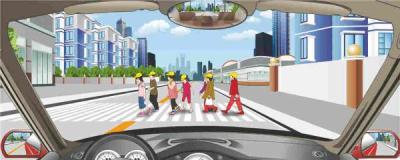
Answer:Y
2、At 3: 40 a.m. one day, Mr. Sun drove a large bus with 54 passengers(capacity 55 people). At the spot of 229 kilometers mark by 300 meters on Suiyue Expressway, the bus had a rear-end collision with a heavy semi-trailer driven by Mr. Li when passengers were getting off from the bus. As a result of the accident, 26 people were killed and 29 injured. According to the investigation afterwards, Mr. Li had been driving the bus since he left the place of departure at 6 p.m. the day before without any rest. What are the main illegal acts of the two drivers?
A、Mr. Sun illegally parked
B、Mr. Sun carried more passengers than permitted
C、Mr. Li exceeded speed limit
D、Mr. Li kept driving when tired
Answer:AD
3、Motor vehicles are prohibited from driving straight or turning left in this situation.
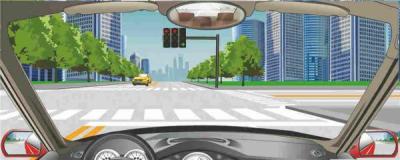
Answer:Y
4、When removing a wounded person suffering spinal fracture, the rescuer should never help the wounded person to walk. He may be carried away with a soft stretcher.
Answer:N
5、When there is a sudden braking failure on the road, what should be done by the driver?
A、Firmly holding the steering wheel and controlling the direction
B、Immediately changing to a low gear to reduce speed
C、Using the stopping brake to reduce speed
D、Turning on the hazard lamps
Answer:ABCD
6、The guide arrow on the road surface of this lane indicates that only left and right turns are permitted on the lanes ahead.
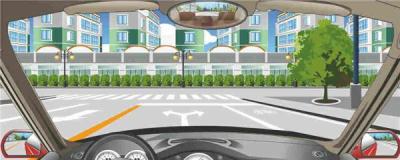
Answer:Y
7、How to ensure motor vehicles have sufficient power when driving uphill?
A、Downshift before reducing speed
B、Downshift after reducing speed
C、Downshift when the speed is excessively low
D、Downshift to the fullest extent
Answer:A
8、What should be done by motor vehicle drivers in order to yield politely to such pedestrians?
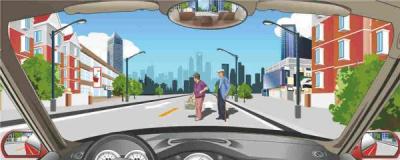
A、Speed up and bypass in front of the pedestrians
B、Speed up and bypass from behind the pedestrians
C、Reduce speed or stop to yield
D、Continuously sound the horn to alert the pedestrians
Answer:C
9、How many kinds of law-breaking acts are displayed in flash 1?
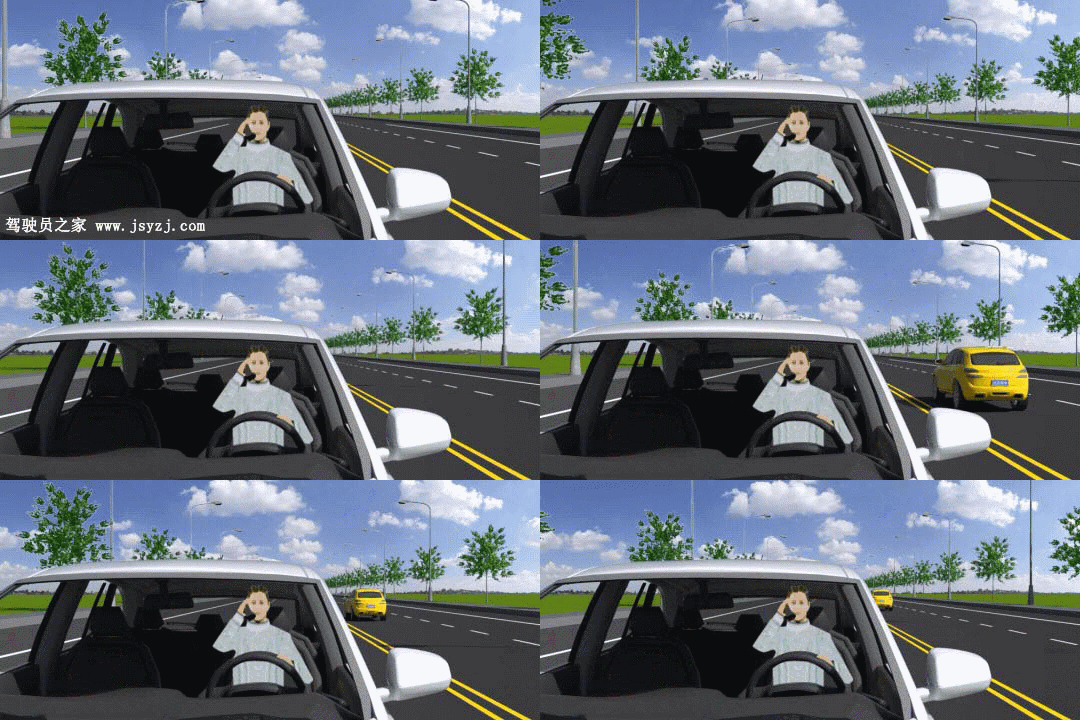
A、One
B、Two
C、Three
D、Four
Answer:B
10、What should a driver do before entering a tunnel on an expressway
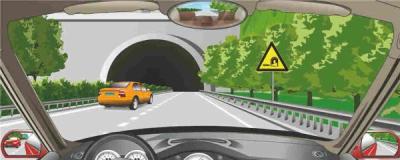
A、Turn on the high-beam
B、Turn on the width lamp and the tail lamp
C、Turn on the low-beam
D、Sound the horn before entering the tunnel
Answer:C
11、The sign on the right warns of low-lying road ahead.
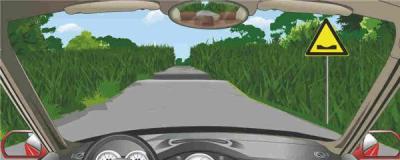
Answer:Y
12、If a motor vehicle encounters a strong side wind when it leaves the opening of an expressway tunnel, what will happen?
A、A feeling of deceleration
B、A feeling of acceleration
C、A feeling of pressure
D、Deviation in direction
Answer:D
13、Under this circumstance, motor vehicle drivers should not reduce speed.
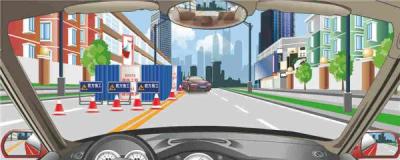
Answer:N
14、When approaching the turning point of a road, in which of the following ways will motor vehicle drivers easily cause a traffic accident?
A、Driving ahead by occupying the opposite lane
B、Turning the steering wheel quickly when passing through the curve
C、Not reducing speed until driving onto the curve
D、Driving by the right side
Answer:ABC
15、When there is bleeding at the bone fracture of a wounded person, the first thing to do is to fix the wounded part in position, then stop the bleeding and dress the wound.
Answer:N
16、What should be done first after getting into the vehicle?
A、Observe the surrounding traffic situation
B、No need to observe the traffic situation around
C、Open the door and get in directly
D、Take note of the weather
Answer:A
17、Under such circumstance at an intersection. motor vehicle drivers should be prepared to stop and yieldat any time.
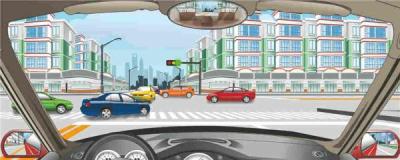
Answer:Y
18、The sign on the right indicates that driving along left side only.
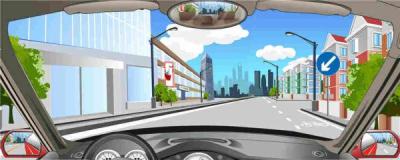
Answer:Y
19、What should be done by drivers in order to safely pass through the curve in this condition?
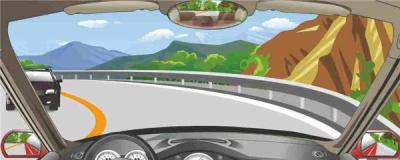
A、Reduce speed and drive o the right side
B、Drive on the central line of the road
C、Drive on the outer side of the curve
D、Drive by borrowing the opposite lane
Answer:A
20、If a motor vehicle misses an exit on the expressway, the driver may reverse along the road shoulder.
Answer:N
21、In such circumstances, which one of the following statements is the safest measure for a motor vehicle driver to take?
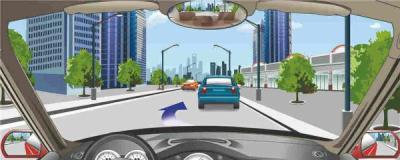
A、Accelerate to overtake the vehicle in front as soon as possibl
B、Voluntarily reduce speed and refrain from overtaking
C、Sound the horn to warn the vehicle in front to yield
D、Turn on the headlamp to warn the oncoming vehicle to yield
Answer:B
22、When extinguishing a fire, the driver should refrain from breathing through mouth or crying loudly Otherwise, the fire and smoke will scorch the upper respiratory tract.
Answer:Y
23、When a motor vehicle passes over an inundated road, what should the driver do for safe driving?
A、Slow down and drive with special care
B、Speed up and pass rapidly
C、Maintain a normal speed and pass through
D、Change to a low gear and speed up to pass
Answer:A
24、What should the driver do if the back wheel slides to the right on a muddy road?
A、Continuously speed up
B、Turn right
C、Turn left
D、Apply emergency brake
Answer:B
25、When there is no bandage for rescuing a wounded person, towels, handkerchiefs, bed sheets and stockings can all be used for dressing.
Answer:Y
26、Motor vehicles should accelerate when driving into an intersection with this traffic signal.
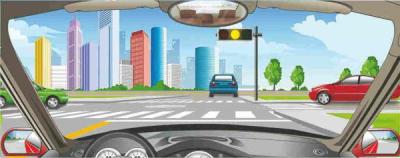
Answer:N
27、When driving on a foggy day, the driver should turn on the fog lamp.
Answer:Y
28、The sign on the right warns of a guarded crossing 150 meters ahead.
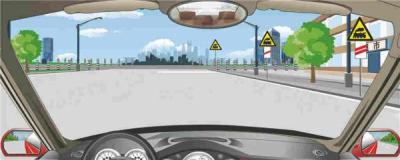
Answer:N
29、What should the driver do when seeing these hand signals?
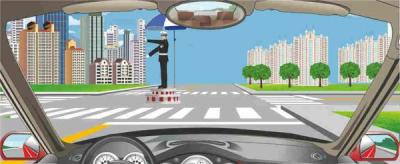
A、Go straight and pass through the intersection
B、Stop in front of the stop-line and wait
C、Turn left at the intersection
D、Drive at a lower speed at the intersection
Answer:C
30、When a motor vehicle breaks down on an expressway and cannot be moved away from the driving lane, the driver may conduct emergency repairs on the driving lane.
Answer:N
31、Which one of the following ways to pass this intersection is correct?
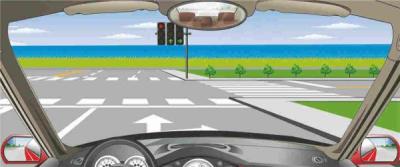
A、Turn left or right
B、Drive straight or turn left
C、Turn left
D、Drive straight or turn right
Answer:D
32、When there is a braking failure on a downhill road, if there is no other alternative, the driver may rub the vehicle body against the rocks and trees on roadside to force the vehicle to slow down and stop.
Answer:Y
33、Mr. Tang drove a large bus with 74 passengers (capacity 30 people). When descending a long curving slope at a speed of 38 kilometers per hour, the bus overturned to a brook beside the road. As a result of the accident, 17 people were killed and 57 people injured. What's the main illegal act committed by Mr. Tang?
A、Driving after drinking
B、Carrying more passengers than permitted
C、Fatigued driving
D、Speeding
Answer:BD
34、The broken white line on the right side of the road indicates that drivers are allowed to change lanes by crossing the line.
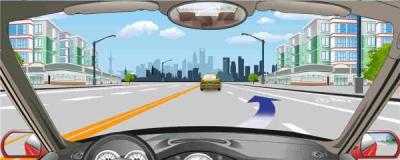
Answer:Y
35、The right-front sign indicates a time-regulated pedestrian area.
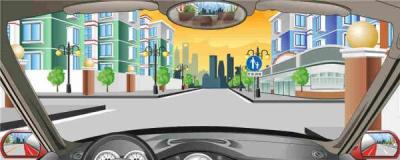
Answer:Y
36、Mr Li drove a large bus with 21 passengers( capacity 35 people). He found the braking system was abnormal on the way but failed to repair it. When running on the Shuangdao Haiwan Bridge at a speed of 50 kilometers per hour(speed limit 40 km/h), the bus fell into the sea due to a braking system failure, killing 13 people and injuring 8. What's the main illegal act committed by Mr Li?
A、Speeding
B、Fatigued drivin
C、Carrying more passengers than permitted
D、Driving a motor vehicle with potential safety hazard
Answer:AD
37、When a motor vehicle breaks down and cannot be moved away from the emergency lane or the road shoulder, the driver and all passengers should get off the vehicle and wait on the road side instead of leaving the expressway.
Answer:N
38、If the road condition behind is good, motor vehicle drivers should reverse rapidly.
Answer:N
39、When rescuing a wounded person in coma causing by excessive blood loss, it is necessary to take measures to prevent heat loss.
Answer:Y
40、When a bicycle occupies the motor vehicle lane and obstructs the traffic, the driver should sound the horncontinuously and speed up to bypass on the left of the bicycle.
Answer:N
41、When a motor vehicle passes over an inundated road the driver should change to a low gear and pass at a constant speed.
Answer:Y
42、The leading cause of this accident is that the driver failed to make sure that it was safe to reverse before doing so.
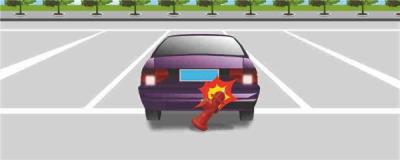
Answer:Y
43、Which one of the following vehicle types is not allowed to pass, as indicated by the right-hand sign?
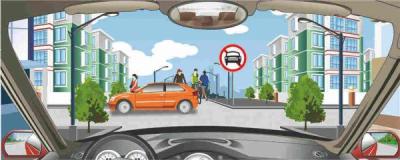
A、Large trucks
B、Large buses
C、Motor vehicles of all kinds
D、Small vans
Answer:C
44、Mr. Zou drove a large sleeper coach (capacity 35 people and carrying 47 passengers). At the spot of 938 kilometers of the Jinggang'ao Expressway, large amounts of dangerous chemicals in the coach blew up, killing 41 people and injuring 6. What are the main illegal acts in this case?
A、Carrying more passengers than permitted
B、Passengers carried flammable and explosive substances
C、Speeding
D、Illegal parking
Answer:AB
45、When the motor vehicle stops on a downhill section how should the driver use the foot brake?
A、Earlier than on a level road
B、Later than on a level road
C、As timely as on a level road
D、Gently depress the foot brake pedal
Answer:A
46、The sign in front indicates the name and number of the highway.
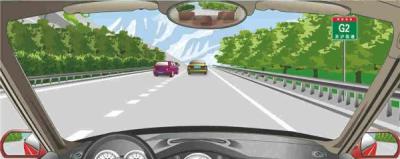
Answer:Y
47、The sign on the right warns of a road section ahead under construction.
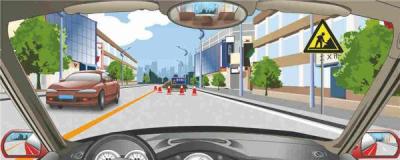
Answer:Y
48、After a motor vehicle falls into water, the driver won't be able to open the side doors or windows to escape until water nearly fills up the compartment.
Answer:Y
49、If a motor vehicle experiences a "water sliding" phenomenon when running on an expressway in rain, what should the driver do?
A、Slow down by suddenly depressing the brake pedal
B、Slow down by slowly releasing the accelerator pedal
C、Turn the steering wheel immediately to adjust the direction
D、Speed up to increase the displacement of the wheels
Answer:B
50、What's the meaning of the sign on the right?
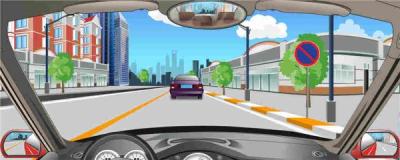
A、Long-time parking permitted
B、Temporary parking permitted
C、Long waiting for passengers permitted
D、No parking
Answer:B
- 陕西科目四英文版练习题库 相关内容
- 重庆英文版驾考 安徽驾考科目四英语版PDF 西藏科目四英文版 辽宁2025英文驾考PDF题库 辽宁英语c1科目四考试 安徽外国人考驾照英文模拟试题 内蒙古科目一英文版模拟 陕西科目四英文版在哪里找 江苏考驾照的英文单词 黑龙江驾考英语版题库book 新疆外国人考科目一 英文 青海考驾照科目四有英文版 海南英语c1科目四考试 老外考驾照需要准备什么东西和材料 海南驾校考试英文版 陕西2025科目四英文版
Copyright © 2025 驾考 版权所有