
- 科目一考试
- 顺序练习
- 随机练习
- 强化练习
- 模拟考试
- 科目四考试
- 顺序练习
- 随机练习
- 强化练习
- 模拟考试
- 外国语言版题库
- 英语题库
- 德语题库
- 韩语题库
- 日语题库
- 俄语题库
- 法语题库
- 西班牙语题库
- 阿拉伯语题库
- 摩托车英文题
浙江科目四英文版题目
-
1、When driving a vehicle equipped with power steering what should the driver do upon finding that steering is difficult?
A、Stop and identify the cause
B、Control the steering and drive slowly
C、Drive at a lower speed
D、Keep the vehicle going straight
Answer:A
2、When a motor vehicle skids sideways on a muddy road, the driver should turn the steering wheel in the direction of the rear wheel skidding to properly adjust the direction.
Answer:Y
3、The sign on the left indicates that drivers should stop to take a pass card at the toll station ahead.
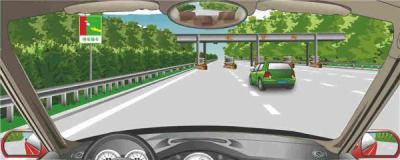
Answer:Y
4、When steering failure happens suddenly, if the road condition permits straight movement, drivers should not apply emergency braking.
Answer:Y
5、If a motor vehicle experiences a "water sliding" phenomenon when running on an expressway in rain, what should the driver do?
A、Slow down by suddenly depressing the brake pedal
B、Slow down by slowly releasing the accelerator pedal
C、Turn the steering wheel immediately to adjust the direction
D、Speed up to increase the displacement of the wheels
Answer:B
6、The sign on the right indicates an inspection station 100 meters ahead.
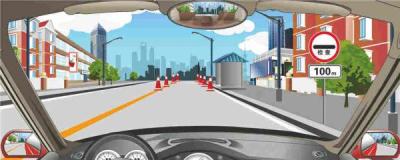
Answer:Y
7、The area in the yellow rectangle markings on the right side of the road indicates that temporary stopping is permitted here.
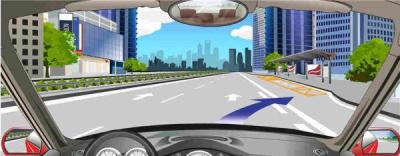
Answer:N
8、The sign on the right warns of a narrowed road on both sides ahead.
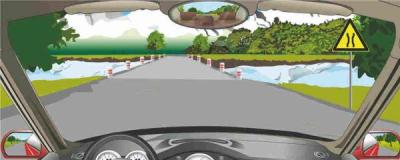
Answer:N
9、What should be done by the driver who intends to overtake but the motor vehicle in front neither reduces its speed nor allows the right of way?
A、Continuously sounding the horn and accelerating to overtake
B、Accelerating and continuing to overtake
C、Refraining from overtaking
D、Following the vehicle in front closely and finding a chance to overtake
Answer:C
10、The sign on the right warns of an embankment road 200 meters ahead.
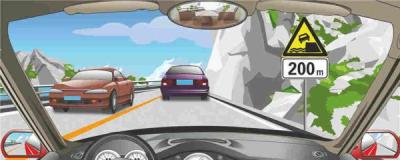
Answer:Y
11、When a tire bursts suddenly on the road, the driver should refrain from violently depressing the brake pedal in panic. Instead, he/she should try his/her best to change to a low gear and use engine braking to reduce the speed of the vehicle.
Answer:Y
12、When a motor vehicle moves through water, the driver should try to maintain a constant speed and sufficient power and pass through without stopping.
Answer:Y
13、When a motor vehicle enters an expressway from the ramp, which of the following lamps should be turned on?
A、The left-turn indicator
B、The right-turn indicator
C、The hazard warning lamp
D、The headlamp
Answer:A
14、Which of the following is an inflammable solid material?
A、Matches
B、Gun powder
C、Calcium carbide
D、Explosives
Answer:A
15、When a motor vehicle passes over an inundated road drivers should change to a high gear and pass rapidly.
Answer:N
16、The sign on the right warns of low-lying road ahead.
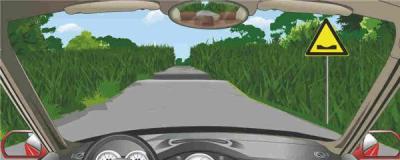
Answer:Y
17、What matters need attention when driving on a rainy day?
A、Avoid using the emergency brake or making sharp turns
B、Keep a safe enough distance
C、Observe the traffic situation of non-motor vehicles and surrounding pedestrians
D、Drive at a safe speed
Answer:ABCD
18、The sign on the right warns of a one-way tunnel ahead.
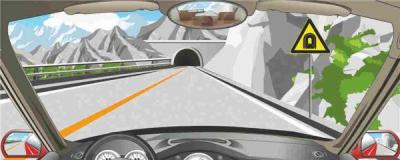
Answer:N
19、The sign on the right indicates a bypass route at the intersection ahead.
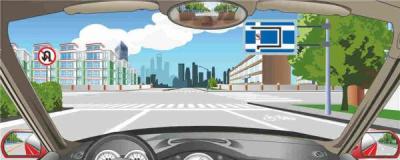
Answer:Y
20、When the wounded person is suffering main artery bleeding, where should the rescue personnel press by thumb to stop the bleeding?
A、The artery near the heart
B、The artery lower to the wound
C、The artery further from the heart
D、The artery in the center of the wound
Answer:A
21、The sign on the right warns of right-hand S-shaped bend ahead.
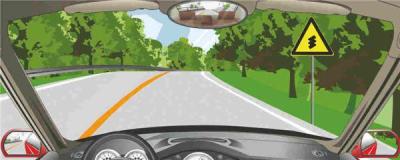
Answer:N
22、The sign on the right indicates that driving along left side only.
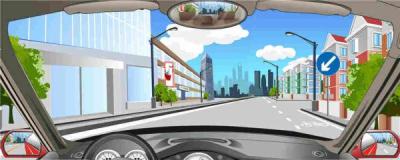
Answer:Y
23、When this signal is constantly flashing, how should a driver react?
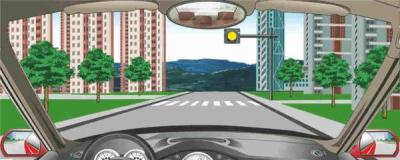
A、Speed up as soon as possible
B、Pull over and wait
C、Observe the traffic situation around to make sure of safe driving
D、Refrain from passing
Answer:C
24、The sign on the left warns of no passing on the right-hand road ahead.
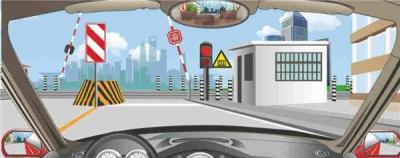
Answer:N
25、Before making a U-turn at the intersection ahead, motor vehicle drivers should drive to the lane for turning left and going straight.
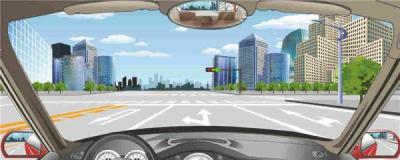
Answer:N
26、The sign on the right warns of children on the section ahead.
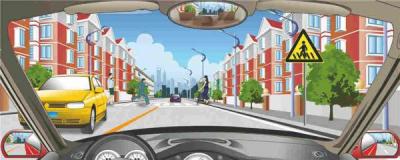
Answer:N
27、Motor vehicles are permitted to follow the guidance of the arrow in this picture and enter the lane of an expressway.
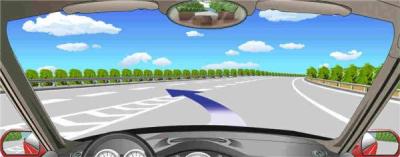
Answer:N
28、When encountering such a situation, motor vehicle drivers should take the left lane.
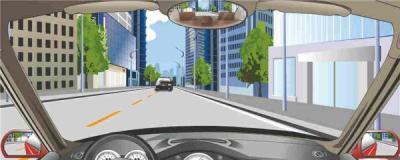
Answer:N
29、The driver may turn right directly at this intersection.
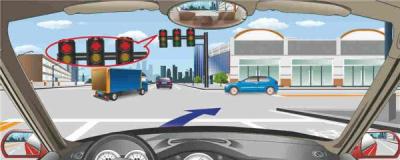
Answer:N
30、The motor vehicle equipped with ABS may sideslip during an emergency brake.
Answer:Y
31、As shown in the flash, the motor vehicle chooses a correct way to pass through the level crossing.
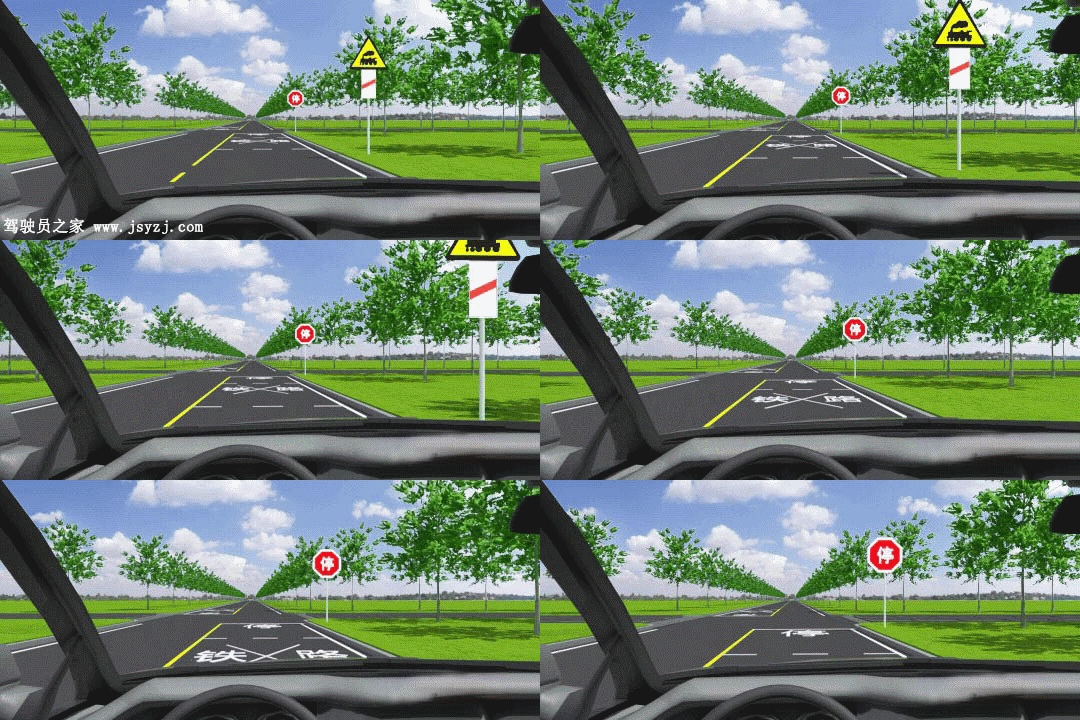
Answer:Y
32、What should the driver do on this kind of curving mountain road?
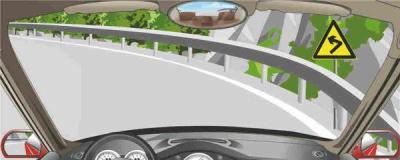
A、Borrow the opposite lane
B、Slow down and drive on the right
C、Stick to the central line of the road
D、Drive close to the right side
Answer:B
33、Under such circumstances, motor vehicle drivers may sound the horn at the proper time and speed up to pass through.
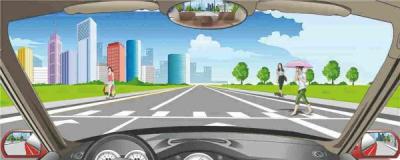
Answer:N
34、Which of the following acts are prohibited when passing through a tunnel?
A、Overtaking
B、Stopping
C、Making a U-turn
D、Reversing
Answer:ABCD
35、The sign on the right indicates a T-shaped intersection head.
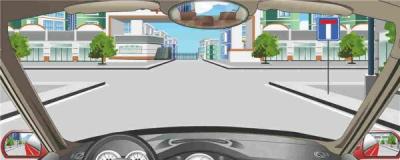
Answer:N
36、When driving on an expressway, drivers should not frequently change lanes.
Answer:Y
37、The sign on the right indicates a passing bay ahead.
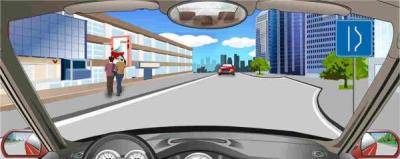
Answer:Y
38、As shown in this picture, the intersection guide line is designed to help drivers make turns.
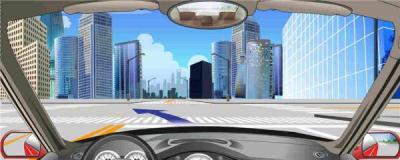
Answer:Y
39、Which one of the following statements is correct in this situation?
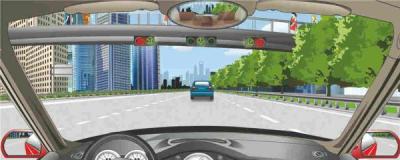
A、Vehicles are prohibited from passing in the lanes on either side
B、Move into the lane on either side at a reduced speed
C、Move into the lane on the right side
D、Move into the lane on either side at an increased speed
Answer:A
40、What should be done by drivers in order to drive safely on the road in this condition?
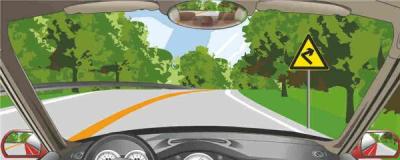
A、Make a large turn on the left side of the road
B、Make a turn on the central line of the curve
C、Make a small turn on the right side of the road
D、Make a turn by borrowing the opposite lane
Answer:C
41、What should motor vehicle drivers do when going straight and passing through the intersection ahead?
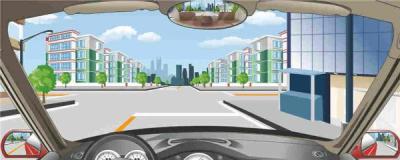
A、Reduce speed when approaching the intersection
B、Reduce speed after entering the intersection
C、May pass through the intersection without speed reduction
D、Accelerate in advance to pass through the intersection
Answer:A
42、The braking distance will be shortened greatly when the motor vehicle is equipped with ABS brakes.
Answer:N
43、When driving on an expressway, where should the driver park?
A、The service area
B、The acceleration lane
C、The deceleration lane
D、On the ramp
Answer:A
44、When encountering this situation on a mountainous road, motor vehicle drivers should overtake the vehicle in front by speeding up.
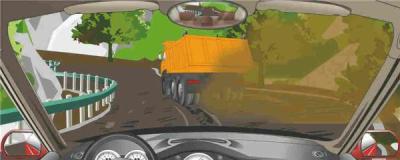
Answer:N
45、Motor vehicles should stop and wait when encountering two red lights flashing alternately at evel crossings.
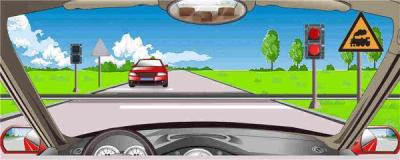
Answer:Y
46、When evading an emergency, except for being calm what principle should be held by drivers?
A、Evading people first and then objects
B、Evading objects first and then vehicles
C、Evading vehicles first and then people
D、Evading objects first and then people
Answer:A
47、Mr. Tao drove a midsize bus with 33 passengers. At the spot of 163 kilometers on the South Xuping Expressway, the bus clashed at a speed of 120 kilometers per hour with Mr. Ans minibus parked without any warning signs on the inside lane, due to breakdown after an accident. The midsize bus overturned after collided with the guardrail on the right-hand side. As a result of the accident, 16 people were killed and 15 injured. What are the main illega acts of the two drivers?
A、Mr. Tao carried more passengers than permitted
B、Mr. Tao exceeded speed limit
C、Mr. An failed to place any warning signs in accordance with relevant stipulations
D、Mr. An was illegally parked
Answer:ABC
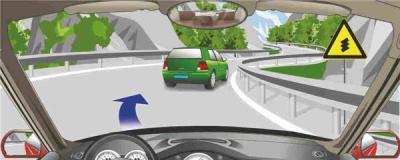
48、Motor vehicle drivers are allowed to overtake as long as there are no oncoming vehicles.
Answer:N
49、When there is no bandage for rescuing a wounded person, which of the following measures is wrong?
A、Dress the wounds with a handkerchief
B、Dress the wounds with a towe
C、Dress the wounds with cotton clothes
D、Dress the wounds with string
Answer:D
50、When driving, besides paying attention to keeping a safe distance from the vehicle in front, drivers should also be prudent when braking so as to avoid a rear-end collision caused by a vehicle behind.
Answer:Y
- 浙江科目四英文版题目 相关内容
- 黑龙江驾考英语版题库book 湖北英文驾考科目四题库PDF电子版 江苏英语c1考试 江苏英文版考驾照 老外考中国驾照难吗 河北驾考科目三英文 新疆驾考科目四英语版书 湖北驾照科目一英文版题库 青海外国人考科目四 英文 江苏驾考科目一英语版PDF题库 西藏英文考驾照用语 北京驾照考试科目一英文版 辽宁科目四考题英文版 辽宁考驾照的英文单词 英语c1考试 云南驾考科目一英语版书
Copyright © 2025 驾考 版权所有