
- 科目一考试
- 顺序练习
- 随机练习
- 强化练习
- 模拟考试
- 科目四考试
- 顺序练习
- 随机练习
- 强化练习
- 模拟考试
- 外国语言版题库
- 英语题库
- 德语题库
- 韩语题库
- 日语题库
- 俄语题库
- 法语题库
- 西班牙语题库
- 阿拉伯语题库
- 摩托车英文题
江苏科目四英文版在哪里找
-
1、Gun powder, explosives and detonating powder belong to which of the following dangerous chemicals?
A、Oxidizing materials
B、Inflammable solid materials
C、Explosives
D、Self-igniting articles
Answer:C
2、Which one of the following measures is correct when a motor vehicle encounters this situation at night?
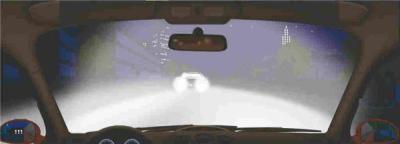
A、Keep driving at a normal speed
B、Drive at an increased speed to avoid light
C、Cut speed or stop to yield
D、Turn on high-beam to reject
Answer:C
3、When parking temporarily in this situation, motor vehicle drivers are allowed to turn the steering wheel right to avoid sliding.
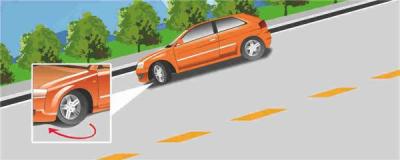
Answer:Y
4、When rescuing a wounded person suffering from bone fracture, which of the following should be kept in mind?
A、Immediately send him/her to the hospital on a stretcher
B、Properly change the original posture when the injured person wounded
C、Dress the fracture with a bandage
D、Do not move the fractured body-part
Answer:D
5、Motor vehicle drivers may reverse at an intersection.
Answer:N
6、When finding a tire burst on the road, the driver should gently depress the brake pedal, reduce speed and stop the vehicle slowly.
Answer:Y
7、The sign on the right warns of an abrupt slope section ahead.
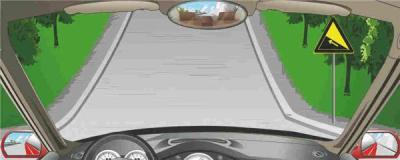
Answer:Y
8、When driving on a snowy day, drivers should follow the tracks on the road before them.
Answer:Y
9、Drivers may turn left when traffic police give these hand signals.
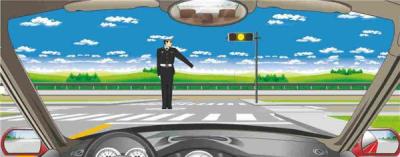
Answer:N
10、When a motor vehicle passes over an inundated road the driver should change to a low gear and pass at a constant speed.
Answer:Y
11、Mr. Qi drove a large bus with 28 passengers(capacit 55 people). When arriving at an intersection without any traffic signals from south to north at a speed of 50 kilometers per hour, the bus had a side collision with Mr. Li's heavy semi-trailer tractor (capacity 40 tons and carrying 55.2 tons) running from east to west. As a result of this accident, 12 people were killed and 17 injured. What are the main illegal acts in this case?
A、The bus carried more passengers than capacity
B、The bus exceeded the speed limit
C、The tractor carried more cargo than capacity
D、The driver of the tractor was inexperienced
Answer:BC
12、When a motor vehicle encounters this situation at a crosswalk, the driver must slow down and pass slowly.
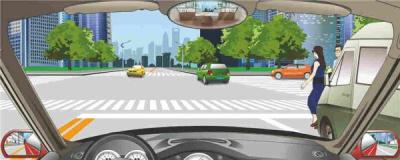
Answer:N
13、When a motor vehicle breaks down on an expressway and cannot be moved away from the driving lane, the driver may conduct emergency repairs on the driving lane.
Answer:N
14、The sign on the right warns of a ferry crossing 100 meters after turning right at the intersection ahead.
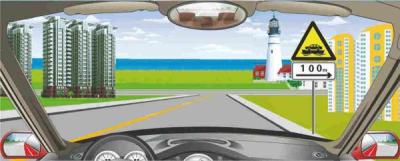
Answer:Y
15、When a motor vehicle passes over an overflowing bridge, what should the driver do after stopping and observing closely?
A、Change to a high gear and pass rapidly
B、Constantly observe the changes of the flow
C、Prepare to stop at any time
D、Change to a low gear and pass through at a constant speed
Answer:D
16、When a motor vehicle encounters thick fog on an expressway and the visibility is poor, the driver should immediately brake and stop.
Answer:N
17、When putting out a fire disaster that gives out corrosive steam or poisonous gas, the firefighters should wear gas masks and other related protective articles and operate from the windward side.
Answer:Y
18、When encountering this situation in a residential area the driver should speed up and pass in front of the bicycle.
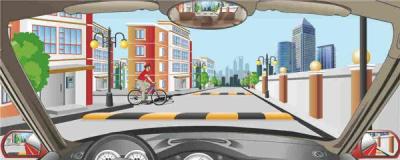
Answer:N
19、What should be checked before driving?
A、No parts need to be checked
B、Whether the tires have been cleaned
C、Where the spare tire is placed
D、The fastening and air pressure of tires
Answer:D
20、The drivers, loaders and supercargoes responsible for dangerous chemicals transportation should all full understand the chemical characteristics, potential risks, features of the packaging containers and emergency measures for any unexpected accidents.
Answer:Y
21、The sign on the right warns of a continuous downhill section ahead.
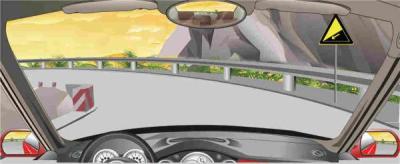
Answer:N
22、Under this circumstance, motor vehicle drivers should not reduce speed.
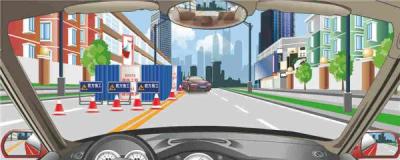
Answer:N
23、When rescuing a wounded person suffering blood loss in an emergency, it is necessary to first stop the bleeding by compression before other treatments are taken in accordance with the conditions of bleeding.
Answer:Y
24、The sign on the right indicates that no restriction for temporary parking.
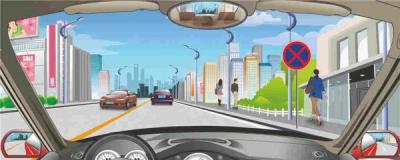
Answer:N
25、The sign on the right warns of a village or town ahead suggesting a 30km/hour speed.
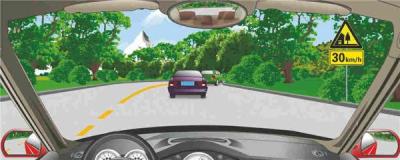
Answer:Y
26、The sign on the right warns of traffic signals ahead.
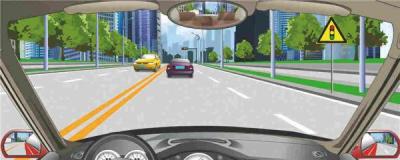
Answer:Y
27、The sign in front indicates a 4-kilometer distance from the next exit.
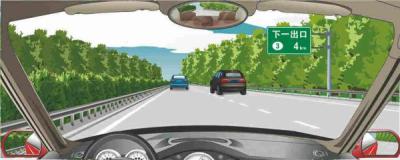
Answer:Y
28、Under such circumstance at an intersection. motor vehicle drivers should be prepared to stop and yieldat any time.
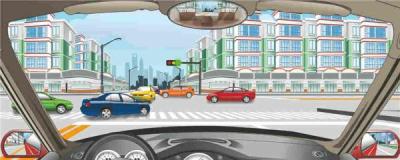
Answer:Y
29、The driver should turn on the left-turn indicator after entering the acceleration lane on an expressway.
Answer:N
30、What should the driver do if he/she encounters this situation at the intersection when driving straight?
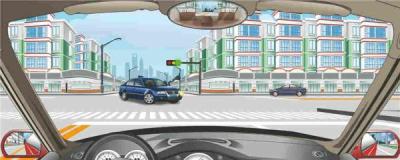
A、Sound the horn to warn the other vehicle to yield
B、Speed up and pass in the front of the vehicle
C、Turn on the headlamp to warn the other vehicle to yield
D、Slow down or stop to yield
Answer:D
31、Mr. Tao drove a midsize bus with 33 passengers. At the spot of 163 kilometers on the South Xuping Expressway, the bus clashed at a speed of 120 kilometers per hour with Mr. Ans minibus parked without any warning signs on the inside lane, due to breakdown after an accident. The midsize bus overturned after collided with the guardrail on the right-hand side. As a result of the accident, 16 people were killed and 15 injured. What are the main illega acts of the two drivers?
A、Mr. Tao carried more passengers than permitted
B、Mr. Tao exceeded speed limit
C、Mr. An failed to place any warning signs in accordance with relevant stipulations
D、Mr. An was illegally parked
Answer:ABC
32、The sign on the right indicates that vehicles from the primary road have priority.
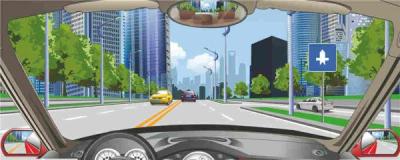
Answer:Y
33、Drivers may turn left when traffic police give these hand signals.
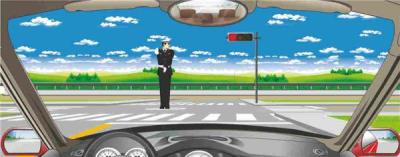
Answer:N
34、This road marker indicates that the minimum speed for this road section is 60 km/hour.
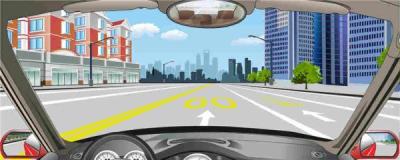
Answer:N
35、How to ensure motor vehicles have sufficient power when driving uphill?
A、Downshift before reducing speed
B、Downshift after reducing speed
C、Downshift when the speed is excessively low
D、Downshift to the fullest extent
Answer:A
36、The sign on the right warns of a widened right-hand road ahead.
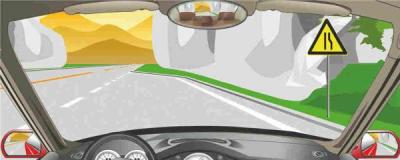
Answer:N
37、What should motor vehicle drivers do under such circumstances at night?
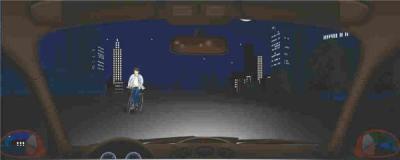
A、Turn off the headlamp when approaching
B、Use low-beam
C、Use high-beam
D、Turn off all lamps in advance
Answer:B
38、When temporarily parking on a raining day, what kind of lamp should the driver turn on?
A、Front and back fog lamps
B、Hazard warning lamp
C、Headlamp
D、Reversing lamp
Answer:B
39、Having driven a large passenger vehicle (carrying 44 passengers, permitted carrying capacity 44) equipped with sleepers at 44km/hour on a frozen road, at 58 km mark by 500m on 540 County Road in Yanhe County, Mr. Luo sideslipped and left the road, killing 15 people and injuring 2 7. Which of the following law-breaking acts did Mr Luo commit?
A、Exceeding the carrying capacity of the passenger vehicle
B、Speeding
C、Fatigued driving
D、Improper driving
Answer:B
40、When approaching motor vehicles ahead running at a normal speed on the highway, drivers behind may find a chance and weave through them swiftly.
Answer:N
41、When encountering this situation at the gate of a school, the driver should prepare to stop.
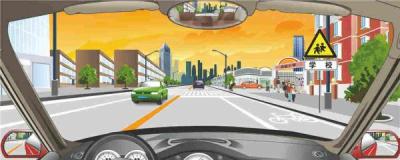
Answer:Y
42、When removing a wounded person suffering spinal fracture, the rescuer should never help the wounded person to walk. He may be carried away with a soft stretcher.
Answer:N
43、The guide arrow on the road surface of this lane indicates that only right turns are permitted at the intersection ahead.
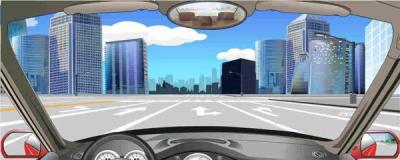
Answer:N
44、When the engine suddenly stalls on the road and cannot be restarted, the driver should apply emergency braking to force the vehicle to stop as fastas possible.
Answer:N
45、Mr. He drove his large bus with 53 passengers (permitted carrying capacity 47) to 454 km mark by 100m along the Yining-hefei Expressway in Nanjing jurisdiction, where he was tailgated by a heavy-type semitrailer tractor. The bus left the road, breaking through the guardrail and catching fire. 17 people were killed and 27 injured. Which of the following law-breaking acts did Mr. He commit?
A、Speeding
B、Exceeding the carrying capacity of the motor bus
C、Driving a motor vehicle overdue for annual inspection
D、Improper operation
Answer:B
46、Which one of the following is a safe way for motor vehicles to converge into an intersection marked with this sign?
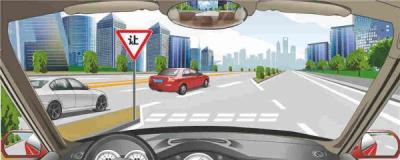
A、Speeding up and driving into the traffic flow directly
B、Driving into the traffic flow behind the gray car on the main road
C、Driving into the traffic flow from the front of the red car on the main road
D、Turning on the indicator and driving into the flow directly
Answer:B
47、Which one of following ways is the safest when driving a motor vehicle on this road?
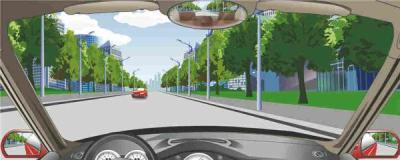
A、Driving along the central line of the road
B、Driving along the right side of the road
C、Driving at the middle of the road
D、Driving along the left side of the road
Answer:B
48、The sign on the right indicates an ETC lane at toll station ahead.
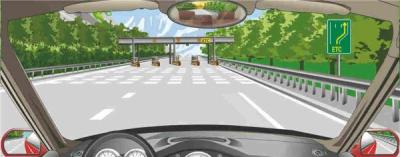
Answer:Y
49、When there is a sudden braking failure on the road, what should be done by the driver?
A、Firmly holding the steering wheel and controlling the direction
B、Immediately changing to a low gear to reduce speed
C、Using the stopping brake to reduce speed
D、Turning on the hazard lamps
Answer:ABCD
50、What should be done by drivers in order to drive safely on the road in this condition?
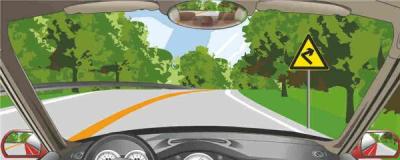
A、Make a large turn on the left side of the road
B、Make a turn on the central line of the curve
C、Make a small turn on the right side of the road
D、Make a turn by borrowing the opposite lane
Answer:C
- 江苏科目四英文版在哪里找 相关内容
- 陕西2025科目四英文版 河北科目四英文版模拟 天津科目一有英文版吗 江苏英文驾考app 江西外国人考科目一 英文 老外驾考电脑版下载安装最新版 陕西科目一英文版在哪里找 天津驾考科目三英文 浙江驾考科目一英文版题库 山东2025科目四考题英文版 江苏英文驾考PDF题库 四川外国人考驾照科目一 科目四英文版在哪里找 安徽驾考英语版题库book 外国人驾照考试题库下载软件安卓 内蒙古驾校考试英文版
Copyright © 2025 驾考 版权所有