
- 科目一考试
- 顺序练习
- 随机练习
- 强化练习
- 模拟考试
- 科目四考试
- 顺序练习
- 随机练习
- 强化练习
- 模拟考试
- 外国语言版题库
- 英语题库
- 德语题库
- 韩语题库
- 日语题库
- 俄语题库
- 法语题库
- 西班牙语题库
- 阿拉伯语题库
- 摩托车英文题
安徽驾考科目三英文
-
1、What should the driver do when the motor vehicle encounters this situation?
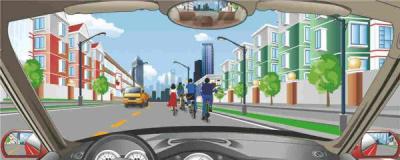
A、Overtake immediatel
B、Sound the horn continuously to warn
C、Maintain safety distance and overtake
D、Sound horn and speed up to overtake
Answer:C
2、Before setting off, it is necessary to check the driving cabin, engine cabin, external and tires of the motor vehicle.
Answer:Y
3、What should the driver do to follow other motor vehicles on a mountain road?
A、Closely follow the vehicle in front
B、Increase the safety distance
C、Reduce the vertical distance between vehicles
D、Try to overtake the vehicle in front as soon as possible
Answer:B
4、When driving on a foggy day, the driver should turn on the fog lamp.
Answer:Y
5、When going straight or turning right, drivers are not allowed to drive on or across the guide lines on both sides of the intersection.
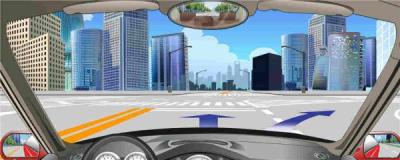
Answer:Y
6、The sign on the right warns that there are vehicles converging into the intersection on the right.
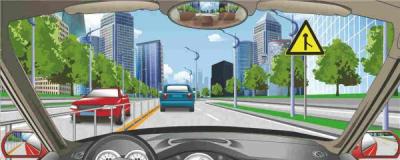
Answer:Y
7、It is not a bad habit for a driver to frequently change lanes.
Answer:N
8、When finding a tire burst on the road, the driver should use emergency braking while controlling the direction of the vehicle at the same time to stop the vehicle qulckly.
Answer:N
9、When driving on road sections where safe sight distance is affected, such as the top of a ramp, what should drivers do to ensure safety?
A、Rush through
B、Use hazard lamp
C、Cut speed and sound the horn
D、Drive at will
Answer:C
10、When driving in a residential area, the driver should not exceed the speed indicated by the speed limit sign.
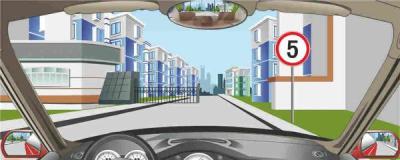
Answer:Y
11、As shown in this picture, the vehicles intending to turn left are not allowed to drive into left-turn waiting area directly to wait for green light.
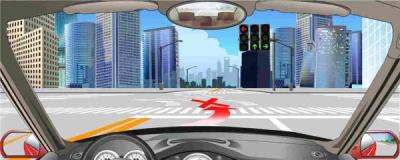
Answer:N
12、The sign on the right indicates to stop and yield for oncoming vehicles approaching on the road ahead.
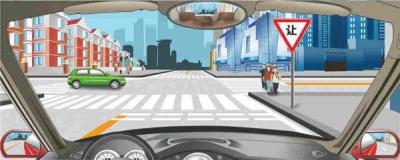
Answer:N
13、The sign on the right indicates that sounding the horn is prohibited here.
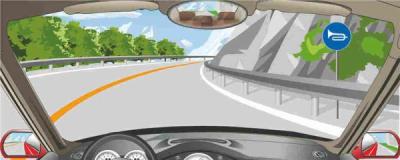
Answer:N
14、Crossing the broken white line on the right edge of the road is allowed.
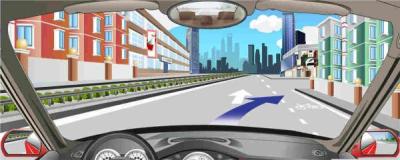
Answer:Y
15、When parking temporarily in this situation, motor vehicle drivers are allowed to turn the steering wheel left to avoid sliding.
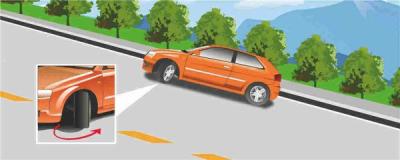
Answer:Y
16、Which of the following is an inflammable solid material?
A、Matches
B、Gun powder
C、Calcium carbide
D、Explosives
Answer:A
17、After a traffic accident, what is the most effective measure to prevent secondary accidents?
A、Evacuate all passengers
B、Turn on the hazard lamps
C、Mark the original place of the injured persons
D、Properly place the danger warning sign
Answer:ABD
18、When two vehicles approach each other on a foggy day, what is the best method of safe driving?
A、Turn on the high-beam
B、Slowdown and maintain a large safety distance
C、Turn on the low-beam
D、Turn on the fog lamp
Answer:B
19、The stop-and-yield line at the intersection ahead indicates that vehicle drivers should reduce speed and give the right of way to vehicles on the trunk road.
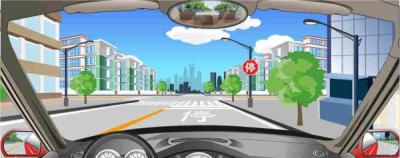
Answer:N
20、The sign on the right warns of three or more winding roads ahead.
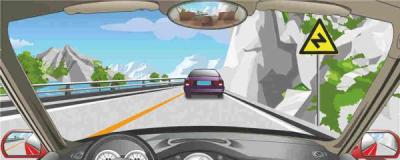
Answer:N
21、When a motor vehicle breaks down on an expressway and cannot be moved away from the driving lane, the driver may conduct emergency repairs on the driving lane.
Answer:N
22、Before a motor vehicle enters a tunnel, the driver should adjust the speed in accordance with the indication of the traffic sign at the entrance of the tunnel.
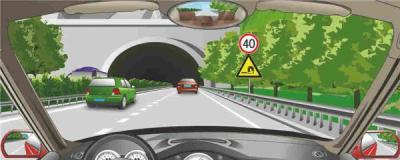
Answer:Y
23、When fixing the unexposed bones in position, it is necessary to exceed the upper and lower joints of the wounded body part.
Answer:Y
24、When encountering such pedestrians while driving, a longer safety distance should be kept by drivers.
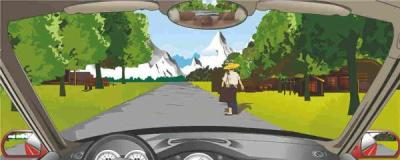
Answer:Y
25、When a front tire bursts, after controlling the driving direction, what should be done by the driver in order to slow down and stop?
A、Immediately change to a high gear
B、Immediately change to a low gear
C、Immediately change to the neutral gear
D、Apply emergency braking
Answer:B
26、When driving on an expressway, where should the driver park?
A、The service area
B、The acceleration lane
C、The deceleration lane
D、On the ramp
Answer:A
27、What should the driver do if the back wheel slides to the right on a muddy road?
A、Continuously speed up
B、Turn right
C、Turn left
D、Apply emergency brake
Answer:B
28、When encountering a situation like changing to a left lane, motor vehicle drivers should vield.
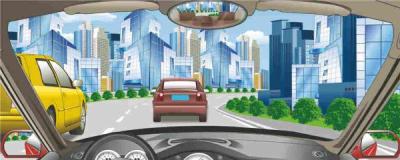
Answer:Y
29、The signs on each side warn of changes in road alignment ahead.
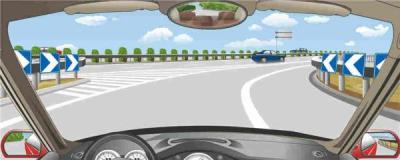
Answer:Y
30、The sign on the left indicates no U-turn at the intersection ahead.
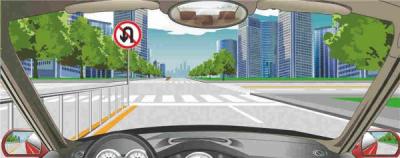
Answer:Y
31、Motor vehicles drivers may overtake by borrowing the opposite lane on this kind of road.
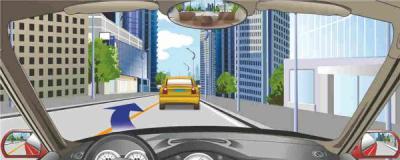
Answer:N
32、What influence does smoking have upon driving?
A、Harmful for safe driving
B、Increase concentration
C、Help relaxation
D、No effect on driving
Answer:A
33、Under the circumstances shown in the flash, what should the driver do?
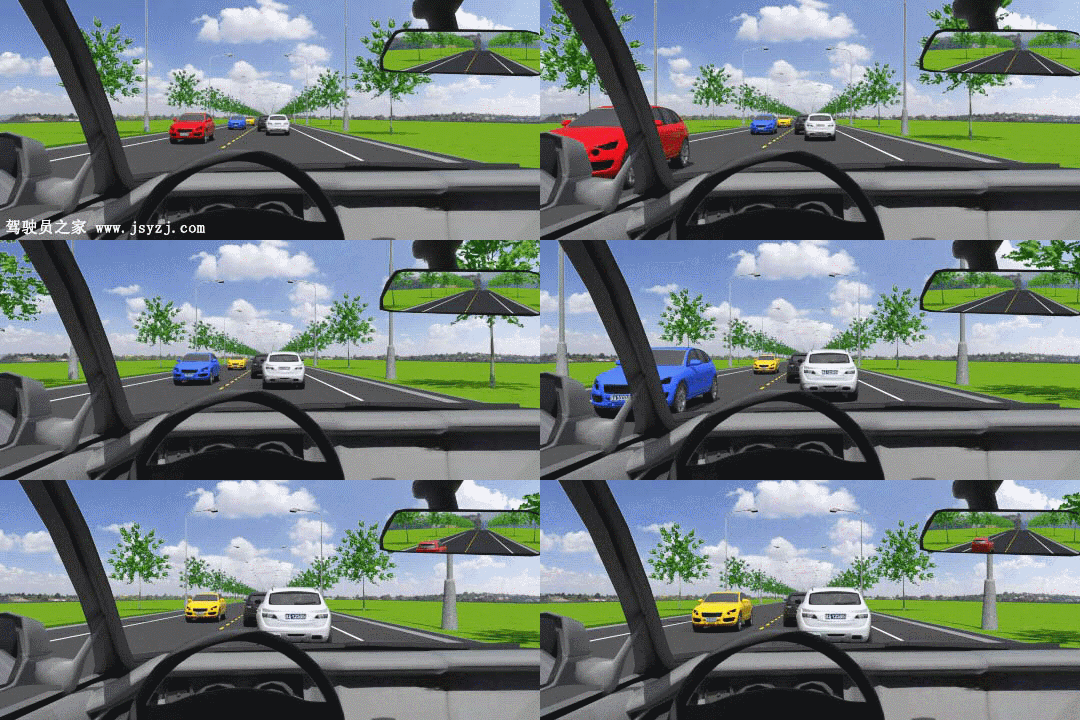
A、Find a chance to overtake the vehicle in front
B、Weave through motor vehicles ahead and pass
C、Reduce speed, stop, and wait in line
D、Sound the horn to urge vehicles in front
Answer:C
34、When a fast-moving vehicle is likely to collide with the vehicle in front, what should the driver do?
A、Brake to reduce speed first, and then steer to evade
B、Turn the steering wheel quickly to the left side to evade
C、Turn the steering wheel quickly to the right side to evade
D、Steer to evade first, and then brake to reduce speed
Answer:A
35、The sign on the right side warns of an emergency lane 500 meters ahead.
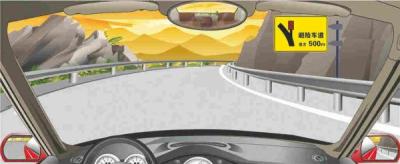
Answer:Y
36、What should a motor vehicle driver do to ensure safety when experiencing a breakdown at night?
A、Park in a safe place
B、Turn on hazard lamp
C、Turn on clearance lamp and tail lamp
D、Set up a warning sign in accordance with regulation
Answer:ABCD
37、The sign on the right warns to keep a safe distance on the road ahead.
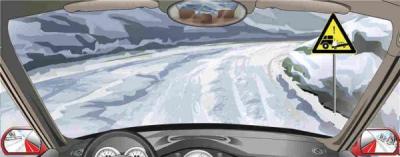
Answer:N
38、When a motor vehicle deviates from the normal direction due to steering failure and an accident is unavoidable, what should the driver do?
A、Apply emergency brake
B、Immediately steer and adjust
C、Immediately steer to the side where there is no obstacle and evade
D、Immediately steer to the side where there is an obstacle and evade
Answer:A
39、The sign on the right indicates that overtaking is allowed on the section ahead.
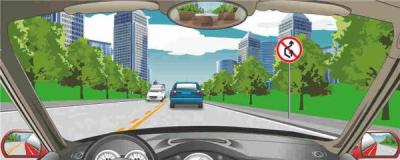
Answer:N
40、When a wounded person is beneath the wheel or cargo, we should help him/her out immediately by pulling the limbs of the wounded.
Answer:N
41、When a motor vehicle breaks down and cannot be moved away from the emergency lane or the road shoulder, the driver and all passengers should get off the vehicle and wait on the road side instead of leaving the expressway.
Answer:N
42、When driving a motor vehicle equipped with power steering, the driver should firmly hold the steering wheel and drive slowly if he/she suddenly finds that steering is difficult.
Answer:N
43、When encountering a vehicle in front ascending on a mountainous road covered with ice and snow, what should the motor vehicle driver do?
A、Ascend after the vehicle in front passes the slope
B、Overtake the vehicle in front swiftly and drive on
C、Overtake the vehicle in front with a slow speed and drive on
D、Follow the vehicle in front closely
Answer:A
44、Mr Ran drove his car from 6am until 11 am without rest, falling down a steep 85-meter ridge at one side of a highway 1 km from Xunan Road in Xuahan County,killing 13 people and injuring 9. Which of the following law-breaking acts did Mr Ran commit?
A、Speeding
B、Driving not in accordance with the traffic markings
C、Exceeding carrying capacity
D、Fatigued driving
Answer:D
45、If a motor vehicle encounters a strong side wind when it leaves the opening of an expressway tunnel, what will happen?
A、A feeling of deceleration
B、A feeling of acceleration
C、A feeling of pressure
D、Deviation in direction
Answer:D
46、When steering failure happens to a fast moving motor vehicle, what should the driver do?
A、Apply emergency braking
B、mmediately change to a low gear
C、Reasonably use the driving brake and the stopping brake and refrain from applying emergency braking
D、Turn on the hazard lamps
Answer:BCD
47、When rescuing a wounded person suffering blood loss in an emergency, it is necessary to first stop the bleeding by compression before other treatments are taken in accordance with the conditions of bleeding.
Answer:Y
48、Motor vehicles are prohibited from driving straight or turning left in this situation.
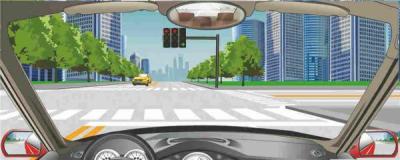
Answer:Y
49、When encountering this situation in a residential area the driver should sound the horn continuously.
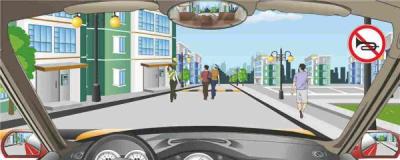
Answer:N
50、Which of the following measures is incorrect when a motor vehicle stops?
A、Stop at a stipulated place
B、Avoid stopping on pedestrian streets
C、Avoid obstructing the passing of other motor vehicles and pedestrians when temporarily stops on the road
D、Stop on the non-motor vehicle lane
Answer:D
- 安徽驾考科目三英文 相关内容
- 内蒙古驾照考试科目四英文版 上海科目一有英文版吗 宁夏英文驾考科目四题库PDF电子版 浙江外国人考驾照科目四 西藏考驾照科目一有英文版 湖南外国人考科目一 英文 老外驾考电脑版下载安装教程视频 山东外国人考科目四 英文 青海英文驾考科目四app 辽宁科目四有英文版吗 云南科目四英文版练习题库 吉林外国人考驾照英文模拟试题 山东科目一英文版模拟 重庆驾考科目四英语版书 陕西只认识英文可以考科目一吗 老外考中国驾照要多久拿证
Copyright © 2025 驾考 版权所有