
- 科目一考试
- 顺序练习
- 随机练习
- 强化练习
- 模拟考试
- 科目四考试
- 顺序练习
- 随机练习
- 强化练习
- 模拟考试
- 外国语言版题库
- 英语题库
- 德语题库
- 韩语题库
- 日语题库
- 俄语题库
- 法语题库
- 西班牙语题库
- 阿拉伯语题库
- 摩托车英文题
黑龙江2025科目四英文版
-
1、When a motor vehicle encounters an accident on an expressway, the driver and all passengers should not get off the vehicle and walk around at will.
Answer:N
2、When approaching each other at night in this situation, drivers should watch for the danger where the two motor vehicles headlamps meet(the sight dead zone).
Answer:Y
3、This sign warns that the section ahead is under traffic monitoring.
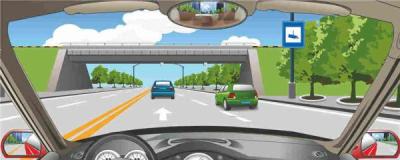
Answer:Y
4、The signs on each side warn of changes in road alignment ahead.
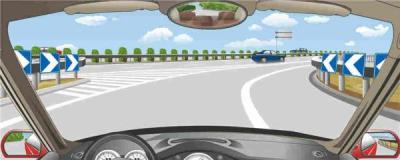
Answer:Y
5、What should the driver do if he/she encounters this situation at the intersection when driving straight?
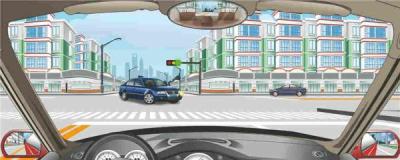
A、Sound the horn to warn the other vehicle to yield
B、Speed up and pass in the front of the vehicle
C、Turn on the headlamp to warn the other vehicle to yield
D、Slow down or stop to yield
Answer:D
6、During normal driving, the driver should do his/her best to run close to or on the central line so as not to allow oncoming vehicles any opportunity to occupy his own route.
Answer:N
7、The sign in front indicates a temporary parking lot on the right side of the highway.
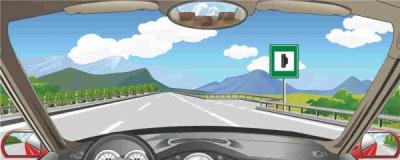
Answer:N
8、When driving in thick or extremely thick fog, what should the driver do due to the low visibility in such weather?
A、Turn on the headlamp and drive slowly
B、Turn on the fog lamp and drive slowl
C、Park in a safe place
D、Drive slowly close to the roadside
Answer:C
9、How should a motor vehicle follow the other vehicle In front when driving on a road covered with ice and snow?
A、Keep a long safe distance
B、Turn on hazard lamp
C、Change between high-and-low beam alternatively
D、Sound the horn in due time to give a notice to the vehicle in front
Answer:A
10、When encountering a situation like changing to a left lane, motor vehicle drivers should vield.
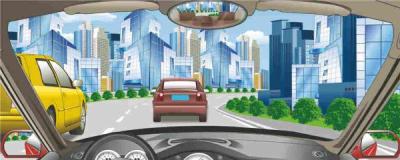
Answer:Y
11、Having driven his truck at 90km/hour on an urban road without road lamps, Mr. Zhou is passing a narrow road using the high-beam and cutting off the way of an oncoming passenger car that runs into the right guardrail as a consequence. Which of the following law-breaking acts did Mr Zhou commit?
A、Speeding
B、Approaching a vehicle not in accordance with related regulations and rules
C、Fatigued driving
D、Using lamps not in accordance with related regulations and rules
Answer:ABD
12、Having driven a large passenger vehicle (carrying 44 passengers, permitted carrying capacity 44) equipped with sleepers at 44km/hour on a frozen road, at 58 km mark by 500m on 540 County Road in Yanhe County, Mr. Luo sideslipped and left the road, killing 15 people and injuring 2 7. Which of the following law-breaking acts did Mr Luo commit?
A、Exceeding the carrying capacity of the passenger vehicle
B、Speeding
C、Fatigued driving
D、Improper driving
Answer:B
13、A motor vehicle may stop and yield if it encounters any problem when changing to the driving lane from an acceleration lane.
Answer:N
14、Which of the following measures should be taken first when rescuing a wounded person suffering blood loss?
A、Observe
B、Dress the wounds
C、Stop bleeding
D、Inquire
Answer:C
15、When rescuing a person sustaining full-body burns the rescue personnel may spray cool water to his body to put out the fire.
Answer:Y
16、Drivers may turn left when traffic police give these hand signals.
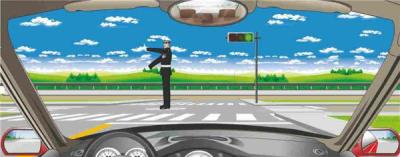
Answer:Y
17、What should the driver do on this kind of curving mountain road?
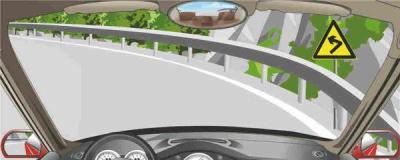
A、Borrow the opposite lane
B、Slow down and drive on the right
C、Stick to the central line of the road
D、Drive close to the right side
Answer:B
18、Under such circumstances, what should be done by the motor vehicle driver?
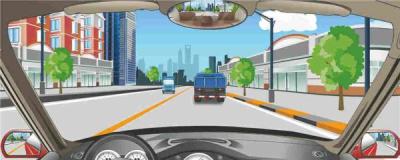
A、Overtaking the vehicle in front on its left
B、Overtaking by occupying the opposite lane
C、Overtaking the vehicle in front on its right
D、Following the vehicle in front
Answer:D
19、When finding a tire burst on the road, the driver should use emergency braking while controlling the direction of the vehicle at the same time to stop the vehicle qulckly.
Answer:N
20、When finding a tire burst on the road, the driver should gently depress the brake pedal, reduce speed and stop the vehicle slowly.
Answer:Y
21、The leading cause of this accident is that the driver failed to make sure that it was safe to reverse before doing so.
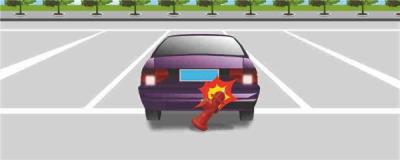
Answer:Y
22、As shown in the flash, the motor vehicle chooses a correct way to pass through the level crossing.
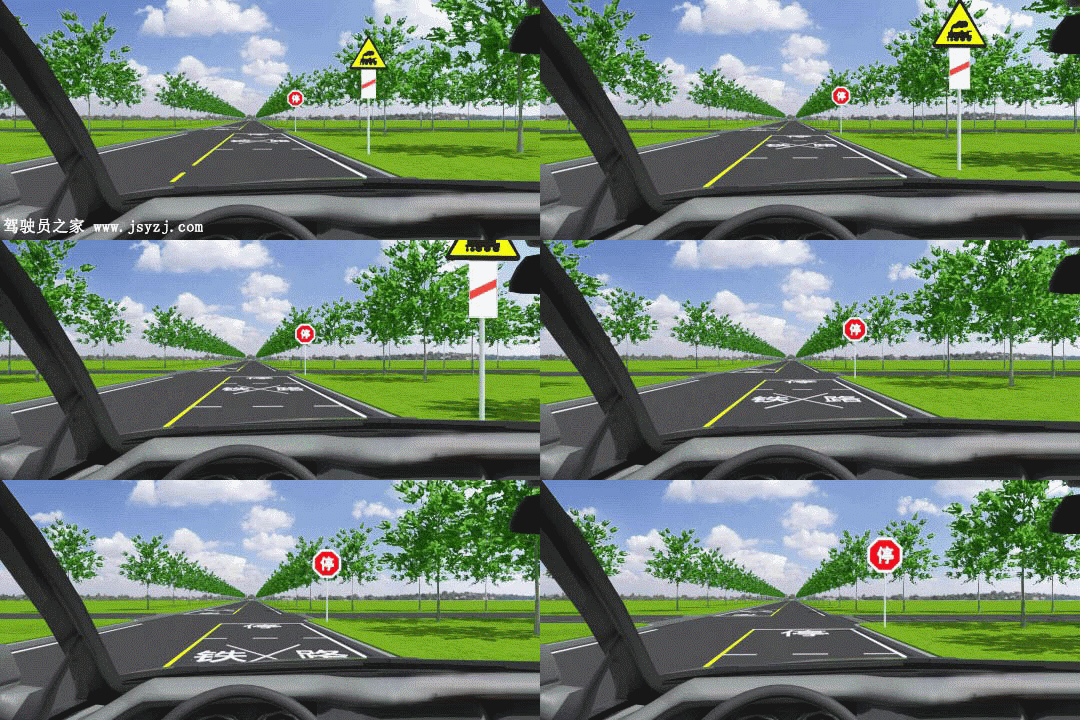
Answer:Y
23、Mr. Wu drove a large bus with 33 passengers (capacity 22 people). At the spot of 7 kilometers mark by 300 meters on the No 163 County Road, the bus lost control and fell into a ravine. As a result of the accident, 10 people were killed and 21 injured. In accordance with the alcohol test after the accident the blood alcohol content of Mr Wu was 26 milligram per milliliter. What's the main illegal act committed by Mr Wu?
A、Speeding
B、Carrying more passengers than permitted
C、Fatigued driving
D、Driving after drinking
Answer:BD
24、The broken white line rectangle area on the right side of the road indicates that long stopping is permitted here.
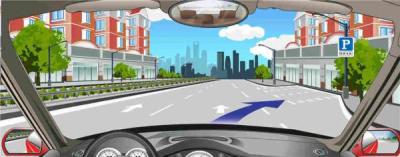
Answer:N
25、When a fast-moving vehicle encounters an emergency the driver should turn to evade first and then brake to slow down so as to mitigate the damage.
Answer:N
26、When encountering such pedestrians, what should motor vehicle drivers do?
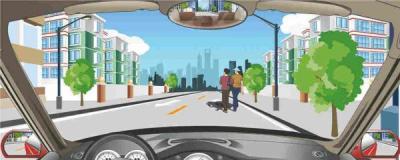
A、Go ahead along the middle line of the road
B、Continuously sound the horn
C、Speed up and overtake
D、Pay attention to the actions of such pedestrians
Answer:D
27、When a motor vehicle deviates from the normal direction due to steering failure, what should the driver do?
A、Immediately steer and adjust
B、Reduce speed and stop the vehicle as early as possible
C、Steer to the side where there is no obstacle to evade
D、Steer to the side where there is an obstacle to evade
Answer:B
28、When braking failure happens to a fast-moving motor vehicle, what should be done by the driver to brake?
A、Continuously depressing the brake pedal
B、Immediately changing to a low gear to reduce speed and using the handbrake
C、Swiftly depressing the clutch pedal
D、Swiftly pulling up the handbrake
Answer:B
29、When a wounded person suffering burns is thirsty he/she may drink a small quantity of lightly salty water.
Answer:Y
30、When driving on a muddy road, what should drivers do to pass at an even speed without stopping?
A、Use the handbrake
B、Press the clutch pedal
C、Press the brake pedal
D、Use the accelerator pedal
Answer:D
31、When there is a braking failure on a downhill road, if there is no favorable terrain or opportunity to stop the vehicle, the driver should drop gear by one position or two positions, and control the speed by taking advantage of the braking role of the engine.
Answer:Y
32、The sign on the right warns of a guarded crossing 150 meters ahead.
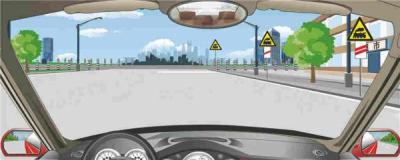
Answer:N
33、When encountering this situation, which of the following is the correct way to overtake other vehicles?
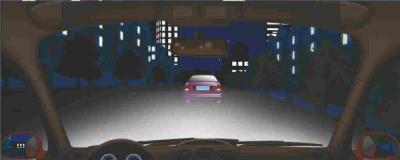
A、Turn on high-beam
B、Use high-beam and low-beam alternatively
C、Turn on low-beam
D、Turning on hazard lamp
Answer:D
34、Mr Hao drove a heavy dump truck with 84.84 tons of cargo (truck allowing for 15.58 tons). When he drove on the No 262 provincial highway in Luanxian County, at the spot of 34 kilometers mark by 623 meters, his truck overturned onto the sideway after a rear-end collision with another truck in front carrying 45.85 tons of cargo(a truck allowing for 1. 71 tons). As a result of this accident, 19 people were killed and 17 injured. What's the common illegal act of the two drivers?
A、Speeding
B、Overloaded
C、Fatigued driving
D、Driving after drinking
Answer:B
35、When driving on a damp and slippery road, drivers should avoid using the emergency brake to his/her best ability.
Answer:Y
36、After setting off from the roadside, motor vehicle drivers should speed up as soon as possible and make a sharp left-turn in order to drive into the normal lane.
Answer:N
37、The sign in front is an advance announcement of the directions led by this intersection.
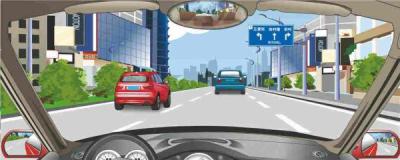
Answer:Y
38、When parking temporarily on a snowy day, drivers should turn on the headlamp and fog lamp.
Answer:N
39、The sign on the right indicates left turn only at the intersection ahead.
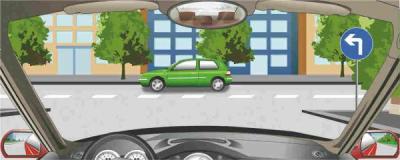
Answer:Y
40、When a motor vehicle equipped with ABS makes an emergency brake, the driver can tread the brake pedal heavily.
Answer:Y
41、When a motor vehicle passes over an inundated road drivers should change to a high gear and pass rapidly.
Answer:N
42、Crossing the broken white line on the right edge of the road is allowed.
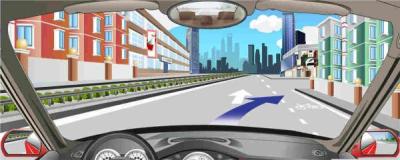
Answer:Y
43、When driving in rain and encountering pedestrians with umbrellas or wearing raincoats, what should be done by motor vehicle drivers in order to yield?
A、Drive at a normal speed
B、Sound the horn to alert when approaching the pedestrians
C、Speed up and bypass on the left
D、Reduce speed and sound the horn in advance
Answer:D
44、The sign on the left indicates that drivers should stop to take a pass card at the toll station ahead.
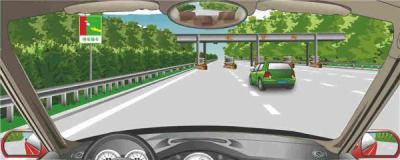
Answer:Y
45、When an erosive material catches fire, it should not be put out with water cannon.
Answer:Y
46、The driver should turn on the left-turn indicator after entering the acceleration lane on an expressway.
Answer:N
47、When a motor vehicle encounters thick fog on an expressway and the visibility is poor, the driver should immediately brake and stop.
Answer:N
48、The driver may not change lanes when the motor vehicle turns right at this intersection.
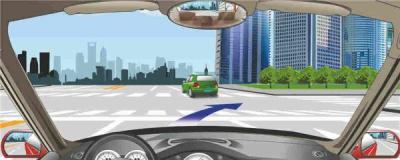
Answer:N
49、When rescuing a wounded person suffering blood loss in an emergency, it is necessary to first stop the bleeding by compression before other treatments are taken in accordance with the conditions of bleeding.
Answer:Y
50、Dangerous chemicals possess the characteristics of explosion, inflammation, poison, erosion and radiation.
Answer:Y
- 黑龙江2025科目四英文版 相关内容
- 宁夏驾考科目三英文 四川2025驾考英文题库 江西驾考科目一英文版题库 安徽驾照考试科目四英文版 广西英文版驾考 外国驾照考试难吗 广西驾考英文版题库 辽宁只认识英文可以考科目四吗 海南驾考英语 陕西只认识英文可以考科目一吗 外国人驾照考试题库下载安装软件 甘肃科目一英文版模拟 广东驾考有英文版吗 山西科目四英文版模拟 甘肃2025科目四考试英文 上海考驾照科目一有英文版
Copyright © 2025 驾考 版权所有