
- 科目一考试
- 顺序练习
- 随机练习
- 强化练习
- 模拟考试
- 科目四考试
- 顺序练习
- 随机练习
- 强化练习
- 模拟考试
- 外国语言版题库
- 英语题库
- 德语题库
- 韩语题库
- 日语题库
- 俄语题库
- 法语题库
- 西班牙语题库
- 阿拉伯语题库
- 摩托车英文题
广西驾考科目四英语版书
-
1、After speeding up to more than 60 km/hour, a motor vehicle driver may drive onto the driving lane directly.
Answer:N
2、How should the driver pass this place safely?
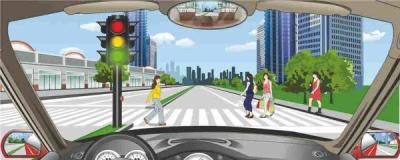
A、Speed up and pass in the front of the pedestrians
B、Bypass behind the pedestrians
C、Slow down and sound the horn
D、Stop and wait until the pedestrians pass
Answer:D
3、Which of the following measures should be taken first when rescuing a wounded person suffering blood loss?
A、Observe
B、Dress the wounds
C、Stop bleeding
D、Inquire
Answer:C
4、Which of the following is an inflammable solid material?
A、Matches
B、Gun powder
C、Calcium carbide
D、Explosives
Answer:A
5、A driver should accelerate in advance to overtake then it is likely to meet with oncoming vehicles.
Answer:N
6、Sideslip happens most easily on which one of the following road surfaces?
A、Dry concrete road
B、Road surface at the beginning of rain
C、Damp concrete road surface
D、Road in heavy rain
Answer:B
7、When encountering a school bus which stops at the right roadside and students are embarking or disembarking, what should motor vehicle drivers do?
A、If there is only one motor vehicle lane in each direction, motor vehicle drivers behind the bus should stop and wait.
B、If there are two motor vehicle lanes in each direction, motor vehicle drivers in the left lane behind the bus may overtake the bus at a lower speed
C、If there are three motor vehicle lanes in each direction, motor vehicle drivers in the middle lane behind the bus should stop and wait
D、If there are three motor vehicle lanes in each direction, motor vehicle drivers in the left lane behind the bus may pass at a lower speed
Answer:ACD
8、Motor vehicles are not allowed to stop in this area for a long time.
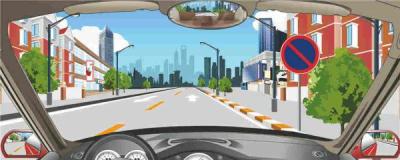
Answer:Y
9、When a motor vehicle turns left at this intersection the driver should change to the left lane in advance by the guide arrow.
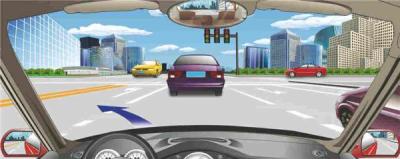
Answer:Y
10、When driving, besides paying attention to keeping a safe distance from the vehicle in front, drivers should also be prudent when braking so as to avoid a rear-end collision caused by a vehicle behind.
Answer:Y
11、Under such circumstances, motor vehicle drivers lould follow the vehicle in front and drive into the Intersection to wait.
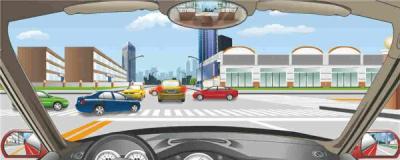
Answer:N
12、After a traffic accident, what is the most effective measure to prevent secondary accidents?
A、Evacuate all passengers
B、Turn on the hazard lamps
C、Mark the original place of the injured persons
D、Properly place the danger warning sign
Answer:ABD
13、Drivers may turn left when traffic police give these hand signals.
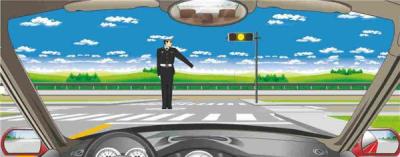
Answer:N
14、When a motor vehicle breaks down on an expressway and cannot be moved away from the driving lane, the driver may conduct emergency repairs on the driving lane.
Answer:N
15、The sign on the right warns of three or more winding roads ahead.
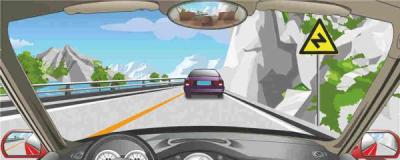
Answer:N
16、Unless stopping due to obstacles or vehicle breakdown on an expressway, motor vehicles are not allowed to stop to pick up or drop off people or load and unload cargo.
Answer:Y
17、vehicles to pass an intersection marked with this sign?
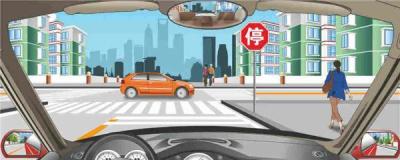
A、Stopping and observing the traffic situation around the intersection
B、Approaching the intersection by speeding up
C、Approaching the intersection at a reduced speed
D、Observing the traffic situation on the left rear side
Answer:A
18、The diamond-shaped sign on the road indicates a crosswalk on the road ahead.
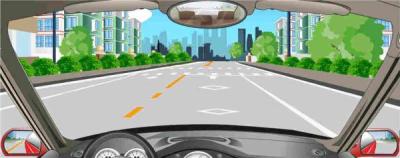
Answer:Y
19、The sign on the right indicates the road width ahead is limited to 3 meters.
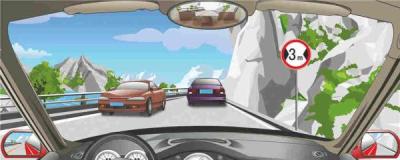
Answer:Y
20、The main reason for this accident is that the pedestrian crossed the street in front of the motor vehicle.
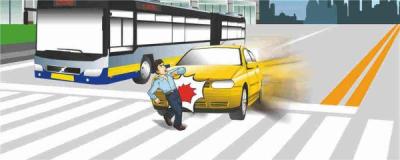
Answer:N
21、This sign indicates that vehicles can either drive straight or turn right at the fly-over junction ahead.
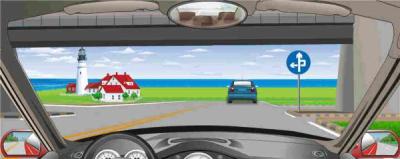
Answer:N
22、After a motor vehicle falls into water, the driver won't be able to open the side doors or windows to escape until water nearly fills up the compartment.
Answer:Y
23、Under such circumstances, what should motor vehicle drivers do?
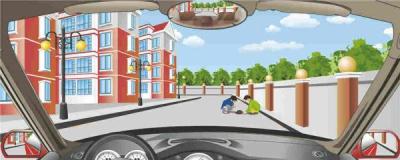
A、Continuously sound the horn
B、Pass quickly
C、Pass at a lower speed
D、Bypass from either side
Answer:C
24、What should be done to keep safe when a motor vehicle driver is overtaking in this condition?
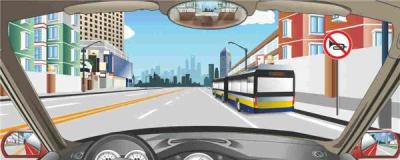
A、Reducing speed and keeping a safe distance
B、Continuously sounding the horn to indicate the vehicle in front
C、Accelerating to pass while keeping a certain distance
D、Overtaking by occupying the opposite lane
Answer:A
25、When a fast-moving vehicle is likely to collide with the vehicle in front, what should the driver do?
A、Brake to reduce speed first, and then steer to evade
B、Turn the steering wheel quickly to the left side to evade
C、Turn the steering wheel quickly to the right side to evade
D、Steer to evade first, and then brake to reduce speed
Answer:A
26、The sign on the right indicates that the speed limit of 40km/hour is lifted on the road ahead.
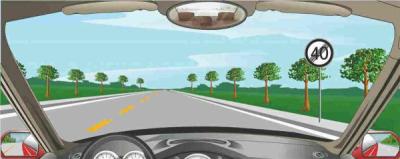
Answer:Y
27、Which of the following acts are prohibited when passing through a tunnel?
A、Overtaking
B、Stopping
C、Making a U-turn
D、Reversing
Answer:ABCD
28、It is an illegal act for the driver to make calls while driving.
Answer:Y
29、When this signal is constantly flashing, how should a driver react?
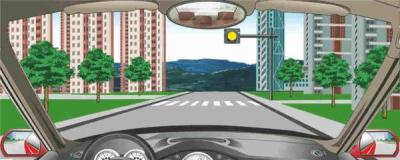
A、Speed up as soon as possible
B、Pull over and wait
C、Observe the traffic situation around to make sure of safe driving
D、Refrain from passing
Answer:C
30、The guide arrow on the road surface of this lane indicates that only left and right turns are permitted on the lanes ahead.
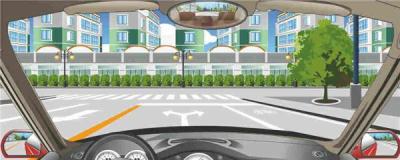
Answer:Y
31、What should the driver do if the back wheel slides to the right on a muddy road?
A、Continuously speed up
B、Turn right
C、Turn left
D、Apply emergency brake
Answer:B
32、The driver should turn left by the left side of the intersection central point.
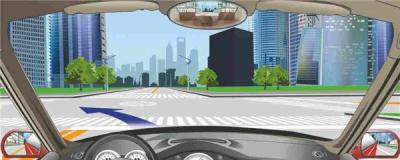
Answer:Y
33、When a head-on collision with another vehicle is unavoidable, what should the driver do?
A、Change head-on collision to side collision
B、Immediately turn the steering wheel to the right side to evade
C、Immediately apply emergency braking
D、Immediately turn the steering wheel to the left side to evade
Answer:C
34、When approaching a sharp curve, motor vehicle drivers should reduce speed only after entering the curve.
Answer:N
35、The guide arrow on the road surface of this lane indicates that only left turns are permitted at the intersection ahead.
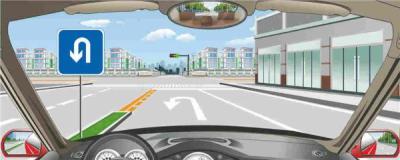
Answer:N
36、When driving in rain and encountering pedestrians with umbrellas or wearing raincoats, what should be done by motor vehicle drivers in order to yield?
A、Drive at a normal speed
B、Sound the horn to alert when approaching the pedestrians
C、Speed up and bypass on the left
D、Reduce speed and sound the horn in advance
Answer:D
37、When the electric equipment and gasoline of a motor vehicle catches fire, the driver may extinguish the fire with water.
Answer:N
38、Motor vehicle drivers may borrow a special lane for other vehicle types, if one exists, to overtake.
Answer:N
39、Under such circumstances, what should be done by the motor vehicle driver who has been overtaken?
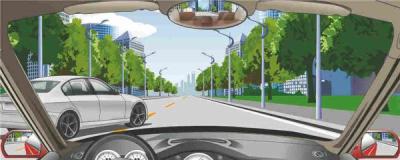
A、Sounding the horn to warn the vehicle that overtook
B、Reducing speed or pulling over by the right side
C、Protesting by turning on the high-beam
D、Catching up with and overtaking the vehicle that overtook, and offering admonitions
Answer:B
40、When encountering this situation in a residential area, the driver should follow them closely.
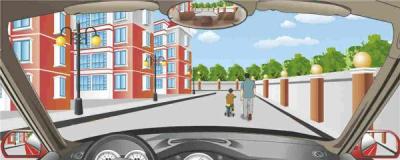
Answer:N
41、The sign in front indicates that the highway entry is on the right side of the road.
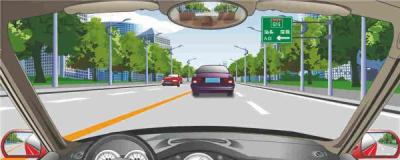
Answer:N
42、The sign in front is an advance announcement of famous places and distances en route.
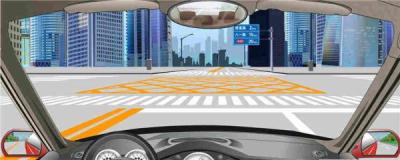
Answer:Y
43、The sign on the right warns of an unguarded railway crossing 150 meters ahead.
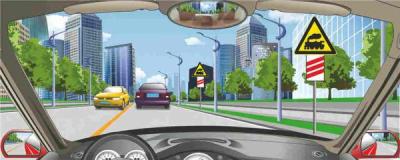
Answer:Y
44、The sign on the right warns of a village 200 meters ahead.
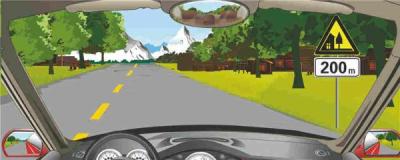
Answer:Y
45、The sign on the right warns that there are vehicles converging into the intersection on the right.
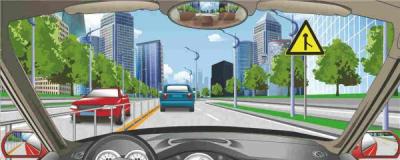
Answer:Y
46、After entering the acceleration lane of an expressway, the driver should increase the speed to how many kilometers per hour?
A、More than 30 km/hour
B、More than 40 km/hour
C、More than 50 km/hour
D、More than 60 km/hour
Answer:D
47、When a motor vehicle breaks down and cannot be moved away from the expressway, the driver and all passengers should stay in the vehicle and wait for the rescue personnel.
Answer:N
48、What should be taken note of by drivers in this situation?
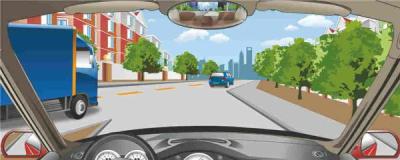
A、he motor vehicle(s)on the left side
B、The motor vehicle(s) on the right side
C、The motor vehicle(s) behind
D、The motor vehicle(s)in front
Answer:A
49、When there is no bandage for rescuing a wounded person, towels, handkerchiefs, bed sheets and stockings can all be used for dressing.
Answer:Y
50、When passing an intersection, vehicle motor drivers are not allowed to overtake.
Answer:Y
- 广西驾考科目四英语版书 相关内容
- 天津驾校考试英文版 甘肃外国人考驾照科目四 重庆英语c1考试 driving licence test 4 贵州英文版驾考 浙江外国人考驾照科目四 云南考驾照的英文单词 四川科目四英文版在哪里找 安徽驾考科目四英文版题库 浙江科目一考题英文版 云南科目四英文版在哪里找 辽宁英文版驾考 辽宁英语c1科目四考试 新疆驾照考试科目一英文版 福建驾考英语版题库book 宁夏驾考科目四英语
Copyright © 2025 驾考 版权所有