
- 科目一考试
- 顺序练习
- 随机练习
- 强化练习
- 模拟考试
- 科目四考试
- 顺序练习
- 随机练习
- 强化练习
- 模拟考试
- 外国语言版题库
- 英语题库
- 德语题库
- 韩语题库
- 日语题库
- 俄语题库
- 法语题库
- 西班牙语题库
- 阿拉伯语题库
- 摩托车英文题
浙江2025英文驾考PDF题库
-
1、The marking on the road surface indicates that the speed limit of this road section is 80 km/hour.
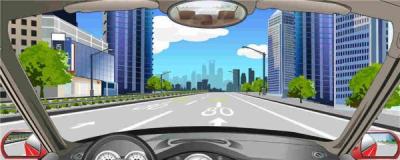
Answer:N
2、When a motor vehicle catches fire, the driver should swiftly turn off the engine and open the hood to extinguish the fire.
Answer:N
3、In the condition of low visibility, drivers should turn on the low-beam when setting off
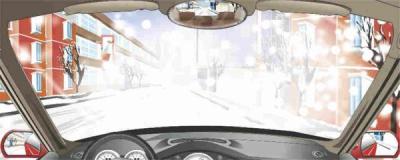
Answer:Y
4、The yellow broken line on the curb indicates that vehicles are not allowed to stop and let passengers embark or disembark or load and unload freight at the roadside.
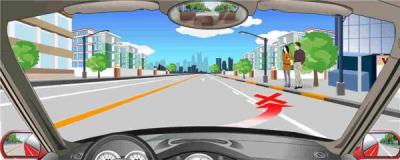
Answer:N
5、Motor vehicles are permitted to follow the guidance of the arrow in this picture and enter the lane of an expressway.
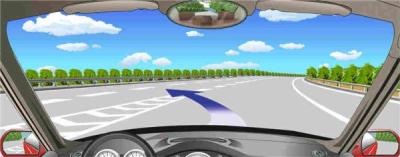
Answer:N
6、The sign on the left warns of no passing on the right-hand road ahead.
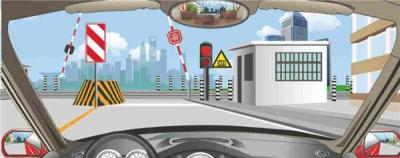
Answer:N
7、The sign in front indicates a one-way lane after turning left.
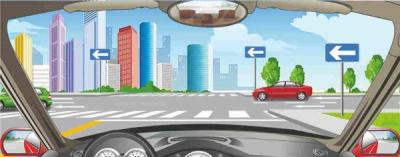
Answer:Y
8、In this driving condition, drivers should turn on the high-beam when setting off.
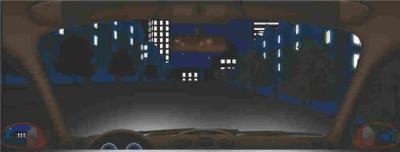
Answer:N
9、When encountering this situation at the gate of a school, the driver should prepare to stop.
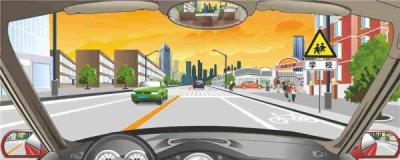
Answer:Y
10、The sign in front indicates a 4-kilometer distance from the next exit.
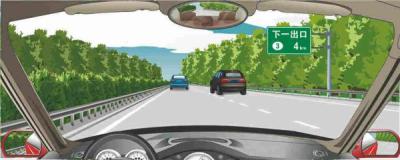
Answer:Y
11、The sign on the right warns of an unguarded railway crossing 150 meters ahead.
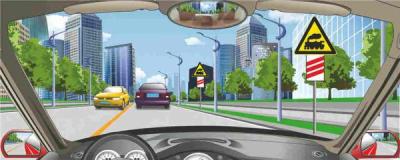
Answer:Y
12、Under such circumstances, motor vehicles are allowed to cross the central solid line to overtake.
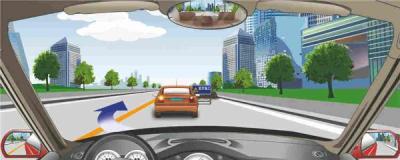
Answer:N
13、Drivers neednt yield to pedestrians who display such behavior.
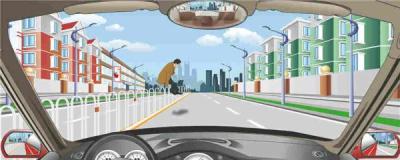
Answer:N
14、When temporarily parking on a raining day, what kind of lamp should the driver turn on?
A、Front and back fog lamps
B、Hazard warning lamp
C、Headlamp
D、Reversing lamp
Answer:B
15、The road marker indicates that vehicles are not allowed to make a U-turn at the intersection ahead.
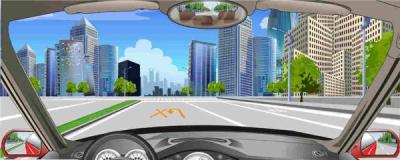
Answer:Y
16、The sign on the right warns that the road will narrow over the next 5 kilometers.
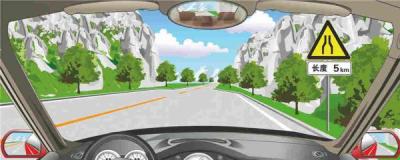
Answer:Y
17、Drivers should drive at a lower speed when traffic police give these hand signals.
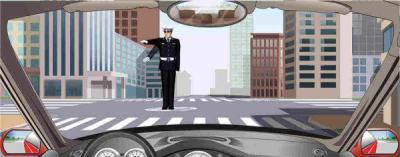
Answer:Y
18、When there is a braking failure on a downhill road, what should not be done by the driver?
A、Steering the motor vehicle to the uphill direction
B、Stopping the vehicle by rubbing the vehicle body against the rocks or trees on roadside
C、Driving to the emergency lane and stop the vehicle there
D、Pulling up the stopping brake or change the gear to two positions lower
Answer:D
19、When driving in a heavy rain, drivers should contro their speed to prevent their vehicles from sliding.
Answer:Y
20、The sign on the right warns of a widened right-hand road ahead.
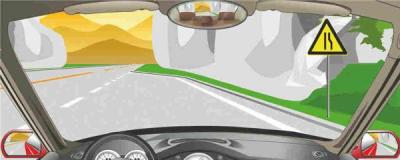
Answer:N
21、When driving in thick fog causing poor visibility on the expressway, the driver should apply emergency braking to stop at once.
Answer:N
22、The sign on the right side warns of crosswind on the mountain pass ahead.
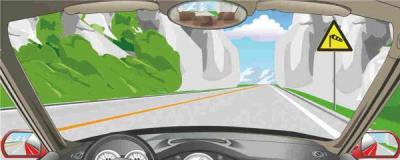
Answer:Y
23、Under such circumstances, what should the motor venicle driver do?
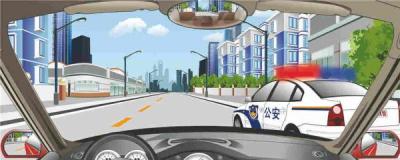
A、Reduce speed and yield by the left side
B、Reduce speed and yield by the right side
C、Speed up and yield by the left side
D、Go ahead along the original route
Answer:A
24、Sounding the horn on a foggy daY can arouse the attention of the opposite side. After hearing the horn from the opposite side, the driver should also sound their own horn to respond.
Answer:Y
25、Drivers may turn right at the intersection when traffic police give these hand signals.
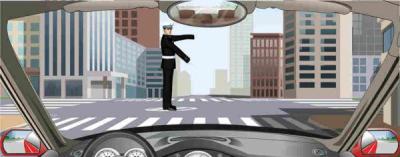
Answer:Y
26、Which lamp should be used when motor vehicles pass hrough an intersection at night where there is no traffic light signal?
A、High-beam
B、Low-beam
C、Hazard lamps
D、High-beam and low-beam should be used alternatively
Answer:D
27、When fixing the unexposed bones in position, it is necessary to exceed the upper and lower joints of the wounded body part.
Answer:Y
28、The signs on each side warn of changes in road alignment ahead.
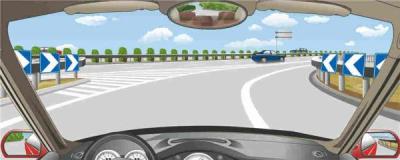
Answer:Y
29、When there is no bandage for rescuing a wounded person, which of the following measures is wrong?
A、Dress the wounds with a handkerchief
B、Dress the wounds with a towe
C、Dress the wounds with cotton clothes
D、Dress the wounds with string
Answer:D
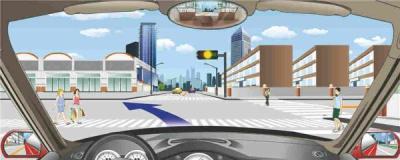
30、At this moment, the driver may speed up and pass the intersection rapidly.
Answer:N
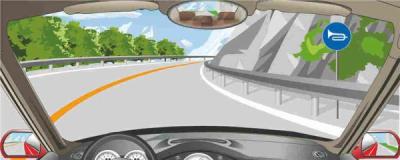
31、The sign on the right indicates that sounding the horn is prohibited here.
Answer:N
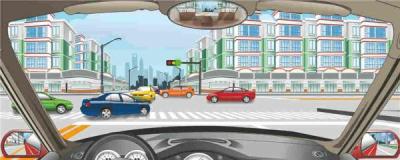
32、Under such circumstance at an intersection. motor vehicle drivers should be prepared to stop and yieldat any time.
Answer:Y
33、When driving on a long downhill road, which is the best way to control driving speed?
A、Coast in neutral gear
B、Depress the clutch and coast
C、Use the engine to brake
D、Depress the brake pedal continuously
Answer:C
34、When a motor vehicle passes over an inundated road, what should the driver do for safe driving?
A、Slow down and drive with special care
B、Speed up and pass rapidly
C、Maintain a normal speed and pass through
D、Change to a low gear and speed up to pass
Answer:A
35、What should the driver do when the motor vehicle encounters this situation in a residential area?
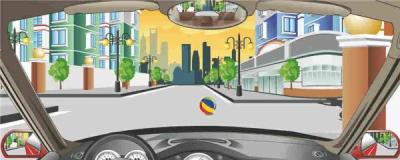
A、Stop immediately
B、Speed up and pass rapidly
C、Sound the horn continuously
D、Slow down and pass slowly
Answer:A
36、When there is bleeding at the bone fracture of a wounded person, the first thing to do is to fix the wounded part in position, then stop the bleeding and dress the wound.
Answer:N
37、The sign on the right warns of an embankment road 200 meters ahead.
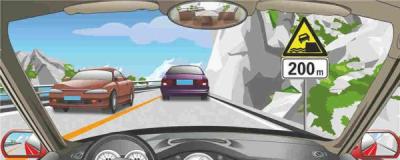
Answer:Y
38、The sign on the right warns of an uneven road ahead.
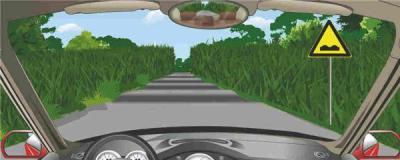
Answer:Y
39、What should be done by drivers in order to drive safely on the road in this condition?
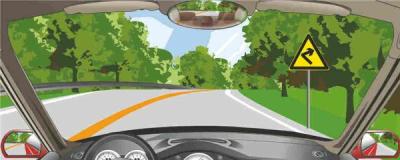
A、Make a large turn on the left side of the road
B、Make a turn on the central line of the curve
C、Make a small turn on the right side of the road
D、Make a turn by borrowing the opposite lane
Answer:C
40、When driving in a strong wind, what should the driver do if he/she feels the steering wheel is suddenly out of control due to the frequent changes in speed and direction of the wind?
A、Turn the steering wheel against the wind
B、Turn the steering wheel with the wind
C、Use emergency brake
D、Firmly hold the steering wheel with both hands
Answer:D
41、What should the driver do when a motor vehicle encounters this situation on a mountain road?
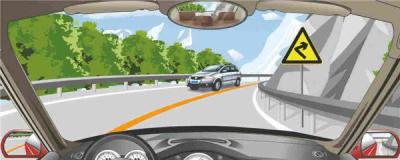
A、Stick to respective lanes and speed up to approach each other
B、Drive close to the central line of the road
C、Retain the normal speed
D、Slow down
Answer:D
42、The guide arrow on the road surface of this lane indicates that only right turns are permitted at the intersection ahead.
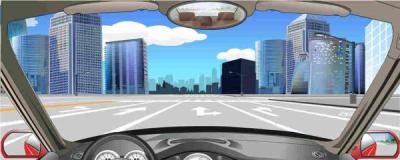
Answer:N
43、When passing another vehicle on a foggy day, what should drivers do?
A、Slow down and pass slowly
B、Maintain a safety distance
C、Properly use lamps
D、Drive at a high speed
Answer:ABC
44、What should the driver do if he/she encounters pedestrians in this situation at an intersection?
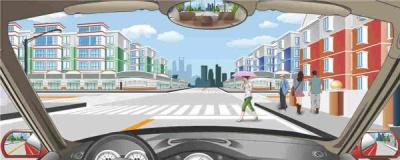
A、Slow down promptly and stop to yield
B、Sound the horn to warn the pedestrians to yield
C、Speed up and pass in front of the pedestrians
D、Turn on the headlamps to warn the pedestrians to yield
Answer:A
45、How should a motor vehicle follow the other vehicle In front when driving on a road covered with ice and snow?
A、Keep a long safe distance
B、Turn on hazard lamp
C、Change between high-and-low beam alternatively
D、Sound the horn in due time to give a notice to the vehicle in front
Answer:A
46、Which one of the following is the safest way when driving a motor vehicle on this road?
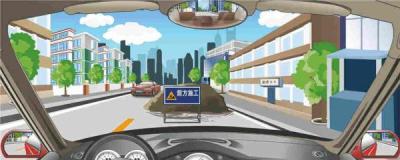
A、Speed up and bypass the obstacle
B、Take the opposite lane and compel the other vehicle to yield
C、Stop and yield to the oncoming vehicle
D、Sound the horn or turn on the headlamp
Answer:C
47、When driving in rain and encountering pedestrians with umbrellas or wearing raincoats, what should be done by motor vehicle drivers in order to yield?
A、Drive at a normal speed
B、Sound the horn to alert when approaching the pedestrians
C、Speed up and bypass on the left
D、Reduce speed and sound the horn in advance
Answer:D
48、When driving on a snowy day, drivers should follow the tracks on the road before them.
Answer:Y
49、When approaching another vehicle at night, why should the driver alternate between high-and-low-beam at a distance more than 150 meters?
A、Warn each other before passing
B、Driving habit
C、Easy to observe the situation ahead from either side
D、Courtesy
Answer:C
50、When a fast-moving vehicle encounters an emergency the driver should turn to evade first and then brake to slow down so as to mitigate the damage.
Answer:N
- 浙江2025英文驾考PDF题库 相关内容
- 西藏考驾照科目四有英文版 西藏2025驾考英文题库 河北驾照科目一英文版题库 河北只认识英文可以考科目一吗 贵州英语c1考试 湖南驾考科目一英文版题库 湖北英语c1科目四考试 湖南2025科目四英文版 天津驾照科目一英文版题库 外国的驾照好考吗 河南英文版驾考 辽宁英文驾考题库PDF电子版 宁夏驾考科目一英文版题库 四川驾考英语版书 北京驾考科目四英文版题库 上海科目四考试英文版
Copyright © 2025 驾考 版权所有