
- 科目一考试
- 顺序练习
- 随机练习
- 强化练习
- 模拟考试
- 科目四考试
- 顺序练习
- 随机练习
- 强化练习
- 模拟考试
- 外国语言版题库
- 英语题库
- 德语题库
- 韩语题库
- 日语题库
- 俄语题库
- 法语题库
- 西班牙语题库
- 阿拉伯语题库
- 摩托车英文题
山西驾照考试科目四英文版
-
1、The road marker indicates that vehicles are not allowed to make a U-turn at the intersection ahead.
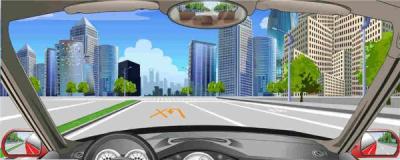
Answer:Y
2、The sign on the right indicates that drivers should choose their lanes in accordance withthe directions indicated by arrows.
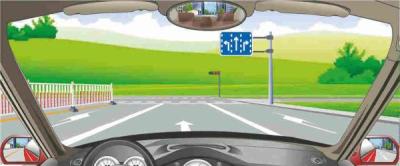
Answer:Y
3、When a motor vehicle falls into water and the side door cannot be opened, which of the following methods is correct for self-rescue?
A、Smash the window glass
B、Close the windows
C、Make calls for help
D、Try to open the door with a tool
Answer:A
4、When driving on a long downhill road, which is the best way to control driving speed?
A、Coast in neutral gear
B、Depress the clutch and coast
C、Use the engine to brake
D、Depress the brake pedal continuously
Answer:C
5、When driving on a muddy road, what should the driver do?
A、Try to avoid using the foot brake
B、Drive slowly in mid or low gear
C、Firmly hold the steering wheel
D、Speed up and pass through
Answer:ABC
6、In the flash, it is correct for the driver to behave this way when there is a traffic jam caused by an accident on the expressway.?
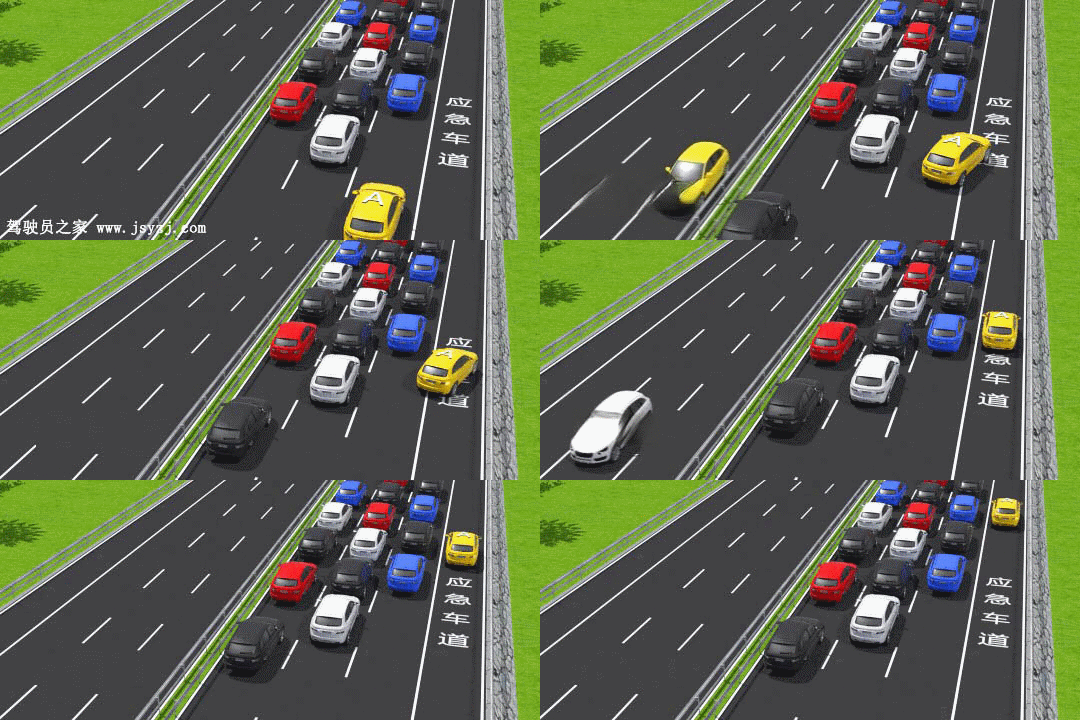
Answer:N
7、When a wounded person is unable to get off the vehicle by himself/herself, he/she should be removed from the vehicle so as to avoid a secondary injury.
Answer:Y
8、What should the driver pay attention to when the motor vehicle on the main road approaches a junction with a feeder road?
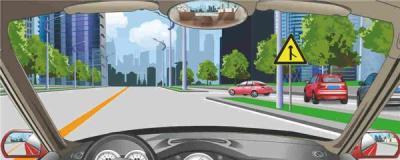
A、Slow down in advance and pay attention to other motor vehicles
B、Maintain the normal speed
C、Sound the horn and pass rapidly
D、Speed up and pass rapidly
Answer:A
9、The cross-hatched marking indicates an area where vehicle drivers are not allowed to stop.
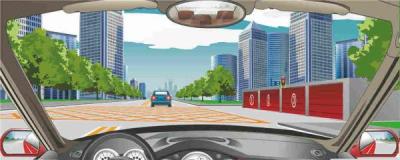
Answer:Y
10、The driver may not change lanes when the motor vehicle turns right at this intersection.
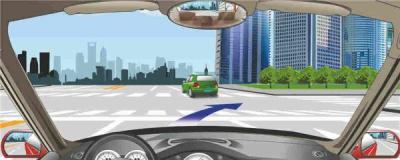
Answer:N
11、Mr. Zhao (with an A2 driving license) drove a large sleeper coach on the No. 219 National Road in Yecheng County. When passing a curve at the spot of 226 kilometers mark by 215 meters on the road, the coach fell into the ravine on one side, killing16 people and injuring 26. What's the main illegal act committed by Mr Zhao?
A、Carrying more passengers than permitted
B、Driving a motor vehicle having failed to accept inspection in time
C、Driving an unpermitted vehicle type
D、Fatigued driving
Answer:C
12、The guide arrow on the road surface of this lane indicates that drivers are only permitted to continue straight at the intersection ahead.
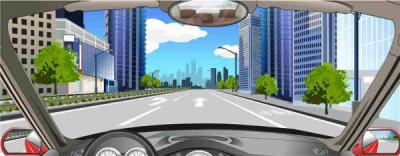
Answer:Y
13、The sign on the right warns of a dangerous mountainside road on the left of the road ahead.
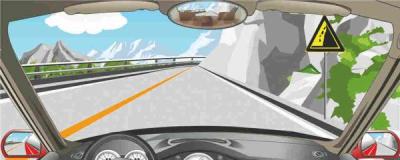
Answer:N
14、Under such circumstances, motor vehicle drivers should reduce speed by the right side swiftly and yield.
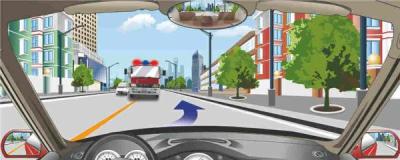
Answer:Y
15、The sign on the right warns of no passing due to collapse on the road ahead.
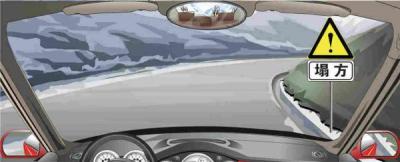
Answer:N
16、Before setting off, it is necessary to check the driving cabin, engine cabin, external and tires of the motor vehicle.
Answer:Y
17、When a motor vehicle passes over an inundated road, what should the driver do for safe driving?
A、Slow down and drive with special care
B、Speed up and pass rapidly
C、Maintain a normal speed and pass through
D、Change to a low gear and speed up to pass
Answer:A
18、The sign on the right warns of traffic signals ahead.
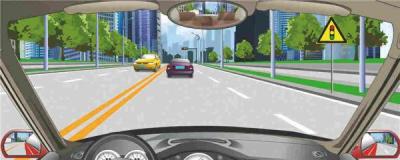
Answer:Y
19、When extinguishing a fire, the driver should refrain from breathing through mouth or crying loudly Otherwise, the fire and smoke will scorch the upper respiratory tract.
Answer:Y
20、When the vehicle engine catches fire, what should the driver do first?
A、Turn off the engine as soon as possible
B、Extinguish the fire with water
C、Open the hood to extinguish the fire
D、Extinguish the fire from the leeward direction
Answer:A
21、Motor vehicle drivers may borrow a special lane for other vehicle types, if one exists, to overtake.
Answer:N
22、When finding a tire suddenly burst on the road, the driver should firmly hold the steering wheel with both hands to ensure the vehicle goes straight.
Answer:Y
23、When driving in a residential area, the driver should not exceed the speed indicated by the speed limit sign.
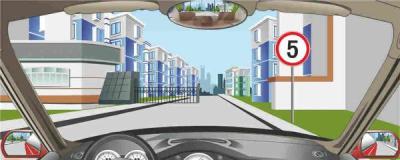
Answer:Y
24、When the motor vehicle stops on a downhill section how should the driver use the foot brake?
A、Earlier than on a level road
B、Later than on a level road
C、As timely as on a level road
D、Gently depress the foot brake pedal
Answer:A
25、The sign on the right warns of an uneven road ahead.
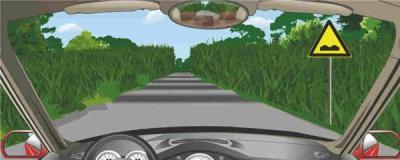
Answer:Y
26、When braking failure happens to a fast-moving motor vehicle, what should be done by the driver to brake?
A、Continuously depressing the brake pedal
B、Immediately changing to a low gear to reduce speed and using the handbrake
C、Swiftly depressing the clutch pedal
D、Swiftly pulling up the handbrake
Answer:B
27、When driving in thick or extremely thick fog, what should the driver do due to the low visibility in such weather?
A、Turn on the headlamp and drive slowly
B、Turn on the fog lamp and drive slowl
C、Park in a safe place
D、Drive slowly close to the roadside
Answer:C
28、The sign on the right warns that there are vehicles converging into the intersection on the right.
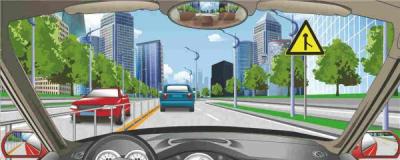
Answer:Y
29、The sign on the right warns of a non-motor vehicle lane.
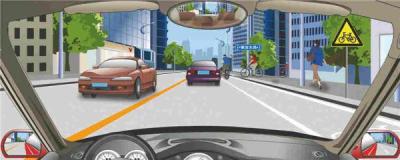
Answer:N
30、Once inflammable gas causes a fire disaster, it should be put out with water in good time.
Answer:N
31、Having driven a large passenger vehicle (carrying 44 passengers, permitted carrying capacity 44) equipped with sleepers at 44km/hour on a frozen road, at 58 km mark by 500m on 540 County Road in Yanhe County, Mr. Luo sideslipped and left the road, killing 15 people and injuring 2 7. Which of the following law-breaking acts did Mr Luo commit?
A、Exceeding the carrying capacity of the passenger vehicle
B、Speeding
C、Fatigued driving
D、Improper driving
Answer:B
32、Motor vehicles are not permitted to change lanes in this position.
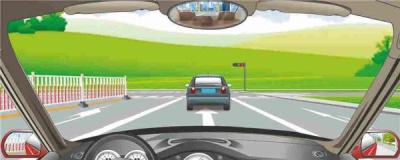
Answer:Y
33、Motor vehicle drivers should rush to the top of the slope in this situation.
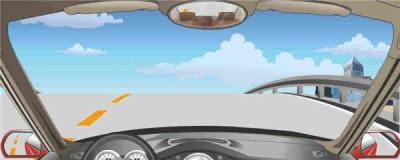
Answer:N
34、When a motor vehicle enters an expressway from the ramp, which of the following lamps should be turned on?
A、The left-turn indicator
B、The right-turn indicator
C、The hazard warning lamp
D、The headlamp
Answer:A
35、When a motor vehicle turns left at this intersection the driver should change to the left lane in advance by the guide arrow.
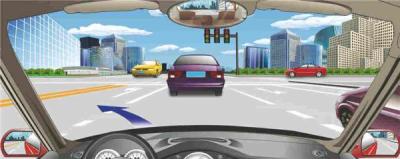
Answer:Y
36、What's the main impact of foggy weather on safe driving?
A、Easy to slide sideways
B、Low visibility
C、Increase the resistance
D、Widen the field of vision
Answer:B
37、What caused this drivers death in an accident?
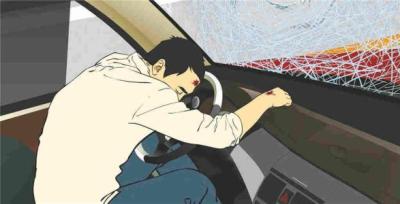
A、Failing to fasten seatbelt
B、Positioned too close to the steering wheel
C、Failing to hold the steering wheel
D、Failing to turn on SRS
Answer:A
38、When a wounded person suffering bone fracture in the thigh, shank or spine, moving the wounded person is usually prohibited.
Answer:Y
39、Driving and smoking has no negative effect on safe driving
Answer:N
40、At 13: 10 pm, Mr Luo set out in his medium bus from 0 km mark on the highway, and by 14: 10 had passed the 125km mark by 200 meters, he caused a rear-end collision with a motor vehicle that ran into the side slope on the southwest side, killing 11 people and injuring 2. Which of the following law-breaking acts did Mr. Luo commit?
A、Speeding
B、Driving not in accordance with traffic markings
C、Exceeding carrying capacity
D、Fatigued driving
Answer:A
41、Which one of the following is the safest way when driving a motor vehicle on this kind of road surface?
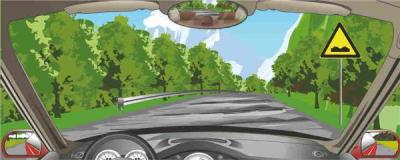
A、Slide over by using neutral gear
B、Pass with a high speed
C、Pass by speeding up
D、Pass with a low speed
Answer:D
42、When driving in rain or snow, the driver should turn left to stabilize the vehicle if the motor vehicle slides to the right side.
Answer:N
43、Motor vehicles can turn right when driving into an intersection with this traffic signal.
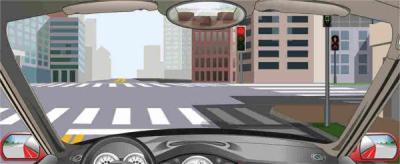
Answer:Y
44、The sign on the right side warns of an emergency lane 500 meters ahead.
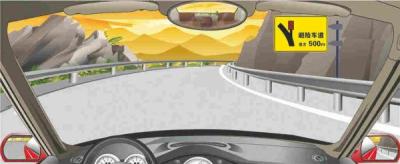
Answer:Y
45、When driving on an expressway, what should the driver do if he/she has missed an exit but the next exit is far away?
A、Reverse along the road shoulder
B、Continue on
C、Stop immediately
D、Make a U-turn at the current location
Answer:B
46、A motor vehicle should slow down and stop at this level crossing.
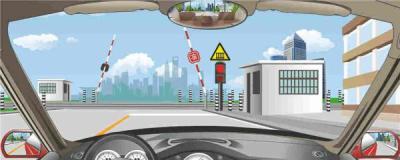
Answer:Y
47、When driving on an expressway, where should the driver park?
A、The service area
B、The acceleration lane
C、The deceleration lane
D、On the ramp
Answer:A
48、When steering failure happens to a fast moving motor vehicle, what should the driver do?
A、Apply emergency braking
B、mmediately change to a low gear
C、Reasonably use the driving brake and the stopping brake and refrain from applying emergency braking
D、Turn on the hazard lamps
Answer:BCD
49、When parking for a long time on an upward slope due to breakdown on the road, drivers should use this method to stop up wheels.
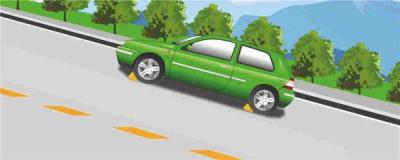
Answer:N
50、When a motor vehicle passes over an inundated road the driver should change to a low gear and pass at a constant speed.
Answer:Y
- 山西驾照考试科目四英文版 相关内容
- 湖北英文考驾照用语 福建驾考英文版题库 云南外国人考驾照科目一 云南英文驾考PDF题库 外国人学驾照需要什么手续和证件和材料 甘肃驾考科目四英语版PDF 吉林科目四英文版题目 广东英文版驾考 安徽驾考英语 国外人在中国考驾照难吗 内蒙古科目四英文版在哪里找 内蒙古关于考驾照的英语 新疆驾考科目一英语版PDF题库 河南驾考英文版题库 西藏考驾照的英文单词 吉林驾考科目三英文
Copyright © 2025 驾考 版权所有