
- 科目一考试
- 顺序练习
- 随机练习
- 强化练习
- 模拟考试
- 科目四考试
- 顺序练习
- 随机练习
- 强化练习
- 模拟考试
- 外国语言版题库
- 英语题库
- 德语题库
- 韩语题库
- 日语题库
- 俄语题库
- 法语题库
- 西班牙语题库
- 阿拉伯语题库
- 摩托车英文题
天津科目四有英文版吗
-
1、How should lamps be used when setting off in this situation?
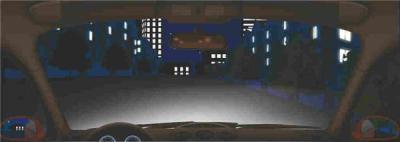
A、Turn on the high-beam
B、Turn on the left indicator only
C、Turn on the left indicator and low-beam
D、Turn on hazard lamp
Answer:C
2、What should the driver do in case the public bus suddenly pulls out from this bus station?
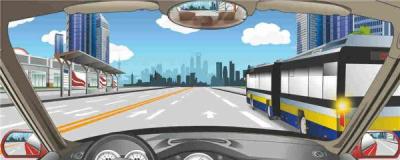
A、Stop behind the public bus
B、Overtake the public bus rapidly
C、Slow down and overtake the public bus slowly
D、Sound the horn continuously to warn the public bus
Answer:C
3、The sign on the right warns of a village 200 meters ahead.
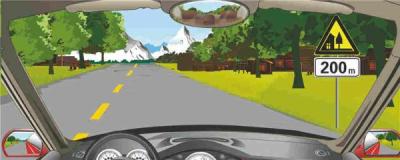
Answer:Y
4、When a motor vehicle moves through water, the driver should try to maintain a constant speed and sufficient power and pass through without stopping.
Answer:Y
5、When passing an intersection, vehicle motor drivers are not allowed to overtake.
Answer:Y
6、When driving on a foggy day, what kind of lamps should the driver turn on?
A、Fog lamp and hazard lamp
B、Fog lamp and indicator
C、Fog lamp and high-beam
D、Fog lamp and low-beam
Answer:A
7、What should be done by the driver who intends to overtake but the motor vehicle in front neither reduces its speed nor allows the right of way?
A、Continuously sounding the horn and accelerating to overtake
B、Accelerating and continuing to overtake
C、Refraining from overtaking
D、Following the vehicle in front closely and finding a chance to overtake
Answer:C
8、The sign on the right indicates an ETC lane at toll station ahead.
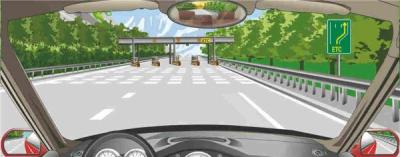
Answer:Y
9、For evading an emergency on an expressway, which of the following principles should drivers stick to?
A、Evading vehicles first and objects later
B、Evading people first and objects later
C、Evading vehicles first and people later
D、Evading objects first and people later
Answer:B
10、When driving on this dangerous mountainside road motor vehicle drivers should drive along the left side of the road.
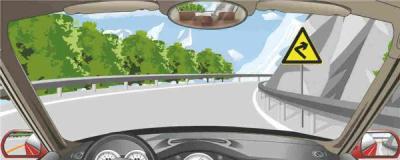
Answer:N
11、When encountering a school bus which stops at the right roadside and students are embarking or disembarking, what should motor vehicle drivers do?
A、If there is only one motor vehicle lane in each direction, motor vehicle drivers behind the bus should stop and wait.
B、If there are two motor vehicle lanes in each direction, motor vehicle drivers in the left lane behind the bus may overtake the bus at a lower speed
C、If there are three motor vehicle lanes in each direction, motor vehicle drivers in the middle lane behind the bus should stop and wait
D、If there are three motor vehicle lanes in each direction, motor vehicle drivers in the left lane behind the bus may pass at a lower speed
Answer:ACD
12、When entering an expressway ramp, which of the following statements is correct?
A、Drivers are allowed to overtake other vehicles
B、Drivers are prohibited from making U-turns
C、Drivers are allowed to stop
D、Drivers are allowed to reverse
Answer:B
13、Under such circumstances, the driver should stop the vehicle and yield to pedestrians.
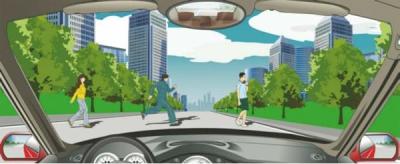
Answer:Y
14、The braking distance will be shortened greatly when the motor vehicle is equipped with ABS brakes.
Answer:N
15、During normal driving, the driver should do his/her best to run close to or on the central line so as not to allow oncoming vehicles any opportunity to occupy his own route.
Answer:N
16、Mr. Qian drove a large sleeper coach with 45 passengers (capacity 40 people) at a speed of more than 40 kilometers per hour. On a long slope with sharp curves in Basu County, the coach fell into a 100-meter-deep valley, killing 17 people and injuring 20. What's the main illegal act committed by MrQian?
A、Making a cellphone call while driving
B、Speeding
C、Carrying more people than permitted
D、Fatigued driving
Answer:BC
17、What should the driver do when seeing these hand signals.
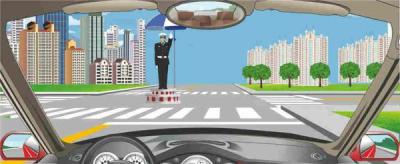
A、Stop and wait
B、Go straight and pass through the intersection
C、Turn right at the intersection
D、Turn left at the intersection
Answer:A
18、The sign on the right indicates that the number of the lanes ahead will increase.
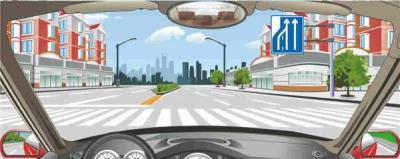
Answer:N
19、Which lamp should be used when motor vehicles pass hrough an intersection at night where there is no traffic light signal?
A、High-beam
B、Low-beam
C、Hazard lamps
D、High-beam and low-beam should be used alternatively
Answer:D
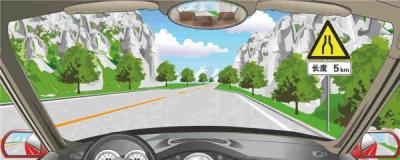
20、The sign on the right warns that the road will narrow over the next 5 kilometers.
Answer:Y
21、Mr. Shi drove a low-speed cargo vehicle (capacity 1.2 tons)with 4.05 tons of cargo. At the spot of 51 kilometers mark by 260 meters on the No. 314 County Road in Ningjin County, the cargo vehicle had a head-on collision with a normally running midsize bus( capacity 11 people and carrying12) from the opposite direction after passing the central line of the road and overtaking the front vehicle in the same direction. As a result of this accident, 10 people were killed and 2 injured. What are the illegal acts in this case?
A、The cargo vehicle carried more cargo than capacity
B、The cargo vehicle illegally overtook other vehicles
C、The bus carried more passengers than capacit
D、The driver of the bus kept driving when tired
Answer:ABC
22、Under such circumstances, what should motor vehicle drivers do?
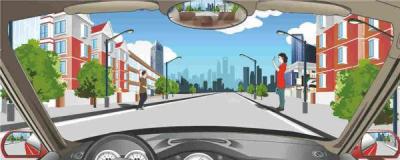
A、Guard against the sideslip of motor vehicles
B、Guard against the crossing of pedestrians
C、Speed up and pass through as quickly as possible
D、Continuously sound the horn
Answer:B
23、When driving on a muddy road, the driver should hold the steering wheel firmly and speed up to pass through.
Answer:N
24、When encountering a school bus which stops at the right roadside and students are embarking or disembarking, and there are three motor vehicle lanes in each direction, motor vehicle drivers on the left lane behind the bus should stop and wait.
Answer:N
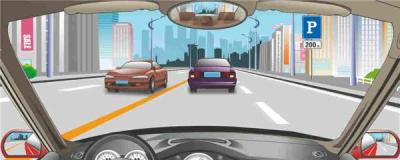
25、The sign in front indicates an open-air parking lot with rest area is 200 meters ahead.
Answer:Y
26、What should motor vehicle drivers do when approaching an oncoming vehicle on a frozen road?
A、Cut speed as approaching each other
B、Pass each other by speeding up properly
C、Pass each other slowly by cutting speed in advance
D、Pass each other along the central line to the best
Answer:C
27、When braking failure happens to a fast-moving motor vehicle, what should be done by the driver to brake?
A、Continuously depressing the brake pedal
B、Immediately changing to a low gear to reduce speed and using the handbrake
C、Swiftly depressing the clutch pedal
D、Swiftly pulling up the handbrake
Answer:B
28、Motor vehicle drivers don't need to fasten their seatbelt
Answer:N
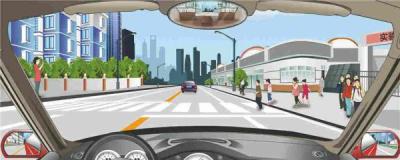
29、When encountering this situation around a school, the driver should speed up and pass as quickly as possible.
Answer:N
30、How should the driver pass this place safely?
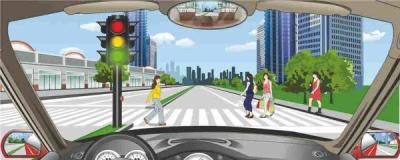
A、Speed up and pass in the front of the pedestrians
B、Bypass behind the pedestrians
C、Slow down and sound the horn
D、Stop and wait until the pedestrians pass
Answer:D
31、Under such circumstances, what should be done by motor vehicle drivers in order to maintain safe driving?
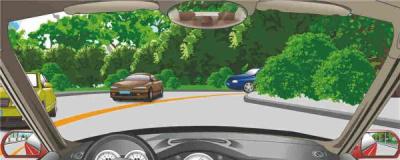
A、Sound the horn or turn on the headlamps
B、Reduce speed or drive on the right side
C、Keep to the central line as best as possible
D、Drive on the left side of the road
Answer:B
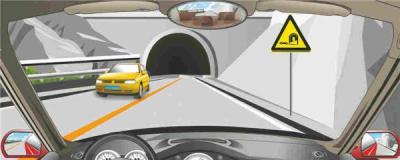
32、The sign on the right warns of entering a tunnel, and requires reduced speed.
Answer:N
33、It is a bad habit for a driver to put his left arm on the window of the vehicle or hold the gear lever in his right hand for a long time.
Answer:Y
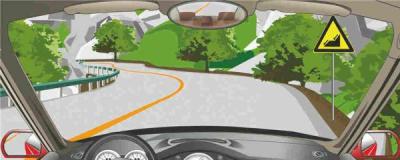
34、The sign on the right side warns of an abrupt downhill section ahead.
Answer:N
35、Under such circumstances, motor vehicle drivers should reduce speed by the right side swiftly and yield.
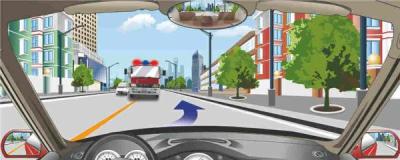
Answer:Y
36、When a motor vehicle passes over an inundated road, what should the driver do for safe driving?
A、Slow down and drive with special care
B、Speed up and pass rapidly
C、Maintain a normal speed and pass through
D、Change to a low gear and speed up to pass
Answer:A
37、The sign in the red circle indicates that the left road is only for small vehicles.
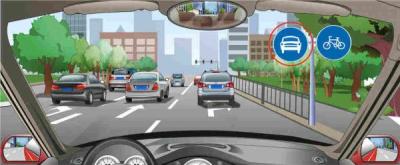
Answer:N
38、Which of the following is a bad driving habit when the vehicle in front is moving slowly in a queue?
A、Cutting in and rushing to pass
B、Not overtaking other vehicles forcefully
C、Stop or pass alternatively
D、Do not occupy on a non-motor vehicle lane
Answer:A
39、The sign on the right warns of a widened right-hand road ahead.
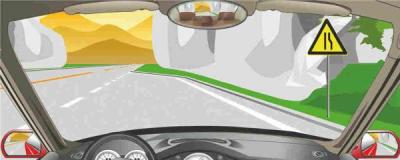
Answer:N
40、When driving on a muddy road, what should drivers do if the wheels spin and slide?
A、Cover the ground under the wheels with gravels
B、Change to a high gear and speed out
C、Cover the ground under the driving wheels with gravels
D、Violently turn the steering wheel and suddenly leed up
Answer:C
41、When there is no bandage for rescuing a wounded person, which of the following measures is wrong?
A、Dress the wounds with a handkerchief
B、Dress the wounds with a towe
C、Dress the wounds with cotton clothes
D、Dress the wounds with string
Answer:D
42、What should the driver do when he/she encounters an oncoming ambulance in the same lane?
A、Keep to the side and reduce speed or stop to yield
B、Drive ahead by occupying another lane
C、Yield by speeding up and changing lanes
D、Drive ahead in the original lane
Answer:A
43、The sign on the right warns of a dangerous mountainside road ahead.
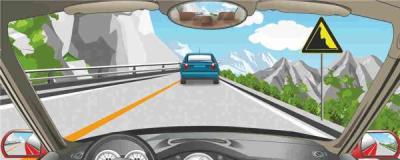
Answer:Y
44、After speeding up to more than 60 km/hour, a motor vehicle driver may drive onto the driving lane directly.
Answer:N
45、When encountering such a situation, motor vehicle drivers should take the left lane.
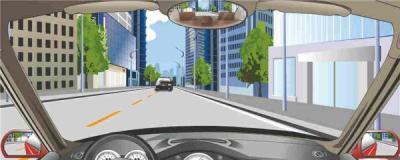
Answer:N
46、How should lamps be used by the motor vehicle driver who follows a vehicle on a road section where he street light condition is good?
A、Turn off the headlamp
B、Use high-beam
C、Turn off all lamps
D、Use low-beam
Answer:D
47、In rain, the most effective way to avoid the danger arising from "water slide" is to drive at high speed
Answer:N
48、Having driven his truck at 90km/hour on an urban road without road lamps, Mr. Zhou is passing a narrow road using the high-beam and cutting off the way of an oncoming passenger car that runs into the right guardrail as a consequence. Which of the following law-breaking acts did Mr Zhou commit?
A、Speeding
B、Approaching a vehicle not in accordance with related regulations and rules
C、Fatigued driving
D、Using lamps not in accordance with related regulations and rules
Answer:ABD
49、When a motor vehicle deviates from the normal direction due to steering failure and an accident is unavoidable, what should the driver do?
A、Apply emergency brake
B、Immediately steer and adjust
C、Immediately steer to the side where there is no obstacle and evade
D、Immediately steer to the side where there is an obstacle and evade
Answer:A
50、When a motor vehicle slides sideways on a road covered by ice and snow, the driver should violently turn the steering wheel to adjust the direction.
Answer:N
- 天津科目四有英文版吗 相关内容
- 黑龙江只认识英文可以考科目四吗 宁夏考驾照的英文单词 辽宁驾考科目三英文 重庆考驾照科目一有英文版 贵州驾考科目一英语版PDF题库 外国人考驾照笔试是英语吗 河北2025科目四考题英文版 甘肃驾校考试英文版 陕西英文驾考科目四题库PDF电子版 江西外国人考科目一 英文 青海驾校一点科目一英文版 海南驾考英语版PDF题库 宁夏驾照考试科目一英文版 湖南驾考有英文版吗 河北英文驾考题库PDF电子版 江西驾考科目四英语版书
Copyright © 2025 驾考 版权所有