
- 科目一考试
- 顺序练习
- 随机练习
- 强化练习
- 模拟考试
- 科目四考试
- 顺序练习
- 随机练习
- 强化练习
- 模拟考试
- 外国语言版题库
- 英语题库
- 德语题库
- 韩语题库
- 日语题库
- 俄语题库
- 法语题库
- 西班牙语题库
- 阿拉伯语题库
- 摩托车英文题
甘肃英文驾考科目四app
-
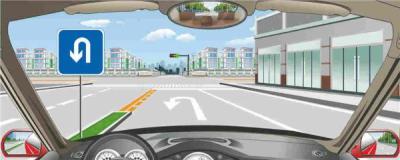
1、The guide arrow on the road surface of this lane indicates that only left turns are permitted at the intersection ahead.
Answer:N
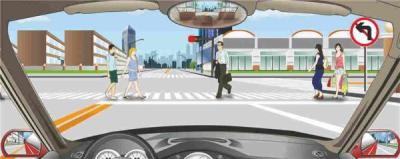
2、Motor vehicle drivers may make a U-turn in this area as long as it will not affect the passing of pedestrians.
Answer:N
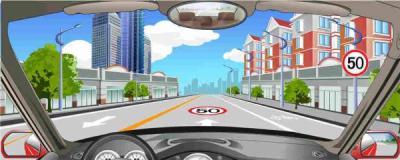
3、The marking on the road surface indicates that the speed limit of this road section is 50 km/hour.
Answer:Y
4、When the driver discovers a tire is leaking and steers the vehicle off the main driving lane, he/she should refrain from applying emergency braking so as to avoid a vehicle turnover or a rear-end collision arising from the late braking of the vehicle behind.
Answer:Y
5、For evading an emergency on an expressway, which of the following principles should drivers stick to?
A、Evading vehicles first and objects later
B、Evading people first and objects later
C、Evading vehicles first and people later
D、Evading objects first and people later
Answer:B
6、When a motor vehicle catches fire, the driver should te to park the vehicle in an open place far away from urban areas, buildings, trees, other motor vehicles and flammable materials.
Answer:Y
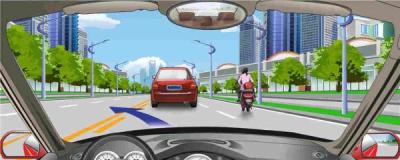
7、Drivers may temporarily cross these central broken and solid yellow lines when overtaking.
Answer:Y
8、Motor vehicles should stop and yield rapidly when encountering this situation at a bus station.
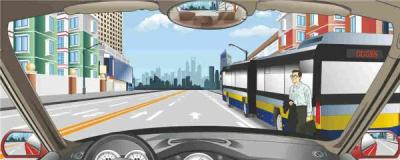
Answer:Y
9、Which of the following measures is correct for rescuing a person sustaining full-body burns?
A、Cover the fire with sandy soil
B、Spray cool water to his body
C、Put out the fire by extinguisher
D、Help to remove the burning clothes
Answer:B
10、The sign in front indicates the name and number of the highway.
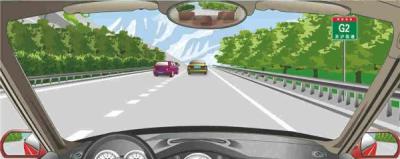
Answer:Y
11、The sign in the red circle indicates that the left road is only for small vehicles.
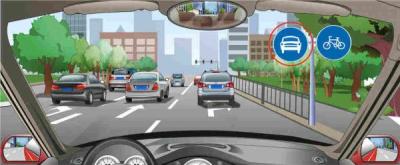
Answer:N
12、Under such circumstances, motor vehicles are not allowed to overtake.
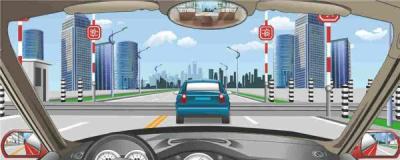
Answer:Y
13、As shown in the flash, the motor vehicle chooses a correct way to pass through the level crossing.
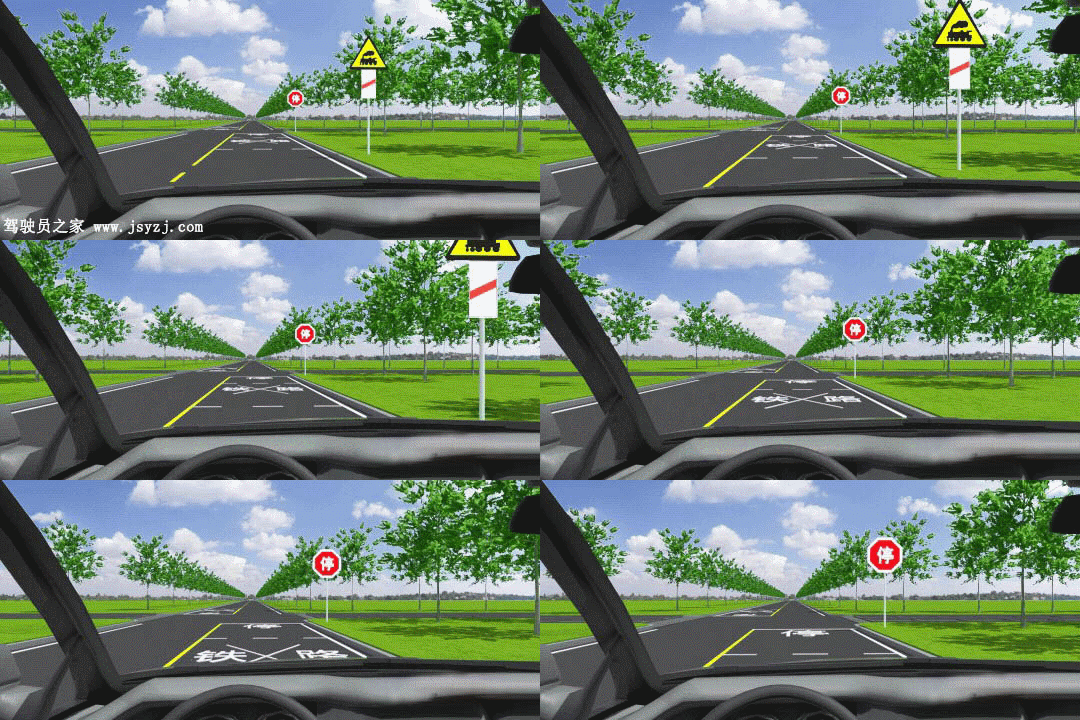
Answer:Y
14、When a motor vehicle slides sideways, how should the driver adiust the direction?
A、If the front wheels skid sideways, turn the steering wheel in the direction of the skid
B、If the front wheels skid sideways, turn the steering wheel in the opposite direction of the skid
C、If the rear wheels skid sideways, turn the steering wheel in the direction of the skid
D、If the rear wheels skid sideways, turn the steering wheel in the opposite direction of the skid
Answer:BC
15、When a motor vehicle slides sideways on a road covered by ice and snow, the driver should violently turn the steering wheel to adjust the direction.
Answer:N
16、When driving on a long downhill road, which is the best way to control the speed?
A、Coast in neutral gear
B、Take a low gear
C、Depress the clutch
D、Pull up the handbrake
Answer:B
17、The sign on the right warns that the road will narrow over the next 5 kilometers.
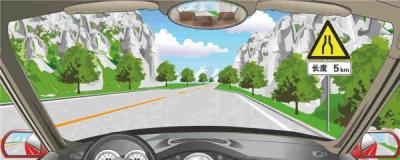
Answer:Y
18、Which one of the following measures is correct when a motor vehicle encounters this situation at night?
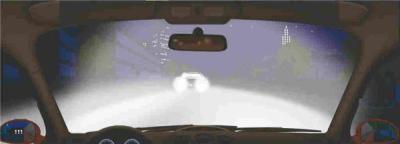
A、Keep driving at a normal speed
B、Drive at an increased speed to avoid light
C、Cut speed or stop to yield
D、Turn on high-beam to reject
Answer:C
19、When driving a vehicle equipped with power steering what should the driver do upon finding that steering is difficult?
A、Stop and identify the cause
B、Control the steering and drive slowly
C、Drive at a lower speed
D、Keep the vehicle going straight
Answer:A
20、If the road condition behind is good, motor vehicle drivers should reverse rapidly.
Answer:N
21、When parking for a long time on a downward slope due to breakdown on the road, drivers should use this method to stop up wheels.
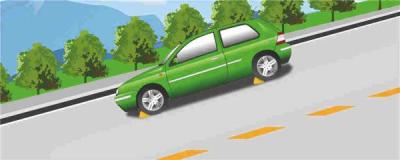
Answer:Y
22、What should be done to keep safe when a motor vehicle driver is overtaking in this condition?
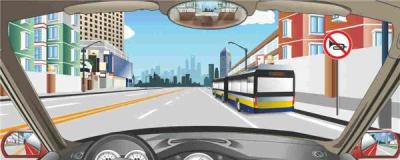
A、Reducing speed and keeping a safe distance
B、Continuously sounding the horn to indicate the vehicle in front
C、Accelerating to pass while keeping a certain distance
D、Overtaking by occupying the opposite lane
Answer:A
23、When encountering a road like this, motor vehicle drivers may make good use of neutral gear to coast.
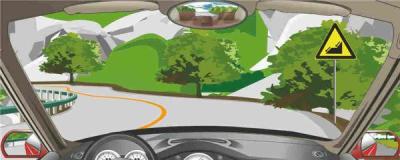
Answer:N
24、When there is a braking failure on a downhill road the driver should change the gear to one position or two positions lower, and control the speed by taking advantage of the braking role of the engine.
Answer:Y
25、How many kinds of law-breaking acts are displayed in flash 7?
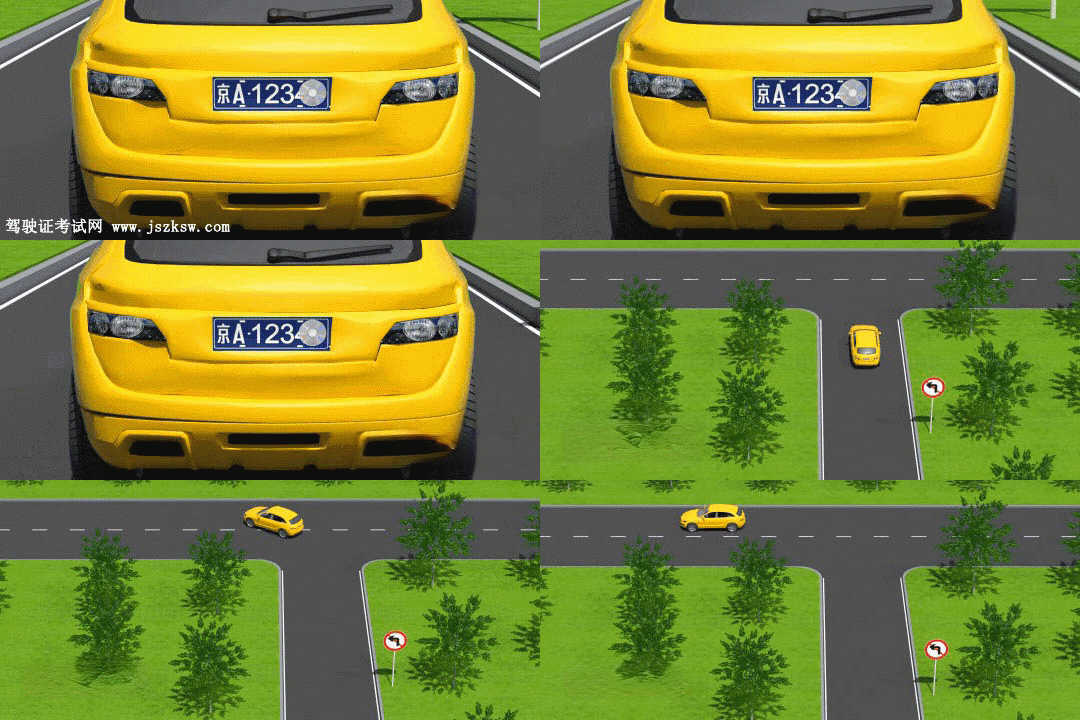
A、One
B、Two
C、Three
D、Four
Answer:B
26、What matters need attention when driving on a rainy day?
A、Avoid using the emergency brake or making sharp turns
B、Keep a safe enough distance
C、Observe the traffic situation of non-motor vehicles and surrounding pedestrians
D、Drive at a safe speed
Answer:ABCD
27、Having driven his truck at 90km/hour on an urban road without road lamps, Mr. Zhou is passing a narrow road using the high-beam and cutting off the way of an oncoming passenger car that runs into the right guardrail as a consequence. Which of the following law-breaking acts did Mr Zhou commit?
A、Speeding
B、Approaching a vehicle not in accordance with related regulations and rules
C、Fatigued driving
D、Using lamps not in accordance with related regulations and rules
Answer:ABD
28、In this driving condition, drivers should turn on the high-beam when setting off.
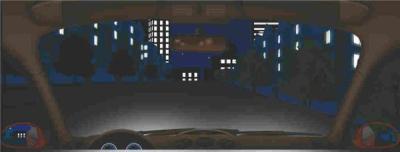
Answer:N
29、Motor vehicle drivers are allowed to make a U-turn at this intersection.
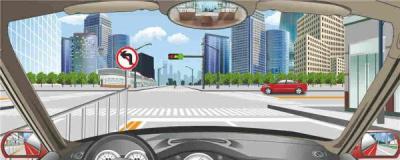
Answer:N
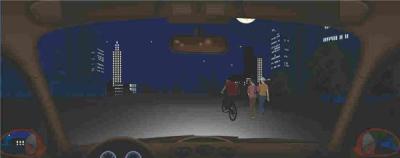
30、When the vehicle behind gives a notice of overtaking at night, the vehicle in front should not yield blindly.
Answer:Y
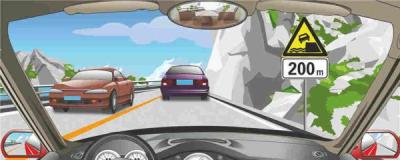
31、The sign on the right warns of an embankment road 200 meters ahead.
Answer:Y
32、When temporarily parking on a raining day, what kind of lamp should the driver turn on?
A、Front and back fog lamps
B、Hazard warning lamp
C、Headlamp
D、Reversing lamp
Answer:B
33、When a motor vehicle needs to stop for inspection after having an accident on an expressway, where should the driver park?
A、On the far outer lane
B、On the inner lane
C、On the emergency lane
D、In the triangle area on the ramp
Answer:C
34、had a head-on collision at the speed of 40 kilometers per hour with Mr. Wangs three-wheeled freight motorcycle carrying 19 passengers, killing10 people nd injuring 9. What are the main illegal acts committed by the two drivers?
A、Mr Ye drove an unpermitted vehicle type
B、Mr. Wang drove a freight motorcycle to carry passengers
C、Mr Ye exceeded the speed limit
D、Mr. Wang failed to follow the guidance of the traffic signal lights
Answer:BC
35、Which one of the following is a safe way for motor vehicles to converge into an intersection marked with this sign?
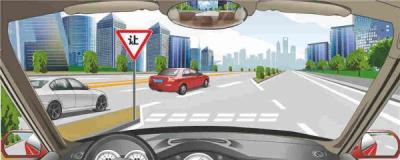
A、Speeding up and driving into the traffic flow directly
B、Driving into the traffic flow behind the gray car on the main road
C、Driving into the traffic flow from the front of the red car on the main road
D、Turning on the indicator and driving into the flow directly
Answer:B
36、Which of the following is a bad habit when changing lanes?
A、Turning on the indicator in advance
B、Observing closely before changing a lane
C、Change lanes at will
D、Not obstructing the passing of other normally moving vehicles
Answer:C
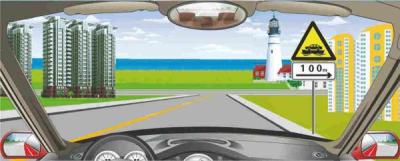
37、The sign on the right warns of a ferry crossing 100 meters after turning right at the intersection ahead.
Answer:Y
38、What action is important on this kind of mountain road?
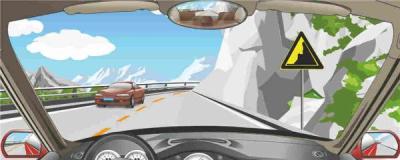
A、Take care of the dangerous hillside road on the left
B、Drive on the left
C、Drive along the central line of the road
D、Drive on the right side and pass slowly
Answer:D
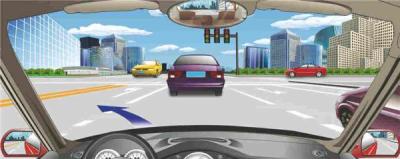
39、When a motor vehicle turns left at this intersection the driver should change to the left lane in advance by the guide arrow.
Answer:Y
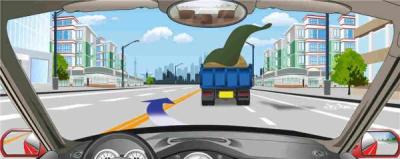
40、Drivers may temporarily cross these central solid double yellow lines when overtaking.
Answer:N
41、The circle in the center of the intersection indicates that drivers should drive along the inner side when making a small left turn.
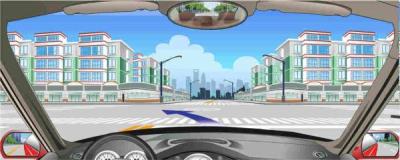
Answer:Y
42、When there is a sudden braking failure on a downhill road, in which ones of the following ways can drivers reduce speed?
A、Driving onto the emergency lane and reduce speed and stop there
B、Rubbing the vehicle body against the rocks or trees on roadside
C、Pulling up the handbrake first
D、Immediately changing to a low gear
Answer:ABD
43、The sign on the right warns of low-lying road ahead.
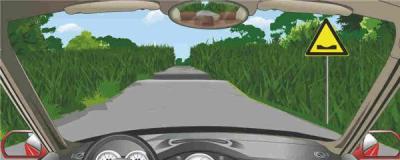
Answer:Y
44、When a motor vehicle temporarily stops at night, which lamp should be turned on?
A、Front and rear fog lamp, clearance lamp and rear position lamp
B、Head lamp, clearance lamp and rear position lamp
C、Hazard lamp, clearance lamp and rear position lamp
D、Reverse lamp, clearance lamp and rear position lamp
Answer:C
45、When driving on this section of the road, drivers should observe closely and prepare to yield to the animals crossing the road.
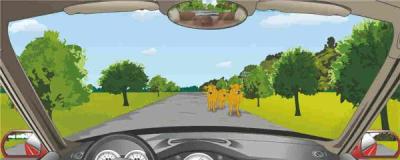
Answer:Y
46、Which of the following materials should not be used to stop bleeding?
A、Bandage
B、Sling
C、Tourniquet
D、Hemp rope
Answer:D
47、When a motor vehicle encounters a group of youngsters bypassing the motor vehicles parking beside the road, the driver should slow down voluntarily and yield.
Answer:Y
48、If a motor vehicle encounters a strong side wind when it leaves the opening of an expressway tunnel, what will happen?
A、A feeling of deceleration
B、A feeling of acceleration
C、A feeling of pressure
D、Deviation in direction
Answer:D
49、Under the circumstances shown in the flash, what should the driver do?
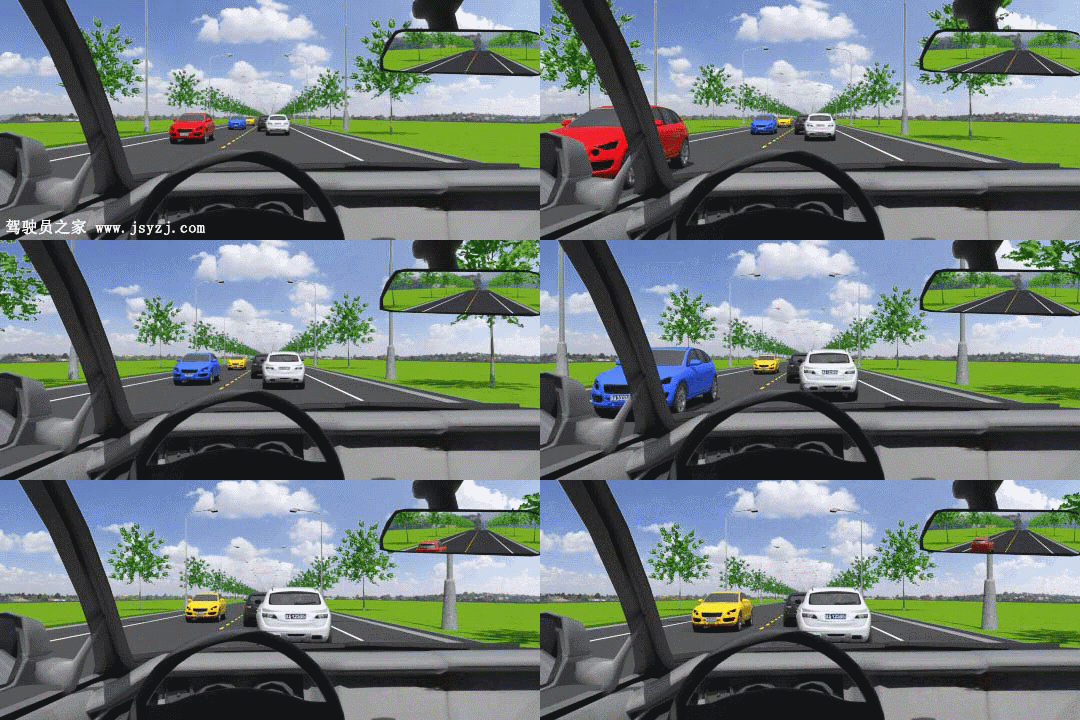
A、Find a chance to overtake the vehicle in front
B、Weave through motor vehicles ahead and pass
C、Reduce speed, stop, and wait in line
D、Sound the horn to urge vehicles in front
Answer:C
50、Mr. Zhou drove a light van (with 22 passengers) on the Bingcha Highway. At the spot of 79 kilometers mark by 150 meters of the highway, the van fell into the valley on one side, killing 12 people and injuring 10. What's the main illegal act committed by Mr.Zhou?
A、Driving a motor vehicle having failed to accept inspection in time
B、Carrying passengers on a freight motor vehicle
C、Speeding
D、Fatigued driving
Answer:B
- 甘肃英文驾考科目四app 相关内容
- 老外考驾照的理论考题是什么题目 甘肃驾考英语版题库book 驾考科目四英语版PDF 福建驾考科目四英语 老外可以在中国考驾照吗 江西2025驾考英文题库 上海驾照考试科目四英文版 广东英文版驾考 辽宁只认识英文可以考科目一吗 河南驾照考试科目一英文版 江苏外国人考驾照科目一 山西科目四有英文版吗 辽宁驾考英语 重庆外国人考科目一 英文 河北科目四英文版练习题库 安徽驾校考试英文版
Copyright © 2025 驾考 版权所有