
- 科目一考试
- 顺序练习
- 随机练习
- 强化练习
- 模拟考试
- 科目四考试
- 顺序练习
- 随机练习
- 强化练习
- 模拟考试
- 外国语言版题库
- 英语题库
- 德语题库
- 韩语题库
- 日语题库
- 俄语题库
- 法语题库
- 西班牙语题库
- 阿拉伯语题库
- 摩托车英文题
江苏英文驾考科目四题库PDF电子版
-
1、At 13: 10 pm, Mr Luo set out in his medium bus from 0 km mark on the highway, and by 14: 10 had passed the 125km mark by 200 meters, he caused a rear-end collision with a motor vehicle that ran into the side slope on the southwest side, killing 11 people and injuring 2. Which of the following law-breaking acts did Mr. Luo commit?
A、Speeding
B、Driving not in accordance with traffic markings
C、Exceeding carrying capacity
D、Fatigued driving
Answer:A
2、After a motor vehicle falls into water, the driver won't be able to open the side doors or windows to escape until water nearly fills up the compartment.
Answer:Y
3、As shown in the flash, the driver's act is correct.
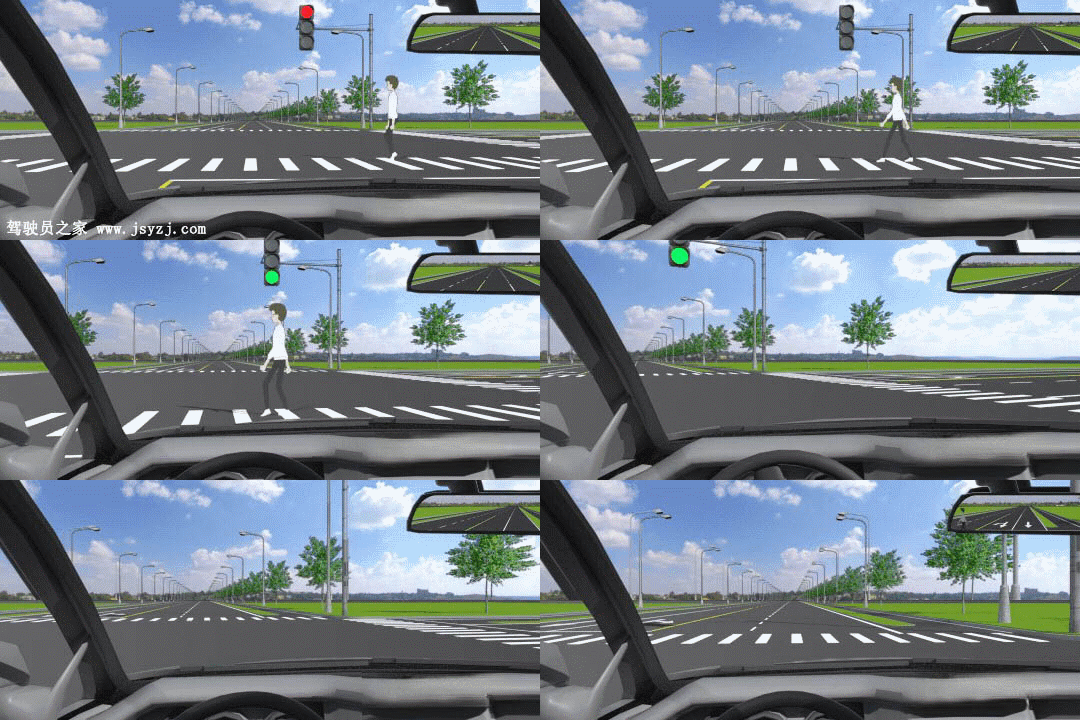
Answer:N
4、The broken white line on the right side of the road indicates that drivers are allowed to change lanes by crossing the line.
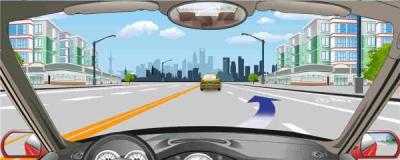
Answer:Y
5、The sign on the right warns of a one-way tunnel ahead.
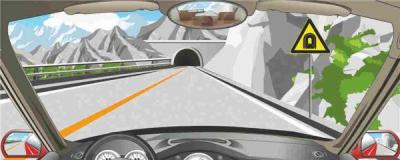
Answer:N
6、The sign in front is an advance announcement of the directions led by the interchange.
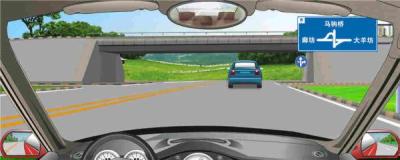
Answer:Y
7、Which of the following is a safe way for motor vehicles to pass the intersection marked with this sign?
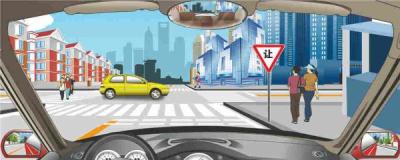
A、Stop and observe the traffic situation around the intersection
B、Approach the intersection by speeding up
C、Observe the traffic situation on the left rear side
D、Approach the intersection at a reduced speed
Answer:D
8、When encountering this situation at the gate of a school, the driver should prepare to stop.
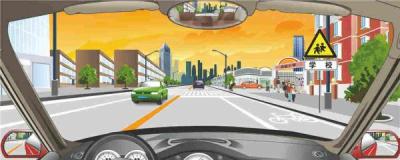
Answer:Y
9、Under such circumstances, motor vehicles are allowed to cross the central solid line to overtake.
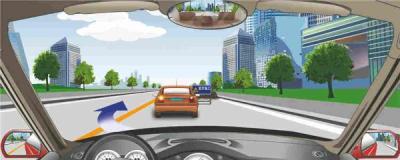
Answer:N
10、Having driven a large passenger vehicle (carrying 44 passengers, permitted carrying capacity 44) equipped with sleepers at 44km/hour on a frozen road, at 58 km mark by 500m on 540 County Road in Yanhe County, Mr. Luo sideslipped and left the road, killing 15 people and injuring 2 7. Which of the following law-breaking acts did Mr Luo commit?
A、Exceeding the carrying capacity of the passenger vehicle
B、Speeding
C、Fatigued driving
D、Improper driving
Answer:B
11、Under such circumstances, what should be done by the motor vehicle driver?
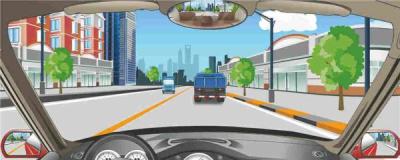
A、Overtaking the vehicle in front on its left
B、Overtaking by occupying the opposite lane
C、Overtaking the vehicle in front on its right
D、Following the vehicle in front
Answer:D
12、The sign on the right indicates a T-shaped intersection head.
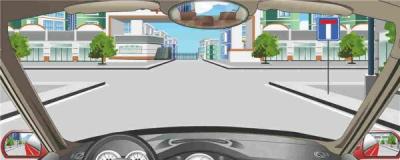
Answer:N
13、Which of the following is a basic requirement for rescuing the injured at the scene of a traffic accident?
A、Treat wounds first and safe life later
B、Save life first and treat wounds later
C、Help lightly wounded persons first
D、Help seriously wounded persons later
Answer:B
14、The road marker indicates that vehicles are only allowed to turn right at the intersection ahead.
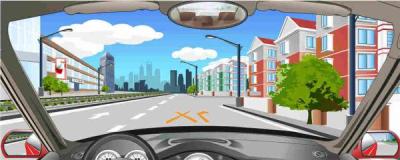
Answer:N
15、What should motor vehicle drivers do under such circumstances at night?
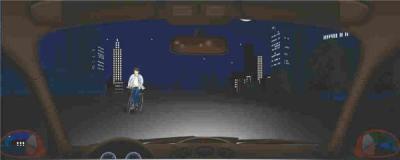
A、Turn off the headlamp when approaching
B、Use low-beam
C、Use high-beam
D、Turn off all lamps in advance
Answer:B
16、Under such circumstances, what should be done by the motor vehicle driver who has been overtaken?
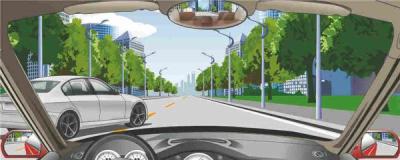
A、Sounding the horn to warn the vehicle that overtook
B、Reducing speed or pulling over by the right side
C、Protesting by turning on the high-beam
D、Catching up with and overtaking the vehicle that overtook, and offering admonitions
Answer:B
17、When approaching another vehicle at night, why should the driver alternate between high-and-low-beam at a distance more than 150 meters?
A、Warn each other before passing
B、Driving habit
C、Easy to observe the situation ahead from either side
D、Courtesy
Answer:C
18、When encountering such a situation, motor vehicle drivers should take the left lane.
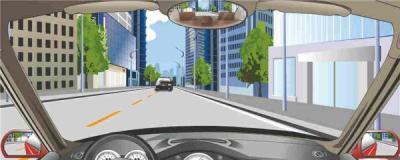
Answer:N
19、The sign on the right warns of a guarded railway crossing 100 meters ahead.
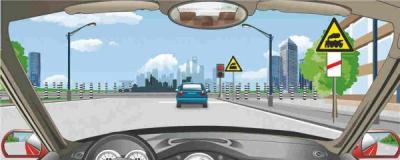
Answer:N
20、Which is the correct way to use a fire extinguisher?
A、Stand on the leeward side
B、Direct the fire extinguisher at the source of fire
C、Try to approach the source of fire as close as possible
D、Direct the fire extinguisher at the flames
Answer:B
21、When encountering such pedestrians, what should motor vehicle drivers do?
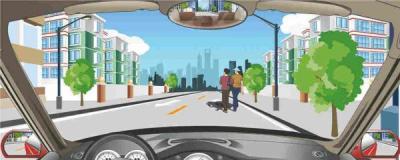
A、Go ahead along the middle line of the road
B、Continuously sound the horn
C、Speed up and overtake
D、Pay attention to the actions of such pedestrians
Answer:D
22、When driving on a snowy day, drivers should follow the tracks on the road before them.
Answer:Y
23、When the speed indicated by the speed limit sign on the highway contradicts the speed indicated for the specific lanes the speed indicated for the specific lanes should prevail.
Answer:N
24、When a motor vehicle slides sideways, how should the driver adiust the direction?
A、If the front wheels skid sideways, turn the steering wheel in the direction of the skid
B、If the front wheels skid sideways, turn the steering wheel in the opposite direction of the skid
C、If the rear wheels skid sideways, turn the steering wheel in the direction of the skid
D、If the rear wheels skid sideways, turn the steering wheel in the opposite direction of the skid
Answer:BC
25、What should a driver do when the engine stalls suddenly on the road?
A、Apply emergency braking to stop the vehicle
B、Slow down and stop the vehicle
C、Change to neutral gear and coast
D、Shut down the ignition switch
Answer:B
26、Which lamp should be turned on when motor vehicles pass through a road section at night where the street light condition is good?
A、Front and rear fog lamps
B、Low-beam
C、High-beam
D、Hazard lamp
Answer:B
27、Where is the proper parking place for breakdown motor vehicles stopping for examination?
A、In the far outer lane
B、In the inner lane
C、In the emergency lane
D、Entrance area of the ramp
Answer:C
28、The sign in front is an advance announcement of the directions led by this intersection.
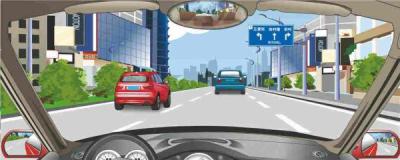
Answer:Y
29、Unless stopping due to obstacles or vehicle breakdown on an expressway, motor vehicles are not allowed to stop to pick up or drop off people or load and unload cargo.
Answer:Y
30、Motor vehicle drivers don't need to fasten their seatbelt
Answer:N
31、When driving on an expressway which of the following statements is correct?
A、Drivers may stop to pick up or drop off passengers in the emergency lane
B、Drives may load or unload cargo in the emergency lane
C、Drives may overtake other vehicles or stop in the deceleration or acceleration lane
D、Drives are prohibited from driving or stopping in the emergency lane in a non-emergency case
Answer:D
32、What matters need attention when driving on a rainy day?
A、Avoid using the emergency brake or making sharp turns
B、Keep a safe enough distance
C、Observe the traffic situation of non-motor vehicles and surrounding pedestrians
D、Drive at a safe speed
Answer:ABCD
33、Drivers should drive at a lower speed when traffic police give these hand signals.
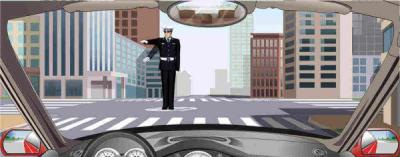
Answer:Y
34、What should the driver pay attention to when the motor vehicle on the main road approaches a junction with a feeder road?
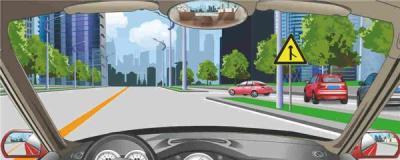
A、Slow down in advance and pay attention to other motor vehicles
B、Maintain the normal speed
C、Sound the horn and pass rapidly
D、Speed up and pass rapidly
Answer:A
35、What should be taken note of by drivers in this situation?
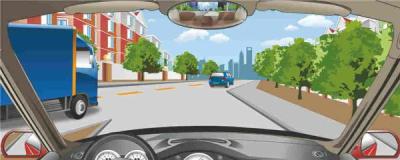
A、he motor vehicle(s)on the left side
B、The motor vehicle(s) on the right side
C、The motor vehicle(s) behind
D、The motor vehicle(s)in front
Answer:A
36、When driving a vehicle equipped with power steering what should the driver do upon finding that steering is difficult?
A、Stop and identify the cause
B、Control the steering and drive slowly
C、Drive at a lower speed
D、Keep the vehicle going straight
Answer:A
37、When driving on the highway in foggy, rainy, or snowy weather with a range of visibility between 100 meters and 200 meters, what should motor vehicle drivers do?
A、Turn on the fog lamp, low-beam, clearance lamp and front and rear position lamp
B、Drive at a speed of no more than 60 km/hour
C、Keep a breaking distance of more than 100 meters from the vehicle in front in the same lane
D、Leave the highway from the nearest exit as soon as possible
Answer:ABC
38、If a motor vehicle breaks down or causes a traffic accident on the expressway and cannot run normally the vehicle may be towed by any accompanying motor vehicles.
Answer:N
39、When parking temporarily on a snowy day, drivers should turn on the headlamp and fog lamp.
Answer:N
40、Which of the following materials should not be used to stop bleeding?
A、Bandage
B、Sling
C、Tourniquet
D、Hemp rope
Answer:D
41、When encountering a road like this, motor vehicle drivers should downshift in advance to maintain the dynamic of the motor vehicle.
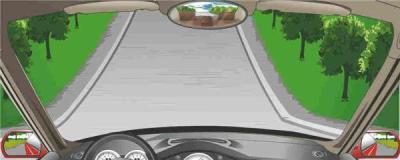
Answer:Y
42、When a bus encounters an unexpected situation or an accident, the driver should do his best to minimize the loss and should never cause a secondary accident or even greater loss for the sake of avoiding danger.
Answer:Y
43、When a motor vehicle temporarily stops in fog, which lamp should be turned on?
A、Hazard lamp, clearance lamp and rear position lamp
B、Left-turn indicator, clearance lamp and rear position amp
C、Headlamp, clearance lamp and rear position lamp
D、Reverse lamp, clearance lamp and rear position lamp
Answer:A
44、What should be done first after getting into the vehicle?
A、Observe the surrounding traffic situation
B、No need to observe the traffic situation around
C、Open the door and get in directly
D、Take note of the weather
Answer:A
45、What should be done by the driver who intends to overtake but the motor vehicle in front neither reduces its speed nor allows the right of way?
A、Continuously sounding the horn and accelerating to overtake
B、Accelerating and continuing to overtake
C、Refraining from overtaking
D、Following the vehicle in front closely and finding a chance to overtake
Answer:C
46、The sign on the right indicates that no long-sounding horn.
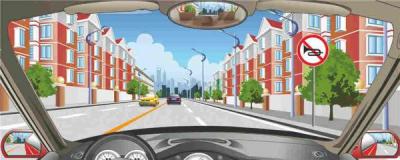
Answer:N
47、The sign on the right indicates a left-turn bypass route at the intersection ahead.
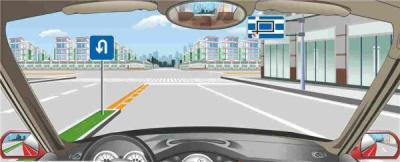
Answer:Y
48、The guide arrow on the road surface of this lane indicates that only right turns are permitted at the intersection ahead.
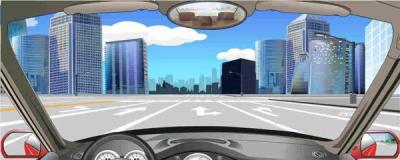
Answer:N
49、In this situation, motor vehicles are permitted to stop temporarily at bus stations.
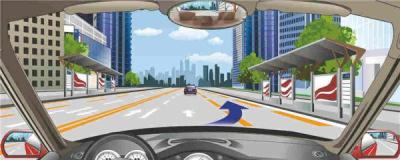
Answer:N
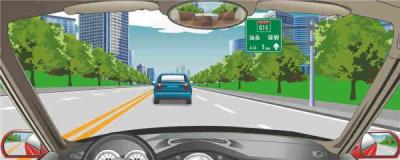
50、The sign in front indicates a one-kilometer distance from the highway entry.
Answer:Y
- 江苏英文驾考科目四题库PDF电子版 相关内容
- 外国考驾照考什么内容 陕西驾考科目四英语版书 吉林英文驾考科目4 云南英文版驾考 北京驾考科目一英语版书 重庆科目四英文版练习题库 广西英文驾考科目四app 辽宁科目四英文版题目 云南驾考英文版题库 天津外国人考科目一 英文 吉林外国人考科目一 英文 河南考驾照科目四有英文版 安徽科目四英文版练习题库 上海科目四英文版在哪里找 安徽考驾照科目四有英文版 江西外国人考驾照科目一
Copyright © 2025 驾考 版权所有