
- 科目一考试
- 顺序练习
- 随机练习
- 强化练习
- 模拟考试
- 科目四考试
- 顺序练习
- 随机练习
- 强化练习
- 模拟考试
- 外国语言版题库
- 英语题库
- 德语题库
- 韩语题库
- 日语题库
- 俄语题库
- 法语题库
- 西班牙语题库
- 阿拉伯语题库
- 摩托车英文题
甘肃2025英文驾考PDF题库
-
1、The crosswalk of the intersection warns that pedestrians have priority.
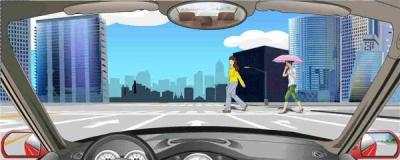
Answer:Y
2、Drivers may turn left when traffic police give these hand signals.
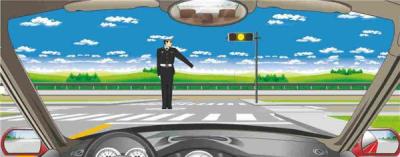
Answer:N
3、Sounding the horn on a foggy daY can arouse the attention of the opposite side. After hearing the horn from the opposite side, the driver should also sound their own horn to respond.
Answer:Y
4、The sign on the right indicates that drivers should choose their lanes in accordance withthe directions indicated by arrows.
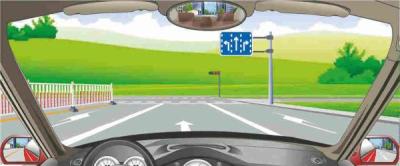
Answer:Y
5、How many kinds of law-breaking acts are displayed in flash 4?
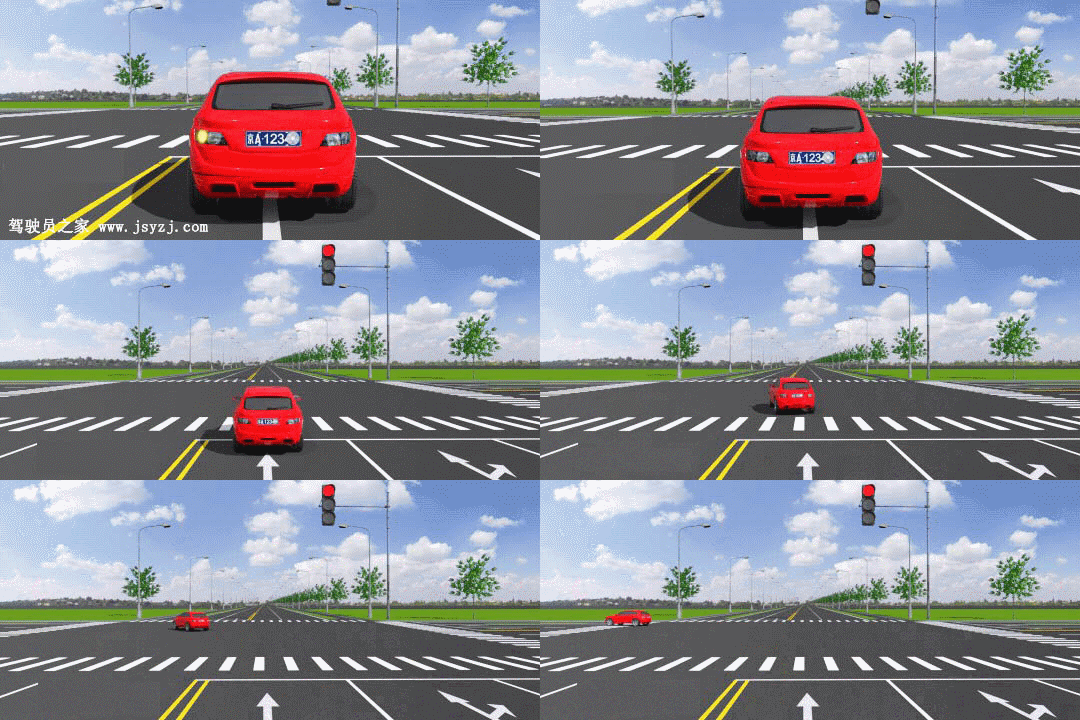
A、One
B、Two
C、Three
D、Four
Answer:C
6、The sign on the right warns for livestock on the road ahead.
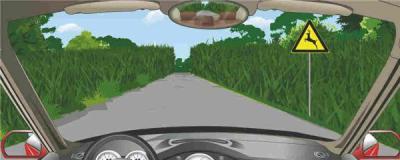
Answer:N
7、Which of the following is a safe way for motor vehicles to pass the intersection marked with this sign?
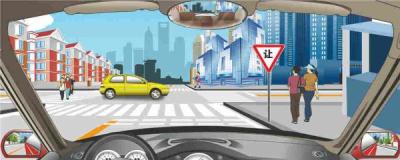
A、Stop and observe the traffic situation around the intersection
B、Approach the intersection by speeding up
C、Observe the traffic situation on the left rear side
D、Approach the intersection at a reduced speed
Answer:D
8、The sign on the right indicates a one-kilometer distance from the ETC toll station.
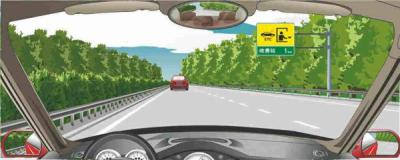
Answer:Y
9、When driving on a foggy day, the driver should turn on the fog lamp.
Answer:Y
10、When parking for a long time on an upward slope due to breakdown on the road, drivers should use this method to stop up wheels.
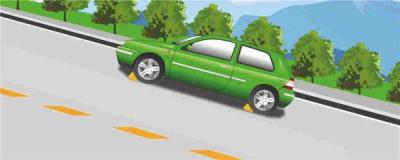
Answer:N
11、After setting off from a roadside, motor vehicle drivers should watch both sides of the road, turn left and drive into the normal lane slowly.
Answer:Y
12、Drivers may temporarily cross these central solid double yellow lines when overtaking.
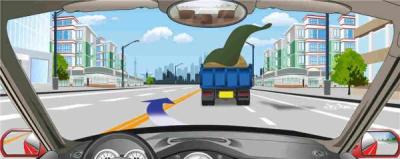
Answer:N
13、When a front tire bursts, after controlling the driving direction, what should be done by the driver in order to slow down and stop?
A、Immediately change to a high gear
B、Immediately change to a low gear
C、Immediately change to the neutral gear
D、Apply emergency braking
Answer:B
14、The leading cause of this accident is that the driver failed to make sure that it was safe to reverse before doing so.
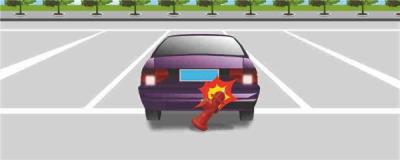
Answer:Y
15、When there is a braking failure on a downhill road, what should not be done by the driver?
A、Steering the motor vehicle to the uphill direction
B、Stopping the vehicle by rubbing the vehicle body against the rocks or trees on roadside
C、Driving to the emergency lane and stop the vehicle there
D、Pulling up the stopping brake or change the gear to two positions lower
Answer:D
16、When the tire pressure is too low, what can happen when driving at a high speed?
A、Tire pressure will be unstable
B、Tire pressure will increase
C、Driving resistance will decrease
D、The tire will burst
Answer:D
17、When driving on the expressway in a heavy rain, what should the driver do to avoid "water sliding" phenomenon?
A、Install slide-proof devices
B、Speed up
C、Slow down
D、Continue to depress the brake
Answer:C
18、At this moment, the driver may speed up and pass the intersection rapidly.
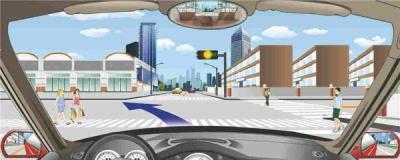
Answer:N
19、When driving on an expressway, where should the driver park?
A、The service area
B、The acceleration lane
C、The deceleration lane
D、On the ramp
Answer:A
20、Under such circumstances, motor vehicles are not allowed to overtake.
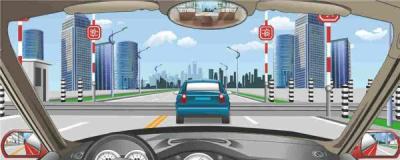
Answer:Y
21、The driver may turn right directly at this intersection.
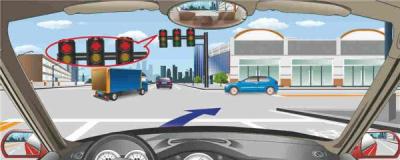
Answer:N
22、Under such circumstances, the motor vehicle driver should voluntarily reduce speed and let the vehicle behind overtake.
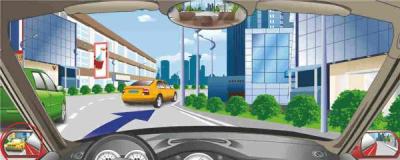
Answer:Y
23、The guide arrow on the road surface of this lane indicates that only U-turns are permitted at the intersection ahead.
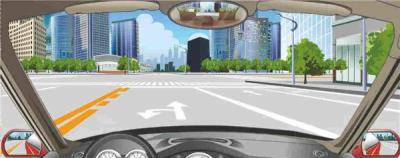
Answer:N
24、When the engine suddenly stalls on the road, what should the driver do?
A、Stop the vehicle and overhaul it immediately
B、Immediately turn on the hazard lamps
C、Move the vehicle to a place where it will not obstruct the traffic flow
D、Set up a breakdown warning sign
Answer:BCD
25、A motor vehicle should slow down and stop at this level crossing.
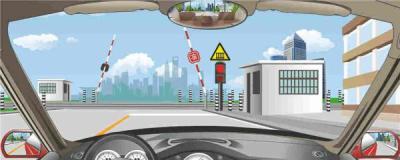
Answer:Y
26、What should be done by the driver who intends to overtake but the motor vehicle in front neither reduces its speed nor allows the right of way?
A、Continuously sounding the horn and accelerating to overtake
B、Accelerating and continuing to overtake
C、Refraining from overtaking
D、Following the vehicle in front closely and finding a chance to overtake
Answer:C
27、What should be done by the driver who intends to overtake but finds that the vehicle in front is also overtaking?
A、Following the vehicle in front closely and finding a chance to overtake it
B、Accelerating to overtake forcefully
C、Continuously sounding the horn to urge the vehicle in front to yield
D、Refraining from overtaking and letting the vehicle in front overtake first
Answer:D
28、When approaching another vehicle at night, why should the driver alternate between high-and-low-beam at a distance more than 150 meters?
A、Warn each other before passing
B、Driving habit
C、Easy to observe the situation ahead from either side
D、Courtesy
Answer:C
29、When driving in rain and encountering pedestrians with umbrellas or wearing raincoats, what should be done by motor vehicle drivers in order to yield?
A、Drive at a normal speed
B、Sound the horn to alert when approaching the pedestrians
C、Speed up and bypass on the left
D、Reduce speed and sound the horn in advance
Answer:D
30、Which of the following is a bad driving habit?
A、Using lights in accordance with relevant rules
B、Carrying both vehicle and driving license
C、Discarding rubbish from the side window
D、Follow the guidance of the traffic signals
Answer:C
31、Mr Ran drove his car from 6am until 11 am without rest, falling down a steep 85-meter ridge at one side of a highway 1 km from Xunan Road in Xuahan County,killing 13 people and injuring 9. Which of the following law-breaking acts did Mr Ran commit?
A、Speeding
B、Driving not in accordance with the traffic markings
C、Exceeding carrying capacity
D、Fatigued driving
Answer:D
32、When entering an expressway ramp, which of the following statements is correct?
A、Drivers are allowed to overtake other vehicles
B、Drivers are prohibited from making U-turns
C、Drivers are allowed to stop
D、Drivers are allowed to reverse
Answer:B
33、When a gas tanker is leaking heavily, which of the following measures is wrong?
A、Cut off the power
B、Wear gas mask and protect gloves
C、Turn off the valve to stop leaking
D、Evacuate people to the leeward side
Answer:D
34、What should a driver do when the engine stalls suddenly on the road?
A、Apply emergency braking to stop the vehicle
B、Slow down and stop the vehicle
C、Change to neutral gear and coast
D、Shut down the ignition switch
Answer:B
35、When driving on a muddy road, what should the driver do?
A、Try to avoid using the foot brake
B、Drive slowly in mid or low gear
C、Firmly hold the steering wheel
D、Speed up and pass through
Answer:ABC
36、When braking, the steering will become impossible if the front wheels are blocked
Answer:Y
37、If a motor vehicle misses an exit on the expressway, the driver may reverse along the road shoulder.
Answer:N
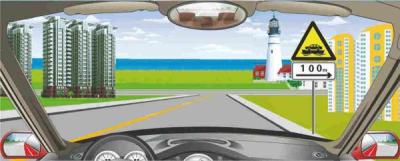
38、The sign on the right warns of a ferry crossing 100 meters after turning right at the intersection ahead.
Answer:Y
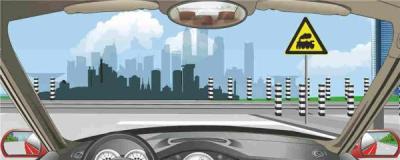
39、The sign on the right warns of a guarded railway intersection ahead.
Answer:N
40、How many kinds of law-breaking acts are displayed in flash 7?
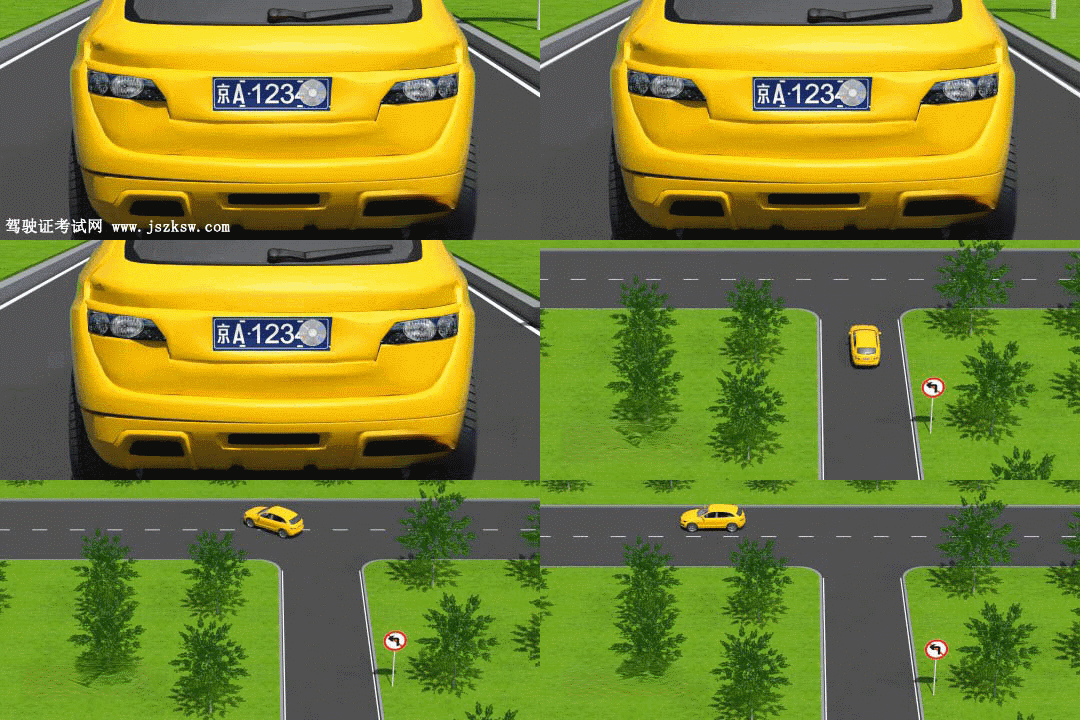
A、One
B、Two
C、Three
D、Four
Answer:B
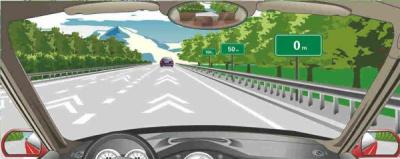
41、The white zig-zag line on the highway serves as a reference for the speed of a driver.
Answer:N
42、When encountering a road like this, motor vehicle drivers should downshift in advance to maintain the dynamic of the motor vehicle.
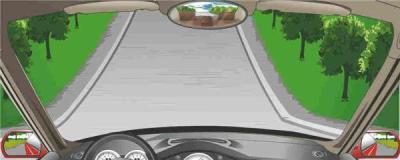
Answer:Y
43、The sign in front indicates a one-kilometer distance from the highway entry.
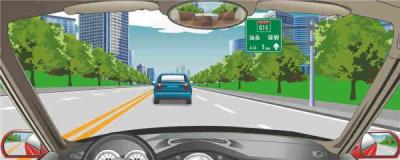
Answer:Y
44、When removing a wounded person suffering spinal fracture, the rescuer should never help the wounded person to walk. He may be carried away with a soft stretcher.
Answer:N
45、Under such circumstances, what should motor vehicle drivers do?
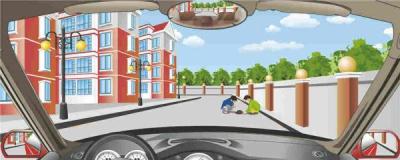
A、Continuously sound the horn
B、Pass quickly
C、Pass at a lower speed
D、Bypass from either side
Answer:C
46、How many kinds of law-breaking acts are displayed in flash 3?

A、One
B、Two
C、Three
D、Four
Answer:B
47、When approaching a sharp curve, motor vehicle drivers should reduce speed only after entering the curve.
Answer:N
48、Which one of the following is the safest way when driving a motor vehicle on this road?
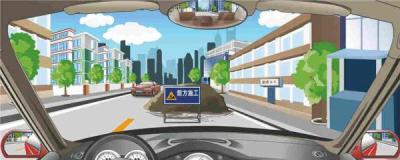
A、Speed up and bypass the obstacle
B、Take the opposite lane and compel the other vehicle to yield
C、Stop and yield to the oncoming vehicle
D、Sound the horn or turn on the headlamp
Answer:C
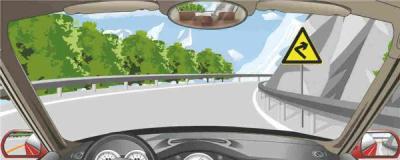
49、When driving on this dangerous mountainside road motor vehicle drivers should drive along the left side of the road.
Answer:N
50、What's the main impact of foggy weather on safe driving?
A、Easy to slide sideways
B、Low visibility
C、Increase the resistance
D、Widen the field of vision
Answer:B
- 甘肃2025英文驾考PDF题库 相关内容
- 重庆驾考英语版PDF题库 北京科目四英文版 重庆2025科目四考题英文版 外国人学驾照需要什么手续和证件和材料 外国的驾照怎么考回中国 江苏科目四考题英文版 安徽科目四英文版练习题库 宁夏关于考驾照的英语 吉林英文驾考科目4 云南驾照考试科目四英文版 浙江科目四考试英文版 西藏科目四英文版 河南驾考英文版题库 天津科目一考题英文版 安徽关于考驾照的英语 黑龙江驾考科目四英语
Copyright © 2025 驾考 版权所有