
- 科目一考试
- 顺序练习
- 随机练习
- 强化练习
- 模拟考试
- 科目四考试
- 顺序练习
- 随机练习
- 强化练习
- 模拟考试
- 外国语言版题库
- 英语题库
- 德语题库
- 韩语题库
- 日语题库
- 俄语题库
- 法语题库
- 西班牙语题库
- 阿拉伯语题库
- 摩托车英文题
重庆2025科目四考题英文版
-
1、When braking failure happens to a fast-moving motor vehicle, what should be done by the driver to brake?
A、Continuously depressing the brake pedal
B、Immediately changing to a low gear to reduce speed and using the handbrake
C、Swiftly depressing the clutch pedal
D、Swiftly pulling up the handbrake
Answer:B
2、When driving on a road covered with ice and snow, drivers tend to encounter glare caused by reflection of light rays from the road surface.
Answer:Y
3、Under the circumstances shown in the flash, what should the driver do?
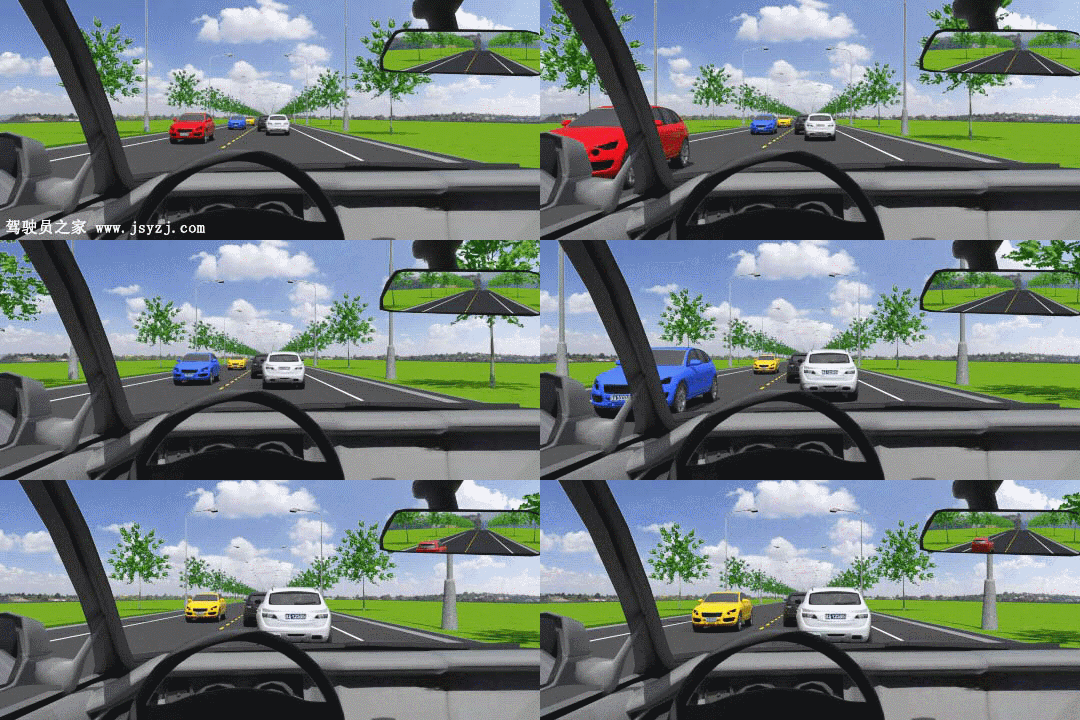
A、Find a chance to overtake the vehicle in front
B、Weave through motor vehicles ahead and pass
C、Reduce speed, stop, and wait in line
D、Sound the horn to urge vehicles in front
Answer:C
4、Which one of the following is a safe way for motor vehicles to converge into an intersection marked with this sign?
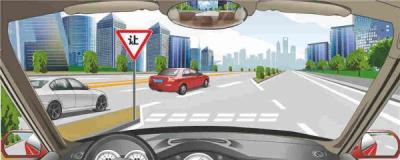
A、Speeding up and driving into the traffic flow directly
B、Driving into the traffic flow behind the gray car on the main road
C、Driving into the traffic flow from the front of the red car on the main road
D、Turning on the indicator and driving into the flow directly
Answer:B
5、What should be done by motor vehicle drivers in order to yield politely to such pedestrians?
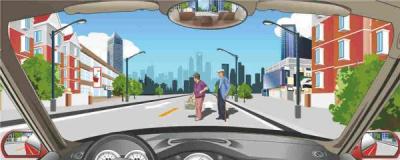
A、Speed up and bypass in front of the pedestrians
B、Speed up and bypass from behind the pedestrians
C、Reduce speed or stop to yield
D、Continuously sound the horn to alert the pedestrians
Answer:C
6、When a motor vehicle accidentally hits the guardrail of the highway, what should be done by the driver inorder to keep safe?
A、Firmly holding and properly adjusting the steering wheel
B、Turning swiftly to the opposite direction
C、Immediately applying emergency braking
D、Immediately steering to the collision side
Answer:A
7、Drivers are not allowed to cross these lane-dividing lines when overtaking in the same direction.
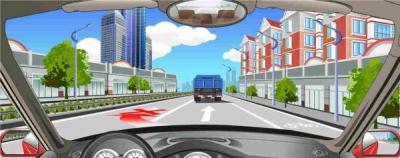
Answer:Y
8、When driving on a muddy road, what should drivers do if the wheels spin and slide?
A、Cover the ground under the wheels with gravels
B、Change to a high gear and speed out
C、Cover the ground under the driving wheels with gravels
D、Violently turn the steering wheel and suddenly leed up
Answer:C
9、What should the driver do when the motor vehicle counters this situation?
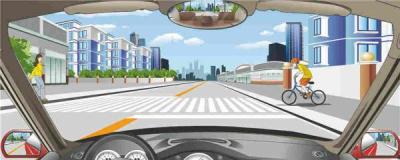
A、Sound the horn continuously to warn
B、Speed up and bypass from the front
C、Slow down when encountering any risks
D、Slow down voluntarily and yield
Answer:D
10、Under such circumstances, the driver should stop the vehicle and yield to pedestrians.
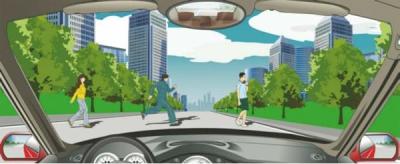
Answer:Y
11、The broken yellow line in the center of the road indicates that overtaking by crossing the line is permitted in safe situations.
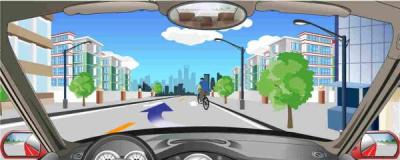
Answer:Y
12、When putting out a fire disaster that gives out corrosive steam or poisonous gas, the firefighters should wear gas masks and other related protective articles and operate from the windward side.
Answer:Y
13、The sign on the right warns of a danger from rockfall on the left side.
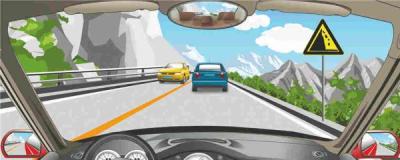
Answer:Y
14、What should the driver do when seeing these hand signals?
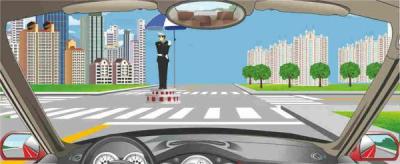
A、Turn left at the intersection
B、Stop and wait
C、Go straight at the intersection
D、Drive to the waiting area for turning left
Answer:B
15、The sign on the right indicates notice by sounding the horn.
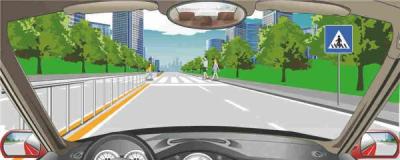
Answer:N
16、The guide line of a changeable lane indicates that drivers can choose their direction at will.
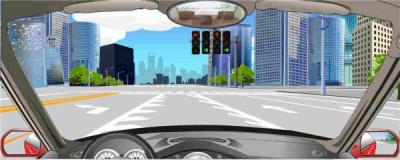
Answer:N
17、When seeing this sign, the driver should slow down promptly.
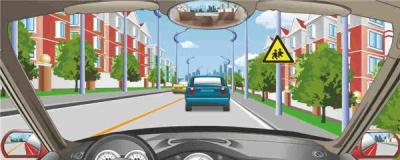
Answer:Y
18、Under such circumstances, the motor vehicle driver should voluntarily reduce speed and let the vehicle behind overtake.
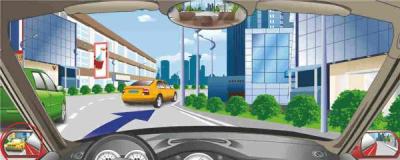
Answer:Y
19、The sign indicates no overtaking on the section ahead.
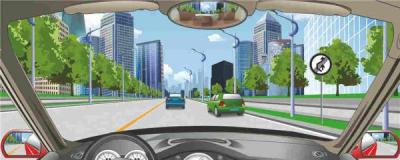
Answer:N
20、What should motor vehicle drivers do when going straight and passing through the intersection ahead?
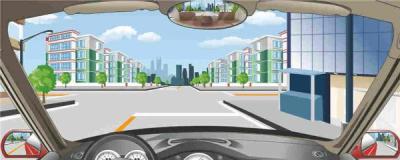
A、Reduce speed when approaching the intersection
B、Reduce speed after entering the intersection
C、May pass through the intersection without speed reduction
D、Accelerate in advance to pass through the intersection
Answer:A
21、The sign on the right indicates the location of the highway emergency phone.
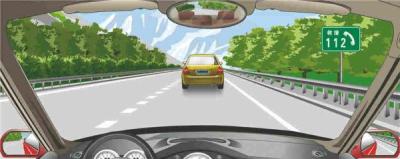
Answer:N
22、When encountering a school bus which stops at the right roadside and students are embarking or disembarking, and there are three motor vehicle lanes in each direction, motor vehicle drivers on the left lane behind the bus should stop and wait.
Answer:N
23、The sign on the right indicates a bypass route at the intersection ahead.
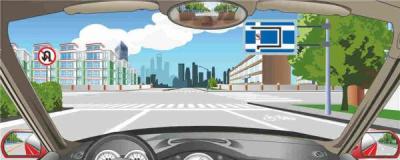
Answer:Y
24、Drivers are not allowed to drive on or across these filled-in slanted yellow lines.
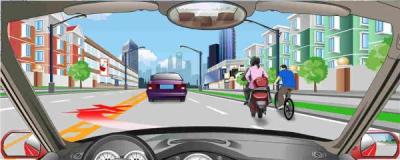
Answer:Y
25、The sign on the right warns of a widened left-hand road ahead.
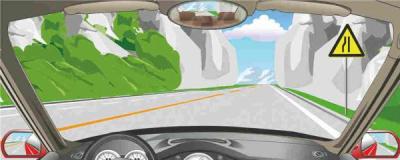
Answer:N
26、Before setting off, it is necessary to check the driving cabin, engine cabin, external and tires of the motor vehicle.
Answer:Y
27、When encountering such pedestrians while driving, a longer safety distance should be kept by drivers.
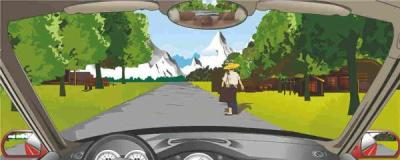
Answer:Y
28、Under such circumstances, what should motor vehicle drivers do?
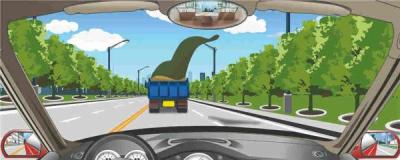
A、Follow the vehicle closely
B、Overtake the vehicle quickly on its left
C、Keep a long braking distance
D、Overtake the vehicle quickly on its right
Answer:C
29、Motor vehicle drivers are allowed to make a U-turn at this intersection.
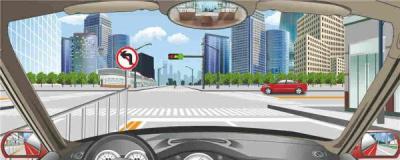
Answer:N
30、Under such circumstances, what should motor vehicle drivers do?
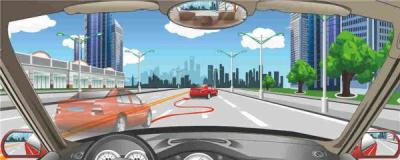
A、Overtake the vehicle quickly on its left
B、Keep a long braking space
C、Continuously sound the horn to alert the vehicle in front
D、Overtake the vehicle quickly from its right
Answer:B
31、What's the main impact of foggy weather on safe driving?
A、Easy to slide sideways
B、Low visibility
C、Increase the resistance
D、Widen the field of vision
Answer:B
32、What is the best way to make turns on this kind of curving mountain road?
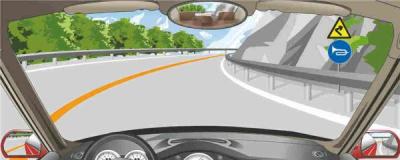
A、Drive along the outer side of the curve
B、Slow down, sound the horn and drive on the right
C、Borrow the opposite lane
D、Drive along the central line of the road
Answer:B
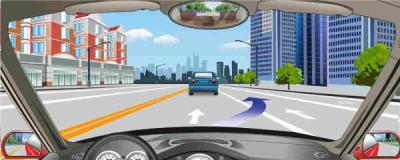
33、Drivers may cross these lane-dividing lines to change lanes in the same direction.
Answer:N
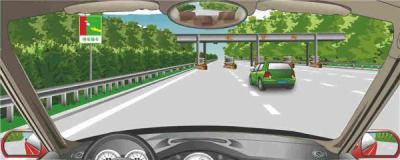
34、The sign on the left indicates that drivers should stop to take a pass card at the toll station ahead.
Answer:Y
35、Mr. Tang drove a large bus with 74 passengers (capacity 30 people). When descending a long curving slope at a speed of 38 kilometers per hour, the bus overturned to a brook beside the road. As a result of the accident, 17 people were killed and 57 people injured. What's the main illegal act committed by Mr. Tang?
A、Driving after drinking
B、Carrying more passengers than permitted
C、Fatigued driving
D、Speeding
Answer:BD
36、When there is a braking failure, the driver should first control the direction and then try to control the speed.
Answer:Y
37、When there is no bandage for rescuing a wounded person, towels, handkerchiefs, bed sheets and stockings can all be used for dressing.
Answer:Y
38、If a motor vehicle encounters a strong side wind when it leaves the opening of an expressway tunnel, what will happen?
A、A feeling of deceleration
B、A feeling of acceleration
C、A feeling of pressure
D、Deviation in direction
Answer:D
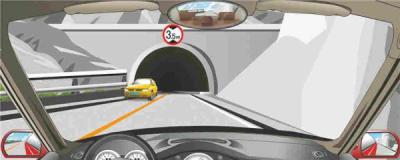
39、The sign above the tunnel indicates a height limit of 3.5 meters on the road ahead.
Answer:Y
40、After a motor vehicle falls into water, the driver should immediately close the windows to prevent water from flowing into the compartment and to keep the air from flowing out. At the same time, he/she should make calls to tell the rescue personnel the place of the accident and wait for their arrival.
Answer:N
41、vehicles to pass an intersection marked with this sign?
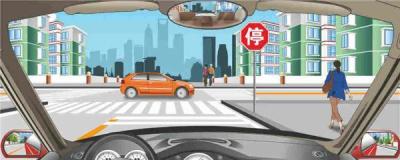
A、Stopping and observing the traffic situation around the intersection
B、Approaching the intersection by speeding up
C、Approaching the intersection at a reduced speed
D、Observing the traffic situation on the left rear side
Answer:A
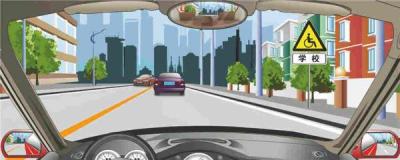
42、The sign on the right warns for disabled people ahead.
Answer:Y
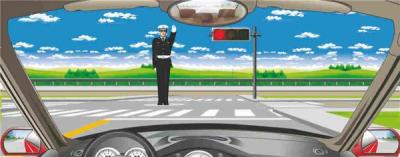
43、These traffic police signals indicate that passing is prohibited.
Answer:Y
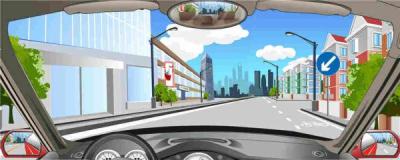
44、The sign on the right indicates that driving along left side only.
Answer:Y
45、How many kinds of law-breaking acts are displayed in flash 1?
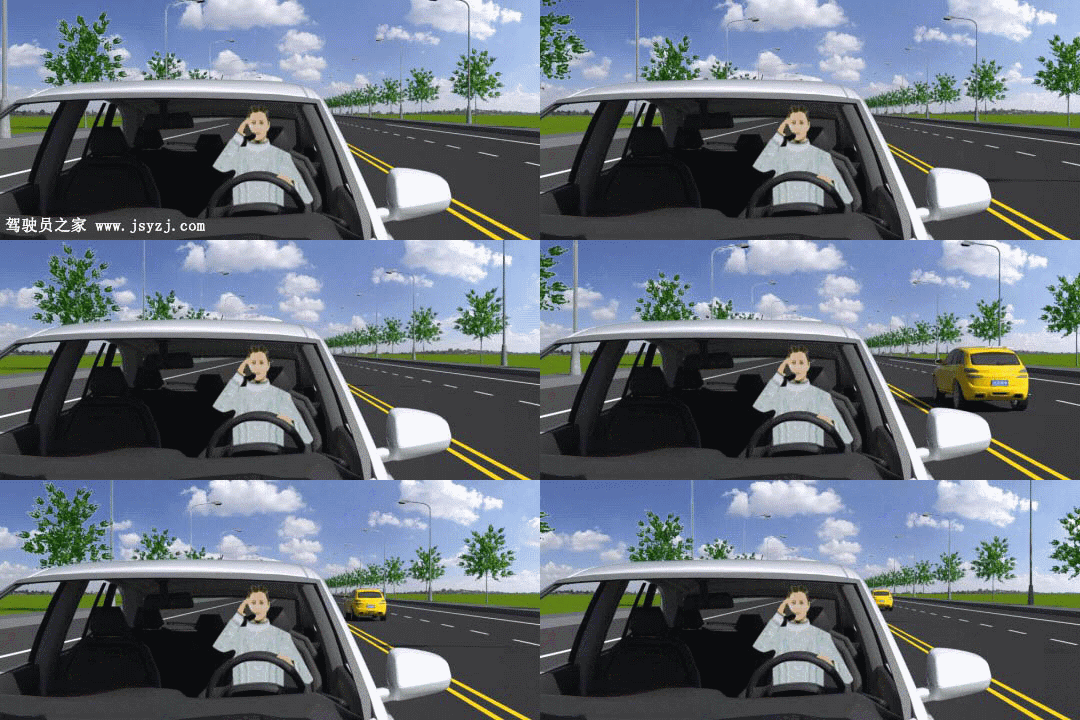
A、One
B、Two
C、Three
D、Four
Answer:B
46、The motor vehicle should stop on the right and wait in this situation.
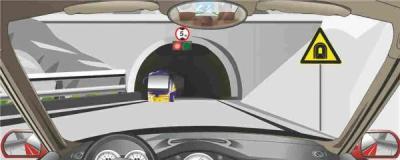
Answer:Y
47、When driving a motor vehicle into a traffic flow, drivers should not hold up other vehicles.
Answer:Y
48、The white solid line on the right side of the road indicates the boundary of a driving lane and crosswalk.
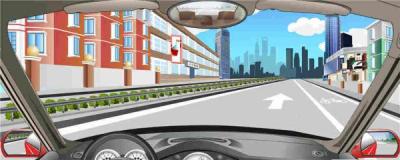
Answer:N
49、What should the driver do upon seeing this sign?
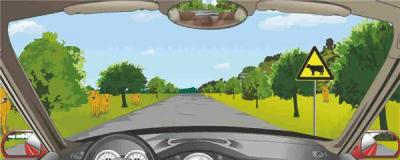
A、Slow down, look and pass slowly
B、Sound the horn to drive them away
C、Go through from the spaces between animals
D、Drive slowly and drive them away from the motor venicle
Answer:A
50、The sign on the right warns of a road section ahead under construction.
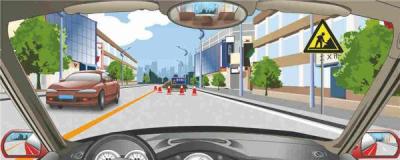
Answer:Y
- 重庆2025科目四考题英文版 相关内容
- 外国学驾照流程视频 四川科目四考题英文版 英文驾考科目四app 海南驾考科目一英文版题库 上海驾校一点科目一英文版 上海驾考科目四英语版书 天津驾考科目四英语版PDF 有外国驾驶证想考中国的驾驶证怎么办? 山东英文驾考app 吉林2025科目四英文版 山西外国人考科目一 英文 湖北英文版驾考 江西科目四英文版模拟 吉林驾考英语版书 北京英文驾考app 上海英文驾考PDF题库
Copyright © 2025 驾考 版权所有