
- 科目一考试
- 顺序练习
- 随机练习
- 强化练习
- 模拟考试
- 科目四考试
- 顺序练习
- 随机练习
- 强化练习
- 模拟考试
- 外国语言版题库
- 英语题库
- 德语题库
- 韩语题库
- 日语题库
- 俄语题库
- 法语题库
- 西班牙语题库
- 阿拉伯语题库
- 摩托车英文题
福建科目四有英文版吗
-
1、When a motor vehicle accidentally hits the guardrail of the highway, what should be done by the driver inorder to keep safe?
A、Firmly holding and properly adjusting the steering wheel
B、Turning swiftly to the opposite direction
C、Immediately applying emergency braking
D、Immediately steering to the collision side
Answer:A
2、Matches, sulfur and red phosphorus belong to which of the following dangerous chemicals?
A、Explosives
B、Oxidizing materials
C、Self-igniting articles
D、Inflammable solid materials
Answer:D
3、The motor vehicle should slow down and pass slowly in this situation.
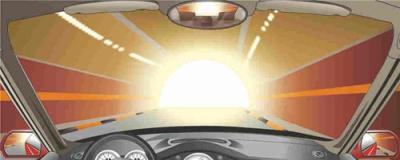
Answer:Y
4、How many kinds of law-breaking acts are displayed in flash 7?
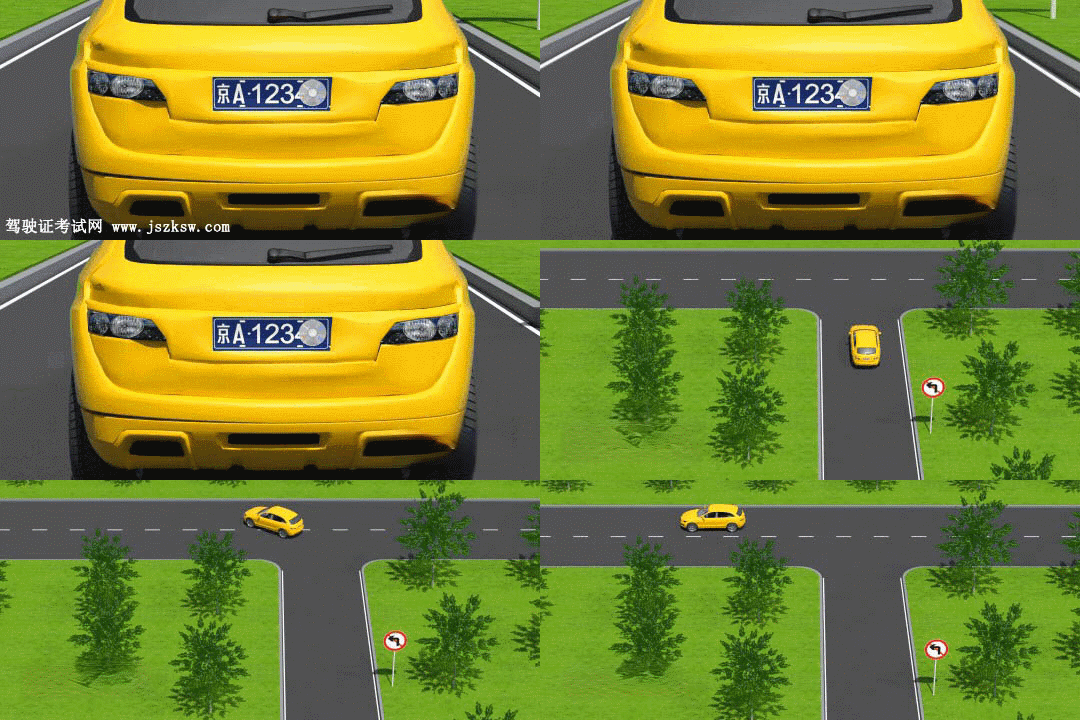
A、One
B、Two
C、Three
D、Four
Answer:B
5、Sideslip happens most easily on which one of the following road surfaces?
A、Dry concrete road
B、Road surface at the beginning of rain
C、Damp concrete road surface
D、Road in heavy rain
Answer:B
6、Under such circumstances, what should be done by the motor vehicle driver who has been overtaken?
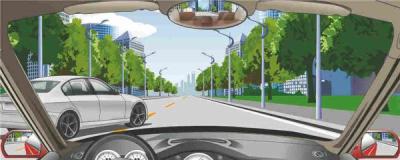
A、Sounding the horn to warn the vehicle that overtook
B、Reducing speed or pulling over by the right side
C、Protesting by turning on the high-beam
D、Catching up with and overtaking the vehicle that overtook, and offering admonitions
Answer:B
7、How should lamps be used when a motor vehicle meets an oncoming bicycle on a narrow road or a narrow bridge at night?
A、Continuously change between low-beam and high-beam
B、Use clearance lamp
C、Use high-beam
D、Use low-beam
Answer:D
8、When braking failure happens to a fast-moving motor vehicle, what should be done by the driver to brake?
A、Continuously depressing the brake pedal
B、Immediately changing to a low gear to reduce speed and using the handbrake
C、Swiftly depressing the clutch pedal
D、Swiftly pulling up the handbrake
Answer:B
9、When rescuing a wounded person suffering from spinal fracture, which of the following measuresshould be taken?
A、Prevent heat loss
B、Rescue the wounded person with a soft stretcher
C、Keep the wounded part in position with a sling
D、Help the wounded person when walking
Answer:C
10、When finding a tire burst on the road, the driver should gently depress the brake pedal, reduce speed and stop the vehicle slowly.
Answer:Y
11、The guide arrow on the road surface of this lane indicates that only left and right turns are permitted on the lanes ahead.
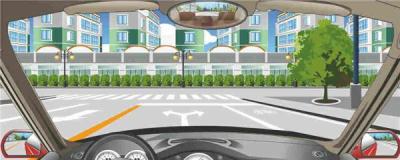
Answer:Y
12、At this moment, the driver may speed up and pass the intersection rapidly.
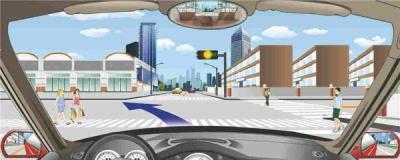
Answer:N
13、When steering failure happens suddenly, if the road condition permits straight movement, drivers should not apply emergency braking.
Answer:Y
14、When encountering this situation in a residential area, the driver should follow them closely.
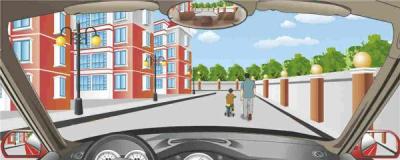
Answer:N
15、When driving on road sections where safe sight distance is affected, such as the top of a ramp, what should drivers do to ensure safety?
A、Rush through
B、Use hazard lamp
C、Cut speed and sound the horn
D、Drive at will
Answer:C
16、When driving on an expressway, which of the following statements is correct?
A、Drives may overtake on either the ramp, the acceleration lane or the deceleration lane
B、Drives are prohibited from reversing, driving in the opposite direction or making a U turn by crossing the central dividing strip
C、Drivers may drive on the emergency lane in a non-emergency case
D、Drives may test a motor vehicle or learn to drive
Answer:B
17、The sign on the right indicates that the speed limit of 40km/hour is lifted on the road ahead.
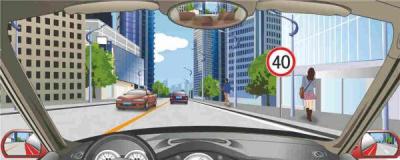
Answer:N
18、The motor vehicle may promptly overtake the vehicle in front from the left side in this situation.
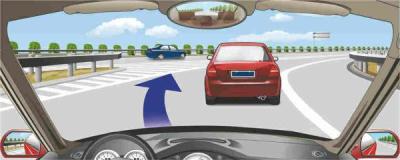
Answer:N
19、Which one of the following is the safest way when driving a motor vehicle on this road?
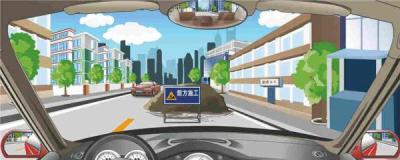
A、Speed up and bypass the obstacle
B、Take the opposite lane and compel the other vehicle to yield
C、Stop and yield to the oncoming vehicle
D、Sound the horn or turn on the headlamp
Answer:C
20、Motor vehicles are prohibited from driving straight or turning left in this situation.
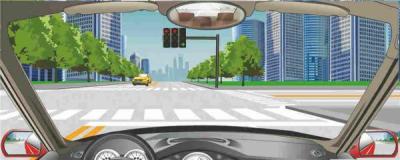
Answer:Y
21、When a motor vehicle stops temporarily in a rainy day,which lamp should be turned on?
A、Front and rear fog lamps
B、Hazard lamps
C、Headlamps
D、Reverse lamps
Answer:B
22、The driver should turn left by the left side of the intersection central point.
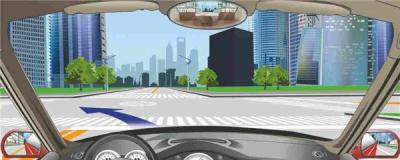
Answer:Y
23、Where is the proper parking place for motor vehicles driving on an expressway?
A、On the expressway ramp
B、In the acceleration lane
C、In the deceleration lane
D、In a service area
Answer:D
24、As shown in this picture, the vehicles intending to turn left are not allowed to drive into left-turn waiting area directly to wait for green light.
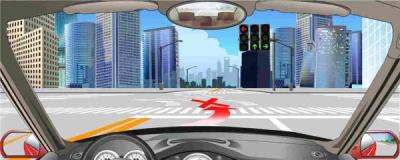
Answer:N
25、On which of the following roads may the wheels be most easily locked when braking?
A、Concrete road
B、Dirt road
C、Road covered by ice and snow
D、Sand road
Answer:C
26、What should the driver do if he/she wants to turn left at this intersection?
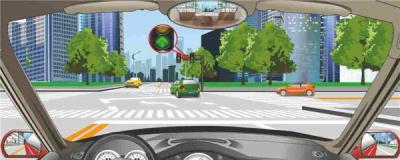
A、Turn left along the straight-going lane
B、Enter the left turn waiting area
C、Enter the straight-moving waiting area
D、Turn left along the left lane
Answer:B
27、The cross-hatched marking indicates an area where vehicle drivers are not allowed to stop.
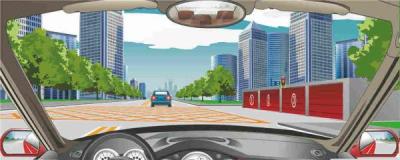
Answer:Y
28、The sign on the right warns of a bumpy road ahead.
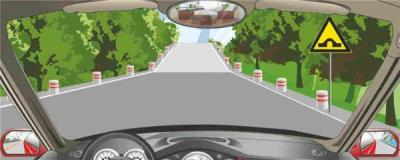
Answer:N
29、When a tire suddenly bursts on the road, in which of the following ways can motor vehicle drivers keep safe?
A、Applying emergency braking and pulling over
B、Firmly holding the steering wheel and keeping the vehicle going straight
C、Immediately releasing the accelerator pedal
D、Gently depressing the brake pedal
Answer:BCD
30、What action is important on this kind of mountain road?
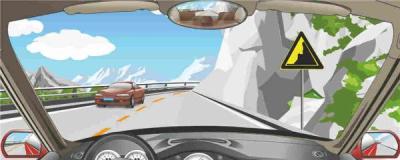
A、Take care of the dangerous hillside road on the left
B、Drive on the left
C、Drive along the central line of the road
D、Drive on the right side and pass slowly
Answer:D
31、The sign on the right indicates that overtaking is allowed on the section ahead.
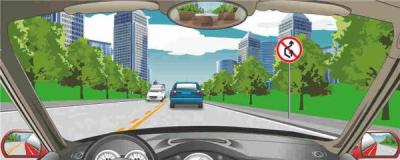
Answer:N
32、The driver may not change lanes when the motor vehicle turns right at this intersection.
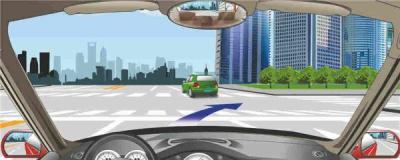
Answer:N
33、After a motor vehicle falls into water, the driver won't be able to open the side doors or windows to escape until water nearly fills up the compartment.
Answer:Y
34、Which of the following measures is correct for rescuing a person sustaining full-body burns?
A、Cover the fire with sandy soil
B、Spray cool water to his body
C、Put out the fire by extinguisher
D、Help to remove the burning clothes
Answer:B
35、A motor vehicle may stop and yield if it encounters any problem when changing to the driving lane from an acceleration lane.
Answer:N
36、Under such circumstances, the motor vehicle is allowed to overtake.
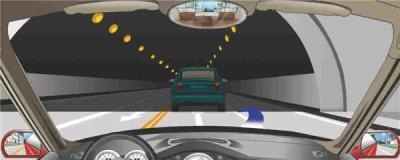
Answer:N
37、Gun powder, explosives and detonating powder belong to which of the following dangerous chemicals?
A、Oxidizing materials
B、Inflammable solid materials
C、Explosives
D、Self-igniting articles
Answer:C
38、When rescuing a wounded person who has been poisoned by toxic gas, which of the following measures should be taken first?
A、Prevent heat loss
B、Bring him/her to a place with fresh air
C、Give him/her artificial respiration
D、Depress the heart over the chest
Answer:B
39、The sign on the right warns of a wildlife protection area ahead.
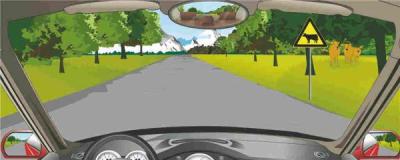
Answer:N
40、The sign on the right warns of a non-motor vehicle lane.
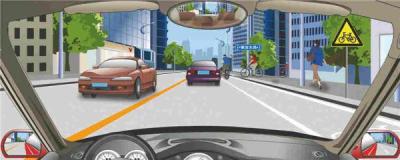
Answer:N
41、When a head-on collision with another vehicle is unavoidable, what should the driver do?
A、Change head-on collision to side collision
B、Immediately turn the steering wheel to the right side to evade
C、Immediately apply emergency braking
D、Immediately turn the steering wheel to the left side to evade
Answer:C
42、Drivers may temporarily cross these central solid double yellow lines when overtaking.
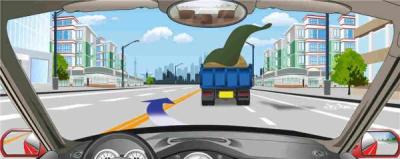
Answer:N
43、Having driven his truck at 90km/hour on an urban road without road lamps, Mr. Zhou is passing a narrow road using the high-beam and cutting off the way of an oncoming passenger car that runs into the right guardrail as a consequence. Which of the following law-breaking acts did Mr Zhou commit?
A、Speeding
B、Approaching a vehicle not in accordance with related regulations and rules
C、Fatigued driving
D、Using lamps not in accordance with related regulations and rules
Answer:ABD
44、Motor vehicles should accelerate when driving into an intersection with this traffic signal.
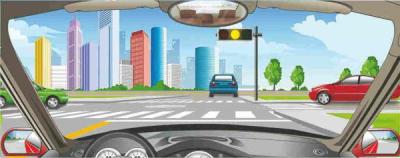
Answer:N
45、The sign on the right indicates a section for ascertaining the distance between the vehicles 200 meters ahead.
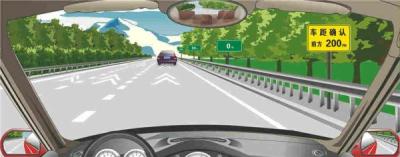
Answer:Y
46、When approaching a vehicle on a narrow slope, which one of the following ways is correct?
A、The descending vehicle yields to the ascending
B、The vehicle which is further from the slope crest should yield
C、The ascending vehicle yields to the descending
D、If the descending vehicle has reached the midpoint while the ascending vehicle has not yet set out, the descending vehicle must yield.
Answer:A
47、When encountering this situation on a mountainous road, motor vehicle drivers should overtake the vehicle in front by speeding up.
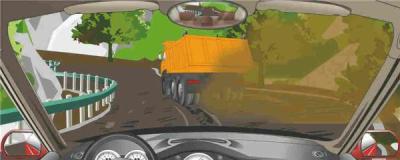
Answer:N
48、What should the driver do if he/she encounters this situation at the intersection when driving straight?
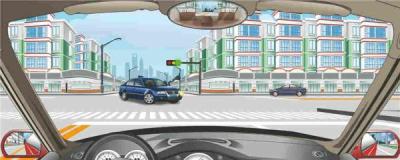
A、Sound the horn to warn the other vehicle to yield
B、Speed up and pass in the front of the vehicle
C、Turn on the headlamp to warn the other vehicle to yield
D、Slow down or stop to yield
Answer:D
49、Under such circumstances, motor vehicles are not allowed to overtake.
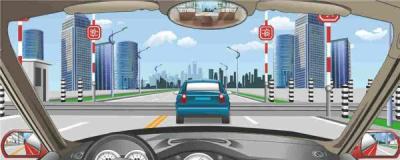
Answer:Y
50、When driving on a muddy road, what should the driver do?
A、Try to avoid using the foot brake
B、Drive slowly in mid or low gear
C、Firmly hold the steering wheel
D、Speed up and pass through
Answer:ABC
- 福建科目四有英文版吗 相关内容
- 上海英文驾考PDF题库 辽宁科目四考题英文版 云南驾考科目一英语版PDF题库 外国考驾驶证难吗 西藏驾照考试科目一英文版 山东驾校考试英文版 江西驾考科目四英语版书 西藏科目四考题英文版 北京科目四考题英文版 广西英文驾考题库PDF电子版 江西英文驾考PDF题库 湖南驾考科目一英语版书 内蒙古驾考科目四英文版题库 辽宁英文驾考app 江苏2025英文驾考PDF题库 重庆2025英文驾考PDF题库
Copyright © 2025 驾考 版权所有