
- 科目一考试
- 顺序练习
- 随机练习
- 强化练习
- 模拟考试
- 科目四考试
- 顺序练习
- 随机练习
- 强化练习
- 模拟考试
- 外国语言版题库
- 英语题库
- 德语题库
- 韩语题库
- 日语题库
- 俄语题库
- 法语题库
- 西班牙语题库
- 阿拉伯语题库
- 摩托车英文题
黑龙江驾考科目三英文
-
1、When there is a sudden braking failure on a downhill road, in which ones of the following ways can drivers reduce speed?
A、Driving onto the emergency lane and reduce speed and stop there
B、Rubbing the vehicle body against the rocks or trees on roadside
C、Pulling up the handbrake first
D、Immediately changing to a low gear
Answer:ABD
2、When encountering a road like this, motor vehicle drivers may make good use of neutral gear to coast.
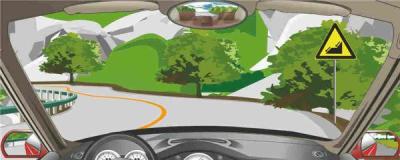
Answer:N
3、The sign on the left warns that there are vehicles converging into the intersection on the left.
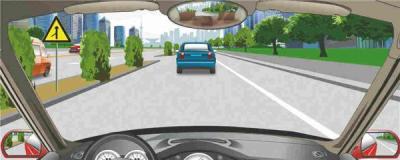
Answer:Y
4、The sign on the right indicates an ETC lane at toll station ahead.
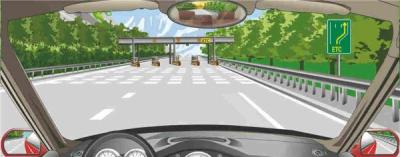
Answer:Y
5、The sign on the right warns for children on the section ahead.
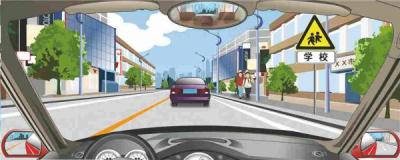
Answer:Y
6、How many kinds of law-breaking acts are displayed in flash 5?
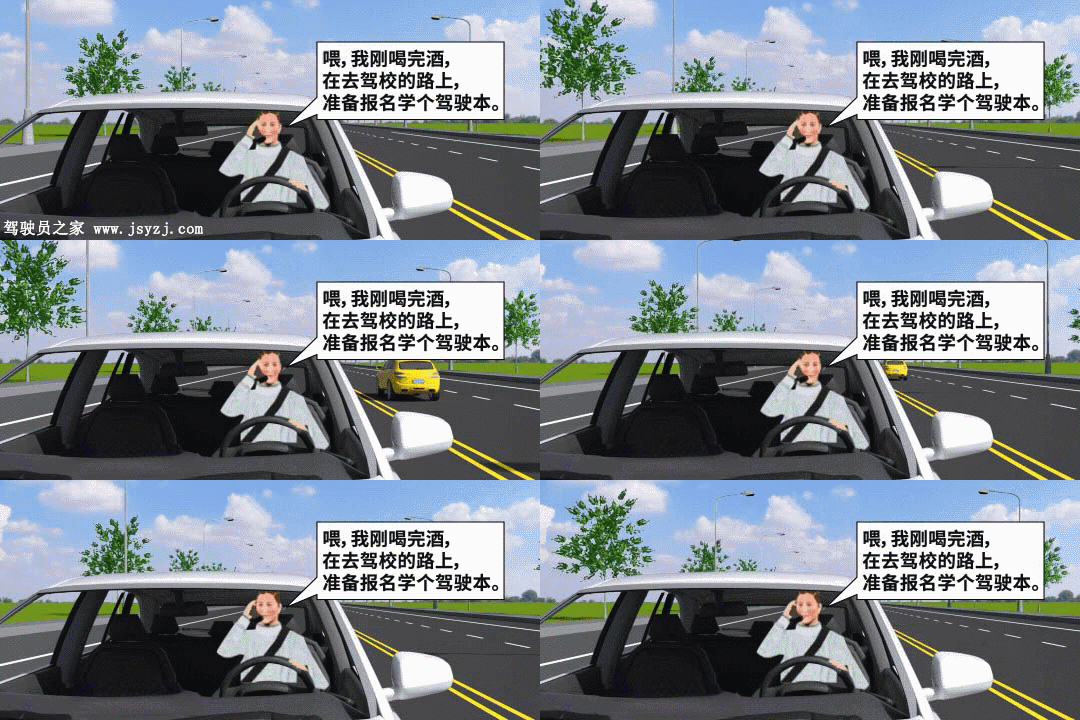
A、One
B、Two
C、Three
D、Four
Answer:C
7、When driving in rain or snow, the driver should turn left to stabilize the vehicle if the motor vehicle slides to the right side.
Answer:N
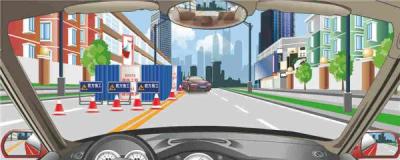
8、Under this circumstance, motor vehicle drivers should not reduce speed.
Answer:N
9、When approaching the turning point of a road, in which of the following ways will motor vehicle drivers easily cause a traffic accident?
A、Driving ahead by occupying the opposite lane
B、Turning the steering wheel quickly when passing through the curve
C、Not reducing speed until driving onto the curve
D、Driving by the right side
Answer:ABC
10、Mr Li drove a large bus with 21 passengers( capacity 35 people). He found the braking system was abnormal on the way but failed to repair it. When running on the Shuangdao Haiwan Bridge at a speed of 50 kilometers per hour(speed limit 40 km/h), the bus fell into the sea due to a braking system failure, killing 13 people and injuring 8. What's the main illegal act committed by Mr Li?
A、Speeding
B、Fatigued drivin
C、Carrying more passengers than permitted
D、Driving a motor vehicle with potential safety hazard
Answer:AD
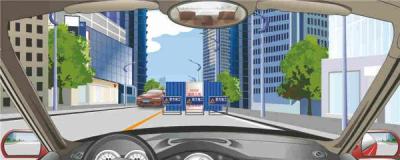
11、Under this circumstance, motor vehicle drivers should give the right of way to oncoming vehicle.
Answer:Y
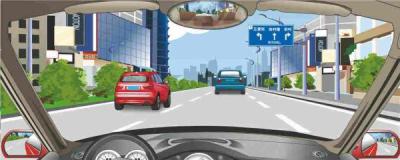
12、The sign in front is an advance announcement of the directions led by this intersection.
Answer:Y
13、When parking temporarily in this situation, motor vehicle drivers are allowed to turn the steering wheel left to avoid sliding.
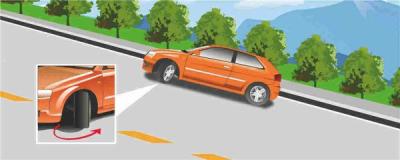
Answer:Y
14、When a motor vehicle breaks down on an expressway and cannot be moved away from the driving lane, the driver may conduct emergency repairs on the driving lane.
Answer:N
15、What should be done to keep safe when a motor vehicle driver is overtaking in this condition?
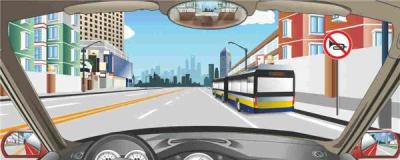
A、Reducing speed and keeping a safe distance
B、Continuously sounding the horn to indicate the vehicle in front
C、Accelerating to pass while keeping a certain distance
D、Overtaking by occupying the opposite lane
Answer:A
16、What should the driver do upon finding a burst rear tire?
A、Adjust by swiftly turning the steering wheel
B、Control the direction while reducing speed slowly
C、Swiftly turn the steering wheel to the opposi direction
D、Swiftly take braking measures
Answer:B
17、The braking distance will be shortened greatly when the motor vehicle is equipped with ABS brakes.
Answer:N
18、The guide line of a changeable lane indicates that drivers can choose their direction at will.
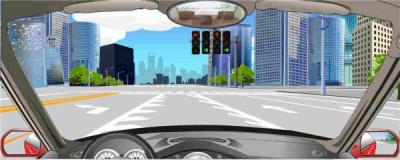
Answer:N
19、The guide arrow on the road surface of this lane indicates that there is an intersection on the right side of the road.
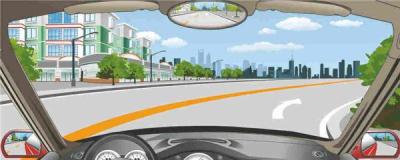
Answer:N
20、Motor vehicles are permitted to move to the right lane at this intersection.
Answer:N
21、The sign in front indicates the distance to highway destination.
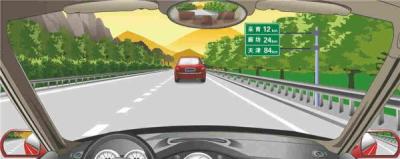
Answer:N
22、The sign on the right warns of an uneven road ahead.
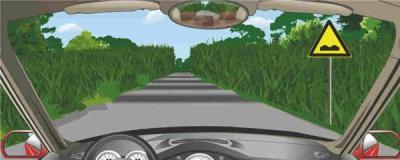
Answer:Y
23、When a motor vehicle encounters a group of youngsters bypassing the motor vehicles parking beside the road, the driver should slow down voluntarily and yield.
Answer:Y
24、In which of the following ways can motor vehicles avoid a tire burst?
A、Lowering tire pressure
B、Checking tires regularly
C、Removing foreign matters from the tire tread grooves timely
D、Replacing the tires that have cracks or deep cuts
Answer:BCD
25、The sign on the right indicates a 2-kilometer distance from the Donglushan Service Area on the highway.
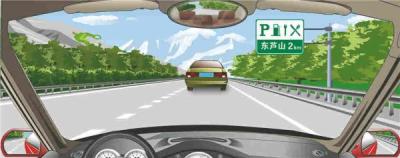
Answer:Y
26、When rescuing a wounded person suffering blood loss in an emergency, it is necessary to first stop the bleeding by compression before other treatments are taken in accordance with the conditions of bleeding.
Answer:Y
27、When driving on an expressway, which of the following statements is correct?
A、Drives are not allowed to drive by riding or rolling on the lane dividing line
B、Drivers are prohibited from driving on road olders
C、Drivers may overtake on the ramp, the acceleration lane or the deceleration lane
D、Drivers are prohibited from learning to drive
Answer:C
28、When two vehicles approach each other on a foggy day, what is the best method of safe driving?
A、Turn on the high-beam
B、Slowdown and maintain a large safety distance
C、Turn on the low-beam
D、Turn on the fog lamp
Answer:B
29、Crossing the broken white line on the right edge of the road is allowed.
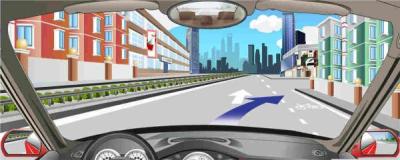
Answer:Y
30、Under such circumstances, what should be done by the motor vehicle driver?
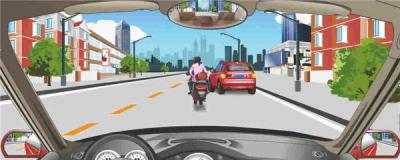
A、Reducing speed to give the right of way to the non-motor vehicle
B、Continuously sounding the horn to warn the vehicle in front to yield
C、Bypassing on the left of the non-motor vehicle
D、Accelerating to overtake by occupying the opposite lane
Answer:A
31、The sign on the right indicates right-hand turn only.
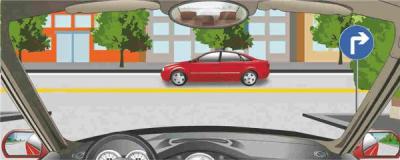
Answer:Y
32、Which of the following is an inflammable solid material?
A、Matches
B、Gun powder
C、Calcium carbide
D、Explosives
Answer:A
33、When a motor vehicle accidentally hits the guardrail of a highway, an effective protective measure is to turn dramatically in the opposite direction.
Answer:N
34、What should the driver do in case the public bus suddenly pulls out from this bus station?
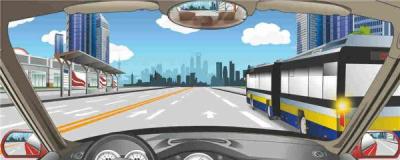
A、Stop behind the public bus
B、Overtake the public bus rapidly
C、Slow down and overtake the public bus slowly
D、Sound the horn continuously to warn the public bus
Answer:C
35、Mr. He drove his large bus with 53 passengers (permitted carrying capacity 47) to 454 km mark by 100m along the Yining-hefei Expressway in Nanjing jurisdiction, where he was tailgated by a heavy-type semitrailer tractor. The bus left the road, breaking through the guardrail and catching fire. 17 people were killed and 27 injured. Which of the following law-breaking acts did Mr. He commit?
A、Speeding
B、Exceeding the carrying capacity of the motor bus
C、Driving a motor vehicle overdue for annual inspection
D、Improper operation
Answer:B
36、If a motor vehicle deviates from the straight direction due to steering failure, what should be done by thedriver in order to reduce speed and stop the vehicle as soon as possible?
A、Gently depressing the brake pedal
B、Pulling up the handbrake
C、Immediately changing to a low gear to reduce speed
D、Decisively and continuously depressing and releasing the brake pedal
Answer:D
37、Mr. Shi drove a low-speed cargo vehicle (capacity 1.2 tons)with 4.05 tons of cargo. At the spot of 51 kilometers mark by 260 meters on the No. 314 County Road in Ningjin County, the cargo vehicle had a head-on collision with a normally running midsize bus( capacity 11 people and carrying12) from the opposite direction after passing the central line of the road and overtaking the front vehicle in the same direction. As a result of this accident, 10 people were killed and 2 injured. What are the illegal acts in this case?
A、The cargo vehicle carried more cargo than capacity
B、The cargo vehicle illegally overtook other vehicles
C、The bus carried more passengers than capacit
D、The driver of the bus kept driving when tired
Answer:ABC
38、Which one of the following is the safest way to pass the oncoming vehicle on this road?
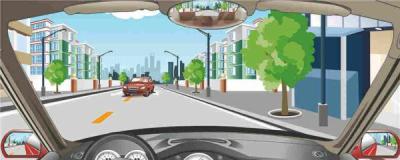
A、Driving along the central line
B、Driving with headlamp on
C、Yielding by the right side of the road
D、Yielding by the left side of the oncoming vehicle
Answer:C
39、Which of the following is a bad habit when changing lanes?
A、Turning on the indicator in advance
B、Observing closely before changing a lane
C、Change lanes at will
D、Not obstructing the passing of other normally moving vehicles
Answer:C
40、When a motor vehicle equipped with ABS makes an emergency brake, the driver can tread the brake pedal heavily.
Answer:Y
41、Driving and smoking has no negative effect on safe driving
Answer:N
42、Which of the following is a safe way for motor vehicles to pass the intersection marked with this sign?
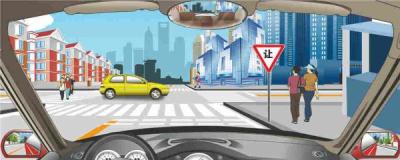
A、Stop and observe the traffic situation around the intersection
B、Approach the intersection by speeding up
C、Observe the traffic situation on the left rear side
D、Approach the intersection at a reduced speed
Answer:D
43、When an erosive material catches fire, it should not be put out with water cannon.
Answer:Y
44、When a motor vehicle slides sideways, how should the driver adiust the direction?
A、If the front wheels skid sideways, turn the steering wheel in the direction of the skid
B、If the front wheels skid sideways, turn the steering wheel in the opposite direction of the skid
C、If the rear wheels skid sideways, turn the steering wheel in the direction of the skid
D、If the rear wheels skid sideways, turn the steering wheel in the opposite direction of the skid
Answer:BC
45、What should motor vehicle drivers do under such circumstances at night?
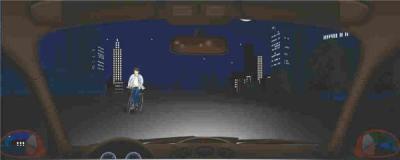
A、Turn off the headlamp when approaching
B、Use low-beam
C、Use high-beam
D、Turn off all lamps in advance
Answer:B
46、The drivers, loaders and supercargoes responsible for dangerous chemicals transportation should all full understand the chemical characteristics, potential risks, features of the packaging containers and emergency measures for any unexpected accidents.
Answer:Y
47、If the road condition behind is good, motor vehicle drivers should reverse rapidly.
Answer:N
48、When driving on the expressway in a heavy rain, what should the driver do to avoid "water sliding" phenomenon?
A、Install slide-proof devices
B、Speed up
C、Slow down
D、Continue to depress the brake
Answer:C
49、When a motor vehicle breaks down on a mountain road, what should the driver do?
A、Park on a downhill section
B、Park on an uphill section
C、Park on a gentle section of the mountain road
D、Park on the crest of a slope
Answer:C
50、A correct measure to avoid tire burst of motor vehicles is to lower the tire pressure.
Answer:N
- 黑龙江驾考科目三英文 相关内容
- 北京驾考英语版PDF题库 湖南只认识英文可以考科目一吗 广西科目四英文版在哪里找 外国考驾驶证有没有理论 青海驾考英语 老外在中国考驾照用什么软件好 新疆驾考英语版题库book 辽宁关于考驾照的英语 driving in china 外国驾照考试视频教学下载 广西驾考有英文版吗 山西科目四英文版练习题库 福建考驾照的英文单词 中国人在外国考驾驶证在中国能用吗 黑龙江英文版驾考 外国如何考驾照最快
Copyright © 2025 驾考 版权所有