
- 科目一考试
- 顺序练习
- 随机练习
- 强化练习
- 模拟考试
- 科目四考试
- 顺序练习
- 随机练习
- 强化练习
- 模拟考试
- 外国语言版题库
- 英语题库
- 德语题库
- 韩语题库
- 日语题库
- 俄语题库
- 法语题库
- 西班牙语题库
- 阿拉伯语题库
- 摩托车英文题
黑龙江驾照科目四英文版题库
-
1、What should the driver do when a motor vehicle encounters this situation on a mountain road?
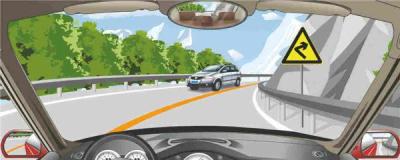
A、Stick to respective lanes and speed up to approach each other
B、Drive close to the central line of the road
C、Retain the normal speed
D、Slow down
Answer:D
2、The sign on the right side warns of crosswind on the mountain pass ahead.
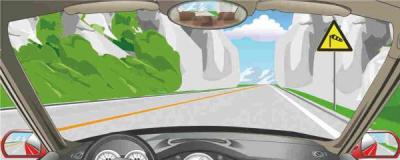
Answer:Y
3、How should motor vehicle drivers make a U-turn at the intersection ahead?
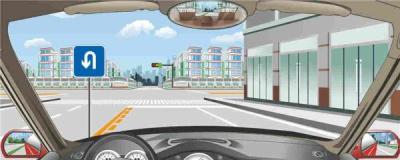
A、Make a U-turn in the waiting area for turning left
B、Make a U-turn at the broken line area of the Intersection
C、Wait until the left-turn indicator is on
D、Wait until the straight-going signal is on
Answer:B
4、The broken and solid white line on the road indicates that crossing is allowed on the solid line side.
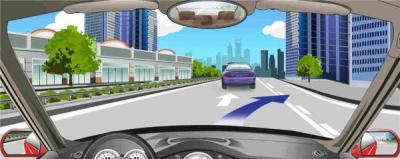
Answer:N
5、Driving and smoking has no negative effect on safe driving
Answer:N
6、What should the driver do when he/she sees this sign on the road?
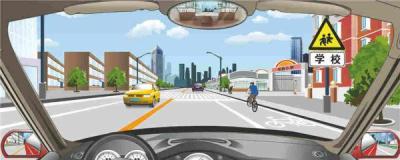
A、Use emergency braking
B、Slow down and take a look
C、Sound the horn intermittently
D、Prepare to bypass
Answer:B
7、When there is a sudden braking failure on a downhill road, in which ones of the following ways can drivers reduce speed?
A、Driving onto the emergency lane and reduce speed and stop there
B、Rubbing the vehicle body against the rocks or trees on roadside
C、Pulling up the handbrake first
D、Immediately changing to a low gear
Answer:ABD
8、The sign on the right side warns of a sharp right turn ahead.
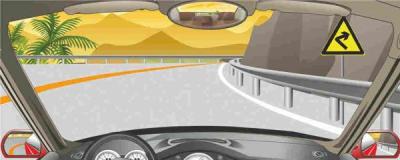
Answer:Y
9、When there is a braking failure on a downhill road, what should not be done by the driver?
A、Steering the motor vehicle to the uphill direction
B、Stopping the vehicle by rubbing the vehicle body against the rocks or trees on roadside
C、Driving to the emergency lane and stop the vehicle there
D、Pulling up the stopping brake or change the gear to two positions lower
Answer:D
10、How to reduce speed or stop when driving on a road covered with snow and ice?
A、Take full advantage of driving brake
B、Take full advantage of the control power from engine
C、Take full advantage of parking brake
D、Take full advantage of speed retarder
Answer:B
11、Drivers may go straight and pass through when traffic police give these hand signals
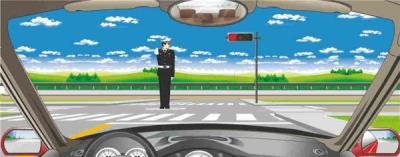
Answer:N
12、Motor vehicles are not allowed to stop in this area for a long time.
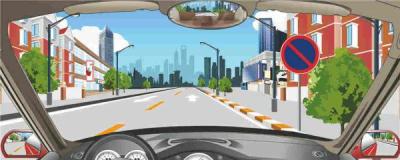
Answer:Y
13、What is the function of ABS during emergency braking?
A、Shortening the braking distance
B、Keeping steering capacity of the motor vehicle
C、Relief the braking inertia
D、Controlling directions automatically
Answer:B
14、When disembarking, what should be done by drivers in order to keep safe?
A、Opening the door and disembarking immediately after stopping
B、Observing the traffic situation ahead
C、Opening the door first and then observing the situation beside and behind the vehicle
D、Observing the situation beside and behind the vehicle before opening the door slowly
Answer:D
15、The sign on the right indicates that the vehicle should yield to the oncoming traffic as approaching each other.
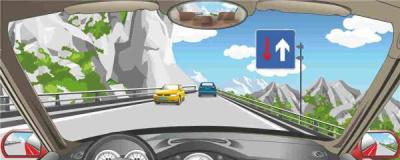
Answer:N
16、The sign on the right indicates an ETC lane at toll station ahead.
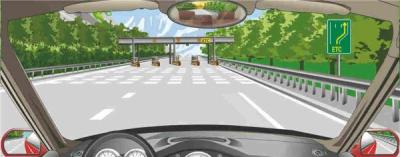
Answer:Y
17、Having driven his vehicle at 110km/hour on an urban road, Mr. Lin is trying to leave the scene after a rear-end collision but is held back by bystanders. The alcohol concentration in his blood, tested in an alcohol test by the traffic police, is 135.8mg per hundred milliliters. Which of the following law-breaking acts did Mr. Lin commit?
A、Drunk driving
B、Speeding
C、Fatigued driving
D、Hit-and-run driving
Answer:ABD
18、What should drivers keep in mind when driving on amountainous road?
A、Keep a safe distance
B、Avoid occupancy of another lane when making a turn
C、Downshift in advance when ascending an abrupt slope
D、Taking full advantage of engine braking when descending a long slope
Answer:ABCD
19、A motor vehicle should not pass the level crossing rapidly in this situation.
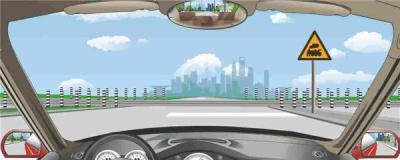
Answer:Y
20、What should the driver do upon finding that one ofthe right tires is leaking while driving?
A、Brake swiftly to slow down
B、Brake slowly to slow down
C、Turn to the left side swiftly
D、Apply emergency braking
Answer:B
21、How should the driver use vehicle lights when the motor vehicle leaves a roundabout?
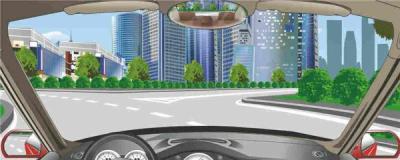
A、Turn on the left-turn indicator
B、Turn on the hazard lamps
C、No need to turn on any indicators
D、Turn on the right-turn indicator
Answer:D
22、Mr. He drove his large bus with 53 passengers (permitted carrying capacity 47) to 454 km mark by 100m along the Yining-hefei Expressway in Nanjing jurisdiction, where he was tailgated by a heavy-type semitrailer tractor. The bus left the road, breaking through the guardrail and catching fire. 17 people were killed and 27 injured. Which of the following law-breaking acts did Mr. He commit?
A、Speeding
B、Exceeding the carrying capacity of the motor bus
C、Driving a motor vehicle overdue for annual inspection
D、Improper operation
Answer:B
23、The guide arrow on the road surface of this lane indicates that the lanes ahead will merge to the left side.
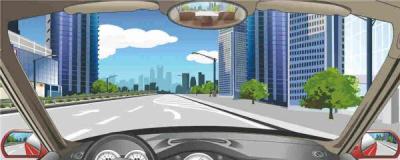
Answer:Y
24、The guide arrow on the road surface of this lane indicates that U-turns and left turns are permitted at the intersection ahead.
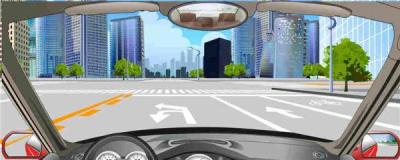
Answer:Y
25、Motor vehicles are prohibited from driving straight or turning left in this situation.
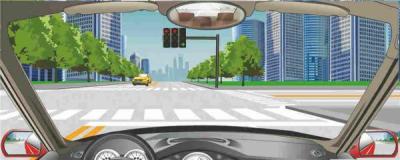
Answer:Y
26、When a motor vehicle on an expressway stops in an emergency due to breakdown or an accident, what should the driver and the passengers do?
A、Stand in front of the motor vehicle
B、Wait in the motor vehicle for rescue
C、Stand behind the motor vehicle
D、Promptly move to the road shoulder on the right side or the emergency lane
Answer:D
27、The driver should turn left by the left side of the intersection central point.
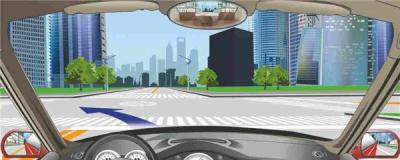
Answer:Y
28、When a motor vehicle encounters thick fog on an expressway and the visibility is poor, the driver should immediately brake and stop.
Answer:N
29、What should the driver do when seeing these hand signals?
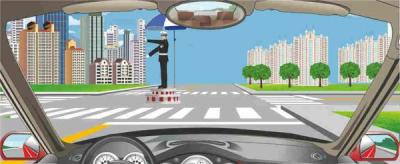
A、Go straight and pass through the intersection
B、Stop in front of the stop-line and wait
C、Turn left at the intersection
D、Drive at a lower speed at the intersection
Answer:C
30、One day, Mr. Yang drove a large bus with 57 passengers(bus capacity 55 people)from 7 pm to 1 am the following morning. At the spot of 3008 kilometers mark by 110 meters on the No. 050 National Road in Jin Chengjiang District, the bus had a malignant traffic accident caused by front left tire burst, killing12 people and injuring 22. What's the main illegal act committed by Mr Yang?
A、Fatigued driving
B、Carrying more passengers than permitted
C、Speeding
D、Misoperation
Answer:AB
31、When the motor vehicle encounters a crosswalk in this situation, the driver may speed up and pass rapidly.
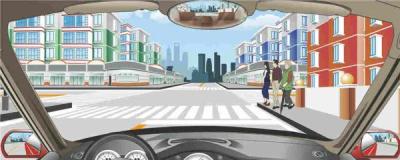
Answer:N
32、When a motor vehicle moves through water, the driver should try to maintain a constant speed and sufficient power and pass through without stopping.
Answer:Y
33、It is illegal to change lanes without turning on indicators.
Answer:Y
34、The sign in front indicates the distance to highway destination.
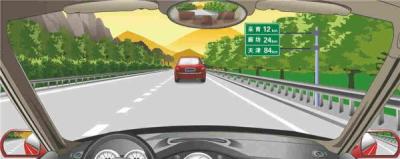
Answer:N
35、Motor vehicles are prohibited from turning left in this situation.
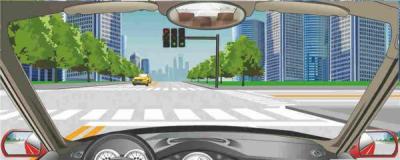
Answer:Y
36、When driving a vehicle equipped with power steering what should the driver do upon finding that steering is difficult?
A、Stop and identify the cause
B、Control the steering and drive slowly
C、Drive at a lower speed
D、Keep the vehicle going straight
Answer:A
37、The sign on the right warns of a danger from rockfall on the left side.
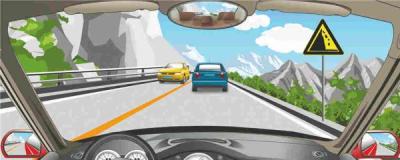
Answer:Y
38、When a motor vehicle deviates from the normal direction due to steering failure, what should the driver do?
A、Immediately steer and adjust
B、Reduce speed and stop the vehicle as early as possible
C、Steer to the side where there is no obstacle to evade
D、Steer to the side where there is an obstacle to evade
Answer:B
39、This road marker indicates that the minimum speed for this road section is 60 km/hour.
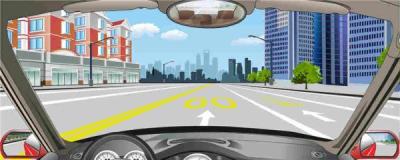
Answer:N
40、How should lamps be used when motor vehicle drivers pass through a two-way tunnel?
A、Turn on the hazard lamps
B、Turn on the high-beam
C、Turn on the fog lamp
D、Turn on the low-beam
Answer:D
41、When driving on an expressway which of the following statements is correct?
A、Drivers may stop to pick up or drop off passengers in the emergency lane
B、Drives may load or unload cargo in the emergency lane
C、Drives may overtake other vehicles or stop in the deceleration or acceleration lane
D、Drives are prohibited from driving or stopping in the emergency lane in a non-emergency case
Answer:D
42、The driver may not change lanes when the motor vehicle turns right at this intersection.
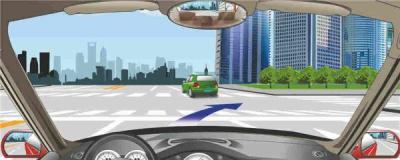
Answer:N
43、Rescue personnel should check the breath of the unconscious person before applying any other emergency treatment.
Answer:Y
44、When finding a tire burst on the road, the driver should gently depress the brake pedal, reduce speed and stop the vehicle slowly.
Answer:Y
45、When following a vehicle on the road, the distance from the vehicle in front is not important. As long as the driver goes forward at the same speed as the vehicle in front does, he/she can avoid a rear-end collision.
Answer:N
46、The sign in front indicates a one-way lane after turning right.
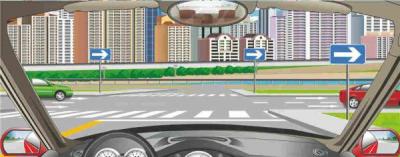
Answer:Y
47、Mr. Tang drove a large bus with 74 passengers (capacity 30 people). When descending a long curving slope at a speed of 38 kilometers per hour, the bus overturned to a brook beside the road. As a result of the accident, 17 people were killed and 57 people injured. What's the main illegal act committed by Mr. Tang?
A、Driving after drinking
B、Carrying more passengers than permitted
C、Fatigued driving
D、Speeding
Answer:BD
48、The area in the yellow rectangle markings on the right side of the road indicates that temporary stopping is permitted here.
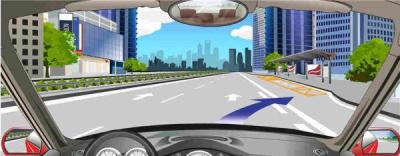
Answer:N
49、When driving in thick or extremely thick fog, what should the driver do due to the low visibility in such weather?
A、Turn on the headlamp and drive slowly
B、Turn on the fog lamp and drive slowl
C、Park in a safe place
D、Drive slowly close to the roadside
Answer:C
50、Where is the proper parking place for breakdown motor vehicles stopping for examination?
A、In the far outer lane
B、In the inner lane
C、In the emergency lane
D、Entrance area of the ramp
Answer:C
- 黑龙江驾照科目四英文版题库 相关内容
- 江西考驾照的英文单词 西藏驾考英语 老外考驾照科三考什么科目 国外人在中国考驾照要多久 山东科目四有英文版吗 安徽驾考英语版题库book 外国的驾照怎么考 吉林考驾照科目一有英文版 上海外国人考驾照科目一 山东驾照考试科目一英文版 西藏驾照考试科目四英文版 湖北科目四考试英文版 湖北英文版考驾照 海南科目一英文版模拟 北京英文考驾照用语 外国人考科目一 英文
Copyright © 2025 驾考 版权所有