
- 科目一考试
- 顺序练习
- 随机练习
- 强化练习
- 模拟考试
- 科目四考试
- 顺序练习
- 随机练习
- 强化练习
- 模拟考试
- 外国语言版题库
- 英语题库
- 德语题库
- 韩语题库
- 日语题库
- 俄语题库
- 法语题库
- 西班牙语题库
- 阿拉伯语题库
- 摩托车英文题
广西英语c1科目四考试
-
1、What should the driver do when a motor vehicle encounters this situation on a mountain road?
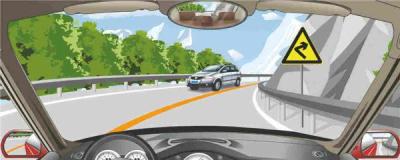
A、Stick to respective lanes and speed up to approach each other
B、Drive close to the central line of the road
C、Retain the normal speed
D、Slow down
Answer:D
2、When a motor vehicle passes over an inundated road drivers should change to a high gear and pass rapidly.
Answer:N
3、After a tire bursts and before the driver can control the speed of the vehicle, he/she should not risk using the foot brake to stop the vehicle. Otherwise, a horizontal swing of the vehicle can cause greater danger.
Answer:Y
4、When rescuing a wounded person suffering blood loss in an emergency, it is necessary to first stop the bleeding by compression before other treatments are taken in accordance with the conditions of bleeding.
Answer:Y
5、The sign on the right indicates that drivers should choose their lanes in accordance withthe directions indicated by arrows.
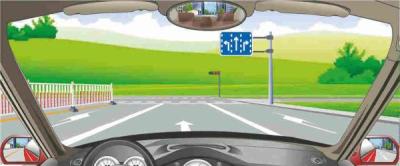
Answer:Y
6、Mr. Zhao (with an A2 driving license) drove a large sleeper coach on the No. 219 National Road in Yecheng County. When passing a curve at the spot of 226 kilometers mark by 215 meters on the road, the coach fell into the ravine on one side, killing16 people and injuring 26. What's the main illegal act committed by Mr Zhao?
A、Carrying more passengers than permitted
B、Driving a motor vehicle having failed to accept inspection in time
C、Driving an unpermitted vehicle type
D、Fatigued driving
Answer:C
7、For a temporary stop on a foggy day, the driver should only turn on the fog lamp and the low-beam
Answer:N
8、When a motor vehicle accidentally hits the guardrail of the highway, what should be done by the driver inorder to keep safe?
A、Firmly holding and properly adjusting the steering wheel
B、Turning swiftly to the opposite direction
C、Immediately applying emergency braking
D、Immediately steering to the collision side
Answer:A
9、Those traffic police signals mean turning right.
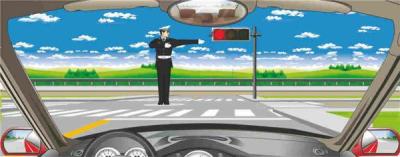
Answer:N
10、What should the driver pay attention to when the motor vehicle passes a school?
A、Observe the traffic signs and markings
B、Slow down and pass slowly
C、Prohibited from sounding the horn
D、Pass rapidly
Answer:ABC
11、Under such circumstances at an intersection. what should motor vehicle drivers do?
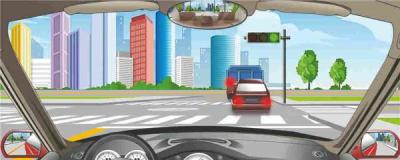
A、Drive into the intersection and wait
B、Wait in front of the intersection stop-line
C、Pass through in the right non-motor vehicle lane
D、Pass through the intersection by borrowing the opposite lane
Answer:B
12、As shown in this picture, before driving to the intersection, vehicles are not allowed to change lanes by crossing the solid white line.
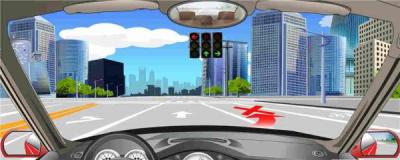
Answer:Y
13、When parking for a long time on a downward slope due to breakdown on the road, drivers should use this method to stop up wheels.
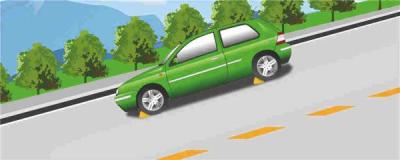
Answer:Y
14、When encountering such pedestrians, what should motor vehicle drivers do?
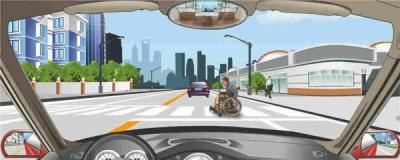
A、Bypass in front of the pedestrians
B、Bypass from behind the pedestrians
C、Sound the horn to alert the pedestrians
D、Voluntarily stop and yield
Answer:D
15、It is a bad habit for a driver to put his left arm on the window of the vehicle or hold the gear lever in his right hand for a long time.
Answer:Y
16、As shown in the flash, the motor vehicle chooses a correct way to pass through the level crossing.
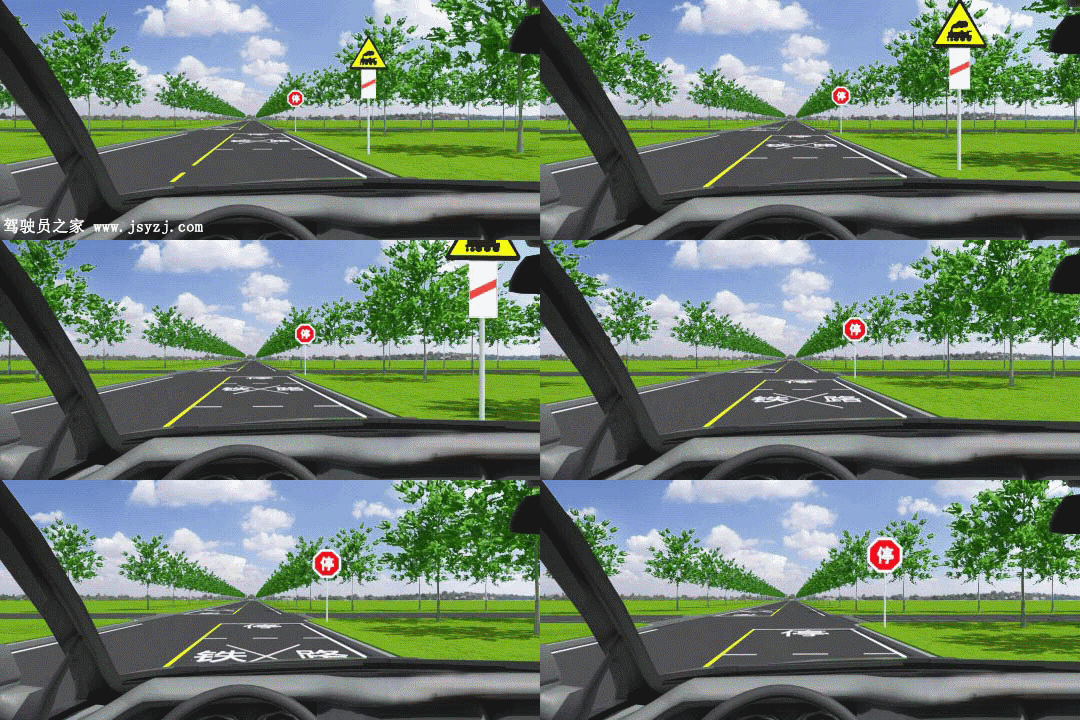
Answer:Y
17、Under such circumstances, motor vehicle drivers should bypass on the left quickly.
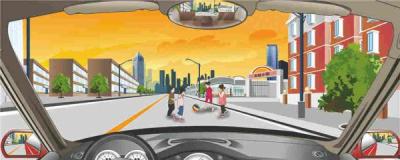
Answer:N
18、hen there is a braking failure on a downhill road the driver should immediately try to find and drive to an emergency lane; after stopping the vehicle on the emergency lane, the driver should pull up the stopping brake so as to prevent a second danger arising from the vehicle sliding.
Answer:Y
19、When a motor vehicle catches fire, the driver should te to park the vehicle in an open place far away from urban areas, buildings, trees, other motor vehicles and flammable materials.
Answer:Y
20、When evading an emergency, except for being calm what principle should be held by drivers?
A、Evading people first and then objects
B、Evading objects first and then vehicles
C、Evading vehicles first and then people
D、Evading objects first and then people
Answer:A
21、Motor vehicle drivers should rush to the top of the slope in this situation.
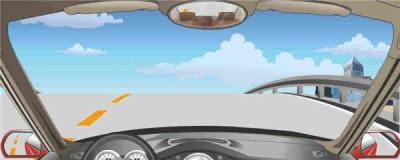
Answer:N
22、When driving on a long downhill road, which is the best way to control the speed?
A、Coast in neutral gear
B、Take a low gear
C、Depress the clutch
D、Pull up the handbrake
Answer:B
23、When encountering this situation in a residential area, the driver should follow them closely.
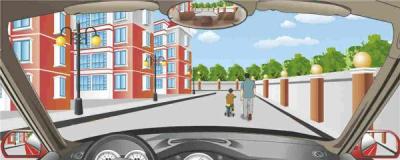
Answer:N
24、What's the meaning of the sign on the right?
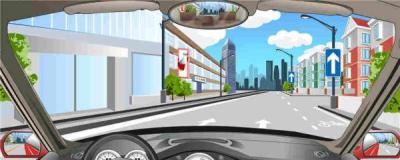
A、Drive on the right side of the road ahead
B、No entry ahead
C、One-way road ahead
D、Watch for the right-hand intersection ahead
Answer:C
25、When encountering this situation on a mountainous road, motor vehicle drivers should overtake the vehicle in front by speeding up.
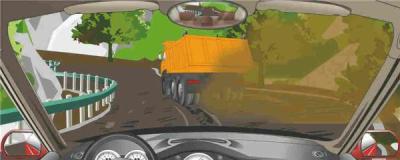
Answer:N
26、For evading an emergency on an expressway, which of the following principles should drivers stick to?
A、Evading vehicles first and objects later
B、Evading people first and objects later
C、Evading vehicles first and people later
D、Evading objects first and people later
Answer:B
27、When a motor vehicle encounters a group of youngsters bypassing the motor vehicles parking beside the road, the driver should slow down voluntarily and yield.
Answer:Y
28、When the vehicle behind gives a notice of overtaking at night, the vehicle in front should not yield blindly.
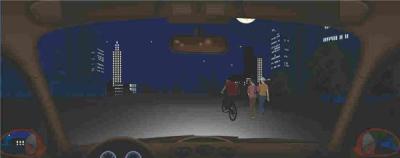
Answer:Y
29、When the tire pressure is too low, what will happen if the tire changes its shape in waves and increases in temperature due to fast movement?
A、Unstable tire pressure
B、Even lower tire pressure
C、Driving resistance increases
D、Tire burst
Answer:D
30、The stop-and-yield line at the intersection ahead indicates that vehicle drivers should reduce speed and give the right of way to vehicles on the trunk road.
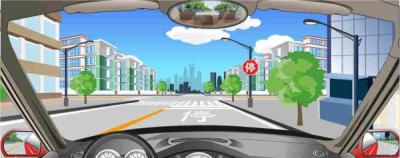
Answer:N
31、The sign in front indicates an open-air parking lot with rest area is 200 meters ahead.
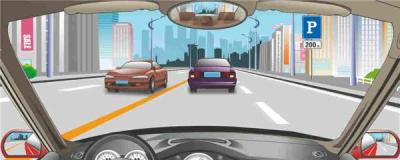
Answer:Y
32、When approaching a sharp curve, motor vehicle drivers should reduce speed only after entering the curve.
Answer:N
33、When a motor vehicle passes over an overflowing bridge, what should the driver do after stopping and observing closely?
A、Change to a high gear and pass rapidly
B、Constantly observe the changes of the flow
C、Prepare to stop at any time
D、Change to a low gear and pass through at a constant speed
Answer:D
34、What should motor vehicle drivers do under the circumstance shown in the flash?

A、Drive by borrowing the opposite lane
B、Brake suddenly and pass through at a lower speed
C、Drive by the outer side of the curve
D、Reduce speed fully and drive by the right side
Answer:D
35、This sign warns that the section ahead is under traffic monitoring.
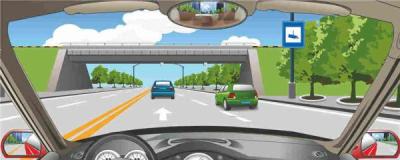
Answer:Y
36、The guide arrow on the road surface of this lane indicates that drivers are only permitted to continue straight at the intersection ahead.
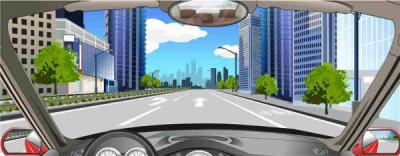
Answer:Y
37、Motor vehicle drivers may reverse at an intersection.
Answer:N
38、If a motor vehicle deviates from the straight direction due to steering failure, what should be done by thedriver in order to reduce speed and stop the vehicle as soon as possible?
A、Gently depressing the brake pedal
B、Pulling up the handbrake
C、Immediately changing to a low gear to reduce speed
D、Decisively and continuously depressing and releasing the brake pedal
Answer:D
39、The sign on the right warns of a guarded crossing 150 meters ahead.
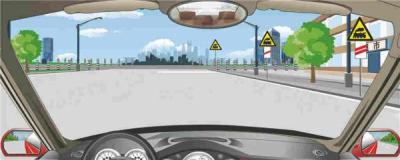
Answer:N
40、Mr Peng drove a heavy semi-trailer tractor with 37.7 tons of cargo(capacity 25 tons). When descending a slope on the Daguang Expressway, the tractor had a rear-end collision with Mr. Li's heavy dump truck ( carrying 3.17 cubes of loess and 24 passengers in the container)occupying the emergency lane. As a result of this accident, 16 people were killed and 13 injured What are the main illegal acts in this case?
A、Mr Peng exceeded the speed limit
B、Mr. Peng's tractor carried more cargo than limited
C、Mr Li illegally drove in the emergency lane
D、Mr. Li's truck illegally carried passengers in the container
Answer:BCD
41、Motor vehicles are not allowed to stop in this area for a long time.
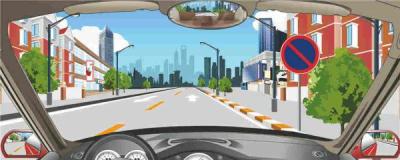
Answer:Y
42、In this situation, motor vehicles are permitted to stop temporarily at bus stations.
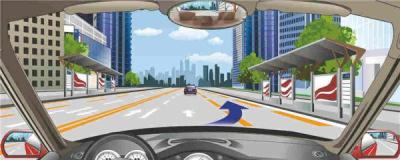
Answer:N
43、What needs attention when a motor vehicle drives on a road covered with ice and snow?
A、Braking length is extended
B、Anti-skating resistance will be greater
C、The adhesive force of the road will be greater
D、The braking length will be shorter
Answer:A
44、The sign on the right side warns of an emergency lane 500 meters ahead.
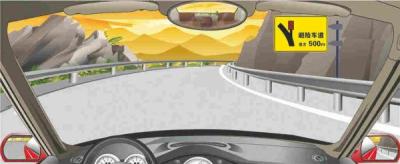
Answer:Y
45、The sign on the right indicates a T-shaped intersection head.
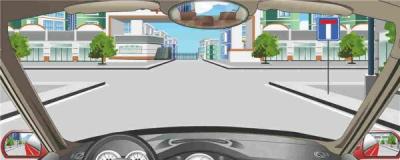
Answer:N
46、This sign indicates the traffic broadcast and radio television channel of highway.
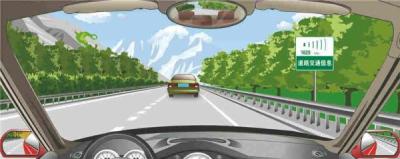
Answer:N
47、Before making a U-turn at the intersection ahead, motor vehicle drivers should drive to the lane for turning left and going straight.
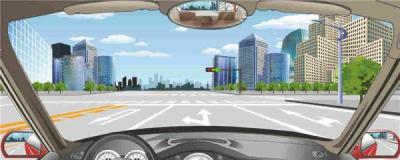
Answer:N
48、When driving on a damp and slippery road, drivers should avoid using the emergency brake to his/her best ability.
Answer:Y
49、What should the driver do when he/she sees this sign on the road?
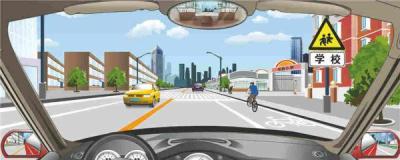
A、Use emergency braking
B、Slow down and take a look
C、Sound the horn intermittently
D、Prepare to bypass
Answer:B
50、The sign on the right warns of a village 200 meters ahead.
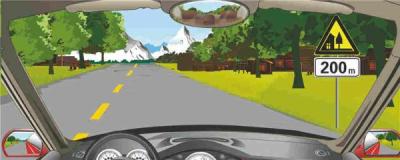
Answer:Y
- 广西英语c1科目四考试 相关内容
- 新疆科目四英文版题目 上海科目四英文版 湖南驾考科目四英语版书 黑龙江2025科目四英文版 北京驾考科目四英语版PDF 宁夏2025科目四英文版 上海外国人考驾照科目四 广西外国人考科目四 英文 内蒙古只认识英文可以考科目一吗 驾校考试英文版 四川2025科目四考试英文 湖北驾照科目四英文版题库 山西外国人考科目四 英文 内蒙古科目一英文版模拟 安徽驾考科目四英文版题库 贵州驾照科目四英文版题库
Copyright © 2025 驾考 版权所有