
- 科目一考试
- 顺序练习
- 随机练习
- 强化练习
- 模拟考试
- 科目四考试
- 顺序练习
- 随机练习
- 强化练习
- 模拟考试
- 外国语言版题库
- 英语题库
- 德语题库
- 韩语题库
- 日语题库
- 俄语题库
- 法语题库
- 西班牙语题库
- 阿拉伯语题库
- 摩托车英文题
北京2025科目四考试英文
-
1、Drivers are not allowed to cross these lane-dividing lines when overtaking in the same direction.
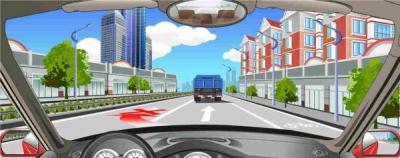
Answer:Y
2、Mr Ran drove his car from 6am until 11 am without rest, falling down a steep 85-meter ridge at one side of a highway 1 km from Xunan Road in Xuahan County,killing 13 people and injuring 9. Which of the following law-breaking acts did Mr Ran commit?
A、Speeding
B、Driving not in accordance with the traffic markings
C、Exceeding carrying capacity
D、Fatigued driving
Answer:D
3、Under such circumstances, what should motor vehicle drivers do?
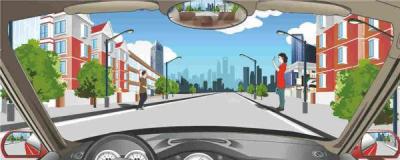
A、Guard against the sideslip of motor vehicles
B、Guard against the crossing of pedestrians
C、Speed up and pass through as quickly as possible
D、Continuously sound the horn
Answer:B
4、When driving, besides paying attention to keeping a safe distance from the vehicle in front, drivers should also be prudent when braking so as to avoid a rear-end collision caused by a vehicle behind.
Answer:Y
5、When driving on a muddy road, the driver should hold the steering wheel firmly and speed up to pass through.
Answer:N
6、The motor vehicle should slow down and pass slowly in this situation.
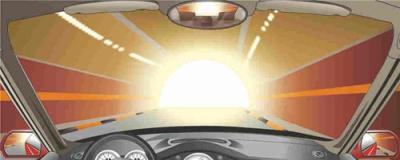
Answer:Y
7、How many kinds of law-breaking acts are displayed in flash 6?
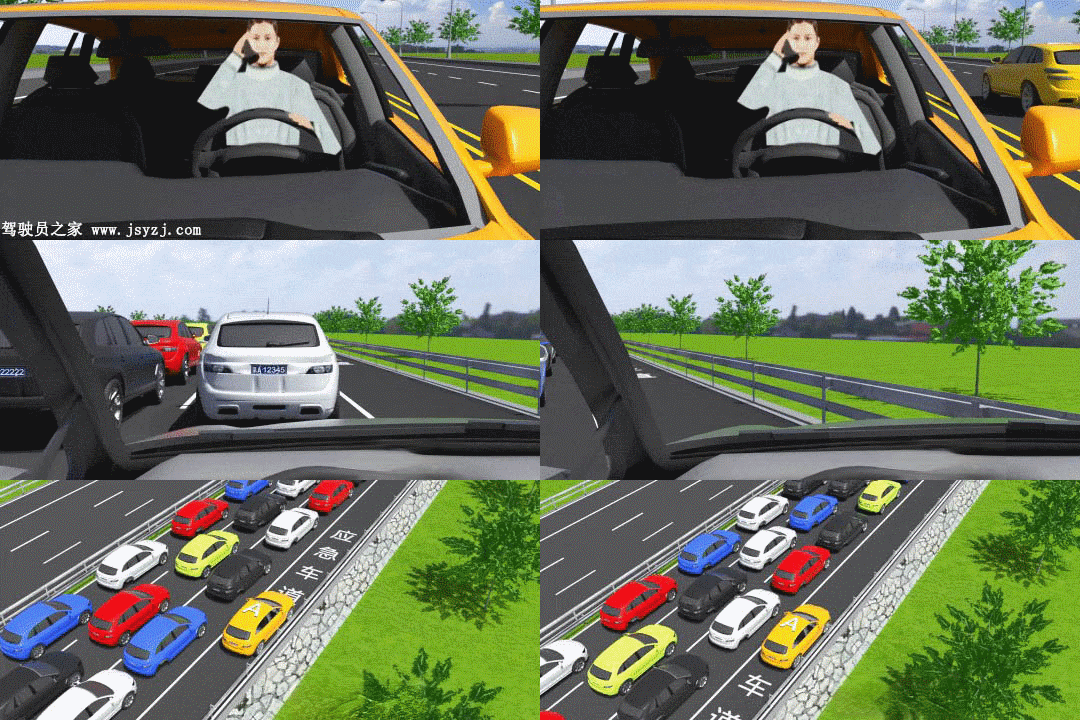
A、One
B、Two
C、Three
D、Four
Answer:C
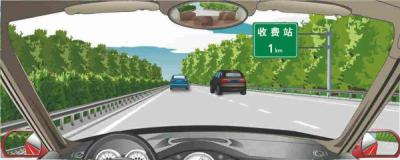
8、The sign on the right indicates a one-kilometer distance from ETC toll station ahead.
Answer:N
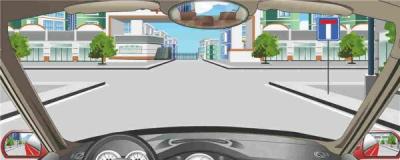
9、The sign on the right indicates a T-shaped intersection head.
Answer:N
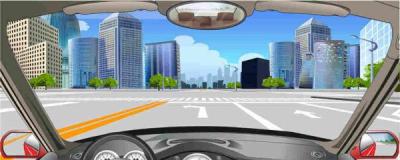
10、The guide arrow on the road surface of this lane indicates that only left turns are permitted at the intersection ahead.
Answer:Y
11、On a mountain road, what should the driver do in this situation?
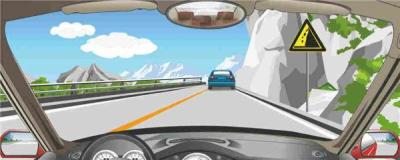
A、Drive on the left and speed up to bypass
B、Stop to observe and pass slowly
C、Observe closely and pass as soon as possible
D、Sound the horn several times and pass slowly
Answer:C
12、Which of the following is a bad habit when changing lanes?
A、Turning on the indicator in advance
B、Observing closely before changing a lane
C、Change lanes at will
D、Not obstructing the passing of other normally moving vehicles
Answer:C
13、If a motor vehicle deviates from the straight direction due to steering failure, what should be done by thedriver in order to reduce speed and stop the vehicle as soon as possible?
A、Gently depressing the brake pedal
B、Pulling up the handbrake
C、Immediately changing to a low gear to reduce speed
D、Decisively and continuously depressing and releasing the brake pedal
Answer:D
14、When a motor vehicle slides sideways on a road covered by ice and snow, the driver should violently turn the steering wheel to adjust the direction.
Answer:N
15、The crosswalk of the intersection warns that pedestrians have priority.
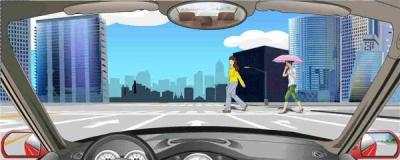
Answer:Y
16、The sign on the right indicates an inspection station 100 meters ahead.
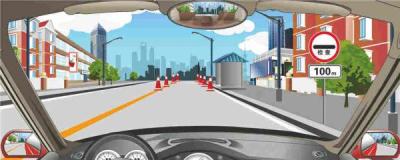
Answer:Y
17、When a motor vehicle stops in snow, which lamp should be turned on?
A、Front and rear fog lamps, clearance lamp and rear position lamp
B、Reverse lamp, clearance lamp and rear position lamp
C、Headlamp, clearance lamp and rear position lamp
D、Hazard lamps, clearance lamp and rear position lamp
Answer:D
18、What's the emergency measure to deal with a sudden tire burst on the road?
A、Swiftly braking to slow down
B、Firmly hold the steering wheel and steadily stop the vehicle as early as possible
C、Swiftly turn the steering wheel to adjust the direction
D、Go ahead at a low speed and find a place for tire change
Answer:B
19、What should the driver do if he/she wants to turn left at this intersection?
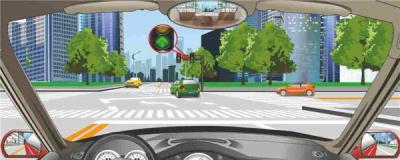
A、Turn left along the straight-going lane
B、Enter the left turn waiting area
C、Enter the straight-moving waiting area
D、Turn left along the left lane
Answer:B
20、Mr. Tao drove a midsize bus with 33 passengers. At the spot of 163 kilometers on the South Xuping Expressway, the bus clashed at a speed of 120 kilometers per hour with Mr. Ans minibus parked without any warning signs on the inside lane, due to breakdown after an accident. The midsize bus overturned after collided with the guardrail on the right-hand side. As a result of the accident, 16 people were killed and 15 injured. What are the main illega acts of the two drivers?
A、Mr. Tao carried more passengers than permitted
B、Mr. Tao exceeded speed limit
C、Mr. An failed to place any warning signs in accordance with relevant stipulations
D、Mr. An was illegally parked
Answer:ABC
21、vehicles may stop temporarily in this area.
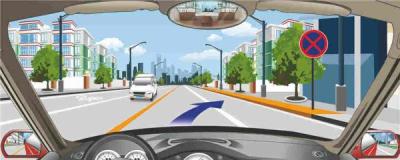
Answer:N
22、When there is a braking failure on a downhill road the driver should change the gear to one position or two positions lower, and control the speed by taking advantage of the braking role of the engine.
Answer:Y
23、The sign on the right warns of no passing due to collapse on the road ahead.
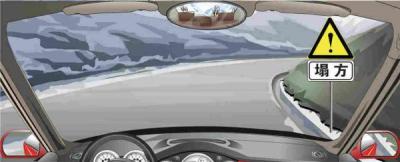
Answer:N
24、When driving in a heavy rain, drivers should contro their speed to prevent their vehicles from sliding.
Answer:Y
25、After speeding up to more than 60 km/hour, a motor vehicle driver may drive onto the driving lane directly.
Answer:N
26、When reversing in this condition, in which of the following ways can motor vehicle drivers keep safe?
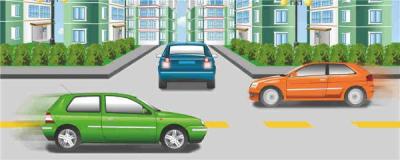
A、Reverse at a lower speed
B、Voluntarily stop and yield
C、Continuously sound the horn to alert
D、Reverse in a clockwise direction
Answer:B
27、What should the driver do upon finding that one of the left tires is leaking while driving?
A、Brake slowly to slow down
B、Brake swiftly to slow down
C、Turn to the right side swiftly
D、Apply emergency braking
Answer:A
28、The area in the yellow rectangle markings on the right side of the road indicates that temporary stopping is permitted here.
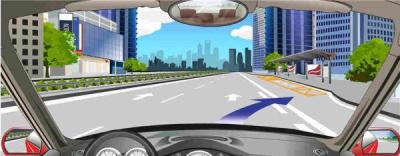
Answer:N
29、For evading an emergency on an expressway, which of the following principles should drivers stick to?
A、Evading vehicles first and objects later
B、Evading people first and objects later
C、Evading vehicles first and people later
D、Evading objects first and people later
Answer:B
30、After a traffic accident, what is the most effective measure to prevent secondary accidents?
A、Evacuate all passengers
B、Turn on the hazard lamps
C、Mark the original place of the injured persons
D、Properly place the danger warning sign
Answer:ABD
31、The driver may turn right directly at this intersection.
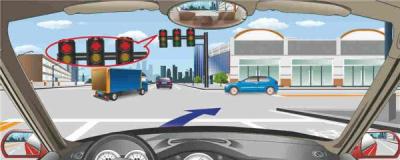
Answer:N
32、The sign on the right warns of entering a tunnel, and requires reduced speed.
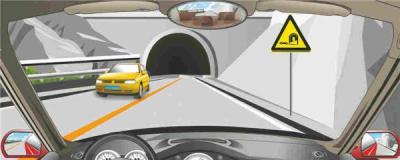
Answer:N
33、This sign warns of an intersection of railways and highways ahead.
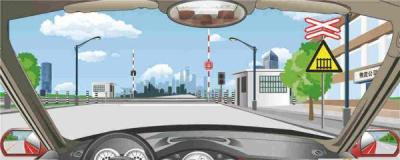
Answer:Y
34、What is the intersection ahead indicated by the right sign?
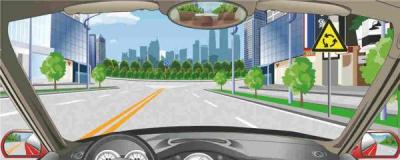
A、T-shaped intersection
B、Y-shaped intersection
C、Cross-shaped intersection
D、Roundabout
Answer:D
35、The sign in front indicates the allocation of roads ahead.
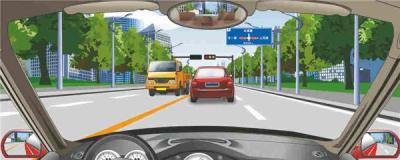
Answer:N
36、The sign on the right warns of a narrowed road on both sides ahead.
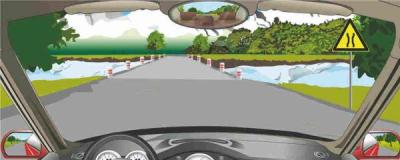
Answer:N
37、When rescuing a wounded person in coma causing by excessive blood loss, it is necessary to take measures to prevent heat loss.
Answer:Y
38、When driving in a residential area, the driver should not exceed the speed indicated by the speed limit sign.
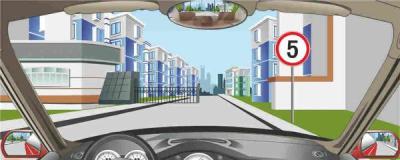
Answer:Y
39、The sign on the right indicates a 2-kilometer distance from the Donglushan Service Area on the highway.
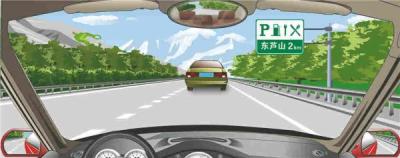
Answer:Y
40、Which of the following acts are prohibited when passing through a tunnel?
A、Overtaking
B、Stopping
C、Making a U-turn
D、Reversing
Answer:ABCD
41、When extinguishing fire, the synthetic-made garments should not be taken off in order to protect the exposed skin from burning.
Answer:N
42、This sign warns to bypass from either side to avoid roadblock.
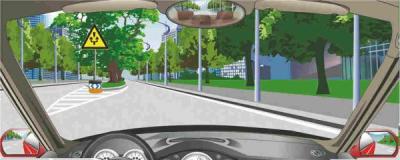
Answer:Y
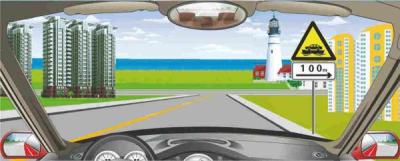
43、The sign on the right warns of a ferry crossing 100 meters after turning right at the intersection ahead.
Answer:Y
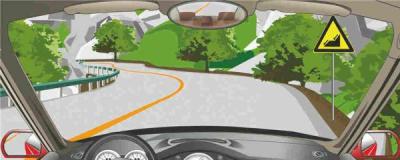
44、The sign on the right side warns of an abrupt downhill section ahead.
Answer:N
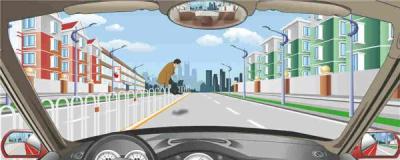
45、Drivers neednt yield to pedestrians who display such behavior.
Answer:N
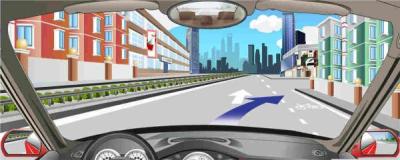
46、Crossing the broken white line on the right edge of the road is allowed.
Answer:Y
47、Under the circumstances shown in the flash, what should be done by the vehicle in front?
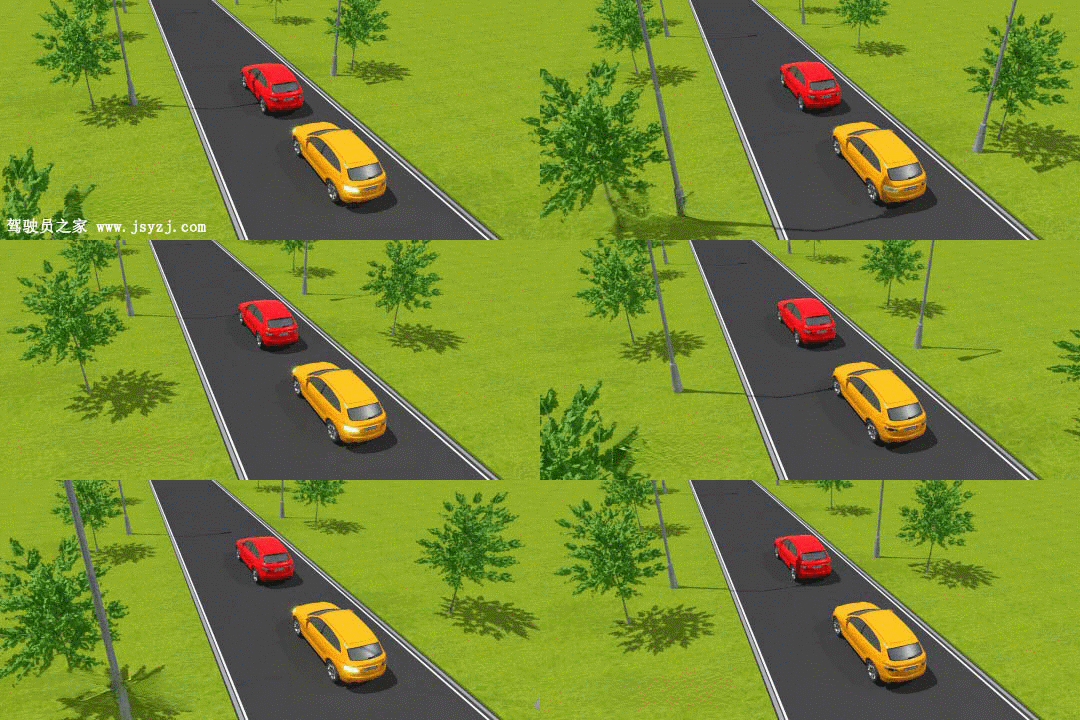
A、Reduce speed swiftly or apply emergency brake
B、Drive at a higher speed after giving a proper space
C、Reduce speed and yield by the right side of the road
D、Drive at a higher speed by the right side of the road
Answer:C
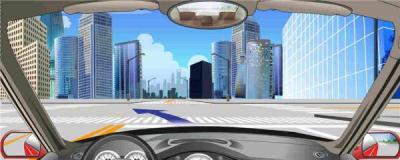
48、As shown in this picture, the intersection guide line is designed to help drivers make turns.
Answer:Y
49、If the road condition behind is good, motor vehicle drivers should reverse rapidly.
Answer:N
50、When a bicycle occupies the motor vehicle lane and obstructs the traffic, the driver should sound the horncontinuously and speed up to bypass on the left of the bicycle.
Answer:N
- 北京2025科目四考试英文 相关内容
- 吉林驾考科目三英文 海南英语c1考试 海南驾考科目四英语版PDF 安徽驾考英语版书 内蒙古只认识英文可以考科目四吗 重庆驾考科目四英语版PDF 老外考驾照的理论书籍有哪些内容 天津英文驾考科目四app 老外驾考电脑版下载安装教程视频 福建驾考英语版书 老外在中国考驾照用什么软件好 贵州驾照考试科目四英文版 青海驾照科目四英文版题库 云南驾考科目三英文 辽宁驾照科目一英文版题库 陕西只认识英文可以考科目四吗
Copyright © 2025 驾考 版权所有