
- 科目一考试
- 顺序练习
- 随机练习
- 强化练习
- 模拟考试
- 科目四考试
- 顺序练习
- 随机练习
- 强化练习
- 模拟考试
- 外国语言版题库
- 英语题库
- 德语题库
- 韩语题库
- 日语题库
- 俄语题库
- 法语题库
- 西班牙语题库
- 阿拉伯语题库
- 摩托车英文题
西藏外国人考驾照科目四
-
1、After a motor vehicle falls into water, the driver should immediately close the windows to prevent water from flowing into the compartment and to keep the air from flowing out. At the same time, he/she should make calls to tell the rescue personnel the place of the accident and wait for their arrival.
Answer:N
2、When driving on a damp and slippery road, drivers should avoid using the emergency brake to his/her best ability.
Answer:Y
3、The sign in front indicates a one-kilometer distance from the next left exit.
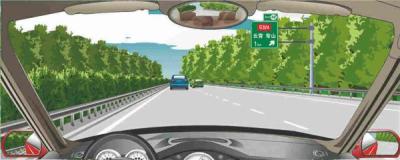
Answer:N
4、When rescuing a person sustaining full-body burns the rescue personnel may spray cool water to his body to put out the fire.
Answer:Y
5、Which one of following ways is the safest when driving a motor vehicle on this road?
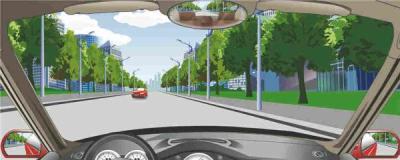
A、Driving along the central line of the road
B、Driving along the right side of the road
C、Driving at the middle of the road
D、Driving along the left side of the road
Answer:B
6、Drivers may cross these lane-dividing lines to change lanes in the same direction.
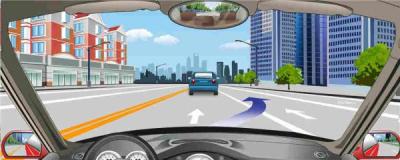
Answer:N
7、When braking, the steering will become impossible if the front wheels are blocked
Answer:Y
8、What should be done first after getting into the vehicle?
A、Observe the surrounding traffic situation
B、No need to observe the traffic situation around
C、Open the door and get in directly
D、Take note of the weather
Answer:A
9、As shown in the flash, when overtaking a vehicle in front, the driver should make the horizontal distance as large as possible and may cross the solid line if necessary.
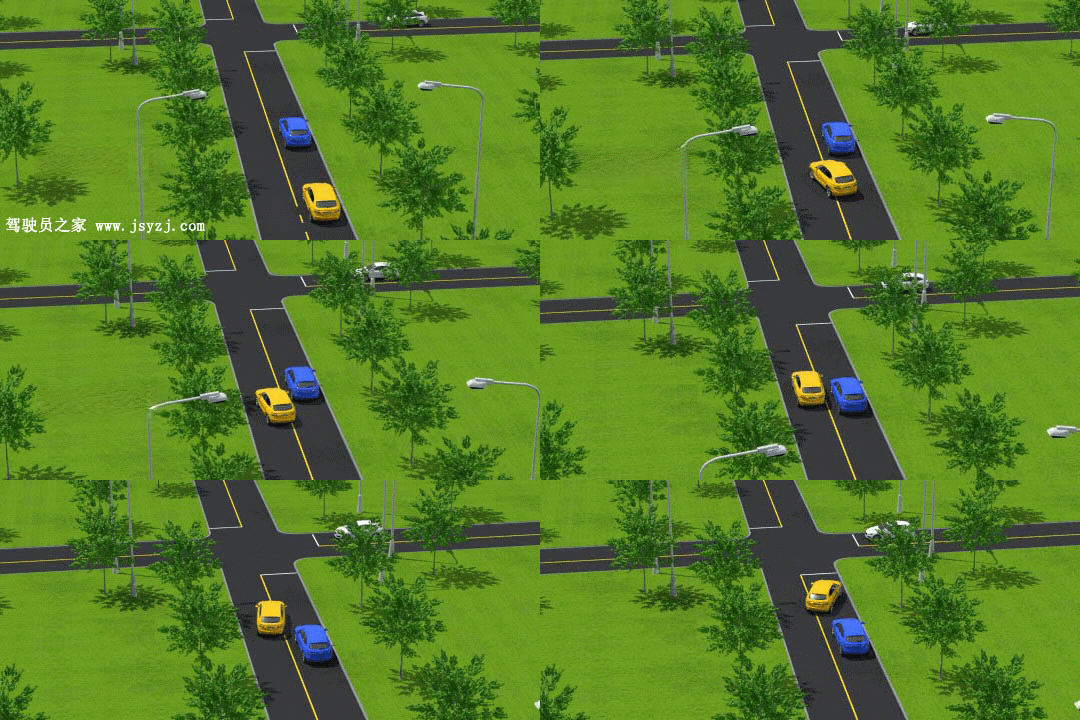
Answer:N
10、When the wounded person is suffering main artery bleeding, where should the rescue personnel press by thumb to stop the bleeding?
A、The artery near the heart
B、The artery lower to the wound
C、The artery further from the heart
D、The artery in the center of the wound
Answer:A
11、When driving in a strong wind, what should the driver do if he/she feels the steering wheel is suddenly out of control due to the frequent changes in speed and direction of the wind?
A、Turn the steering wheel against the wind
B、Turn the steering wheel with the wind
C、Use emergency brake
D、Firmly hold the steering wheel with both hands
Answer:D
12、The sign on the right indicates that vehicles from the primary road have priority.
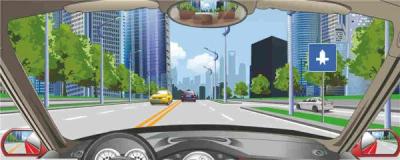
Answer:Y
13、The guide arrow on the road surface of this lane indicates that only left turns are permitted at the intersection ahead.
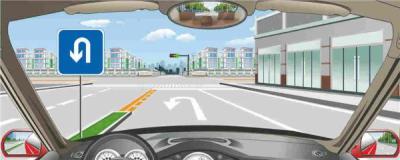
Answer:N
14、When driving on a muddy road, what should the driver do?
A、Try to avoid using the foot brake
B、Drive slowly in mid or low gear
C、Firmly hold the steering wheel
D、Speed up and pass through
Answer:ABC
15、The sign on the left warns of no passing on the right-hand road ahead.
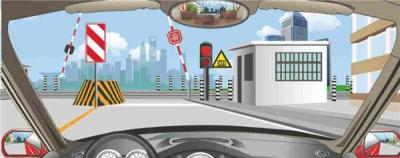
Answer:N
16、Motor vehicles are prohibited from turning left in this situation.
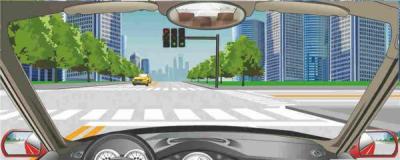
Answer:Y
17、The sign on the right side indicates that turning left is not permitted at the intersection ahead.
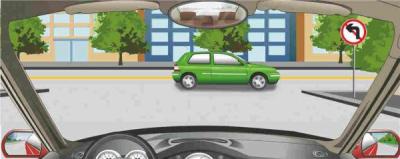
Answer:Y
18、How should lamps be used when setting off in this situation?
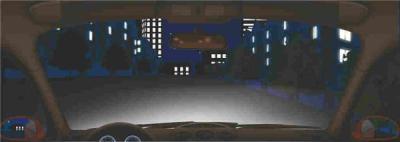
A、Turn on the high-beam
B、Turn on the left indicator only
C、Turn on the left indicator and low-beam
D、Turn on hazard lamp
Answer:C
19、When leaving an expressway, drivers should enter the ramp after slowing down in the deceleration lane.
Answer:Y
20、The sign on the right warns of a hump bridge right ahead.
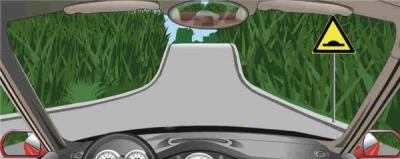
Answer:N
21、Drivers may turn left when traffic police give these hand signals.
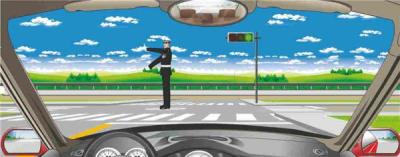
Answer:Y
22、Which of the following acts are prohibited when passing through a tunnel?
A、Overtaking
B、Stopping
C、Making a U-turn
D、Reversing
Answer:ABCD
23、The sign on the right warns of a dangerous mountainside road on the left of the road ahead.
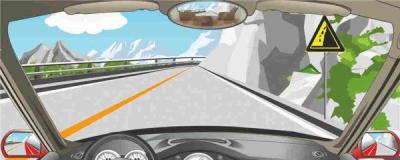
Answer:N
24、When a motor vehicle deviates from the normal direction due to steering failure, what should the driver do?
A、Immediately steer and adjust
B、Reduce speed and stop the vehicle as early as possible
C、Steer to the side where there is no obstacle to evade
D、Steer to the side where there is an obstacle to evade
Answer:B
25、The sign on the right warns of entering a tunnel, and requires reduced speed.
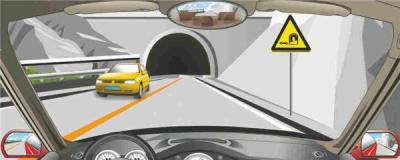
Answer:N
26、What should the driver do upon finding a burst rear tire?
A、Adjust by swiftly turning the steering wheel
B、Control the direction while reducing speed slowly
C、Swiftly turn the steering wheel to the opposi direction
D、Swiftly take braking measures
Answer:B
27、The drivers, loaders and supercargoes responsible for dangerous chemicals transportation should all full understand the chemical characteristics, potential risks, features of the packaging containers and emergency measures for any unexpected accidents.
Answer:Y
28、When the driver discovers a tire is leaking and steers the vehicle off the main driving lane, he/she should refrain from applying emergency braking so as to avoid a vehicle turnover or a rear-end collision arising from the late braking of the vehicle behind.
Answer:Y
29、The guide line of a changeable lane indicates that drivers can choose their direction at will.
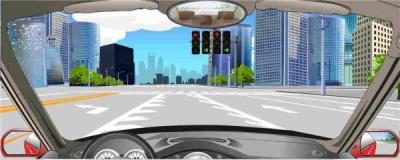
Answer:N
30、When the tire pressure is too low, what will happen if the tire changes its shape in waves and increases in temperature due to fast movement?
A、Unstable tire pressure
B、Even lower tire pressure
C、Driving resistance increases
D、Tire burst
Answer:D
31、Where is the proper parking place for motor vehicles driving on an expressway?
A、On the expressway ramp
B、In the acceleration lane
C、In the deceleration lane
D、In a service area
Answer:D
32、The sign in front is an advance announcement of the directions led by the interchange.
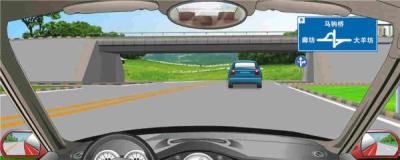
Answer:Y
33、The driver should drive on the left in this kind of tunnel.
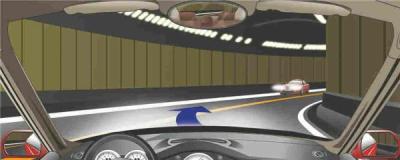
Answer:N
34、When a motor vehicle passes over an inundated road, what should the driver do for safe driving?
A、Slow down and drive with special care
B、Speed up and pass rapidly
C、Maintain a normal speed and pass through
D、Change to a low gear and speed up to pass
Answer:A
35、If a motor vehicle enters a driving lane under this situation, what should the driver do?
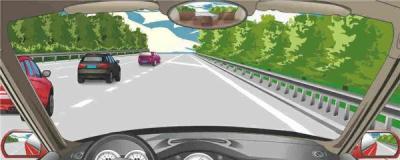
A、Control the driving speed and follow the last vehicle
B、Speed up and cut in front of the second vehicl
C、Speed up and cut in front of the first vehicle
D、Cut in between two vehicles at will
Answer:A
36、When a motor vehicle accidentally hits the guardrail of a highway, an effective protective measure is to turn dramatically in the opposite direction.
Answer:N
37、When following other vehicles on the uphill section of a mountain road, what should the driver do if the vehicle in front stops?
A、Overtake from either side of the front vehicle
B、Stop close to the vehicle in front
C、Stop with a larger space from the vehicle in front
D、Sound the horn continuously to warn the other driver
Answer:C
38、What should be given attention when setting off in this weather?
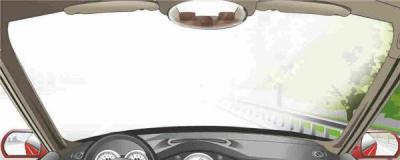
A、Turning on the high-beam
B、Turning on the front and rear fog lamps
C、Turning on the left indicator only
D、Continuously sounding the horn
Answer:B
39、Which one of the following measures is correct when a motor vehicle intends to overtake but the vehicle infront refuses to yield?
A、Use a long-sounding horn
B、Follow the vehicle in front while turning high-beam
C、Wait for it to yield while keeping a safe distance
D、Use high-beam and low-beam alternatively
Answer:C
40、Which one of the following measures is correct when a motor vehicle encounters this situation at night?
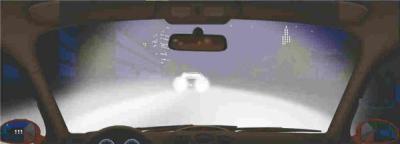
A、Keep driving at a normal speed
B、Drive at an increased speed to avoid light
C、Cut speed or stop to yield
D、Turn on high-beam to reject
Answer:C
41、How should lamps be used when motor vehicle drivers pass through a two-way tunnel?
A、Turn on the hazard lamps
B、Turn on the high-beam
C、Turn on the fog lamp
D、Turn on the low-beam
Answer:D
42、The sign on the right indicates that the speed limit of 40km/hour is lifted on the road ahead.
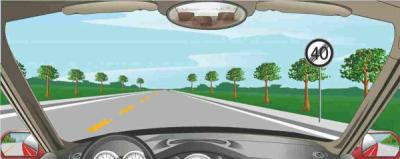
Answer:Y
43、When disembarking, what should be done by drivers in order to keep safe?
A、Opening the door and disembarking immediately after stopping
B、Observing the traffic situation ahead
C、Opening the door first and then observing the situation beside and behind the vehicle
D、Observing the situation beside and behind the vehicle before opening the door slowly
Answer:D
44、When driving on the highway in foggy, rainy, or snowy weather with a range of visibility between 100 meters and 200 meters, what should motor vehicle drivers do?
A、Turn on the fog lamp, low-beam, clearance lamp and front and rear position lamp
B、Drive at a speed of no more than 60 km/hour
C、Keep a breaking distance of more than 100 meters from the vehicle in front in the same lane
D、Leave the highway from the nearest exit as soon as possible
Answer:ABC
45、What should drivers keep in mind when driving on amountainous road?
A、Keep a safe distance
B、Avoid occupancy of another lane when making a turn
C、Downshift in advance when ascending an abrupt slope
D、Taking full advantage of engine braking when descending a long slope
Answer:ABCD
46、The guide arrow on the road surface of this lane indicates that there is an intersection on the right side of the road.
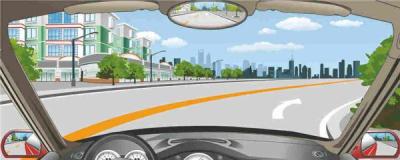
Answer:N
47、When there is a sudden braking failure on a downhill road, in which ones of the following ways can drivers reduce speed?
A、Driving onto the emergency lane and reduce speed and stop there
B、Rubbing the vehicle body against the rocks or trees on roadside
C、Pulling up the handbrake first
D、Immediately changing to a low gear
Answer:ABD
48、The distance-ascertaining section of an expressway is used for the drivers to ascertain the safety distance when the speed is 100 kilometers per hour.
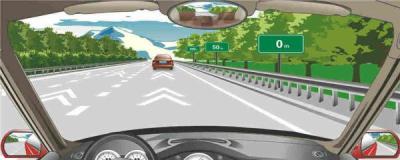
Answer:Y
49、Motor vehicle drivers may make a U-turn in the broken line area as long as it will not affect the normal traffic flow.
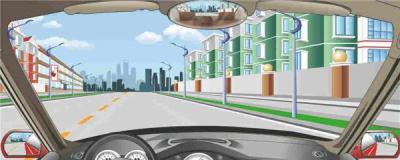
Answer:Y
50、When a motor vehicle passes over an inundated road the driver should change to a low gear and pass at a constant speed.
Answer:Y
- 西藏外国人考驾照科目四 相关内容
- 黑龙江驾照考试科目一英文版 广西驾考英文版题库 湖北英文驾考app 云南驾照考试科目四英文版 四川外国人考科目一 英文 老外考驾照需要准备什么材料和手续 河北驾校考试英文版 黑龙江科目四有英文版吗 江苏科目四考试英文版 上海驾考科目四英语版书 湖南外国人考驾照科目四 海南驾考英文版题库 上海2025驾考英文题库 天津驾考科目一英语 西藏驾照考试科目四英文版 江苏驾照科目四英文版题库
Copyright © 2025 驾考 版权所有