
- 科目一考试
- 顺序练习
- 随机练习
- 强化练习
- 模拟考试
- 科目四考试
- 顺序练习
- 随机练习
- 强化练习
- 模拟考试
- 外国语言版题库
- 英语题库
- 德语题库
- 韩语题库
- 日语题库
- 俄语题库
- 法语题库
- 西班牙语题库
- 阿拉伯语题库
- 摩托车英文题
内蒙古外国人考科目四 英文
-
1、What caused this drivers death in an accident?
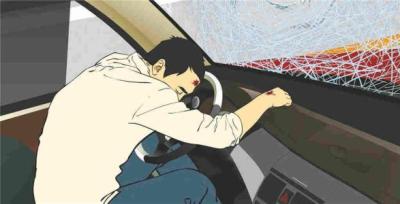
A、Failing to fasten seatbelt
B、Positioned too close to the steering wheel
C、Failing to hold the steering wheel
D、Failing to turn on SRS
Answer:A
2、If a motor vehicle experiences a "water sliding" phenomenon when running on an expressway in rain, what should the driver do?
A、Slow down by suddenly depressing the brake pedal
B、Slow down by slowly releasing the accelerator pedal
C、Turn the steering wheel immediately to adjust the direction
D、Speed up to increase the displacement of the wheels
Answer:B
3、The sign in front indicates the distance to highway destination.
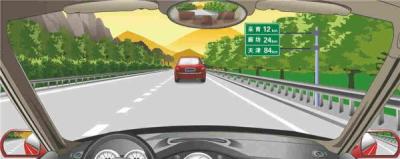
Answer:N
4、The yellow broken line on the curb indicates that vehicles are not allowed to stop and let passengers embark or disembark or load and unload freight at the roadside.
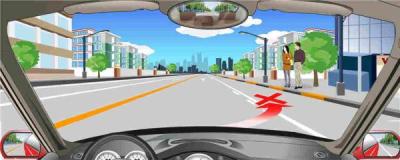
Answer:N
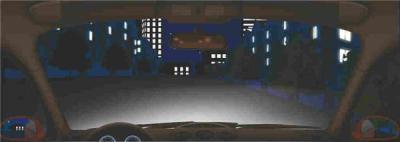
5、How should lamps be used when setting off in this situation?
A、Turn on the high-beam
B、Turn on the left indicator only
C、Turn on the left indicator and low-beam
D、Turn on hazard lamp
Answer:C
6、When driving, besides paying attention to keeping a safe distance from the vehicle in front, drivers should also be prudent when braking so as to avoid a rear-end collision caused by a vehicle behind.
Answer:Y
7、What does this sign on the fly-over junction indicate?
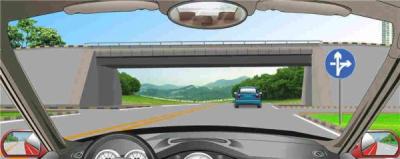
A、Turn right
B、Drive straight or turn left
C、Drive straight or turn right
D、Take a U-turn under bridge
Answer:C
8、When overtaking on a rainy day, drivers should turn on headlamps and sound a long horn.
Answer:N
9、When a motor vehicle breaks down on an expressway and cannot be moved away from the driving lane, the driver may conduct emergency repairs on the driving lane.
Answer:N
10、The braking distance will be shortened greatly when the motor vehicle is equipped with ABS brakes.
Answer:N
11、The sign on the right indicates to stop and yield for oncoming vehicles approaching on the road ahead.
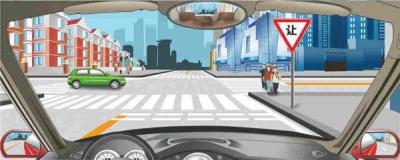
Answer:N
12、The sign on the right indicates a 2-kilometer distance from the Donglushan Service Area on the highway.
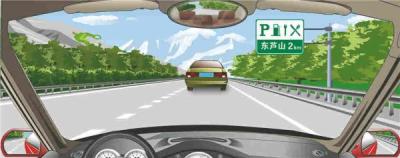
Answer:Y
13、As shown in this picture, the intersection guide line is designed to help drivers make turns.
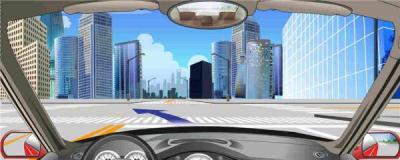
Answer:Y
14、When a fast-moving vehicle encounters an emergency the driver should turn to evade first and then brake to slow down so as to mitigate the damage.
Answer:N
15、How many kinds of law-breaking acts are displayed in flash 7?
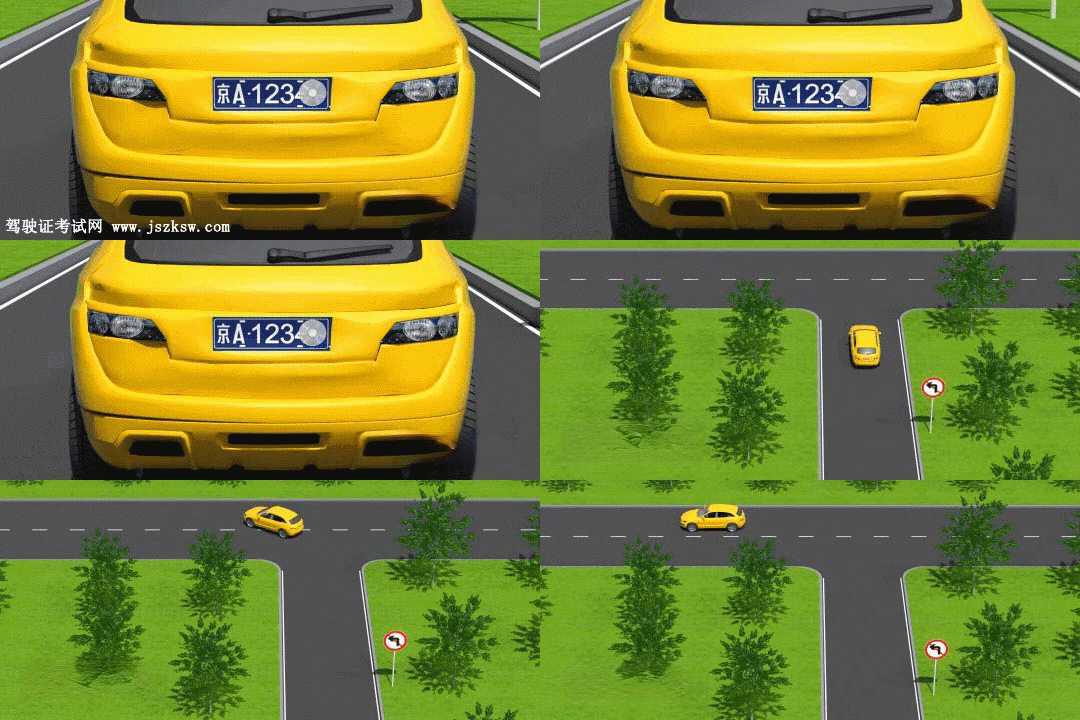
A、One
B、Two
C、Three
D、Four
Answer:B
16、Under the circumstances shown in the flash, what should the driver do?
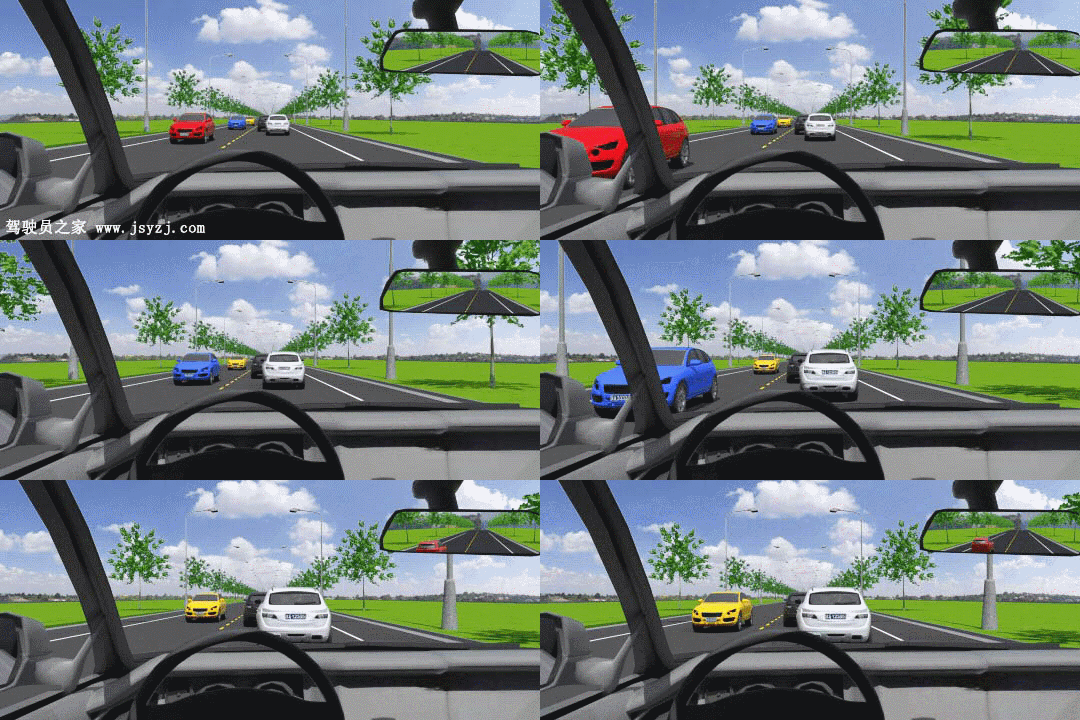
A、Find a chance to overtake the vehicle in front
B、Weave through motor vehicles ahead and pass
C、Reduce speed, stop, and wait in line
D、Sound the horn to urge vehicles in front
Answer:C
17、When driving in thick fog causing poor visibility on the expressway, the driver should apply emergency braking to stop at once.
Answer:N
18、A motor vehicle should slow down and stop at this level crossing.
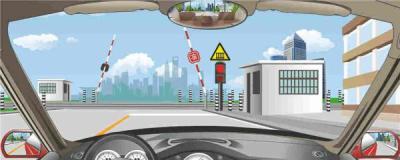
Answer:Y
19、Before setting off, it is necessary to check the driving cabin, engine cabin, external and tires of the motor vehicle.
Answer:Y
20、When driving on a road covered with ice and snow, the motor vehicle may spin or slide when increasing the speed urgently, due to the loss of vehicle stability.
Answer:Y
21、what should motor vehicle drivers do under the circumstances shown in the flash?
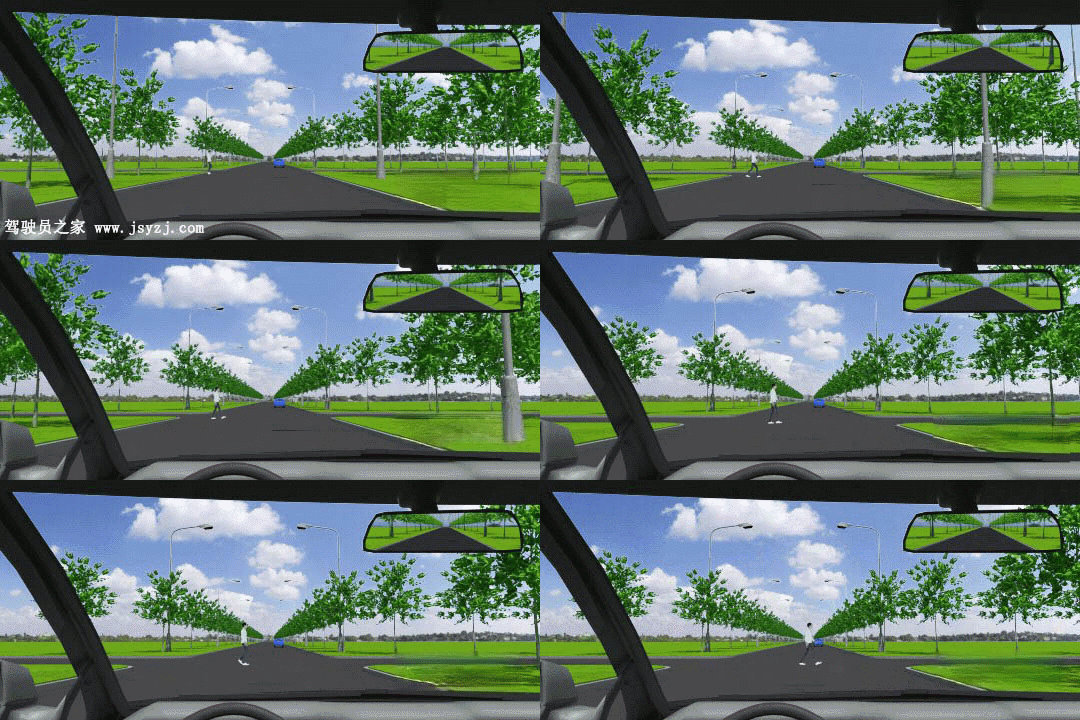
A、Reduce speed or stop to yield
B、Sound the horn to warn the pedestrians to yield
C、Pass before the pedestrians
D、Immediately change to another lane to bypass the pedestrians
Answer:A
22、Mr. Yang drove an adapted minibus( capacity 9 people and carrying 64 passengers, including 62 kindergarten pupils). When driving in Ma Caogou Village of Yu Linzi County, the bus used the lane for oncoming traffic and had a head-on colision with a heavy dump truck. As a result of this accident, 22 people were killed and 44 injured. What are the main illegal acts in this case?
A、The truck exceeded the speed limit
B、Illegal adaptation of a motor vehicle
C、The minibus carried more passengers than capacity
D、Driving in the opposite direction lane
Answer:BCD
23、At 13: 10 pm, Mr Luo set out in his medium bus from 0 km mark on the highway, and by 14: 10 had passed the 125km mark by 200 meters, he caused a rear-end collision with a motor vehicle that ran into the side slope on the southwest side, killing 11 people and injuring 2. Which of the following law-breaking acts did Mr. Luo commit?
A、Speeding
B、Driving not in accordance with traffic markings
C、Exceeding carrying capacity
D、Fatigued driving
Answer:A
24、Drivers may turn left when seeing these hand signals.
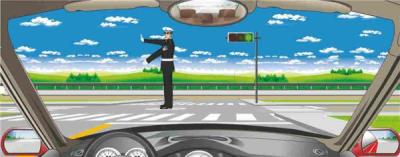
Answer:Y
25、When there is a sudden braking failure on a downhill road, what should be done by the driver?
A、Driving to an emergency lane and reducing speed to stop
B、Dropping the gear by two positions
C、Changing to the reverse gear to force the vehicle to stop
D、Reducing speed by pulling up the handbrake
Answer:A
26、If the road condition behind is good, motor vehicle drivers should reverse rapidly.
Answer:N
27、How should the driver use vehicle lights when the motor vehicle leaves a roundabout?
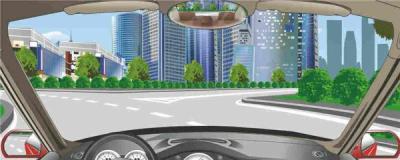
A、Turn on the left-turn indicator
B、Turn on the hazard lamps
C、No need to turn on any indicators
D、Turn on the right-turn indicator
Answer:D
28、When driving on a long downhill road, which is the best way to control driving speed?
A、Coast in neutral gear
B、Depress the clutch and coast
C、Use the engine to brake
D、Depress the brake pedal continuously
Answer:C
29、When driving on a muddy road, the driver should hold the steering wheel firmly and speed up to pass through.
Answer:N
30、The area in the yellow rectangle markings on the right side of the road indicates that temporary stopping is permitted here.
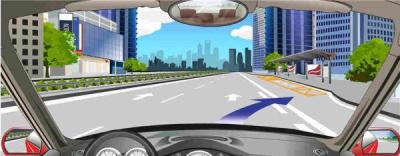
Answer:N
31、The road marker on the right side indicates that drivers may overtake by borrowing this road.
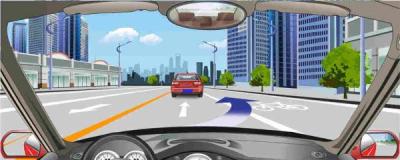
Answer:N
32、When encountering this situation in a residential area the driver should speed up and pass in front of the bicycle.
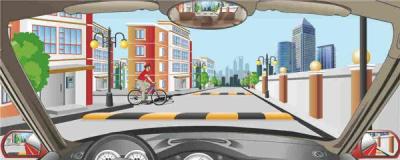
Answer:N
33、When braking, the steering will become impossible if the front wheels are blocked
Answer:Y
34、What should the driver do when the motor vehicle passes the level crossing?
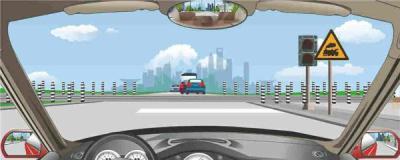
A、Change to neutral gear and slide over
B、Stop, look and pass
C、Speed up, look and pass rapidly
D、Slow down, look and pass slowly
Answer:B
35、What is the best way to make turns on this kind of curving mountain road?
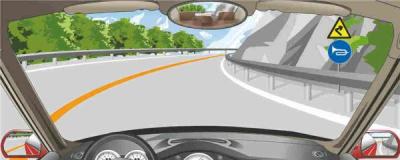
A、Drive along the outer side of the curve
B、Slow down, sound the horn and drive on the right
C、Borrow the opposite lane
D、Drive along the central line of the road
Answer:B
36、When driving on road sections where safe sight distance is affected, such as the top of a ramp, what should drivers do to ensure safety?
A、Rush through
B、Use hazard lamp
C、Cut speed and sound the horn
D、Drive at will
Answer:C
37、vehicles may stop temporarily in this area.
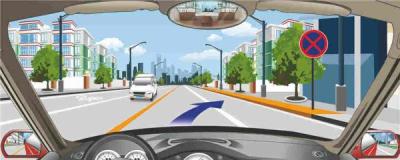
Answer:N
38、What should the driver do when seeing these hand signals?
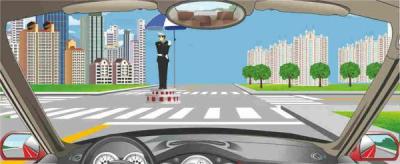
A、Turn left at the intersection
B、Stop and wait
C、Go straight at the intersection
D、Drive to the waiting area for turning left
Answer:B
39、As shown in the flash, what should the motor vehicle driver do when encountering this situation?

A、Reserve a safe crosswise distance and cut speed
B、Keep a normal speed
C、Use the emergency brake when approaching
D、Speed up and pass rapidly
Answer:A
40、The broken yellow line in the center of the road indicates that bypassing by crossing the line is prohibited in any condition.
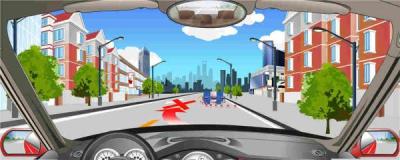
Answer:N
41、If a motor vehicle enters a driving lane under this situation, what should the driver do?
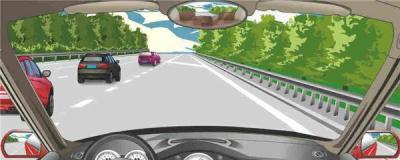
A、Control the driving speed and follow the last vehicle
B、Speed up and cut in front of the second vehicl
C、Speed up and cut in front of the first vehicle
D、Cut in between two vehicles at will
Answer:A
42、In the condition of low visibility, drivers should turn on the low-beam when setting off
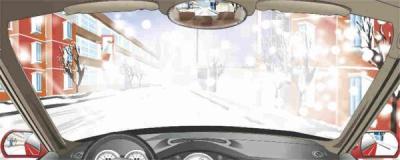
Answer:Y
43、Under such circumstances, motor vehicle drivers may sound the horn at the proper time and speed up to pass through.
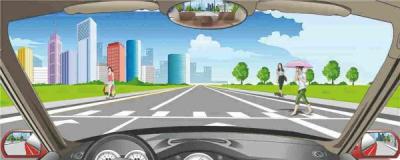
Answer:N
44、The crosswalk of the intersection warns that pedestrians have priority.
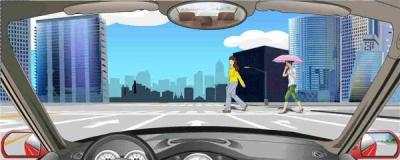
Answer:Y
45、Motor vehicle drivers don't need to use any lamp at night when passing through a road section where the street light condition is good.
Answer:N
46、When approaching another vehicle at night, why should the driver alternate between high-and-low-beam at a distance more than 150 meters?
A、Warn each other before passing
B、Driving habit
C、Easy to observe the situation ahead from either side
D、Courtesy
Answer:C
47、When a motor vehicle equipped with ABS makes an emergency brake, the driver can tread the brake pedal heavily.
Answer:Y
48、The sign in front is an advance announcement of famous places and distances en route.
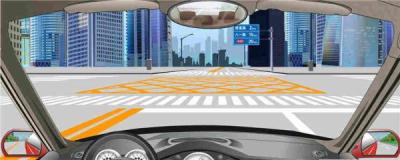
Answer:Y
49、Under such circumstances, what should be done by the motor vehicle driver who has been overtaken?
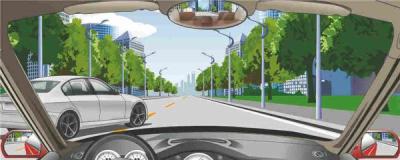
A、Sounding the horn to warn the vehicle that overtook
B、Reducing speed or pulling over by the right side
C、Protesting by turning on the high-beam
D、Catching up with and overtaking the vehicle that overtook, and offering admonitions
Answer:B
50、One day, Mr. Yang drove a large bus with 57 passengers(bus capacity 55 people)from 7 pm to 1 am the following morning. At the spot of 3008 kilometers mark by 110 meters on the No. 050 National Road in Jin Chengjiang District, the bus had a malignant traffic accident caused by front left tire burst, killing12 people and injuring 22. What's the main illegal act committed by Mr Yang?
A、Fatigued driving
B、Carrying more passengers than permitted
C、Speeding
D、Misoperation
Answer:AB
- 内蒙古外国人考科目四 英文 相关内容
- 湖南驾考科目一英语版书 贵州外国人考驾照科目一 北京英文驾考科目四app 青海考驾照的英文单词 科目四有英文版吗 贵州2025科目四考题英文版 外国考驾照难吗现在 江苏驾考科目四英文版题库 江西英文驾考app 黑龙江2025科目一考试英文 天津2025科目一考试英文 辽宁驾考英文版题库 湖南科目四英文版题目 江西科目四考题英文版 吉林英文驾考科目四app 山东驾照考试科目一英文版
Copyright © 2025 驾考 版权所有