
- 科目一考试
- 顺序练习
- 随机练习
- 强化练习
- 模拟考试
- 科目四考试
- 顺序练习
- 随机练习
- 强化练习
- 模拟考试
- 外国语言版题库
- 英语题库
- 德语题库
- 韩语题库
- 日语题库
- 俄语题库
- 法语题库
- 西班牙语题库
- 阿拉伯语题库
- 摩托车英文题
西藏驾考科目四英语版书
-
1、The sign on the right warns of traffic signals ahead.
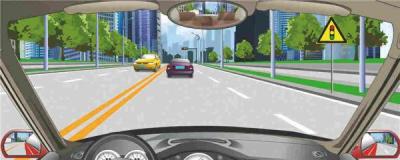
Answer:Y
2、How many kinds of law-breaking acts are displayed in flash 8?
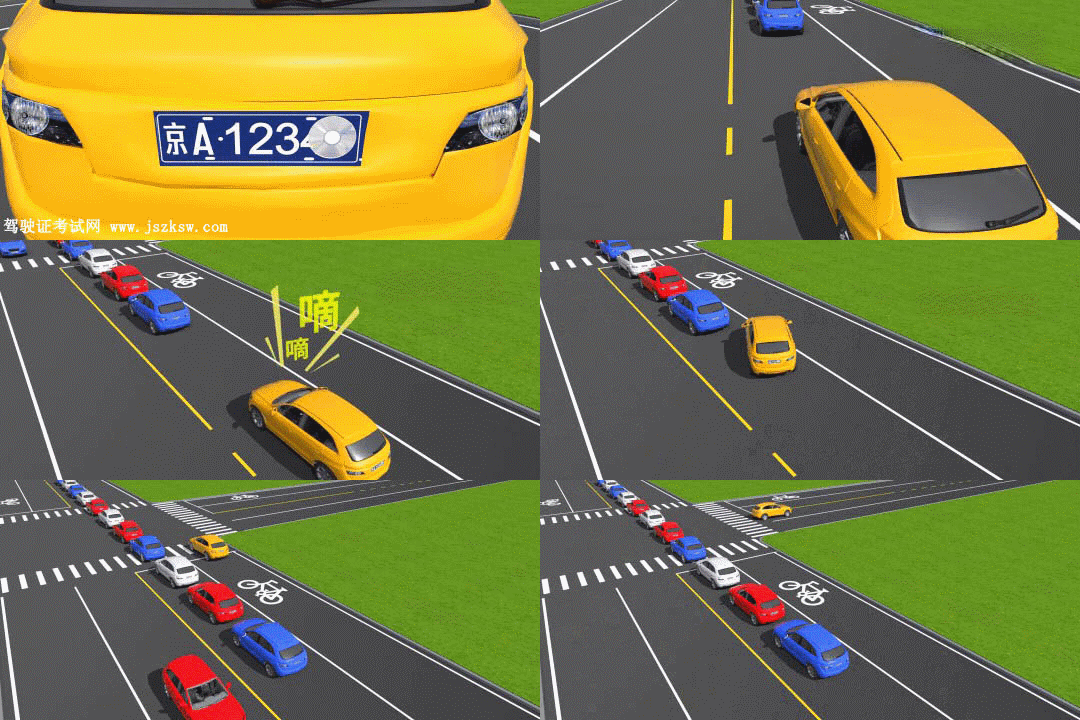
A、One
B、Two
C、Three
D、Four
Answer:B
3、During normal driving, the driver should do his/her best to run close to or on the central line so as not to allow oncoming vehicles any opportunity to occupy his own route.
Answer:N
4、When a motor vehicle moves through water, drivers should intermittently and gently depress the brake pedal in order to restore braking efficiency.
Answer:Y
5、How should the driver use vehicle lights when the motor vehicle leaves a roundabout?
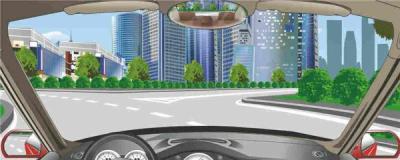
A、Turn on the left-turn indicator
B、Turn on the hazard lamps
C、No need to turn on any indicators
D、Turn on the right-turn indicator
Answer:D
6、Mr. Tong drove a large bus(capacity 55 people and carrying 54)to Taiyuan City. When he drove on a muddy road at the speed of 45 kilometers per hour, the bus skidded into a deep ditch, killing 14 people dead and badly injuring 40 What's the main illegal act committed by Mr Tong?
A、Overloaded
B、Speeding
C、Driving after drinking
D、Fatigued driving
Answer:B
7、When there is a sudden braking failure on the road, what should be done by the driver?
A、Firmly holding the steering wheel and controlling the direction
B、Immediately changing to a low gear to reduce speed
C、Using the stopping brake to reduce speed
D、Turning on the hazard lamps
Answer:ABCD
8、The sign on the right warns of a widened right-hand road ahead.
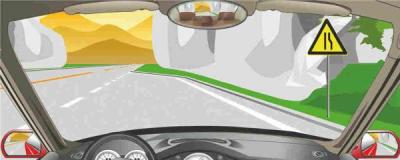
Answer:N
9、When removing a wounded person suffering spinal fracture, the rescuer should never help the wounded person to walk. He may be carried away with a soft stretcher.
Answer:N
10、As shown in this picture, the intersection guide line is designed to help drivers make turns.
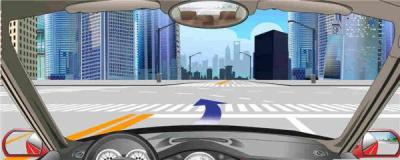
Answer:Y
11、When a tire suddenly bursts on the road, in which of the following ways can motor vehicle drivers keep safe?
A、Applying emergency braking and pulling over
B、Firmly holding the steering wheel and keeping the vehicle going straight
C、Immediately releasing the accelerator pedal
D、Gently depressing the brake pedal
Answer:BCD
12、The sign on the right warns of a village 200 meters ahead.
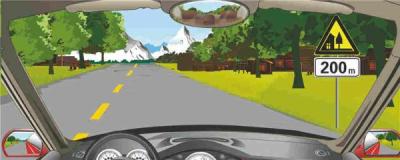
Answer:Y
13、When driving on road sections where safe sight distance is affected, such as the top of a ramp, what should drivers do to ensure safety?
A、Rush through
B、Use hazard lamp
C、Cut speed and sound the horn
D、Drive at will
Answer:C
14、After a motor vehicle falls into water, the driver should immediately close the windows to prevent water from flowing into the compartment and to keep the air from flowing out. At the same time, he/she should make calls to tell the rescue personnel the place of the accident and wait for their arrival.
Answer:N
15、Mr. Wu drove a large bus with 33 passengers (capacity 22 people). At the spot of 7 kilometers mark by 300 meters on the No 163 County Road, the bus lost control and fell into a ravine. As a result of the accident, 10 people were killed and 21 injured. In accordance with the alcohol test after the accident the blood alcohol content of Mr Wu was 26 milligram per milliliter. What's the main illegal act committed by Mr Wu?
A、Speeding
B、Carrying more passengers than permitted
C、Fatigued driving
D、Driving after drinking
Answer:BD
16、What should the driver do upon seeing this sign?
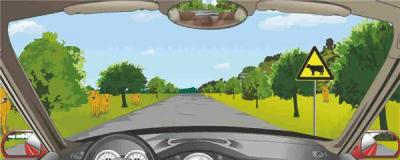
A、Slow down, look and pass slowly
B、Sound the horn to drive them away
C、Go through from the spaces between animals
D、Drive slowly and drive them away from the motor venicle
Answer:A
17、When a tire bursts suddenly on the road, the driver should refrain from violently depressing the brake pedal in panic. Instead, he/she should try his/her best to change to a low gear and use engine braking to reduce the speed of the vehicle.
Answer:Y
18、How should the driver pass this place safely?
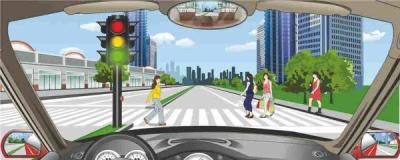
A、Speed up and pass in the front of the pedestrians
B、Bypass behind the pedestrians
C、Slow down and sound the horn
D、Stop and wait until the pedestrians pass
Answer:D
19、What should the driver do when seeing these hand signals?
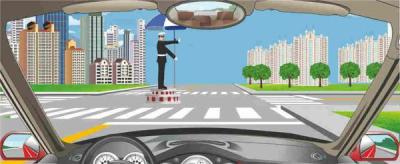
A、Go straight and pass through the intersection
B、Pull over
C、Drive to the waiting area for turning left
D、Turn right at the intersection
Answer:D
20、What does this sign on the fly-over junction indicate?
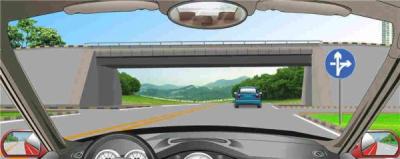
A、Turn right
B、Drive straight or turn left
C、Drive straight or turn right
D、Take a U-turn under bridge
Answer:C
21、What should the driver pay attention to in this situation?
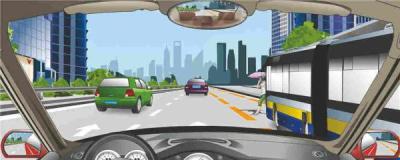
A、Pedestrians passing behind the vehicle
B、Pedestrians passing in front of the vehicle
C、Public buses suddenly reversing
D、Public buses suddenly setting off
Answer:B
22、Crossing the broken white line on the right edge of the road is allowed.
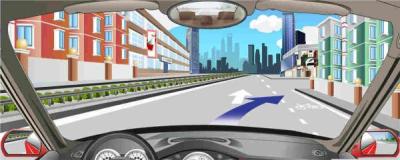
Answer:Y
23、Which one of the following statements is the safest measure for a motor vehicle driver to take on this kind of road?
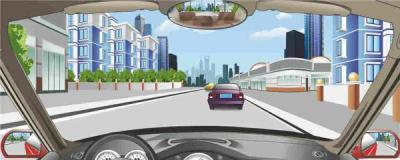
A、Accelerate to overtake the vehicle in front as soon as possible
B、Sound the horn to warn the vehicle in front to vield
C、Follow the vehicle in front and keep a certain distance
D、Overtake the vehicle in front from its righthand
Answer:C
24、Before a motor vehicle enters a tunnel, the driver should adjust the speed in accordance with the indication of the traffic sign at the entrance of the tunnel.
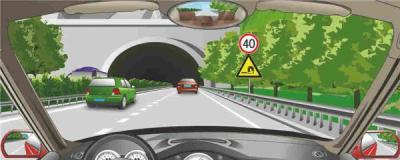
Answer:Y
25、The sign on the left indicates the destinations of two highway directions
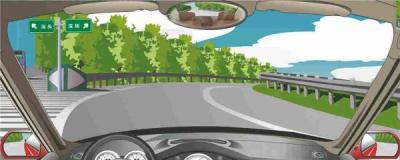
Answer:Y
26、Motor vehicle drivers may make a U-turn in the broken line area as long as it will not affect the normal traffic flow.
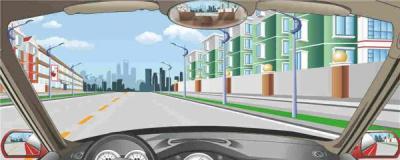
Answer:Y
27、What influence does smoking have upon driving?
A、Harmful for safe driving
B、Increase concentration
C、Help relaxation
D、No effect on driving
Answer:A
28、Drivers may turn left when seeing these hand signals.
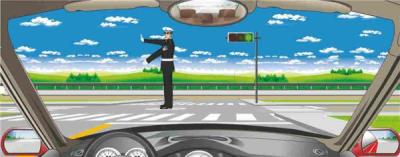
Answer:Y
29、The road marker on the right side indicates that drivers may overtake by borrowing this road.
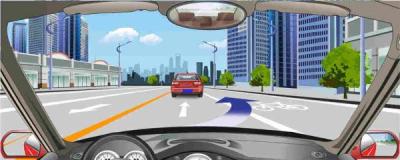
Answer:N
30、When encountering such a situation, the vehicles should cut speed or stop to yield as approaching each other.
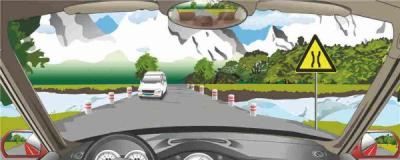
Answer:Y
31、When the speed indicated by the speed limit sign on the highway contradicts the speed indicated for the specific lanes the speed indicated for the specific lanes should prevail.
Answer:N
32、Two parallel broken double-yellow lines indicate the position of a diversion lane.
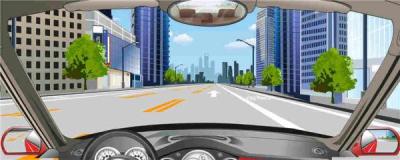
Answer:Y
33、In rain, the most effective way to avoid the danger arising from "water slide" is to drive at high speed
Answer:N
34、The sign in front indicates the allocation of roads ahead.
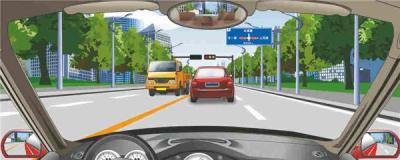
Answer:N
35、Drivers may temporarily cross these central solid double yellow lines when overtaking.
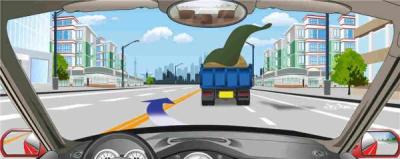
Answer:N
36、The motor vehicle should slow down and pass slowly in this situation.
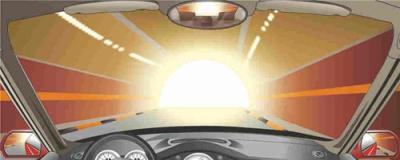
Answer:Y
37、When driving on an expressway, which of the following statements is correct?
A、Drives may overtake on either the ramp, the acceleration lane or the deceleration lane
B、Drives are prohibited from reversing, driving in the opposite direction or making a U turn by crossing the central dividing strip
C、Drivers may drive on the emergency lane in a non-emergency case
D、Drives may test a motor vehicle or learn to drive
Answer:B
38、Which one of the following is the safest way when driving a motor vehicle on this road?
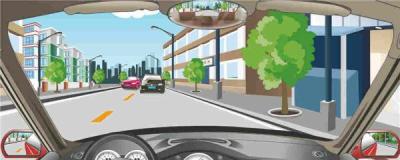
A、Cutting speed or stopping to yield
B、Driving along the center of the road
C、Keeping a normal speed
D、Approaching vehicles by taking the opposite lane
Answer:A
39、The guide arrow on the road surface of this lane indicates that only left turns are permitted at the intersection ahead.
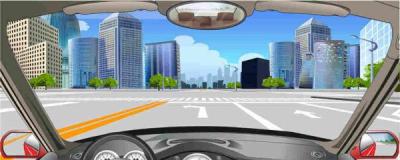
Answer:Y
40、A motor vehicle should not pass the level crossing rapidly in this situation.
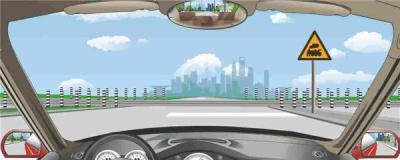
Answer:Y
41、The sign on the right indicates that the speed limit of 40km/hour is lifted on the road ahead.
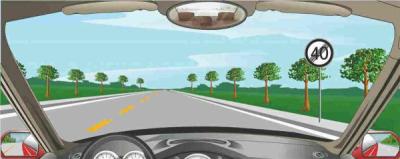
Answer:Y
42、The sign on the right warns of a guarded railway crossing 100 meters ahead.
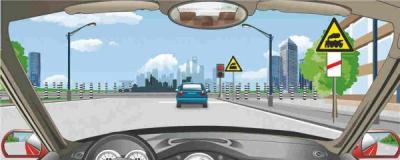
Answer:N
43、When there is a sudden braking failure on a downhill road, what should be done by the driver?
A、Driving to an emergency lane and reducing speed to stop
B、Dropping the gear by two positions
C、Changing to the reverse gear to force the vehicle to stop
D、Reducing speed by pulling up the handbrake
Answer:A
44、When driving on a road covered with ice and snow, the motor vehicle may spin or slide when increasing the speed urgently, due to the loss of vehicle stability.
Answer:Y
45、The sign on the right warns of a dangerous mountainside road on the left of the road ahead.
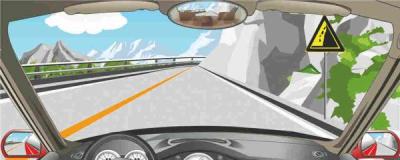
Answer:N
46、The broken and solid white line on the road indicates that crossing is allowed on the solid line side.
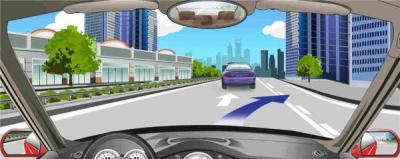
Answer:N
47、When a motor vehicle breaks down and cannot be moved away from the emergency lane or the road shoulder, the driver and all passengers should get off the vehicle and wait on the road side instead of leaving the expressway.
Answer:N
48、What should the driver do when seeing these hand signals?
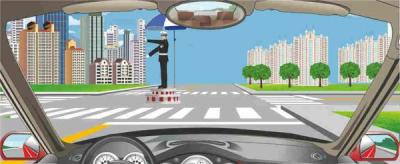
A、Go straight and pass through the intersection
B、Stop in front of the stop-line and wait
C、Turn left at the intersection
D、Drive at a lower speed at the intersection
Answer:C
49、When there is a braking failure on a downhill road, if there is no favorable terrain or opportunity to stop the vehicle, the driver should drop gear by one position or two positions, and control the speed by taking advantage of the braking role of the engine.
Answer:Y
50、When a motor vehicle passes over an inundated road drivers should change to a high gear and pass rapidly.
Answer:N
- 西藏驾考科目四英语版书 相关内容
- 安徽科目四英文版 新疆外国人考科目一 英文 广东2025驾考英文题库 甘肃科目四英文版练习题库 新疆英文驾考书 外国人学驾照需要什么材料和证件 江西驾校一点科目一英文版 青海驾考英语 山西驾考英语版PDF题库 吉林科目一考题英文版 新疆驾照科目四英文版题库 外国人在中国学车需要什么证件 湖南英文版驾考 西藏外国人考驾照科目一 江西科目一英文版在哪里找 广西考驾照的英文单词
Copyright © 2025 驾考 版权所有