
- 科目一考试
- 顺序练习
- 随机练习
- 强化练习
- 模拟考试
- 科目四考试
- 顺序练习
- 随机练习
- 强化练习
- 模拟考试
- 外国语言版题库
- 英语题库
- 德语题库
- 韩语题库
- 日语题库
- 俄语题库
- 法语题库
- 西班牙语题库
- 阿拉伯语题库
- 摩托车英文题
太原摩托车科目四英文题库
-
1、The motor vehicle should speed up and pass rapidly under this situation.
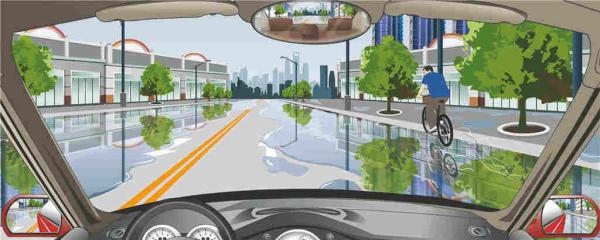
Answer:N
2、When a tire blowout on the road, the driver should swiftly depress the brake pedal to reduce speed and stop the vehicle.
Answer:N
3、When the motor vehicle encounters a crosswalk in this situation, the driver may speed up and pass rapidly.
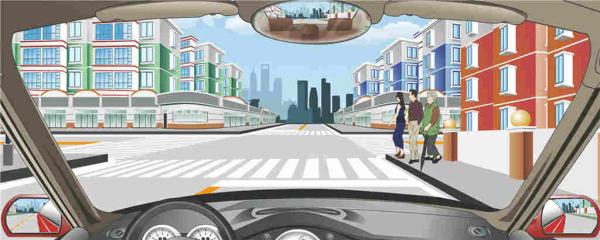
Answer:N
4、Turning on the high-beam is an effective way to improve visibility in fog weather.
Answer:N
5、When approaching another vehicle at night, why should the driver alternate between high-and-low-beam at a distance more than 150 meters?
A、Warn each other before passing
B、Driving habit
C、Easy to observe the situation ahead from either side
D、Courtesy
Answer:C
6、What is the meaning of this sign?
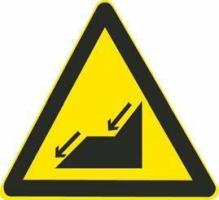
A、Continuous down slopes
B、Steep downhill road
C、Steep uphill road
D、Continuous up slopes
Answer:A
7、When an erosive material catches fire, it should not be put out with water cannon.
Answer:Y
8、When a bicycle borrows the motor vehicle lane, the motor vehicle may sound the horn hurriedly to warn the bicycle to yield.
Answer:N
9、What is the meaning of this sign?
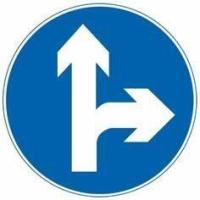
A、Going straight and left turn
B、Going straight and right turn
C、No going straight and no right turn
D、Left turn and right turn only
Answer:B
10、What should the driver do when the motor vehicle counters this situation?
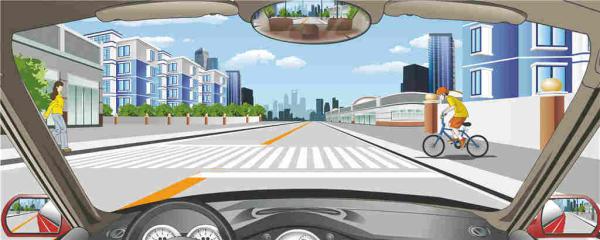
A、Sound the horn continuously to warn
B、Speed up and bypass from the front
C、Slow down when encountering any risks
D、Slow down voluntarily and yield
Answer:D
11、Which of the following acts are prohibited when passing through a tunnel?
A、Overtaking
B、Stopping
C、Making a U-turn
D、Reversing
Answer:ABCD
12、When a rear tire of a motorcycle blows out, the driver should ________.
A、Swiftly turn the steering handlebar to adjust
B、Firmly hold the steering handlebar with both hands
C、Swiftly turn the steering handlebar to the opposite direction
D、Swiftly take braking measures
Answer:B
13、For a temporary stop on a foggy day, the driver should only turn on the fog lamp and the low-beam
Answer:N
14、When driving a motorcycle, the driver may wear slippers for the sake of safety.
Answer:N
15、When a fast-running vehicle makes a sharp turn, it can very easily cause side collision or an overturn due to the centrifugal force.
Answer:Y
16、When a motor vehicle encounters a group of youngsters bypassing the motor vehicles parking beside the road, the driver should slow down voluntarily and yield.
Answer:Y
17、What is the meaning of this sign?
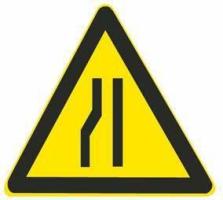
A、Road narrows on both sides
B、Road narrows on the right side
C、Road narrows on the left side
D、Bridge narrows
Answer:C
18、When encountering dangerous and complicated circumstance, the driver should keep medium or low speed and keep the balance of the motorcycle to pass it cautiously.
Answer:Y
19、When a tire blowout on the road, the driver should swiftly depress the brake pedal to reduce speed, do all his can to control the steering wheel and stop the vehicle as soon as possible.
Answer:N
20、After a tire blows out and before the driver can control the speed of the vehicle, he should refrain from using the foot brake to stop the vehicle. Otherwise, a horizontal swing of the vehicle can cause greater danger.
Answer:Y
21、What is the meaning of this sign?
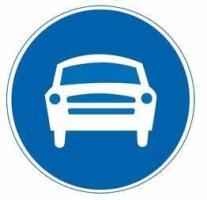
A、No passing for small vehicle
B、Passing for small vehicle only
C、Passing for motorized vehicle
D、No passing for small vehicle
Answer:C
22、When a motorcycle turns at an excessively high speed, it can easily dash out of a curve or skid sideways.
Answer:Y
23、It is an illegal act for the driver to make calls while driving.
Answer:Y
24、When the driver discovers a tire is leaking and steers the vehicle off the main carriageway, he should refrain from applying emergency so as to avoid a vehicle turnover or a rear-end collision arising from the late braking of the following vehicle.
Answer:Y
25、The main impact of muddy roads on safe driving is that the wheels may easily spin and skid
Answer:Y
26、Whats the meaning of the white horizontal solid line in the circle?
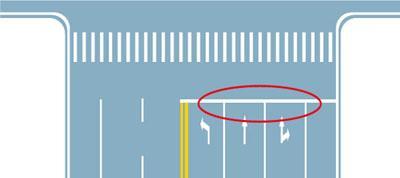
A、Turning waiting line
B、Deceleration line
C、Yielding line
D、Stop line
Answer:D
27、When rescuing a wounded person suffering from bone fracture, which of the following should be kept in mind?
A、Immediately send him/her to the hospital on a stretcher
B、Properly change the original posture when the injured person wounded
C、Dress the fracture with a bandage
D、Do not move the fractured body-part
Answer:D
28、Before riding a motorcycle, the driver should wear a safety helmet and adjust the angle of the rearview mirror till he can clearly watch the left side and the right side of the back.
Answer:Y
29、What should motor vehicle drivers do when approaching an oncoming vehicle on a frozen road?
A、Cut speed as approaching each other
B、Pass each other by speeding up properly
C、Pass each other slowly by cutting speed in advance
D、Pass each other along the central line to the best
Answer:C
30、When seeing this sign, the driver should reduce speed and observe the road conditions.
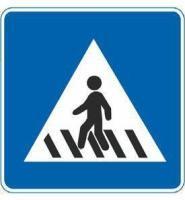
Answer:Y
31、The continuously flashing yellow light is to warn that the driver should look and make sure it is safe to pass.
Answer:Y
32、What is the meaning of this sign?
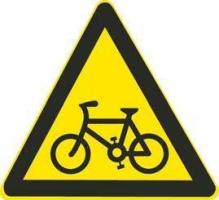
A、The lane for non-motorized vehicles
B、Yield non-motorized vehicles
C、No passing for non-motorized vehicles
D、Watch for non-motorized vehicles
Answer:D
33、What are the hazards of drivers using cellphones or texting while driving?
A、Influencing driving operation
B、Influencing the rest of passengers
C、Failure to respond to emergencies
D、Distracted driving
Answer:ACD
34、When encountering this situation in a residential area, the driver may honk to urge them to yield.
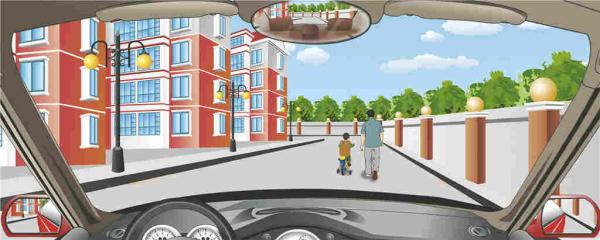
Answer:N
35、When a motorcycle braking on a road covered by ice and snow, the driver should adopt point braking and prepare their feet for landing when braking.
Answer:Y
36、What is the meaning of this sign?
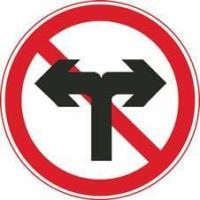
A、No U turn at intersection
B、No changing lane from both sides
C、No left or right turn
D、No going straight
Answer:C
37、What should be done by the driver who intends to overtake but the motor vehicle in front neither reduces its speed nor allows the right of way?
A、Continuously sounding the horn and accelerating to overtake
B、Accelerating and continuing to overtake
C、Refraining from overtaking
D、Following the vehicle in front closely and finding a chance to overtake
Answer:C
38、When driving in rain and encountering pedestrians with umbrellas or wearing raincoats, what should be done by motor vehicle drivers in order to yield?
A、Drive at a normal speed
B、Sound the horn to alert when approaching the pedestrians
C、Speed up and bypass on the left
D、Reduce speed and sound the horn in advance
Answer:D
39、The article that cannot be used to stop bleeding by dressing is _________.
A、Bondage
B、Sling
C、Tourniquet
D、Hemp rope
Answer:D
40、When a tire blowout on the road, the driver should control the direction of the vehicle and use emergency braking to bring the vehicle swiftly to a stop.
Answer:N
41、When encountering a school bus which stops at the right roadside and students are embarking or disembarking, what should motor vehicle drivers do?
A、If there is only one motor vehicle lane in each direction, motor vehicle drivers behind the bus should stop and wait.
B、If there are two motor vehicle lanes in each direction, motor vehicle drivers in the left lane behind the bus may overtake the bus at a lower speed
C、If there are three motor vehicle lanes in each direction, motor vehicle drivers in the middle lane behind the bus should stop and wait
D、If there are three motor vehicle lanes in each direction, motor vehicle drivers in the left lane behind the bus may pass at a lower speed
Answer:ACD
42、When the wounded person is suffering main artery bleeding, where should the rescue personnel press by thumb to stop the bleeding?
A、The artery near the heart
B、The artery lower to the wound
C、The artery further from the heart
D、The artery in the center of the wound
Answer:A
43、How to do in this situation?
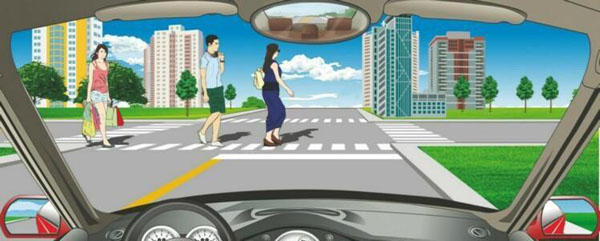
A、Stop and yield to the pedestrians
B、Bypass from the front of the pedestrians
C、Honk to remind the pedestrians
D、Bypass from the rear of the pedestrians
Answer:A
44、Which of the following is a safe way for motor vehicles to pass the intersection marked with this sign?
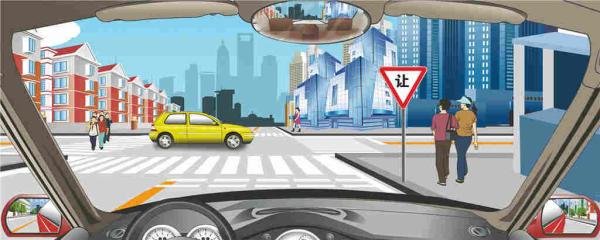
A、Stop and observe the traffic situation around the intersection
B、Approach the intersection by speeding up
C、Observe the traffic situation on the left rear side
D、Approach the intersection at a reduced speed
Answer:D
45、What is the meaning of this sign?
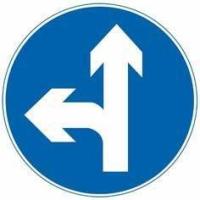
A、Going straight and right turn
B、Going straight and left turn
C、No going straight and no left turn
D、Right turn and left turn only
Answer:B
46、When the vehicles cross each other at night, what should the driver do if the vehicle coming in the opposite direction always use the high beam light.
A、Continuous change lights and honk to remind the vehicle coming in the opposite direction
B、Turn on the high beam light
C、Reduce speed or driving on the right side.
D、Move his sight to the right side to evade the light
Answer:CD
47、Under such circumstances, motor vehicle drivers should stop and yield
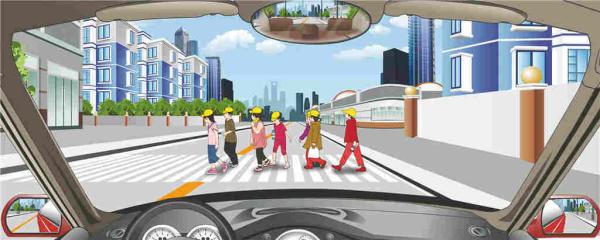
Answer:Y
48、While driving a motorcycle, nothing is permitted to hang on the handlebars.
Answer:Y
49、When there is no bandage for rescuing a wounded person, which of the following measures is wrong?
A、Dress the wounds with a handkerchief
B、Dress the wounds with a towe
C、Dress the wounds with cotton clothes
D、Dress the wounds with string
Answer:D
50、The motorized vehicle driver may go through an intersection rapidly when there is no traffic signal
Answer:N
- 太原摩托车科目四英文题库 相关内容
- 北海摩托车驾照考试英文题库 宜昌用英语考摩托车驾照科目四 六盘水外国人考摩托车驾照 昌吉摩托车考试英语理论试题 临沧用英文考摩托车驾驶证 阳泉用英文考摩托车驾驶证 通化摩托车驾照考试英文题库 遵义摩托车驾照理论试题英语版 梧州摩托车科目四英文题库 山东外国人考摩托车驾照 平凉摩托车驾照考试科目一英语题 廊坊摩托车科目四英文题库 韶关摩托车驾照理论试题英语版 铜川摩托车驾照理论试题英语版 南充摩托车驾照考试科目一英语题 阿里摩托车考试英语题库
Copyright © 2025 驾考 版权所有