
- 科目一考试
- 顺序练习
- 随机练习
- 强化练习
- 模拟考试
- 科目四考试
- 顺序练习
- 随机练习
- 强化练习
- 模拟考试
- 外国语言版题库
- 英语题库
- 德语题库
- 韩语题库
- 日语题库
- 俄语题库
- 法语题库
- 西班牙语题库
- 阿拉伯语题库
- 摩托车英文题
通化用英语考摩托车驾照科目四
-
1、When a vehicle approaches an intersection without crosswalk, the driver should _______ if he finds people are crossing the street.
A、Reduce speed or stop to yield
B、Honk to indicate them to yield
C、Pass before the pedestrians
D、Immediately change lane and bypass the pedestrians
Answer:A
2、Under such circumstances, what should motor vehicle drivers do?
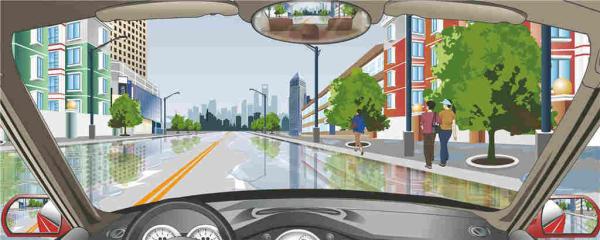
A、Pass slowly at a lower speed
B、Speed up and pass
C、Continuously sound the horn and pass
D、Pass at a normal speed
Answer:A
3、What is the meaning of this sign?
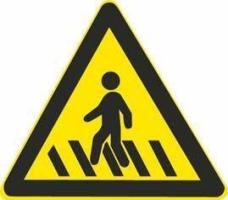
A、Watch for pedestrians
B、Watch for children
C、School area
D、Crosswalk
Answer:A
4、When a motor vehicle encounters a group of youngsters bypassing the motor vehicles parking beside the road, the driver should slow down voluntarily and yield.
Answer:Y
5、When encountering such pedestrians, motor vehicle drivers may continuously sound the horn to alert them to yield.
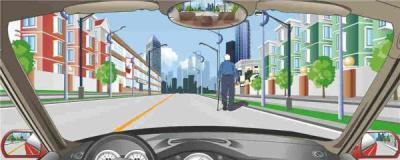
Answer:N
6、When such circumstances happen suddenly, drivers should reduce speed in a timely fashion or stop to yield.
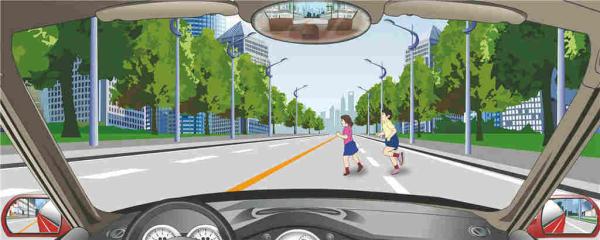
Answer:Y
7、What should driver do when students crossing the road in line?
A、Speed up and pass in the front of the students
B、Sound the horn to warn the students to yield
C、Slow down and pass
D、Stop and wait until the students pass
Answer:D
8、When approaching a sharp curve, motor vehicle drivers should reduce speed only after entering the curve.
Answer:N
9、After a traffic accident, what is the most effective measure to prevent secondary accidents?
A、Evacuate all passengers
B、Turn on the hazard lamps
C、Mark the original place of the injured persons
D、Properly place the danger warning sign
Answer:ABD
10、When seeing this sign, the driver should reduce speed and observe the road conditions.
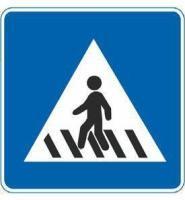
Answer:Y
11、What should the driver do when he/she sees this sign on the road?
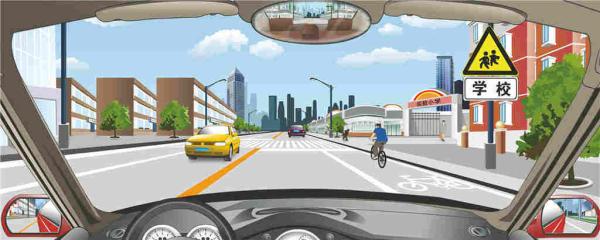
A、Use emergency braking
B、Slow down and take a look
C、Sound the horn intermittently
D、Prepare to bypass
Answer:B
12、The first-aid measure to rescue a poisoned person is to _______.
A、Take warming-up measures
B、Bring him to a place where air is fresh
C、Give him artificial respiration
D、Depress the heart over the chest
Answer:B
13、When carrying the wounded persons in coma or in danger of suffocation, they should lie face up.
Answer:N
14、When a motor vehicle moves through water, the driver should try to maintain a constant speed and sufficient power and pass through without stopping.
Answer:Y
15、When driving on a road covered with ice and snow, drivers tend to encounter glare caused by reflection of light rays from the road surface.
Answer:Y
16、When a motor vehicle temporarily stops in fog, which lamp should be turned on?
A、Hazard lamp, clearance lamp and rear position lamp
B、Left-turn indicator, clearance lamp and rear position amp
C、Headlamp, clearance lamp and rear position lamp
D、Reverse lamp, clearance lamp and rear position lamp
Answer:A
17、When driving on a long downhill road, which is the best way to control driving speed?
A、Coast in neutral gear
B、Depress the clutch and coast
C、Use the engine to brake
D、Depress the brake pedal continuously
Answer:C
18、It is extremely unsafe to take a motorcycle by the side; if the motorcycle sideslips, the passenger may be thrown out and led to death due to an unstable center of gravity.
Answer:Y
19、While driving a motorcycle, it is permitted to keep one hand on the handlebar but not allowed two hands leave handle bars at the same time.
Answer:N
20、What is the meaning of this sign?
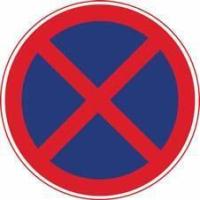
A、Stopping temporarily is allowed
B、Long stopping is allowed
C、No long stopping
D、No stopping
Answer:D
21、What is the meaning of this sign?
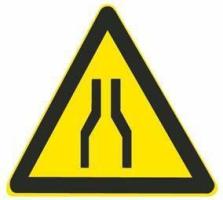
A、Road narrows on both sides
B、Road narrows on the right side
C、Road narrows on the left side
D、Bridge narrows
Answer:A
22、People who take a two-wheeled motorcycle should ride it by side way.
Answer:N
23、The main impact of rainy weather on safe driving is _______.
A、The visibility is poor
B、The tire grip decreases
C、The resistance to the vehicle increases
D、The road is wet and slippery
Answer:ABD
24、How to make a U turn in this intersection?
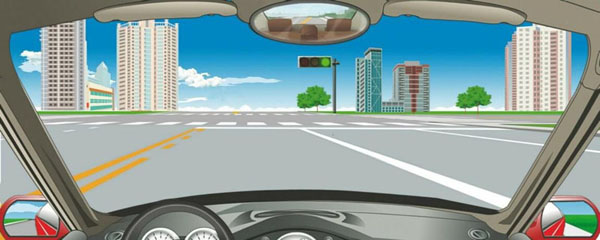
A、broken lines of the central line
B、Make a U turn from the right lane
C、Enter the intersection and make a U turn
D、Make a U turn in the crosswalk
Answer:A
25、Which of the following measures is incorrect when a motor vehicle stops?
A、Stop at a stipulated place
B、Avoid stopping on pedestrian streets
C、Avoid obstructing the passing of other motor vehicles and pedestrians when temporarily stops on the road
D、Stop on the non-motor vehicle lane
Answer:D
26、Which one of the following measures is correct when a motor vehicle intends to overtake but the vehicle infront refuses to yield?
A、Use a long-sounding horn
B、Follow the vehicle in front while turning high-beam
C、Wait for it to yield while keeping a safe distance
D、Use high-beam and low-beam alternatively
Answer:C
27、Whats the meaning of the double white solid lines in far front of the intersection?
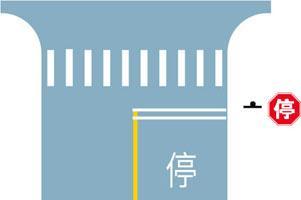
A、Stopping and yield line
B、Slowdown and yield line
C、Left-turn waiting line
D、Waiting to run line
Answer:A
28、What matters need attention when driving on a rainy day?
A、Avoid using the emergency brake or making sharp turns
B、Keep a safe enough distance
C、Observe the traffic situation of non-motor vehicles and surrounding pedestrians
D、Drive at a safe speed
Answer:ABCD
29、When encountering dangerous and complicated circumstance, the driver should keep medium or low speed and keep the balance of the motorcycle to pass it cautiously.
Answer:Y
30、Which will affect the stopping distance?
A、Pavement conditions
B、Driver’s reaction time
C、The quantity of cargo and the structure of brake, etc.
D、The vehicle speed
Answer:ABCD
31、When driving on a rough road, the driver should use low gear to keep low speed; try to choose roads with big pits to reduce bumpy feeling.
Answer:N
32、When driving a motorcycle, the driver may wear slippers for the sake of safety.
Answer:N
33、What should the driver do when he/she encounters an oncoming ambulance in the same lane?
A、Keep to the side and reduce speed or stop to yield
B、Drive ahead by occupying another lane
C、Yield by speeding up and changing lanes
D、Drive ahead in the original lane
Answer:A
34、When driving in a strong wind, drivers should abruptly turn the steering wheel to return to the original direction if they feel the vehicle deviates horizontally due to a strong gale.
Answer:N
35、When encountering non-motorized vehicles cutting in on the road, the driver should ________.
A、Honk to warn
B、Speed up and bypass from the front
C、Voluntarily reduce speed and yield
D、Suddenly speed up when approaching
Answer:C
36、How to do in this situation?
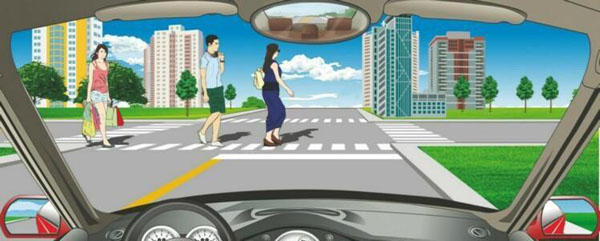
A、Stop and yield to the pedestrians
B、Bypass from the front of the pedestrians
C、Honk to remind the pedestrians
D、Bypass from the rear of the pedestrians
Answer:A
37、When driving a motor vehicle, the driver encounter pedestrians who are focused on using mobile phones, what should the driver do?
A、Drive with care
B、Observe the movement of pedestrians
C、Be ready to stop
D、Swiftly bypass from one side
Answer:ABC
38、When driving on a foggy day, the driver should turn on the fog lamp.
Answer:Y
39、When driving a motor vehicle near an intersection, the vehicle may speed up and honk to pass.
Answer:N
40、According to regulations, motorcycle driver and passenger should wear helmets.
Answer:Y
41、What should the driver do if he/she encounters pedestrians in this situation at an intersection?
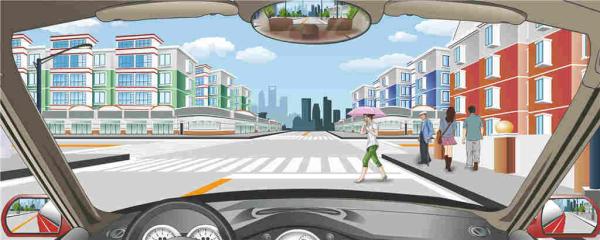
A、Slow down promptly and stop to yield
B、Sound the horn to warn the pedestrians to yield
C、Speed up and pass in front of the pedestrians
D、Turn on the headlamps to warn the pedestrians to yield
Answer:A
42、What is the meaning of this sign?
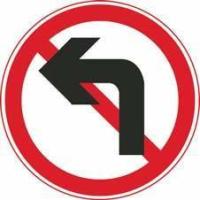
A、No U turn
B、No changing to left lane
C、No turning left
D、No entering the left lane
Answer:C
43、After setting off from a roadside, motor vehicle drivers should watch both sides of the road, turn left and drive into the normal lane slowly.
Answer:Y
44、What should be checked before driving?
A、No parts need to be checked
B、Whether the tires have been cleaned
C、Where the spare tire is placed
D、The fastening and air pressure of tires
Answer:D
45、When encountering such pedestrians, what should motor vehicle drivers do?
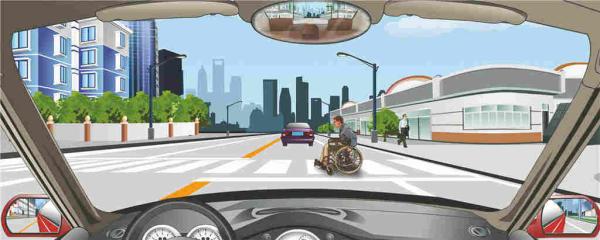
A、Bypass in front of the pedestrians
B、Bypass from behind the pedestrians
C、Sound the horn to alert the pedestrians
D、Voluntarily stop and yield
Answer:D
46、When rescuing a wounded person suffering spinal fracture, it is necessary to ___________.
A、Take warm-keeping measure
B、Use soft stretcher to carry
C、Use sling to keep in position
D、Help the wounded person to move
Answer:C
47、When use the brake of a motorcycle, use the front-wheel brake first, then use the back-wheel brake.
Answer:N
48、The article that cannot be used to stop bleeding by dressing is _________.
A、Bondage
B、Sling
C、Tourniquet
D、Hemp rope
Answer:D
49、When a motorcycle is making a turn in a high speed, the driver should avoid using the brake or use the brake less to prevent sideslip.
Answer:Y
50、When approaching another vehicle at night, why should the driver alternate between high-and-low-beam at a distance more than 150 meters?
A、Warn each other before passing
B、Driving habit
C、Easy to observe the situation ahead from either side
D、Courtesy
Answer:C
- 通化用英语考摩托车驾照科目四 相关内容
- 青岛摩托车驾照考试科目一英语题 日喀则摩托车驾考英语手机APP 都匀用英文考摩托车驾驶证 林芝用英文考摩托车驾驶证 海西州用英文考摩托车驾驶证 铜陵摩托车驾考英语手机APP 红河摩托车驾考英语手机APP 常州摩托车驾照理论试题英语版 上饶摩托车英语考试题 鹰潭摩托车驾照考试科目一英语题 十堰摩托车考试英语题库 天水摩托车驾照考试英文题库 丹东摩托车科目四英文题库 黄南用英语考摩托车驾照科目四 佳木斯摩托车英语考试题 文山摩托车驾照考试英文题库
Copyright © 2025 驾考 版权所有