
- 科目一考试
- 顺序练习
- 随机练习
- 强化练习
- 模拟考试
- 科目四考试
- 顺序练习
- 随机练习
- 强化练习
- 模拟考试
- 外国语言版题库
- 英语题库
- 德语题库
- 韩语题库
- 日语题库
- 俄语题库
- 法语题库
- 西班牙语题库
- 阿拉伯语题库
- 摩托车英文题
南充摩托车驾照考试科目四英语题
-
1、When a wounded person suffering burns is thirsty, he may drink a small quantity of slightly salty water.
Answer:Y
2、When a motor vehicle stops temporarily in a rainy day,which lamp should be turned on?
A、Front and rear fog lamps
B、Hazard lamps
C、Headlamps
D、Reverse lamps
Answer:B
3、What is the meaning of this sign?
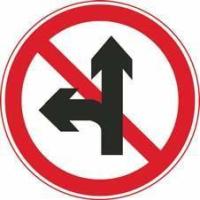
A、No going straight and no changing to left lane
B、No going straight and no left turn
C、Allowed to go straight and turn left
D、No going straight and no right turn
Answer:B
4、What is the meaning of this sign?
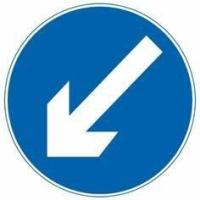
A、Stop by the left side of the road
B、Downhill section left
C、Left turn only
D、Run by the left side of the road
Answer:D
5、At a road that has more than two vehicle lanes in the same direction, the motorcycles should use the very left one.
Answer:N
6、While driving a motorcycle, nothing is permitted to hang on the handlebars.
Answer:Y
7、When driving, the driver should yield to _______.
A、Ambulance
B、Fire engine
C、School bus
D、Police car
Answer:ABCD
8、What is the meaning of this sign?
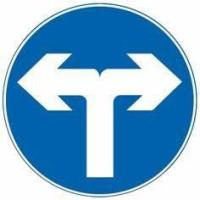
A、No left turn
B、Leftt and right turn
C、No leftt and right turn
D、No right turn
Answer:B
9、What is the meaning of this sign?
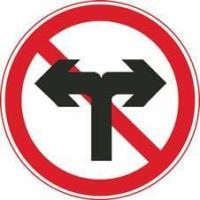
A、No U turn at intersection
B、No changing lane from both sides
C、No left or right turn
D、No going straight
Answer:C
10、When running in a high speed, if only use the front brake, the driver can be easily thrown out due to the inertia.
Answer:Y
11、When driving in a heavy rain, drivers should contro their speed to prevent their vehicles from sliding.
Answer:Y
12、Dangerous chemicals possess the characteristics of explosion, inflammation, poison, erosion and radiation.
Answer:Y
13、Drivers neednt yield to pedestrians who display such behavior.
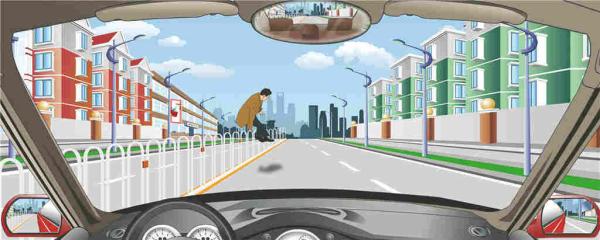
Answer:N
14、When encountering this situation in a residential area, the driver may honk to urge them to yield.
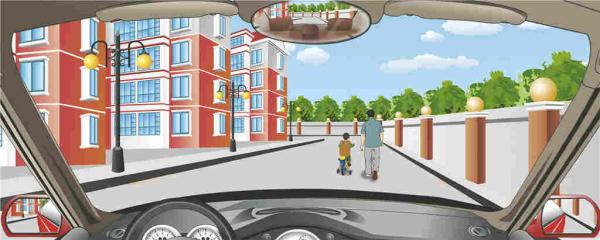
Answer:N
15、When such circumstances happen suddenly, what should the driver do?
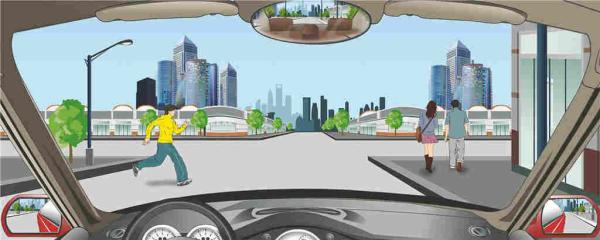
A、Reduce speed or stop to yield
B、Bypass in front of the pedestrians
C、Continuously sound the horn to alert the pedestrians
D、Bypass from behind the pedestrians
Answer:A
16、When an erosive material catches fire, it should not be put out with water cannon.
Answer:Y
17、When driving into the traffic flow on a main road from a relief road, drivers should speed up.
Answer:N
18、When a gas tanker is leaking heavily, which of the following measures is wrong?
A、Cut off the power
B、Wear gas mask and protect gloves
C、Turn off the valve to stop leaking
D、Evacuate people to the leeward side
Answer:D
19、When passing a sharp curve, motor vehicle drivers may overtake if there are few other vehicles on the road.
Answer:N
20、Whats the meaning of this sign?
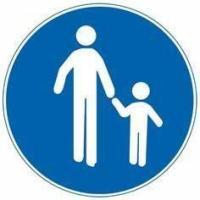
A、Pass with low speed
B、Watch for pedestrians
C、On foot
D、Pedestrians go first
Answer:C
21、Speed up and pass when encountering this traffic light at the intersection
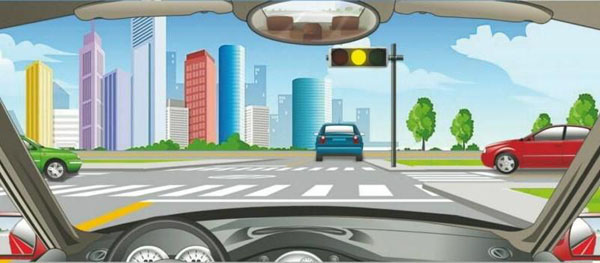
Answer:N
22、When the driver discovers that steering is stiff, the wrong measure is to ___________.
A、Reduce speed and stop the vehicle as fast as possible
B、Stop at a safe place
C、Continue to drive
D、Identify the cause
Answer:C
23、When there is bleeding at the bone fracture of a wounded person, the first thing to do is to fix the wounded part in position, then stop the bleeding and dress the wound.
Answer:N
24、When driving a motor vehicle crosses each other on a hump bridge, what should the driver do?
A、Rush to pass
B、Reduce speed
C、Honk to indicate the vehicle
D、Go on the right side
Answer:BCD
25、When driving on a long downhill road, which is the best way to control driving speed?
A、Coast in neutral gear
B、Depress the clutch and coast
C、Use the engine to brake
D、Depress the brake pedal continuously
Answer:C
26、The first-aid measure to rescue a poisoned person is to _______.
A、Take warming-up measures
B、Bring him to a place where air is fresh
C、Give him artificial respiration
D、Depress the heart over the chest
Answer:B
27、When a motorcycle goes downhill on a mountain road, it is not allowed to overtake.
Answer:Y
28、There is a risk of overtaking when driving a motor vehicle approaches the top of the slope on a mountainous road, because _____.
A、When approaching the top of the slope, the line of sight is blocked and it is impossible to observe the traffic situation.
B、When approaching the top of the slope, the line of sight is blocked. It is impossible to observe whether there are obstacles behind the top of the slope.
C、The speed is slower when approaching the top of the slope.
D、When approaching the top of the slope, the line of sight is blocked and the road direction behind the top of the slope can not be observed.
Answer:ABD
29、Before riding a motorcycle, the driver should wear a safety helmet and adjust the angle of the rearview mirror till he can clearly watch the left side and the right side of the back.
Answer:Y
30、What is the meaning of this sign?
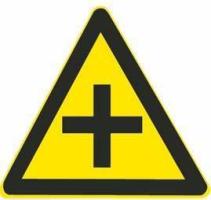
A、Intersection
B、Ring intersection
C、T-shaped intersection
D、Y-shaped intersection
Answer:A
31、Which lamp should be used when motor vehicles pass hrough an intersection at night where there is no traffic light signal?
A、High-beam
B、Low-beam
C、Hazard lamps
D、High-beam and low-beam should be used alternatively
Answer:D
32、What kind of harmful effect will be brought about by continuously using the foot brake on a long downhill road?
A、Shorten the engine’s service life
B、Make the driver feel tired
C、Easily cause the vehicle to overturn
D、Reduce the braking efficiency
Answer:D
33、When driving on a muddy road, what should the driver do?
A、Try to avoid using the foot brake
B、Stop and observe the road ahead
C、Avoid shifting halfway as much as possible
D、Put in low gear ahead of time
Answer:ABCD
34、Driving and smoking has no negative effect on safe driving
Answer:N
35、When encountering such pedestrians, what should motor vehicle drivers do?
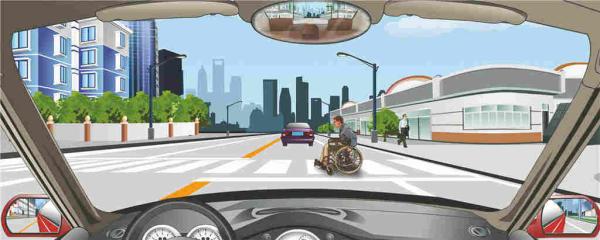
A、Bypass in front of the pedestrians
B、Bypass from behind the pedestrians
C、Sound the horn to alert the pedestrians
D、Voluntarily stop and yield
Answer:D
36、It is illegal to change lanes without turning on indicators.
Answer:Y
37、What is the meaning of this sign?
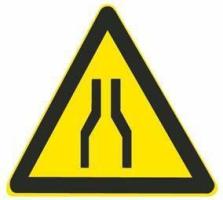
A、Road narrows on both sides
B、Road narrows on the right side
C、Road narrows on the left side
D、Bridge narrows
Answer:A
38、It is an illegal act for the driver to make calls while driving.
Answer:Y
39、When overtaking on a rainy day, drivers should turn on headlamps and sound a long horn.
Answer:N
40、Which of the following is a bad habit when changing lanes?
A、Turning on the indicator in advance
B、Observing closely before changing a lane
C、Change lanes at will
D、Not obstructing the passing of other normally moving vehicles
Answer:C
41、The motorized vehicle driver may go through an intersection rapidly when there is no traffic signal
Answer:N
42、When a motor vehicle passes over an inundated road the driver should change to a low gear and pass at a constant speed.
Answer:Y
43、When rescuing the persons who are losing blood, it is necessary to ______ first.
A、Observe
B、Dress the wounds
C、Stop bleeding
D、Inquire
Answer:C
44、When driving motor vehicles on the uphill section of a mountain road, the driver should _____.
A、Always pay attention to downstream vehicles
B、Advance at a uniform speed.
C、Avoid shifting whenever possible
D、Choosing high speed gear
Answer:ABC
45、When approaching another vehicle at night, why should the driver alternate between high-and-low-beam at a distance more than 150 meters?
A、Warn each other before passing
B、Driving habit
C、Easy to observe the situation ahead from either side
D、Courtesy
Answer:C
46、What should the driver do if he/she encounters pedestrians in this situation at an intersection?
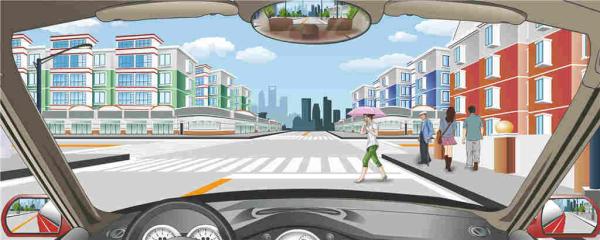
A、Slow down promptly and stop to yield
B、Sound the horn to warn the pedestrians to yield
C、Speed up and pass in front of the pedestrians
D、Turn on the headlamps to warn the pedestrians to yield
Answer:A
47、It is not safe for a female driver to wear high heels to drive a vehicle.
Answer:Y
48、What is the meaning of this sign?
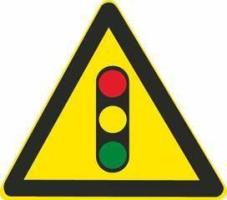
A、Crosswalk lights
B、Watch for pedestrians
C、Attention to traffic lights
D、Intersection
Answer:C
49、After a tire blows out and before the driver can control the speed of the vehicle, he should refrain from using the foot brake to stop the vehicle. Otherwise, a horizontal swing of the vehicle can cause greater danger.
Answer:Y
50、What should the driver do when he/she sees this sign on the road?
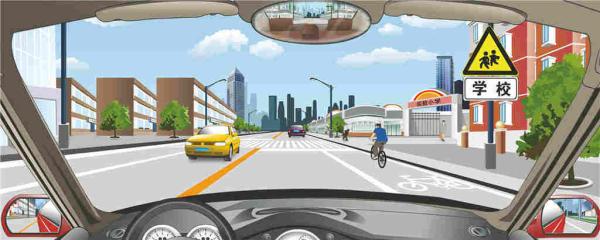
A、Use emergency braking
B、Slow down and take a look
C、Sound the horn intermittently
D、Prepare to bypass
Answer:B
- 南充摩托车驾照考试科目四英语题 相关内容
- 三门峡用英语考摩托车驾照科目四 都匀摩托车考试英语题库 郑州用英语考摩托车驾照科目四 平顶山摩托车驾照理论试题英语版 驻马店摩托车驾照考试科目四英语题 衡阳外国人考摩托车驾照 周口摩托车驾照理论试题英语版 青海摩托车科目四英文题库 长治摩托车考试英语题库 揭阳摩托车科目四英文题库 楚雄摩托车考试英语理论试题 哈密地区摩托车驾照考试英文题库 朝阳摩托车驾照考试英文题库 乌鲁木齐摩托车考试英语理论试题 新疆摩托车驾照考试科目一英语题 江西外国人考摩托车驾照
Copyright © 2025 驾考 版权所有