
- 科目一考试
- 顺序练习
- 随机练习
- 强化练习
- 模拟考试
- 科目四考试
- 顺序练习
- 随机练习
- 强化练习
- 模拟考试
- 外国语言版题库
- 英语题库
- 德语题库
- 韩语题库
- 日语题库
- 俄语题库
- 法语题库
- 西班牙语题库
- 阿拉伯语题库
- 摩托车英文题
海东摩托车驾照考试科目四英语题
-
1、Under such circumstances, the driver should stop the vehicle and yield to pedestrians.
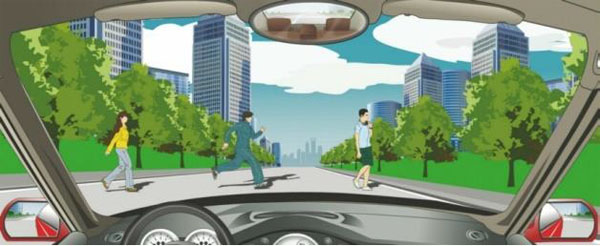
Answer:Y
2、How to do in this situation?
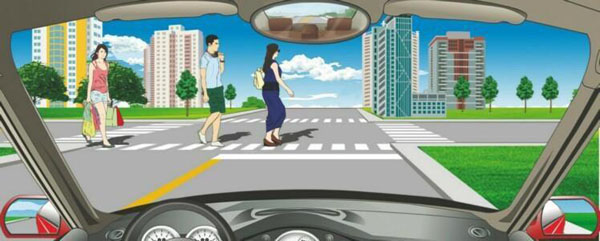
A、Stop and yield to the pedestrians
B、Bypass from the front of the pedestrians
C、Honk to remind the pedestrians
D、Bypass from the rear of the pedestrians
Answer:A
3、When discovering animals crossing the expressway on the highway, the driver should not drastically turn to evade.
Answer:Y
4、When rescuing the injured, it is necessary to ________.
A、Save life first and treat the wounds later
B、Treat the wounds first and safe life later
C、Help the slightly wounded persons first
D、Help the seriously wounded persons later
Answer:A
5、When driving on a damp and slippery road, drivers should avoid using the emergency brake to his/her best ability.
Answer:Y
6、When passing an intersection, vehicle motor drivers are not allowed to overtake.
Answer:Y
7、vehicles to pass an intersection marked with this sign?
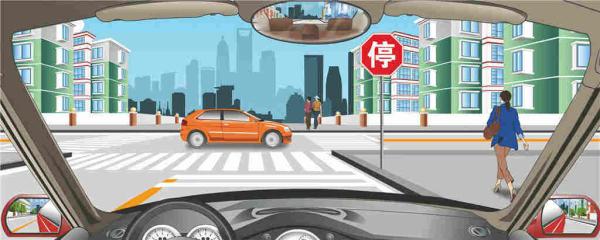
A、Stopping and observing the traffic situation around the intersection
B、Approaching the intersection by speeding up
C、Approaching the intersection at a reduced speed
D、Observing the traffic situation on the left rear side
Answer:A
8、Driving a motor vehicle in the downhill section of a mountain road avoids overtaking as much as possible because _______.
A、Vehicle resistance in downhill section is very high
B、Vehicles on downhill sections are more difficult to control than on flat roads due to gravity.
C、In downhill section, the front speed is faster and it is difficult to overtake.
D、Vehicles on downhill sections tend to be too fast due to gravity
Answer:BD
9、A motorcycle is not permitted to tow other vehicles or to be towed by other vehicles.
Answer:Y
10、What is the meaning of this sign?
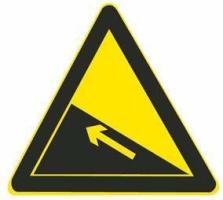
A、Steep downhill road
B、Continuous up slopes
C、Steep uphill road
D、Embankment road
Answer:C
11、What is the meaning of this sign?
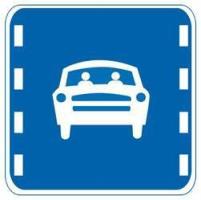
A、Special lane for small vehicles
B、Special lane for motorized vehicles
C、Special lane for taxis
D、Special lane for multi-passenger vehicles
Answer:D
12、The wrong method about parking is to _______.
A、Parking on a railway crossing
B、Parking on a level crossing
C、Parking on a parking lot
D、Parking on rocky sections in Mountainous Areas
Answer:ABD
13、When a tire blowout on the road, the driver should swiftly depress the brake pedal to reduce speed and stop the vehicle.
Answer:N
14、When a motorcycle is making a turn in a high speed, the driver should avoid using the brake or use the brake less to prevent sideslip.
Answer:Y
15、When driving on a foggy day, the driver should turn on the fog lamp.
Answer:Y
16、When seeing this sign, the driver should reduce speed and observe the road conditions.
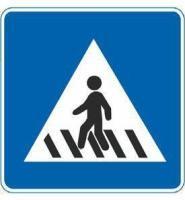
Answer:Y
17、When driving a motor vehicle ready to enter a congested roundabout, the wrong measure is to ______.
A、Honk to indicate another vehicle to yield
B、Stop to yield
C、Driving into the congested intersection
D、Drive fast into the intersection
Answer:ACD
18、What are the main reasons why driving a motor vehicle should not overtake on rainy days?
A、It is not easy for drivers around to see the overtaking signal.
B、Can not accurately judge the distance of vehicles around
C、Road is wet and slippery, and vehicles are prone to sideslip
D、The driver can not detect dangerous in time
Answer:ABCD
19、What is the main impact of foggy weather on safe driving?
A、Easy to slide sideways
B、Low visibility
C、Increase the resistance
D、Widen the field of vision
Answer:B
20、How should lamps be used when a motor vehicle meets an oncoming bicycle on a narrow road or a narrow bridge at night?
A、Continuously change between low-beam and high-beam
B、Use clearance lamp
C、Use high-beam
D、Use low-beam
Answer:D
21、When two vehicles approach each other on a foggy day, what is the best method of safe driving?
A、Turn on the high-beam
B、Slowdown and maintain a large safety distance
C、Turn on the low-beam
D、Turn on the fog lamp
Answer:B
22、When such circumstances happen suddenly, drivers should reduce speed in a timely fashion or stop to yield.
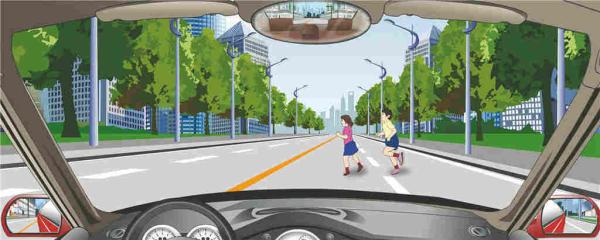
Answer:Y
23、What should the driver do when he/she encounters an oncoming ambulance in the same lane?
A、Keep to the side and reduce speed or stop to yield
B、Drive ahead by occupying another lane
C、Yield by speeding up and changing lanes
D、Drive ahead in the original lane
Answer:A
24、The wrong measure to use the brake of a motorcycle is to __________.
A、Simultaneously use the front and back brakes
B、Use the front brake first
C、Use the back brake first
D、Avoid using the front brake too early
Answer:B
25、After a traffic accident, what is the most effective measure to prevent secondary accidents?
A、Evacuate all passengers
B、Turn on the hazard lamps
C、Mark the original place of the injured persons
D、Properly place the danger warning sign
Answer:ABD
26、When using emergency brake, be aware of keeping the body of the motorcycle being perpendicular to the ground to avoid sideslip.
Answer:Y
27、Which one of the following measures is correct when a motor vehicle intends to overtake but the vehicle infront refuses to yield?
A、Use a long-sounding horn
B、Follow the vehicle in front while turning high-beam
C、Wait for it to yield while keeping a safe distance
D、Use high-beam and low-beam alternatively
Answer:C
28、When following other vehicles on a foggy day, what should the driver do?
A、Maintain a large safety distance
B、Turn on the high-beam
C、Turn on the low-bea
D、Sound the horn in due time
Answer:A
29、When a wounded person is unable to get off the vehicle by himself, he should be removed from the vehicle so as to avoid a secondary injury.
Answer:Y
30、What is the meaning of this sign?
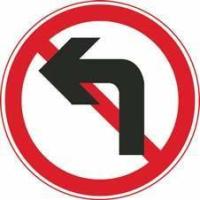
A、No U turn
B、No changing to left lane
C、No turning left
D、No entering the left lane
Answer:C
31、When carrying the wounded persons in coma or in danger of suffocation, they should lie face up.
Answer:N
32、When a motorcycle goes down a long slope, it should run at a lower gear and fully use the engine to brake.
Answer:Y
33、What is the meaning of this sign?
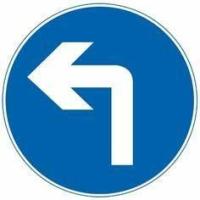
A、Turn left
B、No going straight
C、Straight-going lane
D、One-way road
Answer:A
34、What should the driver pay attention to when the motor vehicle passes a school?
A、Observe the traffic signs and markings
B、Slow down and pass slowly
C、Prohibited from sounding the horn
D、Pass rapidly
Answer:ABC
35、What should be done by the driver who intends to overtake but finds that the vehicle in front is also overtaking?
A、Following the vehicle in front closely and finding a chance to overtake it
B、Accelerating to overtake forcefully
C、Continuously sounding the horn to urge the vehicle in front to yield
D、Refraining from overtaking and letting the vehicle in front overtake first
Answer:D
36、When the motor vehicle encounters a crosswalk in this situation, the driver may speed up and pass rapidly.
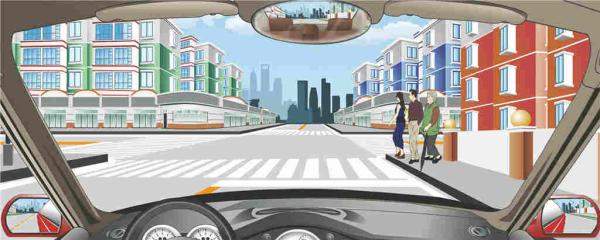
Answer:N
37、What is the meaning of this sign?

A、No going straight and no changing to left lane
B、No going straight and no left turn
C、Allowed to go straight and change to left lane
D、No going straight and no right turn
Answer:D
38、When driving motor vehicles on the uphill section of a mountain road, the driver should _____.
A、Always pay attention to downstream vehicles
B、Advance at a uniform speed.
C、Avoid shifting whenever possible
D、Choosing high speed gear
Answer:ABC
39、When following a vehicle on the road, the distance from the vehicle in front is not important. As long as the driver goes forward at the same speed as the vehicle in front does, he/she can avoid a rear-end collision.
Answer:N
40、What should the driver do if he/she encounters pedestrians in this situation at an intersection?
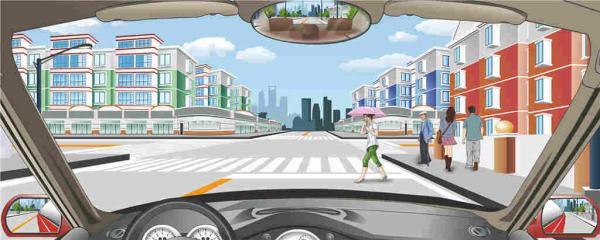
A、Slow down promptly and stop to yield
B、Sound the horn to warn the pedestrians to yield
C、Speed up and pass in front of the pedestrians
D、Turn on the headlamps to warn the pedestrians to yield
Answer:A
41、Gun powder, explosives and detonating powder belong to which of the following dangerous chemicals?
A、Oxidizing materials
B、Inflammable solid materials
C、Explosives
D、Self-igniting articles
Answer:C
42、When encountering such pedestrians, what should motor vehicle drivers do?
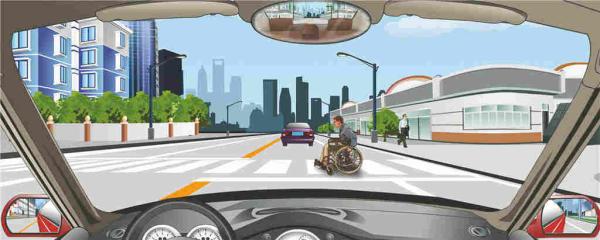
A、Bypass in front of the pedestrians
B、Bypass from behind the pedestrians
C、Sound the horn to alert the pedestrians
D、Voluntarily stop and yield
Answer:D
43、When approaching another vehicle at night, why should the driver alternate between high-and-low-beam at a distance more than 150 meters?
A、Warn each other before passing
B、Driving habit
C、Easy to observe the situation ahead from either side
D、Courtesy
Answer:C
44、What is the meaning of this sign?
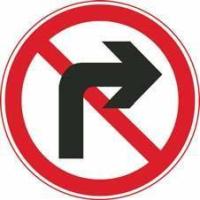
A、No entering the intersection
B、No right turn
C、No changing lane
D、No U turn
Answer:B
45、What is the meaning of this sign?
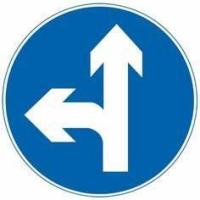
A、Going straight and right turn
B、Going straight and left turn
C、No going straight and no left turn
D、Right turn and left turn only
Answer:B
46、How to follow a motor vehicle safely on the road?
A、Observe the front vehicle conditions
B、Drive on the left side of the road as far as possible
C、Be ready to slow down at any time
D、Keep a safe distance
Answer:ACD
47、In such road sections, you can enter the cross-hatched marking area to wait.
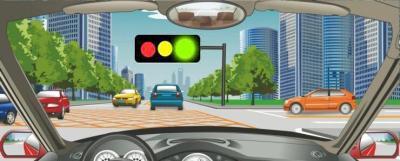
Answer:N
48、Which lamp should be used when motor vehicles pass hrough an intersection at night where there is no traffic light signal?
A、High-beam
B、Low-beam
C、Hazard lamps
D、High-beam and low-beam should be used alternatively
Answer:D
49、When the driver discovers a tire is leaking and steers the vehicle off the main driving lane, he/she should refrain from applying emergency braking so as to avoid a vehicle turnover or a rear-end collision arising from the late braking of the vehicle behind.
Answer:Y
50、The wrong method to rescue a poisoned person in a traffic accident is to ______.
A、Bring him to a place where air is fresh
B、Take off clothes that are exposed to toxic air
C、Clean exposed areas with clean water
D、Stay in the original place and wait for the rescue personnel
Answer:D
- 海东摩托车驾照考试科目四英语题 相关内容
- 上饶用英文考摩托车驾驶证 泰州摩托车考试英语理论试题 雅安摩托车驾照考试科目一英语题 普洱摩托车驾照理论试题英语版 遂宁摩托车考试英语理论试题 武汉外国人考摩托车驾照 临夏用英文考摩托车驾驶证 韶关摩托车驾照考试科目四英语题 贵港外国人考摩托车驾照 四川摩托车驾照考试科目四英语题 和田外国人考摩托车驾照 马鞍山摩托车驾考英语手机APP 秦皇岛用英语考摩托车驾照科目四 黑河摩托车考试英语理论试题 上海用英语考摩托车驾照科目四 毕节摩托车考试英语题库
Copyright © 2025 驾考 版权所有