
- 科目一考试
- 顺序练习
- 随机练习
- 强化练习
- 模拟考试
- 科目四考试
- 顺序练习
- 随机练习
- 强化练习
- 模拟考试
- 外国语言版题库
- 英语题库
- 德语题库
- 韩语题库
- 日语题库
- 俄语题库
- 法语题库
- 西班牙语题库
- 阿拉伯语题库
- 摩托车英文题
黄冈摩托车科目四英文题库
-
1、When driving in icy and snowy weather, because of the reduction of the stability, it is easy for the wheels to race or slip when rapidly speeding up.
Answer:Y
2、There is a risk of overtaking when driving a motor vehicle approaches the top of the slope on a mountainous road, because _____.
A、When approaching the top of the slope, the line of sight is blocked and it is impossible to observe the traffic situation.
B、When approaching the top of the slope, the line of sight is blocked. It is impossible to observe whether there are obstacles behind the top of the slope.
C、The speed is slower when approaching the top of the slope.
D、When approaching the top of the slope, the line of sight is blocked and the road direction behind the top of the slope can not be observed.
Answer:ABD
3、When a motorcycle turns at an excessively high speed, it can easily dash out of a curve or skid sideways.
Answer:Y
4、Which of the following is a basic requirement for rescuing the injured at the scene of a traffic accident?
A、Treat wounds first and safe life later
B、Save life first and treat wounds later
C、Help lightly wounded persons first
D、Help seriously wounded persons later
Answer:B
5、When a bicycle borrows the motor vehicle lane, the motor vehicle may sound the horn hurriedly to warn the bicycle to yield.
Answer:N
6、When driving a motorcycle, the driver may wear slippers for the sake of safety.
Answer:N
7、What is the meaning of this sign?
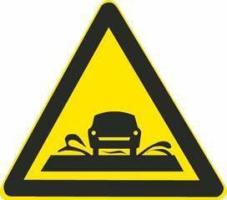
A、Muddy road
B、Low-lying road
C、Overflowing road
D、Ferry
Answer:C
8、when passing an intersection without traffic lights, the driver finds people are crossing the street, the wrong measure for the driver to take is to __________.
A、Reduce speed or stop and yield
B、Honk to urge the pedestrians
C、Bypass
D、Weave through the pedestrians
Answer:BCD
9、What are the main reason for slow driving of motorized vehicles on rainy days?
A、Braking distance will increase
B、The driver’s view is limited
C、Emergency braking can easily cause side skidding
D、Fast driving increases fuel consumption
Answer:ABC
10、When rescuing a wounded person who has been poisoned by toxic gas, the first measure is to send him/her to a place with fresh air so that he/she will not continue to be poisoned.
Answer:Y
11、Serious wave will appear when the front tire blows out; the driver should release the accelerator, firmly hold the steering wheel with both hands, quickly gradually break down, and stop to yield.
Answer:Y
12、When a motor vehicle passes over an inundated road the driver should change to a low gear and pass at a constant speed.
Answer:Y
13、What is the meaning of this sign?
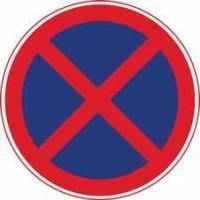
A、Stopping temporarily is allowed
B、Long stopping is allowed
C、No long stopping
D、No stopping
Answer:D
14、When a motor vehicle reaches a muddy or burst-and-muddy section of the road, the driver should stop, observe and select a level and solid section or a section with vehicle tracks.
Answer:Y
15、How should the driver pass this place safely?
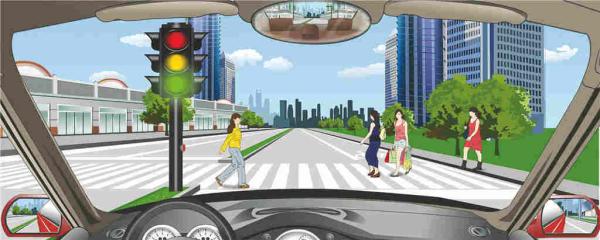
A、Speed up and pass in the front of the pedestrians
B、Bypass behind the pedestrians
C、Slow down and sound the horn
D、Stop and wait until the pedestrians pass
Answer:D
16、How to do in this situation?
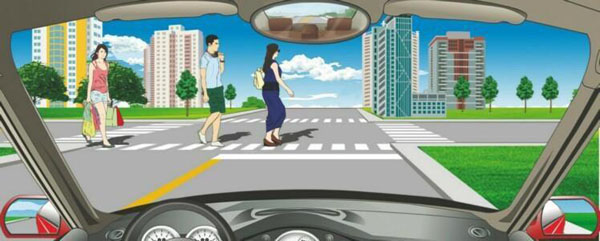
A、Stop and yield to the pedestrians
B、Bypass from the front of the pedestrians
C、Honk to remind the pedestrians
D、Bypass from the rear of the pedestrians
Answer:A
17、What should the driver do when the motor vehicle counters this situation?
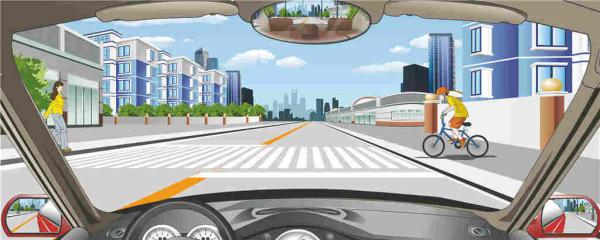
A、Sound the horn continuously to warn
B、Speed up and bypass from the front
C、Slow down when encountering any risks
D、Slow down voluntarily and yield
Answer:D
18、When passing an intersection, vehicle motor drivers are not allowed to overtake.
Answer:Y
19、When a tire blowout on the road, the driver should swiftly depress the brake pedal to reduce speed and stop the vehicle.
Answer:N
20、What are the hazards of drivers using cellphones or texting while driving?
A、Influencing driving operation
B、Influencing the rest of passengers
C、Failure to respond to emergencies
D、Distracted driving
Answer:ACD
21、What should the driver do when he/she encounters an oncoming ambulance in the same lane?
A、Keep to the side and reduce speed or stop to yield
B、Drive ahead by occupying another lane
C、Yield by speeding up and changing lanes
D、Drive ahead in the original lane
Answer:A
22、How to follow a motor vehicle safely on the road?
A、Observe the front vehicle conditions
B、Drive on the left side of the road as far as possible
C、Be ready to slow down at any time
D、Keep a safe distance
Answer:ACD
23、When a motor vehicle passes over an inundated road drivers should change to a high gear and pass rapidly.
Answer:N
24、When a wounded person is under the wheel or cargo, the wrong method is to pull the limbs of the wounded.
Answer:N
25、When driving in thick or extremely thick fog, what should the driver do due to the low visibility in such weather?
A、Turn on the headlamp and drive slowly
B、Turn on the fog lamp and drive slowl
C、Park in a safe place
D、Drive slowly close to the roadside
Answer:C
26、When the tire pressure is too low, what can happen when driving at a high speed?
A、Tire pressure will be unstable
B、Tire pressure will increase
C、Driving resistance will decrease
D、The tire will burst
Answer:D
27、When a vehicle stops temporarily at the roadside at night, the wrong measure is to ______.
A、Turn on the warning flash light
B、Turn on the contour light
C、Turn on the high beam light
D、Turn off all lights
Answer:CD
28、What is the meaning of this sign?
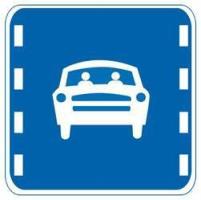
A、Special lane for small vehicles
B、Special lane for motorized vehicles
C、Special lane for taxis
D、Special lane for multi-passenger vehicles
Answer:D
29、When a motorcycle braking on a road covered by ice and snow, the driver should adopt point braking and prepare their feet for landing when braking.
Answer:Y
30、Under such circumstances, what should be done by motor vehicle drivers in order to yield to the pedestrians politely?
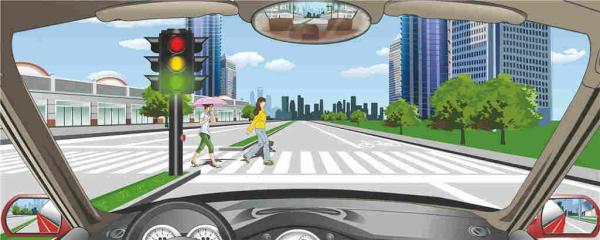
A、Set off after pedestrians pass
B、Set off and bypass in front of the pedestrians
C、Sound the horn to warn the pedestrians to yield
D、Set off and approach the pedestrians slowly
Answer:A
31、When rescuers enter the scene to rescue the wounded after harmful gas leakage caused by traffic accidents, they must wear air respirators or cover their mouth and nose with wet towels.
Answer:Y
32、What is the meaning of this sign?
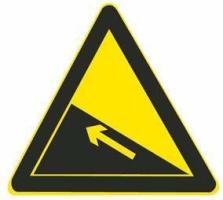
A、Steep downhill road
B、Continuous up slopes
C、Steep uphill road
D、Embankment road
Answer:C
33、What are the main reasons why driving a motor vehicle should not overtake on rainy days?
A、It is not easy for drivers around to see the overtaking signal.
B、Can not accurately judge the distance of vehicles around
C、Road is wet and slippery, and vehicles are prone to sideslip
D、The driver can not detect dangerous in time
Answer:ABCD
34、Motor vehicle drivers don’t need to use any lamp at night when passing through a road section where the street light condition is good.
Answer:N
35、When driving, besides paying attention to keeping a safe distance from the vehicle in front, drivers should also be prudent when braking so as to avoid a rear-end collision caused by a vehicle behind.
Answer:Y
36、What is the meaning of this sign?
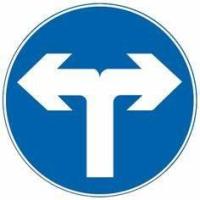
A、No left turn
B、Leftt and right turn
C、No leftt and right turn
D、No right turn
Answer:B
37、When a tire bursts suddenly on the road, the driver should refrain from violently depressing the brake pedal in panic. Instead, he/she should try his/her best to change to a low gear and use engine braking to reduce the speed of the vehicle.
Answer:Y
38、When a motor vehicle stops in snow, which lamp should be turned on?
A、Front and rear fog lamps, clearance lamp and rear position lamp
B、Reverse lamp, clearance lamp and rear position lamp
C、Headlamp, clearance lamp and rear position lamp
D、Hazard lamps, clearance lamp and rear position lamp
Answer:D
39、Under such circumstances, motor vehicle drivers should slow down and yield
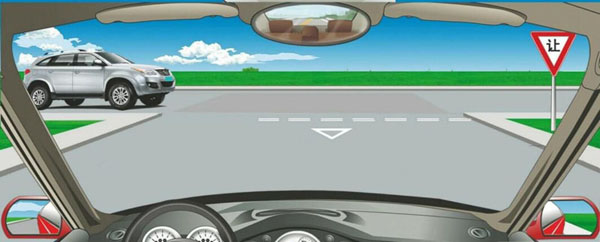
Answer:Y
40、The drivers, loaders and supercargoes responsible for dangerous chemicals transportation should all full understand the chemical characteristics, potential risks, features of the packaging containers and emergency measures for any unexpected accidents.
Answer:Y
41、Motor vehicle drivers may make a U-turn in this area as long as it will not affect the passing of pedestrians.
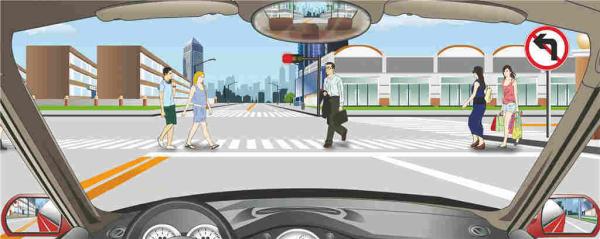
Answer:N
42、When driving on a foggy day, the driver should turn on the fog lamp.
Answer:Y
43、When the driver discovers a tire is leaking and steers the vehicle off the main carriageway, he should refrain from applying emergency so as to avoid a vehicle turnover or a rear-end collision arising from the late braking of the following vehicle.
Answer:Y
44、Before riding a motorcycle, the driver should wear a safety helmet and adjust the angle of the rearview mirror till he can clearly watch the left side and the right side of the back.
Answer:Y
45、What is the meaning of this sign?
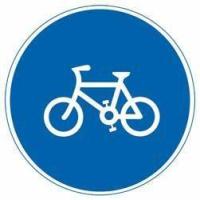
A、Electric bicycles may go
B、Parking space for non-motorized vehicles
C、Parking area for non-motorized vehicles
D、Non-motorized vehicles may go
Answer:D
46、When encountering a vehicle in front ascending on a mountainous road covered with ice and snow, what should the motor vehicle driver do?
A、Ascend after the vehicle in front passes the slope
B、Overtake the vehicle in front swiftly and drive on
C、Overtake the vehicle in front with a slow speed and drive on
D、Follow the vehicle in front closely
Answer:A
47、When a motor vehicle passes over an overflowing bridge, what should the driver do after stopping and observing closely?
A、Change to a high gear and pass rapidly
B、Constantly observe the changes of the flow
C、Prepare to stop at any time
D、Change to a low gear and pass through at a constant speed
Answer:D
48、The main impact of muddy roads on safe driving is that the wheels may easily spin and skid
Answer:Y
49、What needs attention when a motor vehicle drives on a road covered with ice and snow?
A、Braking length is extended
B、Anti-skating resistance will be greater
C、The adhesive force of the road will be greater
D、The braking length will be shorter
Answer:A
50、What is the meaning of this sign?
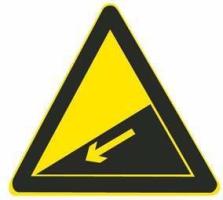
A、Embankment road
B、Steep uphill road
C、Continuous up slopes
D、Steep downhill road
Answer:D
- 黄冈摩托车科目四英文题库 相关内容
- 保山摩托车驾考英语手机APP 安康用英文考摩托车驾驶证 宿州摩托车考试英语题库 阜阳摩托车驾照考试英文题库 长治摩托车英语考试题 上海用英语考摩托车驾照科目四 延安摩托车驾照考试英文题库 益阳摩托车驾照理论试题英语版 崇左摩托车英语考试题 淮安摩托车驾照理论试题英语版 宝鸡摩托车驾考英语手机APP 永州摩托车驾照理论试题英语版 永州摩托车驾考英语手机APP 宿州用英文考摩托车驾驶证 乐山摩托车驾照考试科目一英语题 滨州外国人考摩托车驾照
Copyright © 2025 驾考 版权所有