
- 科目一考试
- 顺序练习
- 随机练习
- 强化练习
- 模拟考试
- 科目四考试
- 顺序练习
- 随机练习
- 强化练习
- 模拟考试
- 外国语言版题库
- 英语题库
- 德语题库
- 韩语题库
- 日语题库
- 俄语题库
- 法语题库
- 西班牙语题库
- 阿拉伯语题库
- 摩托车英文题
铜仁摩托车驾照考试科目四英语题
-
1、When overtaking a motor vehicles on uphill sections of a mountain road, the driver should _____.
A、Honk in advance
B、Forward cars are allowed to overtake before overtaking.
C、Turn on the left-turn signal in advance
D、Speed up direct and overtake
Answer:ABC
2、When approaching a vehicle on a narrow slope, which one of the following ways is correct?
A、The descending vehicle yields to the ascending
B、The vehicle which is further from the slope crest should yield
C、The ascending vehicle yields to the descending
D、If the descending vehicle has reached the midpoint while the ascending vehicle has not yet set out, the descending vehicle must yield.
Answer:A
3、What is the meaning of this sign?
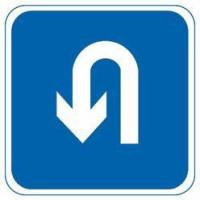
A、U turn
B、Reversing
C、Left turn
D、Bypassing
Answer:A
4、Under such circumstances, motor vehicle drivers should stop and yield
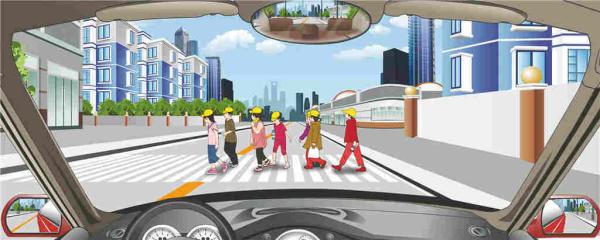
Answer:Y
5、Before driving, it is necessary to check whether the cooling liquid, engine oil and fuel oil, are leaking.
Answer:Y
6、When encountering dangerous and complicated circumstance, the driver should keep medium or low speed and keep the balance of the motorcycle to pass it cautiously.
Answer:Y
7、What is the meaning of this sign?
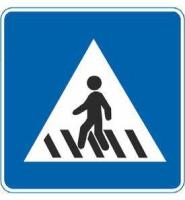
A、Crosswalk
B、Students’ passage
C、Watch for pedestrians
D、Children’s passage
Answer:A
8、A motorcycle is not permitted to tow other vehicles or to be towed by other vehicles.
Answer:Y
9、What is the meaning of this sign?
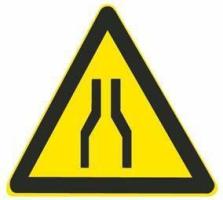
A、Road narrows on both sides
B、Road narrows on the right side
C、Road narrows on the left side
D、Bridge narrows
Answer:A
10、When driving into the traffic flow on a main road from a relief road, drivers should speed up.
Answer:N
11、When rescuing the persons who are losing blood, it is necessary to ______ first.
A、Observe
B、Dress the wounds
C、Stop bleeding
D、Inquire
Answer:C
12、When the driver discovers that steering is stiff, the wrong measure is to ___________.
A、Reduce speed and stop the vehicle as fast as possible
B、Stop at a safe place
C、Continue to drive
D、Identify the cause
Answer:C
13、What matters need attention when driving on a rainy day?
A、Avoid using the emergency brake or making sharp turns
B、Keep a safe enough distance
C、Observe the traffic situation of non-motor vehicles and surrounding pedestrians
D、Drive at a safe speed
Answer:ABCD
14、When a motorcycle wades across the water, the braking efficiency of the brake does not change.
Answer:N
15、What is the meaning of this sign?
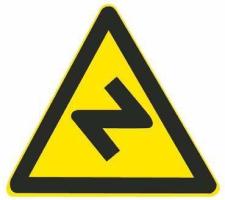
A、Slippery section
B、Sharp curve
C、Inverse curve
D、Continuous curves
Answer:C
16、If a driver finds there is no vehicle behind, he/she may change lanes without turning on the indicator.
Answer:N
17、When overtaking on a rainy day, drivers should turn on headlamps and sound a long horn.
Answer:N
18、Which measures is correct when a motor vehicle intends to overtake
A、Use the high and low beam lights alternately to indicate the intention
B、Honk to indicate the vehicle
C、Speed up and overtake on the right side
D、Turn on the left-turn signal in advance
Answer:ABD
19、When an erosive material catches fire, it should not be put out with water cannon.
Answer:Y
20、Under such circumstances, motor vehicle drivers should slow down and yield
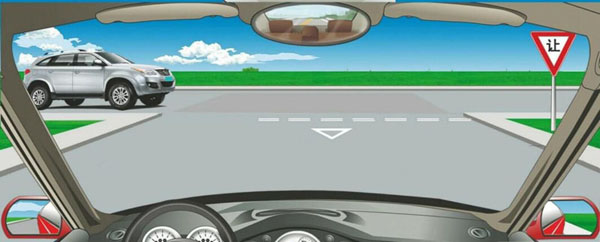
Answer:Y
21、When putting out a fire disaster that gives out erosive steam or poisonous gas, the firefighters should wear gas masks and other related protective articles and should operate from the windward side.
Answer:Y
22、When a motor vehicle stops in snow, which lamp should be turned on?
A、Front and rear fog lamps, clearance lamp and rear position lamp
B、Reverse lamp, clearance lamp and rear position lamp
C、Headlamp, clearance lamp and rear position lamp
D、Hazard lamps, clearance lamp and rear position lamp
Answer:D
23、What should be checked before driving?
A、No parts need to be checked
B、Whether the tires have been cleaned
C、Where the spare tire is placed
D、The fastening and air pressure of tires
Answer:D
24、Which of the following can effectively avoid driving fatigue
A、Take a proper rest after dinner before driving.
B、Driving continuously for no more than 4 hours
C、Keep a Good Sleep
D、Do npt eat too much
Answer:ABCD
25、What needs attention when a motor vehicle drives on a road covered with ice and snow?
A、Braking length is extended
B、Anti-skating resistance will be greater
C、The adhesive force of the road will be greater
D、The braking length will be shorter
Answer:A
26、When rescuing the injured, it is necessary to ________.
A、Save life first and treat the wounds later
B、Treat the wounds first and safe life later
C、Help the slightly wounded persons first
D、Help the seriously wounded persons later
Answer:A
27、What are the hazards of drivers using cellphones or texting while driving?
A、Influencing driving operation
B、Influencing the rest of passengers
C、Failure to respond to emergencies
D、Distracted driving
Answer:ACD
28、Under such circumstances, motor vehicle drivers may sound the horn at the proper time and speed up to pass through.
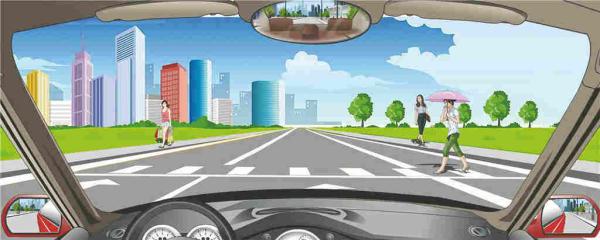
Answer:N
29、When such circumstances happen suddenly, what should the driver do?
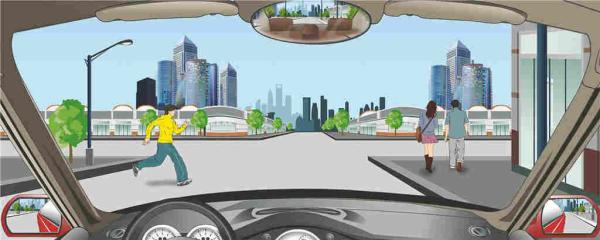
A、Reduce speed or stop to yield
B、Bypass in front of the pedestrians
C、Continuously sound the horn to alert the pedestrians
D、Bypass from behind the pedestrians
Answer:A
30、How should lamps be used by the motor vehicle driver who follows a vehicle on a road section at night where he street light condition is good?
A、Turn off the headlamp
B、Use high-beam
C、Turn off all lamps
D、Use low-beam
Answer:D
31、When there is no bondage for rescuing a wounded person, towels, handkerchiefs, bed sheets and stockings can be used for dressing.
Answer:Y
32、Once inflammable gas causes a fire disaster, it should be put out with water in good time.
Answer:N
33、What are the main reason for not applying emergency braking when driving on rainy days?
A、Increase fuel consumption
B、Reduce fuel consumption
C、The tires can easily spin
D、Easy to cause rear-end collision
Answer:CD
34、You can make an U turn at this intersection.
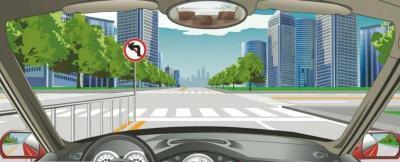
Answer:N
35、What is the meaning of this sign?
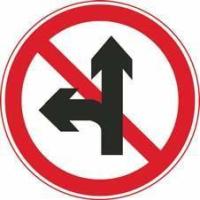
A、No going straight and no changing to left lane
B、No going straight and no left turn
C、Allowed to go straight and turn left
D、No going straight and no right turn
Answer:B
36、What is the meaning of this sign?
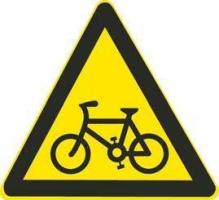
A、The lane for non-motorized vehicles
B、Yield non-motorized vehicles
C、No passing for non-motorized vehicles
D、Watch for non-motorized vehicles
Answer:D
37、When there is bleeding at the bone fracture of a wounded person, the first thing to do is to keep it in position before stopping the bleeding and dress the wound.
Answer:N
38、What is the meaning of this sign?
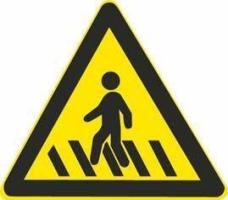
A、Watch for pedestrians
B、Watch for children
C、School area
D、Crosswalk
Answer:A
39、When a motorcycle goes down a long slope, it should run at a lower gear and fully use the engine to brake.
Answer:Y
40、Where should we choose to park?
A、Parking spaces on roads
B、Construction section
C、Crosswalk
D、Parking lot
Answer:AD
41、After a tire blows out and before the driver can control the speed of the vehicle, he should refrain from using the foot brake to stop the vehicle. Otherwise, a horizontal swing of the vehicle can cause greater danger.
Answer:Y
42、Motor vehicle drivers may make a U-turn in this area as long as it will not affect the passing of pedestrians.
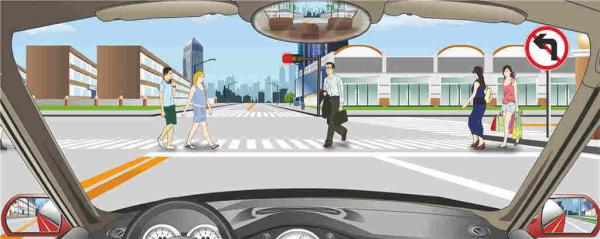
Answer:N
43、When passing an intersection, vehicle motor drivers are not allowed to overtake.
Answer:Y
44、How should a motor vehicle follow the other vehicle In front when driving on a road covered with ice and snow?
A、Keep a long safe distance
B、Turn on hazard lamp
C、Change between high-and-low beam alternatively
D、Sound the horn in due time to give a notice to the vehicle in front
Answer:A
45、When a vehicle stops temporarily at the roadside at night, the wrong measure is to ______.
A、Turn on the warning flash light
B、Turn on the contour light
C、Turn on the high beam light
D、Turn off all lights
Answer:CD
46、When driving on a long downhill road, which is the best way to control the speed?
A、Coast in neutral gear
B、Take a low gear
C、Depress the clutch
D、Pull up the handbrake
Answer:B
47、How to do in this intersection?
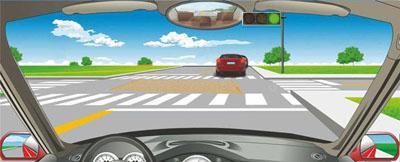
A、Wait in the cross-hatched marking area
B、stop and wait outside the intersection
C、Follow the vehicle in front and pass
D、Wait inside the intersection
Answer:B
48、Which of the following is an inflammable solid material?
A、Matches
B、Fireworks
C、Calcium carbide
D、Explosives
Answer:A
49、Which lamp should be turned on when motor vehicles pass through a road section at night where the street light condition is good?
A、Front and rear fog lamps
B、Low-beam
C、High-beam
D、Hazard lamp
Answer:B
50、Which of the following measures is correct for rescuing a person sustaining full-body burns?
A、Cover the fire with sandy soil
B、Spray cool water to his body
C、Put out the fire by extinguisher
D、Help to remove the burning clothes
Answer:B
- 铜仁摩托车驾照考试科目四英语题 相关内容
- 益阳摩托车驾照考试科目四英语题 那曲用英语考摩托车驾照科目四 包头用英语考摩托车驾照科目四 锦州摩托车科目四英文题库 阿坝摩托车驾照考试科目一英语题 扬州摩托车科目四英文题库 阿拉善盟摩托车科目四英文题库 莆田外国人考摩托车驾照 梅州摩托车驾考英语手机APP 海南摩托车驾照考试科目一英语题 泰安摩托车英语考试题 福建摩托车驾考英语手机APP 六安用英语考摩托车驾照科目四 新余摩托车考试英语理论试题 马鞍山摩托车科目四英文题库 淮北外国人考摩托车驾照
Copyright © 2025 驾考 版权所有