
- 科目一考试
- 顺序练习
- 随机练习
- 强化练习
- 模拟考试
- 科目四考试
- 顺序练习
- 随机练习
- 强化练习
- 模拟考试
- 外国语言版题库
- 英语题库
- 德语题库
- 韩语题库
- 日语题库
- 俄语题库
- 法语题库
- 西班牙语题库
- 阿拉伯语题库
- 摩托车英文题
保定用英语考摩托车驾照科目四
-
1、What are the main reasons why driving a motor vehicle should not overtake on rainy days?
A、It is not easy for drivers around to see the overtaking signal.
B、Can not accurately judge the distance of vehicles around
C、Road is wet and slippery, and vehicles are prone to sideslip
D、The driver can not detect dangerous in time
Answer:ABCD
2、The wrong measure to ride a motorcycle in summer is to __________.
A、Drive at a high speed for a long time
B、Control the speed by the accelerator
C、Avoid using the brake
D、Avoid loading people or cargoes
Answer:A
3、When driving in icy and snowy weather, because of the reduction of the stability, it is easy for the wheels to race or slip when rapidly speeding up.
Answer:Y
4、What is the meaning of this sign?
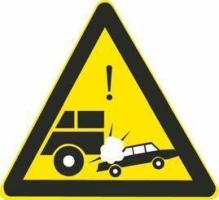
A、Accident-prone section
B、Construction section
C、Reducing speed and going slowly section
D、Jammed section
Answer:A
5、When the motor vehicle encounters a crosswalk in this situation, the driver may speed up and pass rapidly.
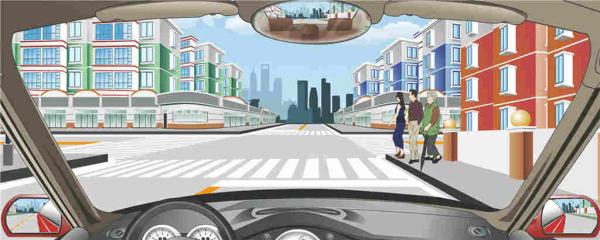
Answer:N
6、When passing another vehicle on a foggy day, what should drivers do?
A、Slow down and pass slowly
B、Maintain a safety distance
C、Properly use lamps
D、Drive at a high speed
Answer:ABC
7、Serious wave will appear when the front tire blows out; the driver should release the accelerator, firmly hold the steering wheel with both hands, quickly gradually break down, and stop to yield.
Answer:Y
8、When rescuing a wounded person suffering from bone fracture, which of the following should be kept in mind?
A、Immediately send him/her to the hospital on a stretcher
B、Properly change the original posture when the injured person wounded
C、Dress the fracture with a bandage
D、Do not move the fractured body-part
Answer:D
9、What are the hazards of drivers using cellphones or texting while driving?
A、Influencing driving operation
B、Influencing the rest of passengers
C、Failure to respond to emergencies
D、Distracted driving
Answer:ACD
10、What is the meaning of this sign?
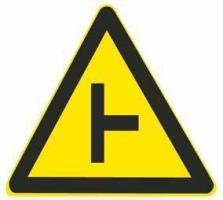
A、Y-shaped intersection
B、T-shaped intersection
C、Intersection
D、Ring intersection
Answer:B
11、Motor vehicle drivers don’t need to use any lamp at night when passing through a road section where the street light condition is good.
Answer:N
12、When driving in a strong wind, drivers should abruptly turn the steering wheel to return to the original direction if they feel the vehicle deviates horizontally due to a strong gale.
Answer:N
13、When driving, besides paying attention to keeping a safe distance from the vehicle in front, drivers should also be prudent when braking so as to avoid a rear-end collision caused by a vehicle behind.
Answer:Y
14、Why is it dangerous to overtake on a snowy mud road in heavy snow?
A、Snow can increase tire adhesion
B、The flying mud made the sight bad.
C、Long braking distance in case of emergency
D、Pavement under snow and mud is easier to skid.
Answer:BCD
15、When driving in rain and encountering pedestrians with umbrellas or wearing raincoats, what should be done by motor vehicle drivers in order to yield?
A、Drive at a normal speed
B、Sound the horn to alert when approaching the pedestrians
C、Speed up and bypass on the left
D、Reduce speed and sound the horn in advance
Answer:D
16、When a fast-running vehicle makes a sharp turn, it can very easily cause side collision or an overturn due to the centrifugal force.
Answer:Y
17、When driving on road sections where safe sight distance is affected, such as the top of a ramp, what should drivers do to ensure safety?
A、Rush through
B、Use hazard lamp
C、Cut speed and sound the horn
D、Drive at will
Answer:C
18、What is the meaning of this sign?
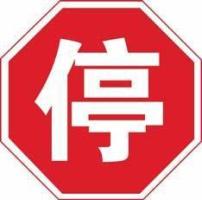
A、Stop to yield
B、No stopping temporarily
C、No entry
D、No long stopping
Answer:A
19、What is the meaning of this sign?
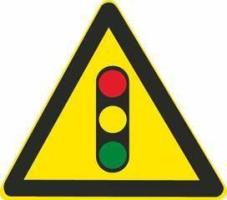
A、Crosswalk lights
B、Watch for pedestrians
C、Attention to traffic lights
D、Intersection
Answer:C
20、According to regulations, motorcycle driver should wear _______.
A、Glasses
B、A special safety helmet
C、Gloves
D、Safety kneepads
Answer:B
21、Under such circumstance at an intersection. motor vehicle drivers should be prepared to stop and yieldat any time.
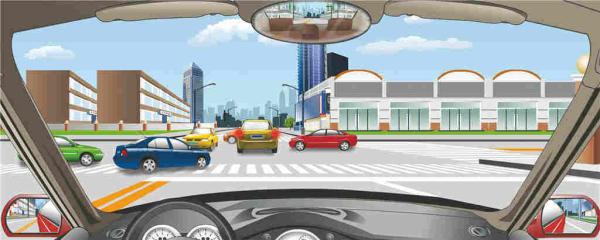
Answer:Y
22、Speed up and pass when encountering this traffic light at the intersection
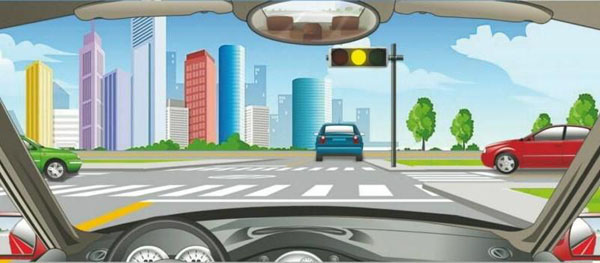
Answer:N
23、What is the meaning of this sign?
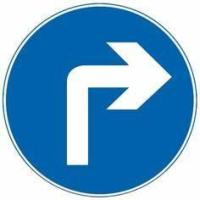
A、Turn right
B、One-way road
C、Going straight only
D、Straight-going lane
Answer:A
24、What is the meaning of this sign?
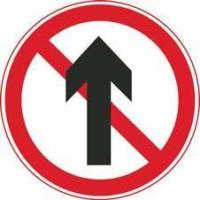
A、No right turn
B、No U turn
C、No going straight
D、No left turn
Answer:C
25、When driving a motor vehicle near an intersection, the vehicle may speed up and honk to pass.
Answer:N
26、Which measures is correct when a motor vehicle turn around?
A、Turn around in the turning lane
B、Should not turn on the turning light
C、Turn around in the straight lane
D、Turn on the left-turn signal in advance
Answer:AD
27、When a motorcycle goes downhill, it may fully use the neutral gear and slide.
Answer:N
28、What is the meaning of this sign?
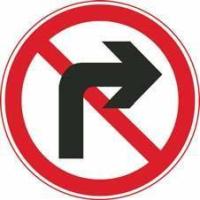
A、No entering the intersection
B、No right turn
C、No changing lane
D、No U turn
Answer:B
29、What is the meaning of this sign?
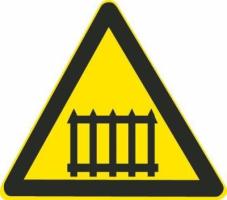
A、A manned level crossing
B、Multi-crossing of railway and road
C、Grade separation level crossing
D、An unmanned level crossing
Answer:A
30、What is the meaning of this sign?
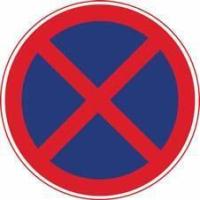
A、Stopping temporarily is allowed
B、Long stopping is allowed
C、No long stopping
D、No stopping
Answer:D
31、When a motor vehicle passes over an inundated road the driver should change to a low gear and pass at a constant speed.
Answer:Y
32、How to drive a car safely when the sight of rain, snow, fog is not clear or the road is slippery?
A、Increase the horizontal distance
B、Reduce speed and run
C、Speed up and run
D、Stop to yield when necessary
Answer:ABD
33、When there is bleeding at the bone fracture of a wounded person, the first thing to do is to keep it in position before stopping the bleeding and dress the wound.
Answer:N
34、What is the meaning of this sign?
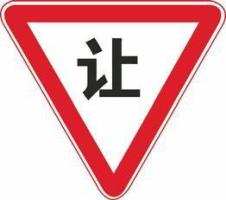
A、No yielding
B、Yield while crossing each other
C、Reduce speed and yield
D、Stop to yield
Answer:C
35、The first-aid measure to rescue a poisoned person is to _______.
A、Take warming-up measures
B、Bring him to a place where air is fresh
C、Give him artificial respiration
D、Depress the heart over the chest
Answer:B
36、Which is correct when riding a motorcycle
A、Both hands can temporarily leave the steering handle bar
B、Voluntarily operate the steering handle bar
C、It is prohibited to simultaneously move two hands from the steering handle bar
D、It is able to statically turn the steering handle bar
Answer:C
37、When driving on a long downhill road, which is the best way to control driving speed?
A、Coast in neutral gear
B、Depress the clutch and coast
C、Use the engine to brake
D、Depress the brake pedal continuously
Answer:C
38、When driving on a road covered with ice and snow drivers should not use the emergency brake but can apply a sharp turn.
Answer:N
39、When driving into the traffic flow on a main road from a relief road, drivers should speed up.
Answer:N
40、When driving motor vehicles on the uphill section of a mountain road, the driver should _____.
A、Always pay attention to downstream vehicles
B、Advance at a uniform speed.
C、Avoid shifting whenever possible
D、Choosing high speed gear
Answer:ABC
41、When a fast-moving vehicle encounters an emergency the driver should turn to evade first and then brake to slow down so as to mitigate the damage.
Answer:N
42、When passing a turn or a curve section, the driver should slow down and disengage the clutch.
Answer:N
43、What should the motor vehicle driver do when the motor vehicle encounters the crosswalk in thissituation?
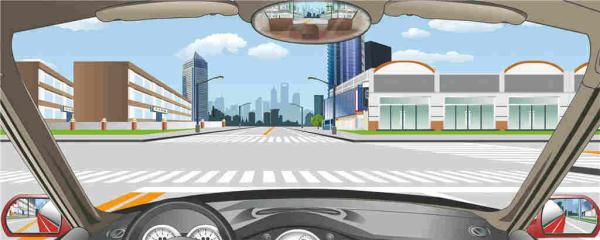
A、Slow down and pass
B、Speed up and pass
C、Sound the horn and pass
D、Stop immediately
Answer:A
44、Which of the following can effectively avoid driving fatigue
A、Take a proper rest after dinner before driving.
B、Driving continuously for no more than 4 hours
C、Keep a Good Sleep
D、Do npt eat too much
Answer:ABCD
45、Under such circumstances, motor vehicle drivers should stop and yield
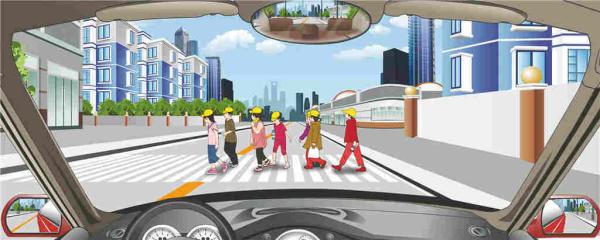
Answer:Y
46、When a motor vehicle passes over an overflowing bridge, what should the driver do after stopping and observing closely?
A、Change to a high gear and pass rapidly
B、Constantly observe the changes of the flow
C、Prepare to stop at any time
D、Change to a low gear and pass through at a constant speed
Answer:D
47、Drivers who ride motorcycles are able to not wear safety helmets.
Answer:N
48、When there is no bandage for rescuing a wounded person, which of the following measures is wrong?
A、Dress the wounds with a handkerchief
B、Dress the wounds with a towe
C、Dress the wounds with cotton clothes
D、Dress the wounds with string
Answer:D
49、When a motor vehicle stops in snow, which lamp should be turned on?
A、Front and rear fog lamps, clearance lamp and rear position lamp
B、Reverse lamp, clearance lamp and rear position lamp
C、Headlamp, clearance lamp and rear position lamp
D、Hazard lamps, clearance lamp and rear position lamp
Answer:D
50、It is not a bad habit for a driver to frequently change lanes.
Answer:N
- 保定用英语考摩托车驾照科目四 相关内容
- 遂宁摩托车驾照考试科目四英语题 阿勒泰外国人考摩托车驾照 芜湖用英文考摩托车驾驶证 阿拉善盟摩托车驾照考试科目一英语题 莆田摩托车驾照考试科目四英语题 镇江摩托车考试英语理论试题 无锡外国人考摩托车驾照 辽阳摩托车考试英语理论试题 白城用英文考摩托车驾驶证 宣城摩托车驾考英语手机APP 昆明用英语考摩托车驾照科目四 苏州外国人考摩托车驾照 北海摩托车考试英语题库 莆田摩托车驾照考试科目一英语题 盐城用英语考摩托车驾照科目四 宿州摩托车驾考英语手机APP
Copyright © 2025 驾考 版权所有