
- 科目一考试
- 顺序练习
- 随机练习
- 强化练习
- 模拟考试
- 科目四考试
- 顺序练习
- 随机练习
- 强化练习
- 模拟考试
- 外国语言版题库
- 英语题库
- 德语题库
- 韩语题库
- 日语题库
- 俄语题库
- 法语题库
- 西班牙语题库
- 阿拉伯语题库
- 摩托车英文题
海南摩托车驾照考试科目四英语题
-
1、When such circumstances happen suddenly, drivers should reduce speed in a timely fashion or stop to yield.
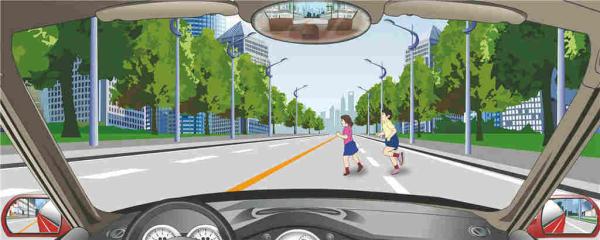
Answer:Y
2、Sounding the horn on a foggy daY can arouse the attention of the opposite side. After hearing the horn from the opposite side, the driver should also sound their own horn to respond.
Answer:Y
3、What is the meaning of this sign?
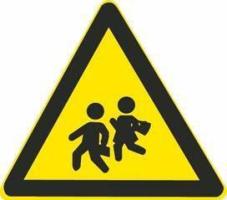
A、School area
B、Watch for children
C、Crosswalk
D、Watch for pedestrians
Answer:B
4、When a tire blowout on the road, the driver should control the direction of the vehicle and use emergency braking to bring the vehicle swiftly to a stop.
Answer:N
5、When driving on a rough road, the driver should use low gear to keep low speed; try to choose roads with big pits to reduce bumpy feeling.
Answer:N
6、When overtaking on a rainy day, drivers should turn on headlamps and sound a long horn.
Answer:N
7、It is not safe for a female driver to wear high heels to drive a vehicle.
Answer:Y
8、Speeding up to go though the intersection before the light turns to red in this case.
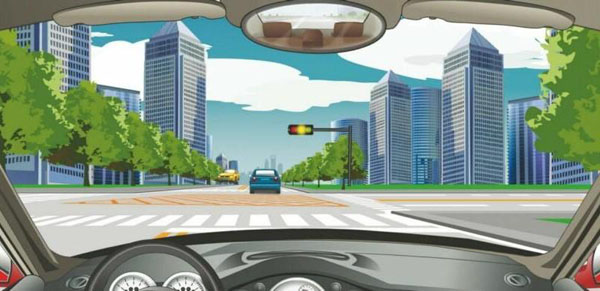
Answer:N
9、Which measures is correct when a motor vehicle turn around?
A、Turn around in the turning lane
B、Should not turn on the turning light
C、Turn around in the straight lane
D、Turn on the left-turn signal in advance
Answer:AD
10、While driving a motorcycle, nothing is permitted to hang on the handlebars.
Answer:Y
11、When driving on a road covered with ice and snow, the motor vehicle may spin or slide when increasing the speed urgently, due to the loss of vehicle stability.
Answer:Y
12、When driving a motor vehicle following anther vehicle, What should the driver pay attention to?
A、When following a taxi, it is necessary to prevent it from pulling over at any time to get on and off passengers.
B、For large trucks loaded with goods, we should increase the distance between cars and avoid long time follow ups to prevent the risk of cargo spilling and blind areas.
C、When the current side of the vehicle has an internship sign, it should increase the distance with the vehicle to prevent the front vehicle emergency braking.
D、Follow a vehicle in foggy weather, pay attention to the emergency braking of the front vehicle
Answer:ABCD
13、Which of the following is a basic requirement for rescuing the injured at the scene of a traffic accident?
A、Treat wounds first and safe life later
B、Save life first and treat wounds later
C、Help lightly wounded persons first
D、Help seriously wounded persons later
Answer:B
14、Under such circumstances, motor vehicle drivers may sound the horn at the proper time and speed up to pass through.
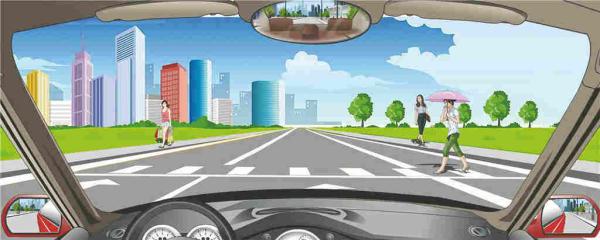
Answer:N
15、Which of the following measures is incorrect when a motor vehicle stops?
A、Stop at a stipulated place
B、Avoid stopping on pedestrian streets
C、Avoid obstructing the passing of other motor vehicles and pedestrians when temporarily stops on the road
D、Stop on the non-motor vehicle lane
Answer:D
16、Which is the wrong measure to avoid tire burst?
A、Reduce tire pressure
B、Check tires regularly
C、Remove foreign matters from the tire tread grooves timely
D、Replace tires that have cracks or deep cuts
Answer:A
17、Under such circumstances, the driver should stop the vehicle and yield to pedestrians.
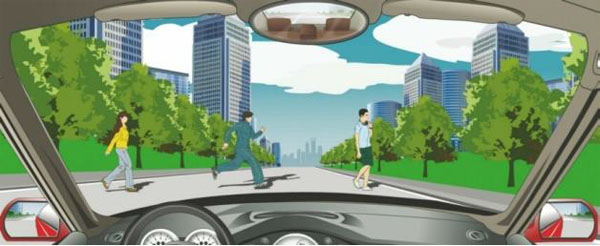
Answer:Y
18、When a wounded person suffering burns is thirsty, he should only drink plain boiled water.
Answer:N
19、When encountering an obstacle on one side of the road, what should vehicles do as they approach each other?
A、The vehicle not encountering an obstacle should Yield to the other vehicle
B、The slower vehicle should yield to the faster
C、The vehicle encountering an obstacle should yield to the other vehicle
D、The faster vehicle should yield to the slower
Answer:C
20、In such road sections, you can enter the cross-hatched marking area to wait.
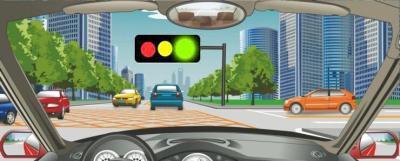
Answer:N
21、What is the meaning of this sign?
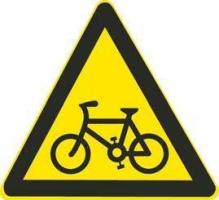
A、The lane for non-motorized vehicles
B、Yield non-motorized vehicles
C、No passing for non-motorized vehicles
D、Watch for non-motorized vehicles
Answer:D
22、Drivers who ride motorcycles are able to not wear safety helmets.
Answer:N
23、What is the meaning of this sign?
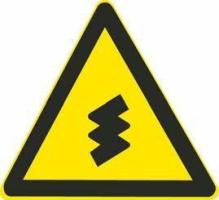
A、Slippery section
B、Sharp curve
C、Inverse curve
D、Continuous curves
Answer:D
24、What matters need attention when driving on a rainy day?
A、Avoid using the emergency brake or making sharp turns
B、Keep a safe enough distance
C、Observe the traffic situation of non-motor vehicles and surrounding pedestrians
D、Drive at a safe speed
Answer:ABCD
25、Where can not park?
A、Parking lot
B、Parking spaces on roads
C、Landslide and debris flow in Mountainous Areas
D、Crosswalk
Answer:CD
26、A light motorcycle is only permitted to carry preschoolers.
Answer:N
27、When the vehicles cross each other at night, what should the driver do if the vehicle coming in the opposite direction always use the high beam light.
A、Continuous change lights and honk to remind the vehicle coming in the opposite direction
B、Turn on the high beam light
C、Reduce speed or driving on the right side.
D、Move his sight to the right side to evade the light
Answer:CD
28、What are the driving behaviors that cause accidents when a motor vehicle turns to a turning road?
A、Vehicles occupy opposite lanes
B、Turn the steering wheel sharply in the bend
C、Do not slow down before turning
D、Motor vehicles drive on the right side of the road
Answer:ABC
29、What is the meaning of this sign?
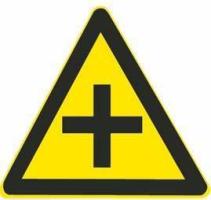
A、Intersection
B、Ring intersection
C、T-shaped intersection
D、Y-shaped intersection
Answer:A
30、Which of the following method is correct to rescue an unconscious person?
A、Apply cardio-pulmonaryresuscitation immediately
B、Press the philtrum of the wounded person with force
C、Continuously slap the face of the wounded person
D、Check the breath of the wounded person before other emergency treatments
Answer:D
31、When rescuing the injured, it is necessary to ________.
A、Save life first and treat the wounds later
B、Treat the wounds first and safe life later
C、Help the slightly wounded persons first
D、Help the seriously wounded persons later
Answer:A
32、It is an illegal act for the driver to make calls while driving.
Answer:Y
33、When a vehicle encounters a strong side wind in a mountain valley, the driver should drastically turn the steering handlebar to adjust the direction of the vehicle if he feels the vehicle deviates from the normal direction.
Answer:N
34、When a tire blowout on the road, the driver should swiftly depress the brake pedal to reduce speed, do all his can to control the steering wheel and stop the vehicle as soon as possible.
Answer:N
35、What is the meaning of this sign?
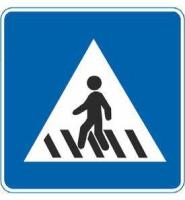
A、Crosswalk
B、Students’ passage
C、Watch for pedestrians
D、Children’s passage
Answer:A
36、When driving a motor vehicle crosses each other on a hump bridge, what should the driver do?
A、Rush to pass
B、Reduce speed
C、Honk to indicate the vehicle
D、Go on the right side
Answer:BCD
37、What is the meaning of this sign?
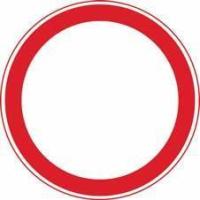
A、No passing
B、Driving at reduced speed
C、Time limit for entering
D、No entering
Answer:A
38、What should be done by the driver who intends to overtake but finds that the vehicle in front is also overtaking?
A、Following the vehicle in front closely and finding a chance to overtake it
B、Accelerating to overtake forcefully
C、Continuously sounding the horn to urge the vehicle in front to yield
D、Refraining from overtaking and letting the vehicle in front overtake first
Answer:D
39、Where should we choose to park?
A、Parking spaces on roads
B、Construction section
C、Crosswalk
D、Parking lot
Answer:AD
40、When evading an emergency, except for being calm what principle should be held by drivers?
A、Evading people first and then objects
B、Evading objects first and then vehicles
C、Evading vehicles first and then people
D、Evading objects first and then people
Answer:A
41、What is the meaning of this sign?
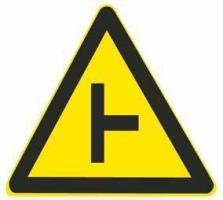
A、Y-shaped intersection
B、T-shaped intersection
C、Intersection
D、Ring intersection
Answer:B
42、When a gas tanker is leaking heavily, which of the following measures is wrong?
A、Cut off the power
B、Wear gas mask and protect gloves
C、Turn off the valve to stop leaking
D、Evacuate people to the leeward side
Answer:D
43、What is the meaning of this sign?
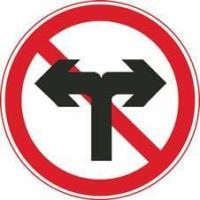
A、No U turn at intersection
B、No changing lane from both sides
C、No left or right turn
D、No going straight
Answer:C
44、Which lamp should be turned on when motor vehicles pass through a road section at night where the street light condition is good?
A、Front and rear fog lamps
B、Low-beam
C、High-beam
D、Hazard lamp
Answer:B
45、Matches, sulfur and red phosphorus are _________.
A、Explosives
B、Inflammable solid materials
C、Self-igniting articles
D、Oxidizing materials
Answer:B
46、How to make a U turn in this intersection?
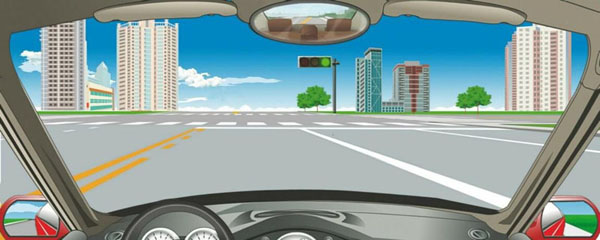
A、broken lines of the central line
B、Make a U turn from the right lane
C、Enter the intersection and make a U turn
D、Make a U turn in the crosswalk
Answer:A
47、When driving into the traffic flow on a main road from a relief road, drivers should speed up.
Answer:N
48、What is the meaning of this sign?
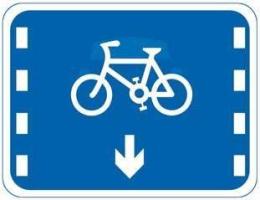
A、No entry for bicycles
B、Lane for non-motorized vehicles
C、Special lane for bicycles
D、Bicycle stopping area
Answer:B
49、What needs attention when a motor vehicle drives on a road covered with ice and snow?
A、Braking length is extended
B、Anti-skating resistance will be greater
C、The adhesive force of the road will be greater
D、The braking length will be shorter
Answer:A
50、It is unsafe to ride a motorcycle by high-heel shoes.
Answer:Y
- 海南摩托车驾照考试科目四英语题 相关内容
- 许昌用英文考摩托车驾驶证 丹东用英文考摩托车驾驶证 连云港摩托车驾照考试科目四英语题 银川摩托车驾考英语手机APP 嘉峪关摩托车驾照理论试题英语版 鞍山摩托车驾照考试英文题库 凉山州摩托车驾照理论试题英语版 东莞摩托车英语考试题 绍兴外国人考摩托车驾照 来宾摩托车驾照考试英文题库 汕头摩托车考试英语理论试题 天水摩托车驾照考试英文题库 锦州摩托车驾照考试科目四英语题 鄂尔多斯用英语考摩托车驾照科目四 广西用英文考摩托车驾驶证 德州摩托车英语考试题
Copyright © 2025 驾考 版权所有