
- 科目一考试
- 顺序练习
- 随机练习
- 强化练习
- 模拟考试
- 科目四考试
- 顺序练习
- 随机练习
- 强化练习
- 模拟考试
- 外国语言版题库
- 英语题库
- 德语题库
- 韩语题库
- 日语题库
- 俄语题库
- 法语题库
- 西班牙语题库
- 阿拉伯语题库
- 摩托车英文题
阜新摩托车科目四英文题库
-
1、Under such circumstances, motor vehicle drivers should stop and yield
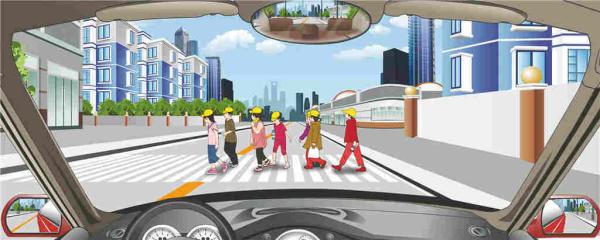
Answer:Y
2、When passing another vehicle on a foggy day, what should drivers do?
A、Slow down and pass slowly
B、Maintain a safety distance
C、Properly use lamps
D、Drive at a high speed
Answer:ABC
3、If a driver finds there is no vehicle behind, he/she may change lanes without turning on the indicator.
Answer:N
4、When rescuing a wounded person who has been poisoned by toxic gas, the first measure is to send him to a place where air is fresh so that he will not continue to be poisoned.
Answer:Y
5、When a motor vehicle passes over an inundated road the driver should change to a low gear and pass at a constant speed.
Answer:Y
6、At a road that has more than two vehicle lanes in the same direction, the motorcycles should use the very left one.
Answer:N
7、Under such circumstances, the driver should stop the vehicle and yield to pedestrians.
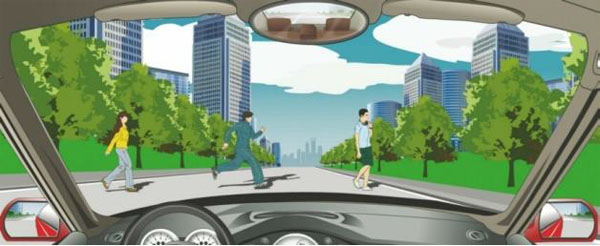
Answer:Y
8、When driving on a long downhill road, which is the best way to control the speed?
A、Coast in neutral gear
B、Take a low gear
C、Depress the clutch
D、Pull up the handbrake
Answer:B
9、When driving a motor vehicle into a traffic flow, drivers should not hold up other vehicles.
Answer:Y
10、Which one of the following measures is correct when a motor vehicle intends to overtake but the vehicle infront refuses to yield?
A、Use a long-sounding horn
B、Follow the vehicle in front while turning high-beam
C、Wait for it to yield while keeping a safe distance
D、Use high-beam and low-beam alternatively
Answer:C
11、When the tire pressure is too low, what can happen when driving at a high speed?
A、Tire pressure will be unstable
B、Tire pressure will increase
C、Driving resistance will decrease
D、The tire will burst
Answer:D
12、When a rear tire of a motorcycle blows out, the driver should ________.
A、Swiftly turn the steering handlebar to adjust
B、Firmly hold the steering handlebar with both hands
C、Swiftly turn the steering handlebar to the opposite direction
D、Swiftly take braking measures
Answer:B
13、When encountering such pedestrians, motor vehicle drivers may continuously sound the horn to alert them to yield.
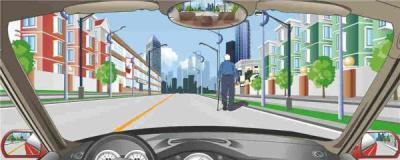
Answer:N
14、Under such circumstances, motor vehicle drivers should slow down and yield
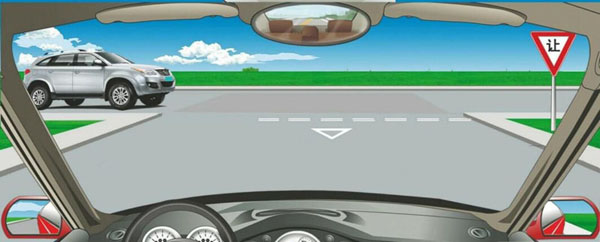
Answer:Y
15、When driving into the traffic flow on a main road from a relief road, drivers should speed up.
Answer:N
16、What is the meaning of this sign?
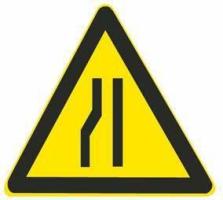
A、Road narrows on both sides
B、Road narrows on the right side
C、Road narrows on the left side
D、Bridge narrows
Answer:C
17、When parking temporarily on a snowy day, drivers should turn on the headlamp and fog lamp.
Answer:N
18、What is the meaning of this sign?
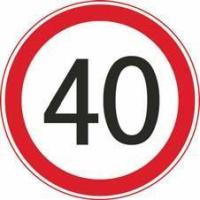
A、Reducing speed 40m ahead
B、Minimum speed is 40km/hr
C、Axle weight limit is 40 tons
D、Maximum speed limit is 40km/hr
Answer:D
19、When the vehicles cross each other at night, what should the driver do if the vehicle coming in the opposite direction don’t turn off the high beam light?
A、Reduce speed for yield or stop on the right side.
B、Continuous change lights to remind the vehicle coming in the opposite direction
C、Turn on the high lights and force the coming car to change the lights
D、Move his sight to the right side to evade the light
Answer:ABD
20、When a motorcycle goes downhill, it may fully use the neutral gear and slide.
Answer:N
21、Which of the following measures is correct for rescuing a person sustaining full-body burns?
A、Cover the fire with sandy soil
B、Spray cool water to his body
C、Put out the fire by extinguisher
D、Help to remove the burning clothes
Answer:B
22、The first-aid measure to rescue a poisoned person is to _______.
A、Take warming-up measures
B、Bring him to a place where air is fresh
C、Give him artificial respiration
D、Depress the heart over the chest
Answer:B
23、When encountering such pedestrians, what should motor vehicle drivers do?
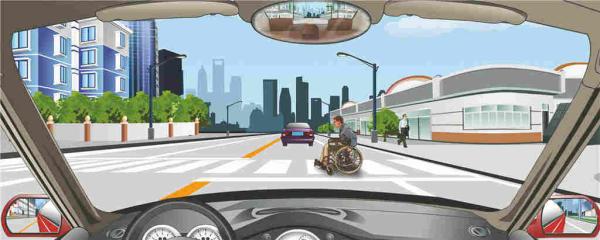
A、Bypass in front of the pedestrians
B、Bypass from behind the pedestrians
C、Sound the horn to alert the pedestrians
D、Voluntarily stop and yield
Answer:D
24、How will the adhesive force of road change when speed increases on a damp and slippery road?
A、Increase sharply
B、Increase gradually
C、Decrease sharply
D、No change
Answer:C
25、Speed up and pass when encountering this traffic light at the intersection
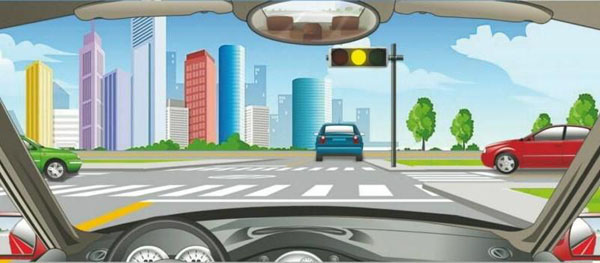
Answer:N
26、What is the meaning of this sign?
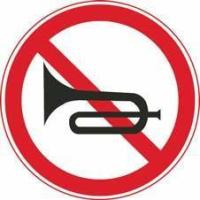
A、No long time honking
B、Honk discontinuously
C、Reduce speed and honk
D、No honking
Answer:D
27、When rescuing a wounded person in an emergency, it is necessary to firstly stop the bleeding by compression before other methods are taken according to the conditions of bleeding.
Answer:Y
28、When driving on road sections where safe sight distance is affected, such as the top of a ramp, what should drivers do to ensure safety?
A、Rush through
B、Use hazard lamp
C、Cut speed and sound the horn
D、Drive at will
Answer:C
29、When finding a tire burst on the road, the driver should gently depress the brake pedal, reduce speed and stop the vehicle slowly.
Answer:Y
30、Once inflammable gas causes a fire disaster, it should be put out with water in good time.
Answer:N
31、When driving a motor vehicle crosses each other on a hump bridge, what should the driver do?
A、Rush to pass
B、Reduce speed
C、Honk to indicate the vehicle
D、Go on the right side
Answer:BCD
32、When a vehicle approaches an intersection without crosswalk, the driver should _______ if he finds people are crossing the street.
A、Reduce speed or stop to yield
B、Honk to indicate them to yield
C、Pass before the pedestrians
D、Immediately change lane and bypass the pedestrians
Answer:A
33、When a motor vehicle temporarily stops in fog, which lamp should be turned on?
A、Hazard lamp, clearance lamp and rear position lamp
B、Left-turn indicator, clearance lamp and rear position amp
C、Headlamp, clearance lamp and rear position lamp
D、Reverse lamp, clearance lamp and rear position lamp
Answer:A
34、Under such circumstances, motor vehicle drivers should bypass on the left quickly.
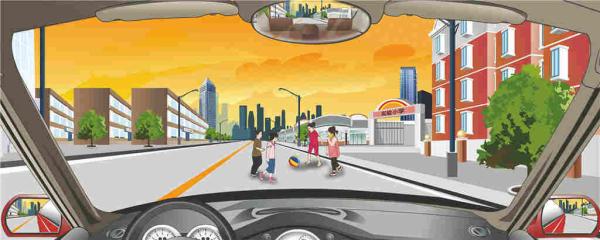
Answer:N
35、When encountering this situation at the gate of a school, the driver should prepare to stop.
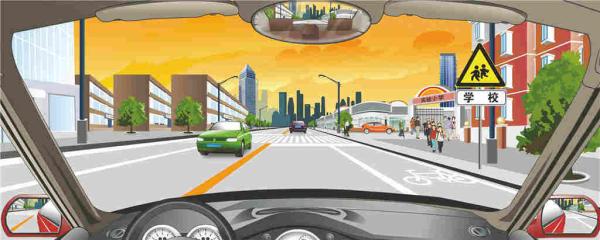
Answer:Y
36、Where can not park?
A、Parking lot
B、Parking spaces on roads
C、Landslide and debris flow in Mountainous Areas
D、Crosswalk
Answer:CD
37、After a traffic accident, what is the most effective measure to prevent secondary accidents?
A、Evacuate all passengers
B、Turn on the hazard lamps
C、Mark the original place of the injured persons
D、Properly place the danger warning sign
Answer:ABD
38、Dangerous chemicals possess the characteristics of explosion, inflammation, poison, erosion and radiation.
Answer:Y
39、When a motor vehicle moves through water, drivers should intermittently and gently depress the brake pedal in order to restore braking efficiency.
Answer:Y
40、What should be done by the driver who intends to overtake but the motor vehicle in front neither reduces its speed nor allows the right of way?
A、Continuously sounding the horn and accelerating to overtake
B、Accelerating and continuing to overtake
C、Refraining from overtaking
D、Following the vehicle in front closely and finding a chance to overtake
Answer:C
41、What is the meaning of this sign?
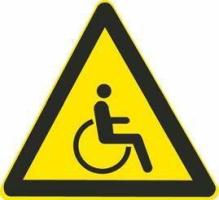
A、Exit and entry for disabled people
B、Watch for disabled people
C、Rest area for disabled people
D、Special passage for disabled people
Answer:B
42、What is the meaning of this sign?
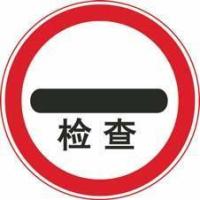
A、Customs inspection
B、Stop-for-inspection
C、Frontier inspection
D、No passing
Answer:B
43、Which of the following method is correct to rescue an unconscious person?
A、Apply cardio-pulmonaryresuscitation immediately
B、Press the philtrum of the wounded person with force
C、Continuously slap the face of the wounded person
D、Check the breath of the wounded person before other emergency treatments
Answer:D
44、What is the meaning of this sign?
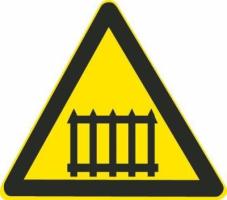
A、A manned level crossing
B、Multi-crossing of railway and road
C、Grade separation level crossing
D、An unmanned level crossing
Answer:A
45、How should a motor vehicle follow the other vehicle In front when driving on a road covered with ice and snow?
A、Keep a long safe distance
B、Turn on hazard lamp
C、Change between high-and-low beam alternatively
D、Sound the horn in due time to give a notice to the vehicle in front
Answer:A
46、What is the most frequent problem for driving on a muddy road?
A、High resistance force
B、Sideways slide
C、The motor vehicle bumps
D、Steering failure
Answer:B
47、What is the meaning of this sign?
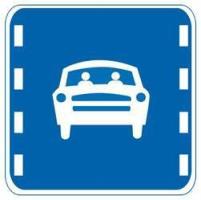
A、Special lane for small vehicles
B、Special lane for motorized vehicles
C、Special lane for taxis
D、Special lane for multi-passenger vehicles
Answer:D
48、It is extremely unsafe to take a motorcycle by the side; if the motorcycle sideslips, the passenger may be thrown out and led to death due to an unstable center of gravity.
Answer:Y
49、When a motor vehicle stops in snow, which lamp should be turned on?
A、Front and rear fog lamps, clearance lamp and rear position lamp
B、Reverse lamp, clearance lamp and rear position lamp
C、Headlamp, clearance lamp and rear position lamp
D、Hazard lamps, clearance lamp and rear position lamp
Answer:D
50、When approaching another vehicle at night, why should the driver alternate between high-and-low-beam at a distance more than 150 meters?
A、Warn each other before passing
B、Driving habit
C、Easy to observe the situation ahead from either side
D、Courtesy
Answer:C
- 阜新摩托车科目四英文题库 相关内容
- 鄂尔多斯外国人考摩托车驾照 蚌埠用英语考摩托车驾照科目四 三门峡摩托车驾照考试英文题库 日照用英语考摩托车驾照科目四 肇庆用英文考摩托车驾驶证 莆田外国人考摩托车驾照 德阳摩托车驾照考试科目一英语题 保山用英文考摩托车驾驶证 临汾摩托车驾考英语手机APP 邢台摩托车考试英语题库 赣州用英文考摩托车驾驶证 怀化摩托车科目四英文题库 临汾用英语考摩托车驾照科目四 邯郸外国人考摩托车驾照 随州摩托车考试英语题库 嘉兴外国人考摩托车驾照
Copyright © 2025 驾考 版权所有