
- 科目一考试
- 顺序练习
- 随机练习
- 强化练习
- 模拟考试
- 科目四考试
- 顺序练习
- 随机练习
- 强化练习
- 模拟考试
- 外国语言版题库
- 英语题库
- 德语题库
- 韩语题库
- 日语题库
- 俄语题库
- 法语题库
- 西班牙语题库
- 阿拉伯语题库
- 摩托车英文题
衡阳摩托车驾照考试科目四英语题
-
1、When encountering non-motorized vehicles cutting in on the road, the driver should ________.
A、Honk to warn
B、Speed up and bypass from the front
C、Voluntarily reduce speed and yield
D、Suddenly speed up when approaching
Answer:C
2、When using emergency brake, be aware of keeping the body of the motorcycle being perpendicular to the ground to avoid sideslip.
Answer:Y
3、When a motorcycle goes down a long slope, it should run at a lower gear and fully use the engine to brake.
Answer:Y
4、Why is it dangerous to overtake on a snowy mud road in heavy snow?
A、Snow can increase tire adhesion
B、The flying mud made the sight bad.
C、Long braking distance in case of emergency
D、Pavement under snow and mud is easier to skid.
Answer:BCD
5、What is the main impact of foggy weather on safe driving?
A、Easy to slide sideways
B、Low visibility
C、Increase the resistance
D、Widen the field of vision
Answer:B
6、When a motorcycle braking on a road covered by ice and snow, the driver should adopt point braking and prepare their feet for landing when braking.
Answer:Y
7、When the vehicles cross each other at night, what should the driver do if the vehicle coming in the opposite direction don’t turn off the high beam light?
A、Reduce speed for yield or stop on the right side.
B、Continuous change lights to remind the vehicle coming in the opposite direction
C、Turn on the high lights and force the coming car to change the lights
D、Move his sight to the right side to evade the light
Answer:ABD
8、What should the driver do when he/she sees this sign on the road?
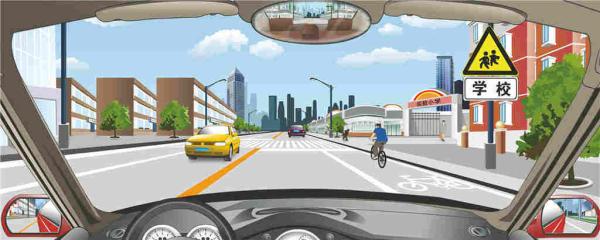
A、Use emergency braking
B、Slow down and take a look
C、Sound the horn intermittently
D、Prepare to bypass
Answer:B
9、When there is no bondage for rescuing a wounded person, towels, handkerchiefs, bed sheets and stockings can be used for dressing.
Answer:Y
10、Turning on the high-beam is an effective way to improve visibility in fog weather.
Answer:N
11、When driving in rain and encountering pedestrians with umbrellas or wearing raincoats, what should be done by motor vehicle drivers in order to yield?
A、Drive at a normal speed
B、Sound the horn to alert when approaching the pedestrians
C、Speed up and bypass on the left
D、Reduce speed and sound the horn in advance
Answer:D
12、What is the meaning of this sign?
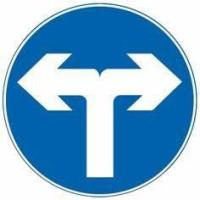
A、No left turn
B、Leftt and right turn
C、No leftt and right turn
D、No right turn
Answer:B
13、When removing a wounded person suffering spinal fracture, the rescuer should never help the wounded person to walk. He may be carried away with a soft stretcher.
Answer:N
14、What should the driver do when the motor vehicle encounters this situation in front of a school?
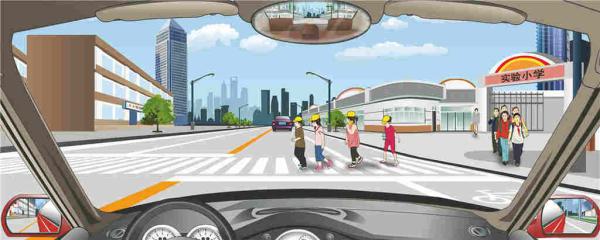
A、Bypass before the queue
B、Slow down and pass slowl
C、Stop promptly and yield
D、Go through in the spaces between the queues
Answer:C
15、Which of the following is an inflammable solid material?
A、Matches
B、Fireworks
C、Calcium carbide
D、Explosives
Answer:A
16、What is the meaning of this sign?
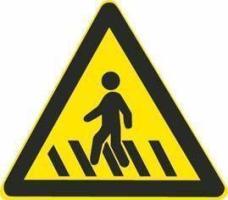
A、Speed up when the driver can not see the pedestrians
B、Speed up
C、There is a crosswalk ahead.
D、Keep driving at the same speed when you can not see the pedestrians
Answer:C
17、What is the meaning of this sign?
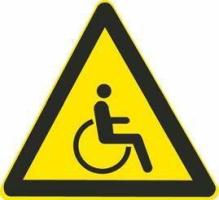
A、Exit and entry for disabled people
B、Watch for disabled people
C、Rest area for disabled people
D、Special passage for disabled people
Answer:B
18、How to reduce speed or stop when driving on a road covered with snow and ice?
A、Take full advantage of driving brake
B、Take full advantage of the control power from engine
C、Take full advantage of parking brake
D、Take full advantage of speed retarder
Answer:B
19、When finding a tire burst on the road, the driver should gently depress the brake pedal, reduce speed and stop the vehicle slowly.
Answer:Y
20、When encountering a school bus which stops at the right roadside and students are embarking or disembarking, what should motor vehicle drivers do?
A、If there is only one motor vehicle lane in each direction, motor vehicle drivers behind the bus should stop and wait.
B、If there are two motor vehicle lanes in each direction, motor vehicle drivers in the left lane behind the bus may overtake the bus at a lower speed
C、If there are three motor vehicle lanes in each direction, motor vehicle drivers in the middle lane behind the bus should stop and wait
D、If there are three motor vehicle lanes in each direction, motor vehicle drivers in the left lane behind the bus may pass at a lower speed
Answer:ACD
21、When passing a sharp curve, motor vehicle drivers may overtake if there are few other vehicles on the road.
Answer:N
22、When driving on road sections where safe sight distance is affected, such as the top of a ramp, what should drivers do to ensure safety?
A、Rush through
B、Use hazard lamp
C、Cut speed and sound the horn
D、Drive at will
Answer:C
23、What is the meaning of this sign?
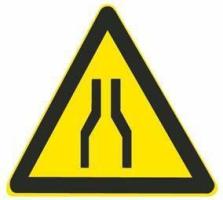
A、Road narrows on both sides
B、Road narrows on the right side
C、Road narrows on the left side
D、Bridge narrows
Answer:A
24、Which lamp should be turned on when motor vehicles pass through a road section at night where the street light condition is good?
A、Front and rear fog lamps
B、Low-beam
C、High-beam
D、Hazard lamp
Answer:B
25、What is the meaning of this sign?
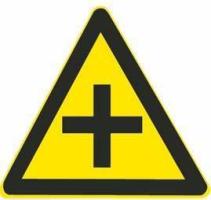
A、Intersection
B、Ring intersection
C、T-shaped intersection
D、Y-shaped intersection
Answer:A
26、It is not safe for a female driver to wear high heels to drive a vehicle.
Answer:Y
27、When a motorcycle reaches a muddy or burst-and-muddy section, the driver should stop, observe and select the level and solid section or the section with vehicle tracks.
Answer:Y
28、When a wounded person is unable to get off the vehicle by himself, he should be removed from the vehicle so as to avoid a secondary injury.
Answer:Y
29、When approaching another vehicle at night, why should the driver alternate between high-and-low-beam at a distance more than 150 meters?
A、Warn each other before passing
B、Driving habit
C、Easy to observe the situation ahead from either side
D、Courtesy
Answer:C
30、Under such circumstances, the driver should stop the vehicle and yield to pedestrians.
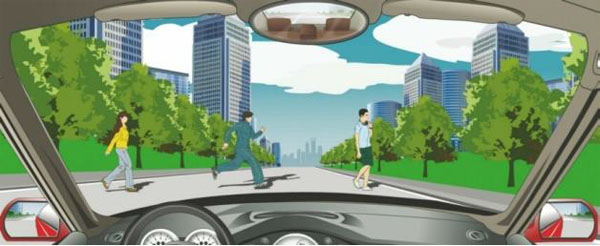
Answer:Y
31、When there is bleeding at the bone fracture of a wounded person, the first thing to do is to fix the wounded part in position, then stop the bleeding and dress the wound.
Answer:N
32、When carrying the wounded persons in coma or in danger of suffocation, they should lie face up.
Answer:N
33、What is the meaning of this sign?
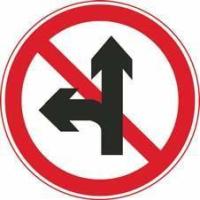
A、No going straight and no changing to left lane
B、No going straight and no left turn
C、Allowed to go straight and turn left
D、No going straight and no right turn
Answer:B
34、What is the meaning of this sign?
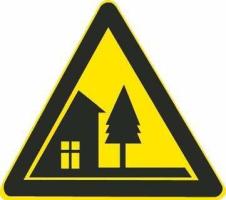
A、Watch for pedestrians
B、Crosswalk
C、Village or town
D、Primary school
Answer:C
35、When a motor vehicle moves through water, the driver should try to maintain a constant speed and sufficient power and pass through without stopping.
Answer:Y
36、When driving, the driver should yield to _______.
A、Ambulance
B、Fire engine
C、School bus
D、Police car
Answer:ABCD
37、What is the meaning of this sign?
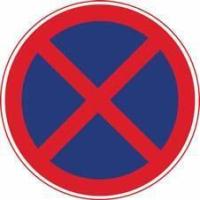
A、Stopping temporarily is allowed
B、Long stopping is allowed
C、No long stopping
D、No stopping
Answer:D
38、When a motor vehicle passes over an inundated road drivers should change to a high gear and pass rapidly.
Answer:N
39、What should the driver do if he/she encounters pedestrians in this situation at an intersection?
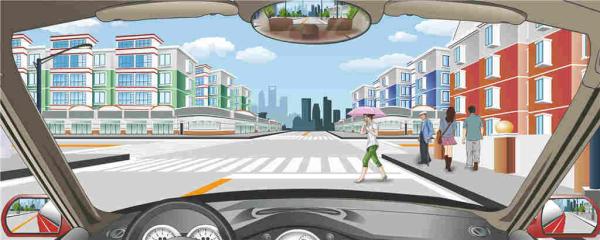
A、Slow down promptly and stop to yield
B、Sound the horn to warn the pedestrians to yield
C、Speed up and pass in front of the pedestrians
D、Turn on the headlamps to warn the pedestrians to yield
Answer:A
40、When driving in icy and snowy weather, because of the reduction of the stability, it is easy for the wheels to race or slip when rapidly speeding up.
Answer:Y
41、What should the driver do when the motor vehicle counters this situation?
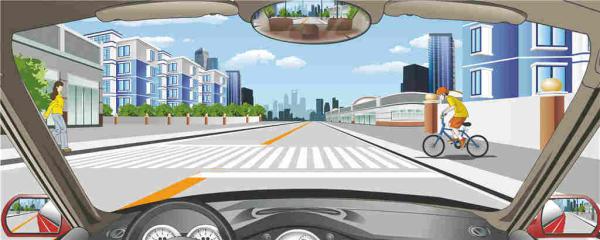
A、Sound the horn continuously to warn
B、Speed up and bypass from the front
C、Slow down when encountering any risks
D、Slow down voluntarily and yield
Answer:D
42、What is the meaning of this sign?
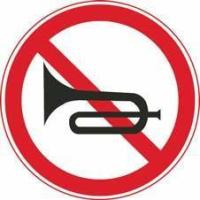
A、No long time honking
B、Honk discontinuously
C、Reduce speed and honk
D、No honking
Answer:D
43、When the tire pressure is too low, what will happen if the tire changes its shape in waves and increases in temperature due to fast movement?
A、Unstable tire pressure
B、Even lower tire pressure
C、Driving resistance increases
D、Tire burst
Answer:D
44、When encountering an obstacle on one side of the road, what should vehicles do as they approach each other?
A、The vehicle not encountering an obstacle should Yield to the other vehicle
B、The slower vehicle should yield to the faster
C、The vehicle encountering an obstacle should yield to the other vehicle
D、The faster vehicle should yield to the slower
Answer:C
45、How to ensure motor vehicles have sufficient power when driving uphill?
A、Downshift before reducing speed
B、Downshift after reducing speed
C、Downshift when the speed is excessively low
D、Downshift to the fullest extent
Answer:A
46、How should lamps be used by the motor vehicle driver who follows a vehicle on a road section at night where he street light condition is good?
A、Turn off the headlamp
B、Use high-beam
C、Turn off all lamps
D、Use low-beam
Answer:D
47、When driving a motorcycle, the driver may wear slippers for the sake of safety.
Answer:N
48、What are the driving behaviors that cause accidents when a motor vehicle turns to a turning road?
A、Vehicles occupy opposite lanes
B、Turn the steering wheel sharply in the bend
C、Do not slow down before turning
D、Motor vehicles drive on the right side of the road
Answer:ABC
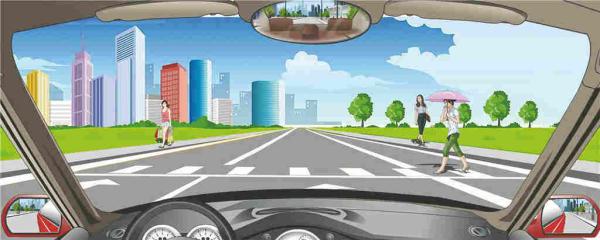
49、Under such circumstances, motor vehicle drivers may sound the horn at the proper time and speed up to pass through.
Answer:N
50、In which of the following ways can motor vehicles avoid a tire burst?
A、Lowering tire pressure
B、Checking tires regularly
C、Removing foreign matters from the tire tread grooves timely
D、Replacing the tires that have cracks or deep cuts
Answer:BCD
- 衡阳摩托车驾照考试科目四英语题 相关内容
- 揭阳摩托车考试英语理论试题 眉山摩托车驾照考试科目一英语题 江西摩托车科目四英文题库 防城港摩托车科目四英文题库 六盘水摩托车驾照考试科目四英语题 延安摩托车驾考英语手机APP 石家庄摩托车科目四英文题库 佳木斯摩托车驾照考试科目一英语题 青岛摩托车驾照理论试题英语版 沧州摩托车驾照考试英文题库 黄南摩托车驾照考试科目四英语题 上海摩托车驾照考试科目一英语题 南昌摩托车驾照考试英文题库 张家口外国人考摩托车驾照 天水用英文考摩托车驾驶证 滁州摩托车科目四英文题库
Copyright © 2025 驾考 版权所有