
- 科目一考试
- 顺序练习
- 随机练习
- 强化练习
- 模拟考试
- 科目四考试
- 顺序练习
- 随机练习
- 强化练习
- 模拟考试
- 外国语言版题库
- 英语题库
- 德语题库
- 韩语题库
- 日语题库
- 俄语题库
- 法语题库
- 西班牙语题库
- 阿拉伯语题库
- 摩托车英文题
广东科目四英文版练习题库
-
1、Under such circumstances, the motor vehicle is allowed to overtake.
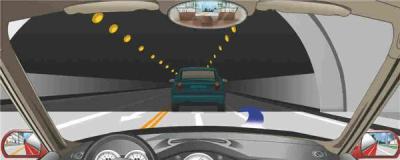
Answer:N
2、After a traffic accident, what is the most effective measure to prevent secondary accidents?
A、Evacuate all passengers
B、Turn on the hazard lamps
C、Mark the original place of the injured persons
D、Properly place the danger warning sign
Answer:ABD
3、Which one of following ways is the safest when driving a motor vehicle on this road?
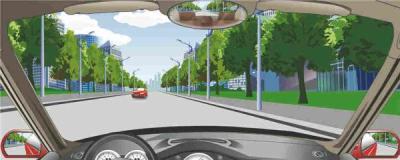
A、Driving along the central line of the road
B、Driving along the right side of the road
C、Driving at the middle of the road
D、Driving along the left side of the road
Answer:B
4、When encountering a road like this, motor vehicle drivers should downshift in advance and- control speed by braking the engine.
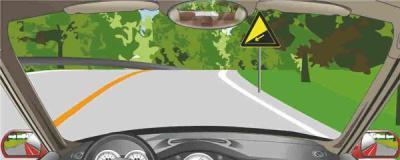
Answer:Y
5、The driver should turn left by the left side of the intersection central point.
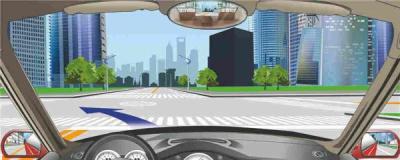
Answer:Y
6、The sign in front gives information about the direction of road exits.
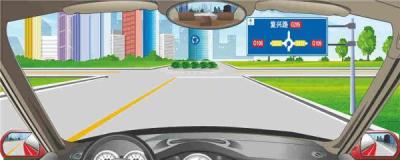
Answer:Y
7、When such circumstances happen suddenly, what should the driver do?
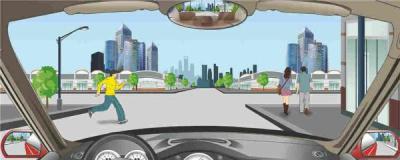
A、Reduce speed or stop to yield
B、Bypass in front of the pedestrians
C、Continuously sound the horn to alert the pedestrians
D、Bypass from behind the pedestrians
Answer:A
8、Once inflammable gas causes a fire disaster, it should be put out with water in good time.
Answer:N
9、The sign on the right warns of a guarded crossing 150 meters ahead.
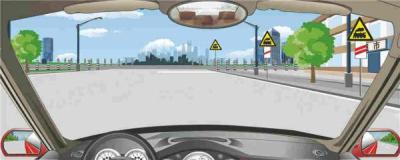
Answer:N
10、Which one of the following is a safe way for motor vehicles to converge into an intersection marked with this sign?
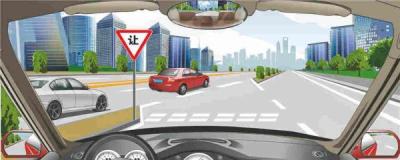
A、Speeding up and driving into the traffic flow directly
B、Driving into the traffic flow behind the gray car on the main road
C、Driving into the traffic flow from the front of the red car on the main road
D、Turning on the indicator and driving into the flow directly
Answer:B
11、What should be done when drivers evade an emergency on the highway?
A、Take braking measures to reduce speed
B、Yield by turning to the left side
C、Evade by swiftly turning the steering wheel
D、Yield by turning to the right side
Answer:A
12、When the vehicle engine catches fire, what should the driver do first?
A、Turn off the engine as soon as possible
B、Extinguish the fire with water
C、Open the hood to extinguish the fire
D、Extinguish the fire from the leeward direction
Answer:A
13、When rescuing a wounded person who has been poisoned by toxic gas, the first measure is to send him/her to a place with fresh air so that he/she will not continue to be poisoned.
Answer:Y
14、What should be given attention when setting off in this weather?
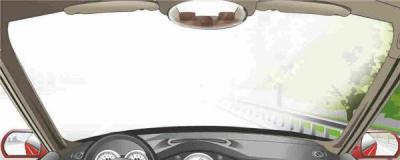
A、Turning on the high-beam
B、Turning on the front and rear fog lamps
C、Turning on the left indicator only
D、Continuously sounding the horn
Answer:B
15、The sign on the right indicates a T-shaped intersection head.
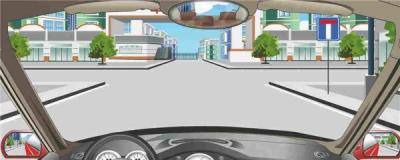
Answer:N
16、When a motor vehicle encounters an emergency on an expressway, the driver should not swiftly turn the steering wheel to evade.
Answer:Y
17、What should be done by drivers in order to drive safely on the road in this condition?
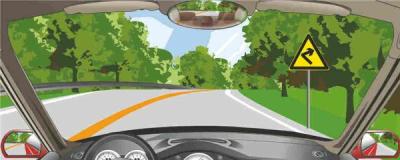
A、Make a large turn on the left side of the road
B、Make a turn on the central line of the curve
C、Make a small turn on the right side of the road
D、Make a turn by borrowing the opposite lane
Answer:C
18、Drivers may turn left when traffic police give these hand signals.
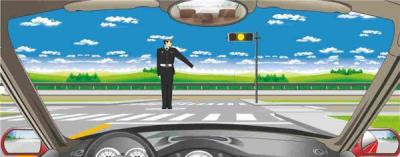
Answer:N
19、The sign on the right warns of a guarded railway intersection ahead.
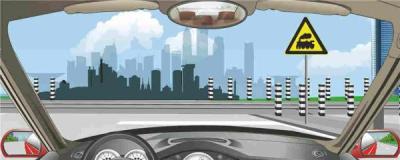
Answer:N
20、Drivers should drive at a lower speed when traffic police give these hand signals.
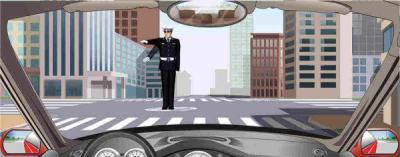
Answer:Y
21、The stop-and-yield line at the intersection ahead indicates that vehicle drivers should reduce speed and give the right of way to vehicles on the trunk road.
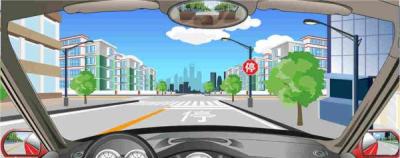
Answer:N
22、The sign on the right indicates right-hand turn only.
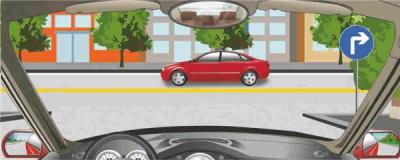
Answer:Y
23、What should the driver do when a motor vehicle encounters this situation on a mountain road?
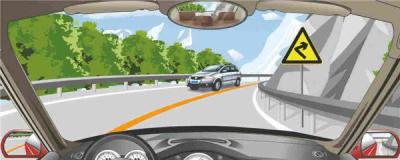
A、Stick to respective lanes and speed up to approach each other
B、Drive close to the central line of the road
C、Retain the normal speed
D、Slow down
Answer:D
24、vehicles to pass an intersection marked with this sign?
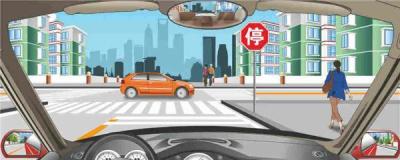
A、Stopping and observing the traffic situation around the intersection
B、Approaching the intersection by speeding up
C、Approaching the intersection at a reduced speed
D、Observing the traffic situation on the left rear side
Answer:A
25、When a wounded person is unable to get off the vehicle by himself/herself, he/she should be removed from the vehicle so as to avoid a secondary injury.
Answer:Y
26、vehicles may stop temporarily in this area.
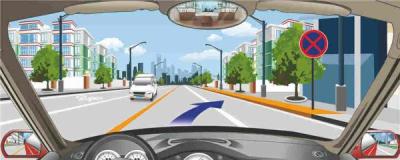
Answer:N
27、The sign on the right indicates an emergency shield 100 meters ahead.
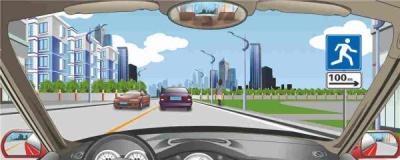
Answer:Y
28、When driving on a damp and slippery road, drivers should avoid using the emergency brake to his/her best ability.
Answer:Y
29、The sign in front indicates the name and number of the highway.
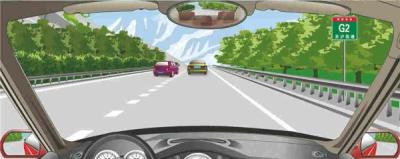
Answer:Y
30、Drivers may turn left when traffic police give these hand signals.
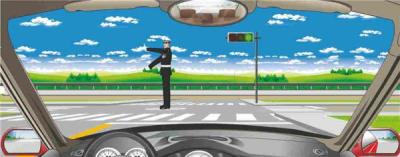
Answer:Y
31、When passing another vehicle on a foggy day, what should drivers do?
A、Slow down and pass slowly
B、Maintain a safety distance
C、Properly use lamps
D、Drive at a high speed
Answer:ABC
32、These traffic police signals indicate that passing is prohibited.
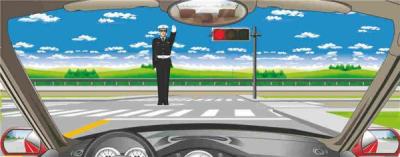
Answer:Y
33、How should the driver use vehicle lights when the motor vehicle enters this intersection?
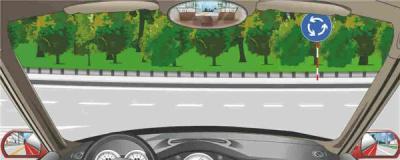
A、Turn on the right-turn indicator
B、Turn on the hazard lamps
C、No need to turn on any indicators
D、Turn on the left indicator
Answer:C
34、What does this sign on the fly-over junction indicate?
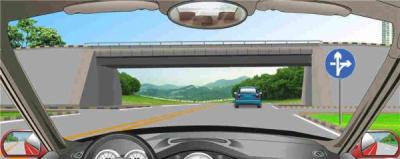
A、Turn right
B、Drive straight or turn left
C、Drive straight or turn right
D、Take a U-turn under bridge
Answer:C
35、When seeing this sign, the driver should slow down promptly.
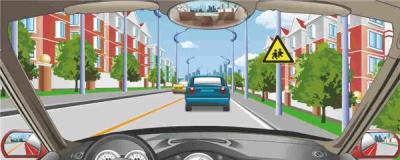
Answer:Y
36、The sign on the left indicates that drivers should stop to take a pass card at the toll station ahead.
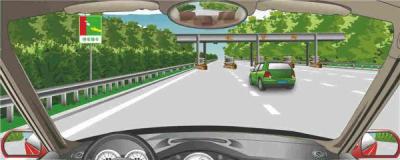
Answer:Y
37、It is safest for a motor vehicle driver to overtake the vehicle in front from its righthand on this kind of road.
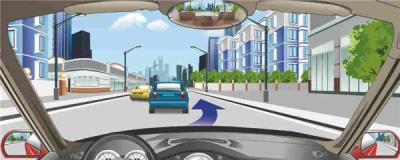
Answer:N
38、A driver should speed up when passing through road sections with this traffic marking.
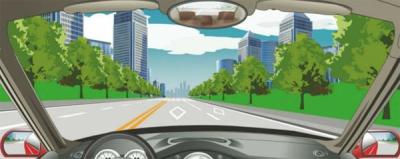
Answer:N
39、The sign in front indicates a 2-kilometer distance from the destination of the highway ahead.
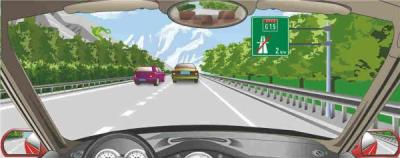
Answer:Y
40、The sign in front indicates that the highway entry is on the right side of the road.
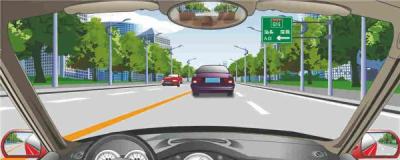
Answer:N
41、When driving in rain and encountering pedestrians with umbrellas or wearing raincoats, what should be done by motor vehicle drivers in order to yield?
A、Drive at a normal speed
B、Sound the horn to alert when approaching the pedestrians
C、Speed up and bypass on the left
D、Reduce speed and sound the horn in advance
Answer:D
42、When approaching another vehicle at night, why should the driver alternate between high-and-low-beam at a distance more than 150 meters?
A、Warn each other before passing
B、Driving habit
C、Easy to observe the situation ahead from either side
D、Courtesy
Answer:C
43、What should the driver pay attention to when the motor vehicle passes a school?
A、Observe the traffic signs and markings
B、Slow down and pass slowly
C、Prohibited from sounding the horn
D、Pass rapidly
Answer:ABC
44、The sign on the right warns of a widened right-hand road ahead.
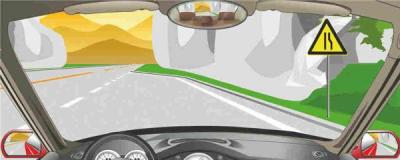
Answer:N
45、When a vehicle encounters a strong side wind, the driver should firmly hold the steering wheel and press the brake urgently if he feels the vehicle deviates horizontally from the normal direction.
Answer:N
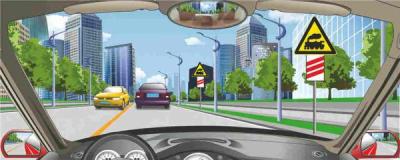
46、The sign on the right warns of an unguarded railway crossing 150 meters ahead.
Answer:Y
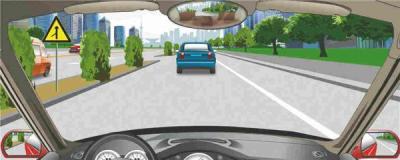
47、The sign on the left warns that there are vehicles converging into the intersection on the left.
Answer:Y
48、When driving on an expressway, drivers should not frequently change lanes.
Answer:Y
49、Motor vehicles are not allowed to reverse in a tunnel.
Answer:Y
50、When a wounded person suffering burns is thirsty, he should only drink plain boiled water.
Answer:N
- 广东科目四英文版练习题库 相关内容
- 福建科目四英文版在哪里找 上海英语c1科目四考试 湖北关于考驾照的英语 西藏驾考有英文版吗 老外驾考电脑版 吉林考驾照科目一有英文版 山东科目四英文版题目 老外驾考苹果手机app 西藏2025英文驾考PDF题库 新疆驾考有英文版吗 海南2025科目四考试英文 江西外国人考驾照英文模拟试题 西藏2025科目四考题英文版 福建外国人考驾照科目四 海南英文版驾考 陕西英文版驾考
Copyright © 2025 驾考 版权所有