
- 科目一考试
- 顺序练习
- 随机练习
- 强化练习
- 模拟考试
- 科目四考试
- 顺序练习
- 随机练习
- 强化练习
- 模拟考试
- 外国语言版题库
- 英语题库
- 德语题库
- 韩语题库
- 日语题库
- 俄语题库
- 法语题库
- 西班牙语题库
- 阿拉伯语题库
- 摩托车英文题
驾照科目四英文版题库
-
1、Which one of the following statements is correct in this situation?
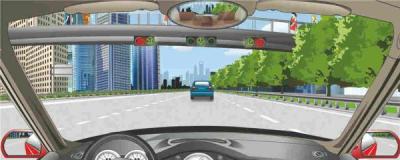
A、Vehicles are prohibited from passing in the lanes on either side
B、Move into the lane on either side at a reduced speed
C、Move into the lane on the right side
D、Move into the lane on either side at an increased speed
Answer:A
2、When driving on an expressway, drivers should not frequently change lanes.
Answer:Y
3、The braking distance will be shortened greatly when the motor vehicle is equipped with ABS brakes.
Answer:N
4、When rescuing a wounded person suffering from spinal fracture, which of the following measuresshould be taken?
A、Prevent heat loss
B、Rescue the wounded person with a soft stretcher
C、Keep the wounded part in position with a sling
D、Help the wounded person when walking
Answer:C
5、What should the driver pay attention to when the motor vehicle on the main road approaches a junction with a feeder road?
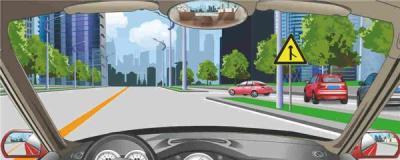
A、Slow down in advance and pay attention to other motor vehicles
B、Maintain the normal speed
C、Sound the horn and pass rapidly
D、Speed up and pass rapidly
Answer:A
6、Which one of following ways is the safest when driving a motor vehicle on this road?
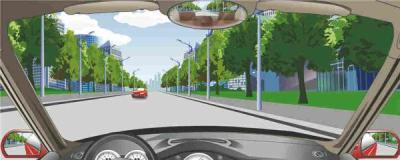
A、Driving along the central line of the road
B、Driving along the right side of the road
C、Driving at the middle of the road
D、Driving along the left side of the road
Answer:B
7、In such circumstances, which one of the following statements is the safest measure for a motor vehicle driver to take?
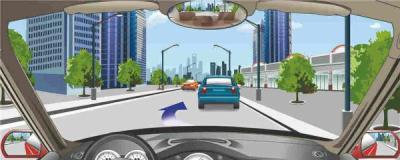
A、Accelerate to overtake the vehicle in front as soon as possibl
B、Voluntarily reduce speed and refrain from overtaking
C、Sound the horn to warn the vehicle in front to yield
D、Turn on the headlamp to warn the oncoming vehicle to yield
Answer:B
8、When encountering such pedestrians, what should motor vehicle drivers do?
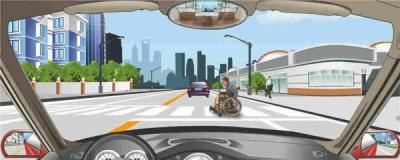
A、Bypass in front of the pedestrians
B、Bypass from behind the pedestrians
C、Sound the horn to alert the pedestrians
D、Voluntarily stop and yield
Answer:D
9、If a motor vehicle enters a driving lane under this situation, what should the driver do?
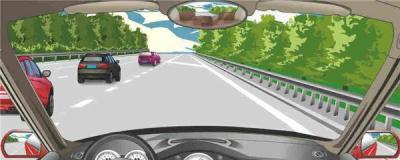
A、Control the driving speed and follow the last vehicle
B、Speed up and cut in front of the second vehicl
C、Speed up and cut in front of the first vehicle
D、Cut in between two vehicles at will
Answer:A
10、The sign in the red circle indicates that the left road is only for small vehicles.
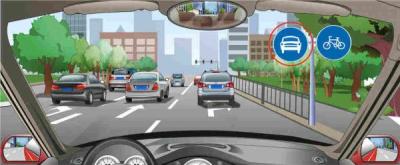
Answer:N
11、What should be done by the driver who intends to overtake but finds that the vehicle in front is also overtaking?
A、Following the vehicle in front closely and finding a chance to overtake it
B、Accelerating to overtake forcefully
C、Continuously sounding the horn to urge the vehicle in front to yield
D、Refraining from overtaking and letting the vehicle in front overtake first
Answer:D
12、When driving on a long downhill road, which is the best way to control the speed?
A、Coast in neutral gear
B、Take a low gear
C、Depress the clutch
D、Pull up the handbrake
Answer:B
13、Drivers may go straight and pass through when traffic police give these hand signals
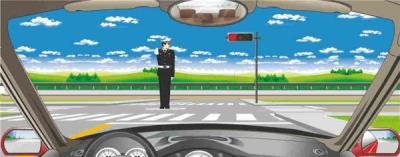
Answer:N
14、Gun powder, explosives and detonating powder belong to which of the following dangerous chemicals?
A、Oxidizing materials
B、Inflammable solid materials
C、Explosives
D、Self-igniting articles
Answer:C
15、As shown in this picture, before driving to the intersection, vehicles are not allowed to change lanes by crossing the solid white line.
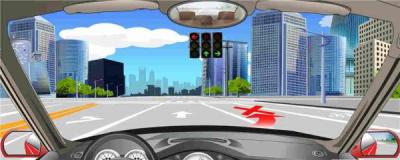
Answer:Y
16、When a motor vehicle passes over an inundated road, what should the driver do for safe driving?
A、Slow down and drive with special care
B、Speed up and pass rapidly
C、Maintain a normal speed and pass through
D、Change to a low gear and speed up to pass
Answer:A
17、Which of the following is a bad driving habit when the vehicle in front is moving slowly in a queue?
A、Cutting in and rushing to pass
B、Not overtaking other vehicles forcefully
C、Stop or pass alternatively
D、Do not occupy on a non-motor vehicle lane
Answer:A
18、When a motor vehicle enters an expressway from the ramp, which of the following lamps should be turned on?
A、The left-turn indicator
B、The right-turn indicator
C、The hazard warning lamp
D、The headlamp
Answer:A
19、What should the motor vehicle driver do when the motor vehicle encounters the crosswalk in thissituation?
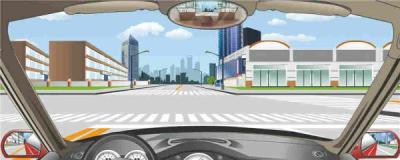
A、Slow down and pass
B、Speed up and pass
C、Sound the horn and pass
D、Stop immediately
Answer:A
20、Drivers may cross these central solid and broken yellow lines when overtaking.
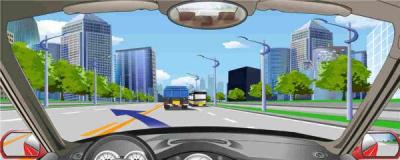
Answer:N
21、How should lamps be used when setting off in this situation?
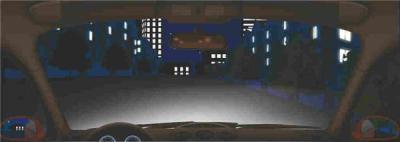
A、Turn on the high-beam
B、Turn on the left indicator only
C、Turn on the left indicator and low-beam
D、Turn on hazard lamp
Answer:C
22、When the tire pressure is too low, what will happen if the tire changes its shape in waves and increases in temperature due to fast movement?
A、Unstable tire pressure
B、Even lower tire pressure
C、Driving resistance increases
D、Tire burst
Answer:D
23、What's the meaning of the sign on the right?
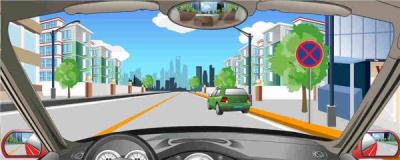
A、Parking prohibited
B、Temporary parking permitted
C、Picking up or dropping off passengers permitted
D、Stopping to unload permitted
Answer:A
24、When a wounded person suffering burns is thirsty he/she may drink a small quantity of lightly salty water.
Answer:Y
25、The sign in front is an advance announcement of the directions led by the interchange.
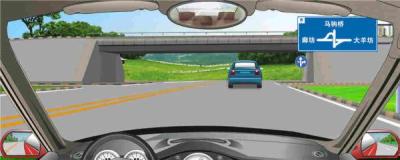
Answer:Y
26、The sign in front is an advance announcement of famous places and distances en route.
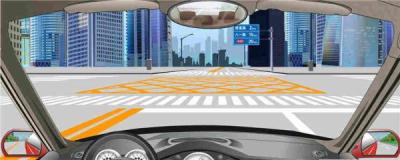
Answer:Y
27、When a motor vehicle breaks down on a mountain road, what should the driver do?
A、Park on a downhill section
B、Park on an uphill section
C、Park on a gentle section of the mountain road
D、Park on the crest of a slope
Answer:C
28、The driver should take emergency evasion measures when the motor vehicle suddenly self-ignites. Which ones of the following methods are correct?
A、Spray clean water to extinguish the fire
B、Report to the police
C、Use the spare fire extinguisher in the vehicle to put out the fire
D、Set up a warning sign in the oncoming direction
Answer:BCD
29、Before a motor vehicle enters a tunnel, the driver should adjust the speed in accordance with the indication of the traffic sign at the entrance of the tunnel.
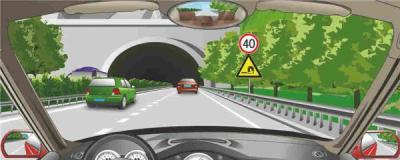
Answer:Y
30、What's the most frequent problem for driving on a muddy road?
A、High resistance force
B、Sideways slide
C、The motor vehicle bumps
D、Steering failure
Answer:B
31、When driving in a strong wind, drivers should abruptly turn the steering wheel to return to the original direction if they feel the vehicle deviates horizontally due to a strong gale.
Answer:N
32、What caused this drivers death in an accident?
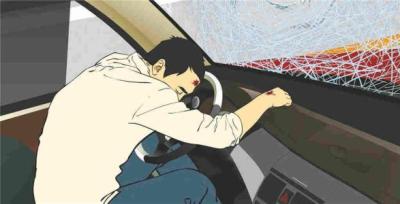
A、Failing to fasten seatbelt
B、Positioned too close to the steering wheel
C、Failing to hold the steering wheel
D、Failing to turn on SRS
Answer:A
33、When encountering a road like this, motor vehicle drivers may make good use of neutral gear to coast.
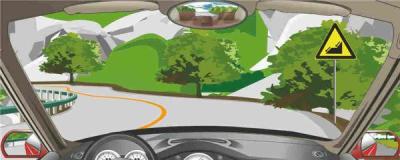
Answer:N
34、When parking for a long time on an upward slope due to breakdown on the road, drivers should use this method to stop up wheels.
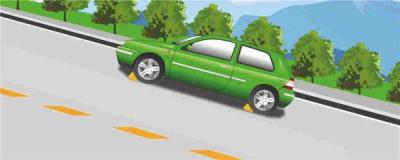
Answer:N
35、Under such circumstances, what should be done by a motor vehicle driver in order to yield out of courtesy?
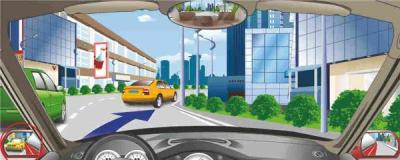
A、Driving at a higher speed
B、Closely following the vehicle in front
C、Driving at a higher speed by the right side
D、Driving at a lower speed by the right side
Answer:D
36、A driver should accelerate in advance to overtake then it is likely to meet with oncoming vehicles.
Answer:N
37、When a motor vehicle stops in snow, which lamp should be turned on?
A、Front and rear fog lamps, clearance lamp and rear position lamp
B、Reverse lamp, clearance lamp and rear position lamp
C、Headlamp, clearance lamp and rear position lamp
D、Hazard lamps, clearance lamp and rear position lamp
Answer:D
38、The sign on the left indicates vehicles are allowed to drive on the section ahead.
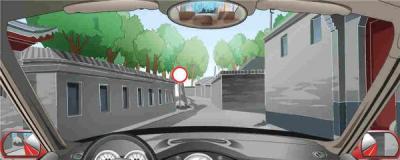
Answer:N
39、The sign in front indicates that vehicles except public buses are not allowed to drive in this lane.
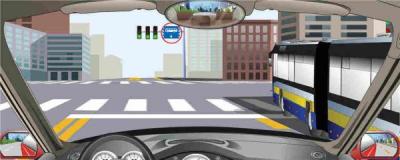
Answer:Y
40、The sign on the right indicates that turning right is not permitted at the intersection ahead.
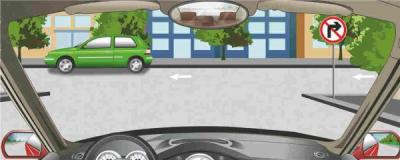
Answer:Y
41、Which one of the following measures is correct when a motor vehicle encounters this situation at night?
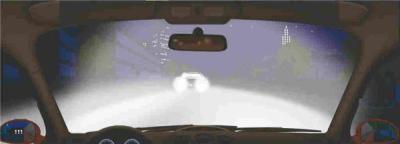
A、Keep driving at a normal speed
B、Drive at an increased speed to avoid light
C、Cut speed or stop to yield
D、Turn on high-beam to reject
Answer:C
42、When a motor vehicle needs to stop for inspection after having an accident on an expressway, where should the driver park?
A、On the far outer lane
B、On the inner lane
C、On the emergency lane
D、In the triangle area on the ramp
Answer:C
43、When a motor vehicle skids sideways on a muddy road, the driver should turn the steering wheel in the direction of the rear wheel skidding to properly adjust the direction.
Answer:Y
44、When such circumstances happen suddenly, what should the driver do?
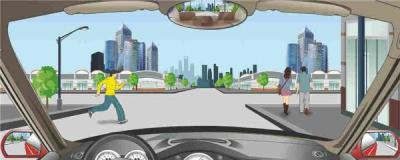
A、Reduce speed or stop to yield
B、Bypass in front of the pedestrians
C、Continuously sound the horn to alert the pedestrians
D、Bypass from behind the pedestrians
Answer:A
45、The diamond-shaped broken line warns that drivers should drive at a lower speed on the road sections ahead.
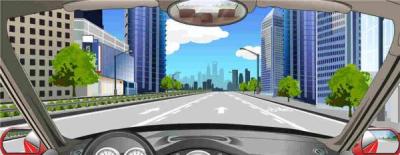
Answer:Y
46、When encountering an emergency on a highway, the driver should not drastically turn to evade.
Answer:Y
47、Drivers may turn left when traffic police give these hand signals.
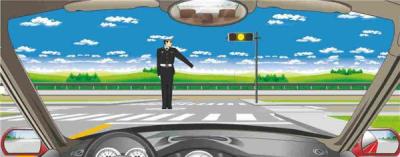
Answer:N
48、After setting off from a roadside, motor vehicle drivers should watch both sides of the road, turn left and drive into the normal lane slowly.
Answer:Y
49、Once inflammable gas causes a fire disaster, it should be put out with water in good time.
Answer:N
50、The sign on the right warns of an unguarded railway crossing 150 meters ahead.
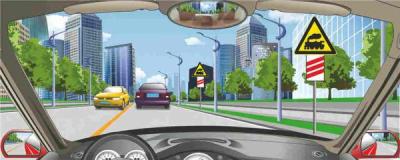
Answer:Y
- 驾照科目四英文版题库 相关内容
- 老外驾考电脑版下载安装最新版 辽宁驾考科目四英语 新疆外国人考驾照科目一 外国驾照考试视频教程全集 内蒙古只认识英文可以考科目四吗 天津2025科目一考试英文 辽宁驾校考试英文版 甘肃驾考科目四英语版书 陕西驾考英文版题库 浙江科目一有英文版吗 外国人驾照考试题库下载安装软件 河南外国人考科目一 英文 云南外国人考驾照科目四 青海科目一有英文版吗 湖北科目四英文版练习题库 陕西科目四英文版
Copyright © 2025 驾考 版权所有