
- 科目一考试
- 顺序练习
- 随机练习
- 强化练习
- 模拟考试
- 科目四考试
- 顺序练习
- 随机练习
- 强化练习
- 模拟考试
- 外国语言版题库
- 英语题库
- 德语题库
- 韩语题库
- 日语题库
- 俄语题库
- 法语题库
- 西班牙语题库
- 阿拉伯语题库
- 摩托车英文题
科目四考试英文版
-
1、Mr. Zhao (with an A2 driving license) drove a large sleeper coach on the No. 219 National Road in Yecheng County. When passing a curve at the spot of 226 kilometers mark by 215 meters on the road, the coach fell into the ravine on one side, killing16 people and injuring 26. What's the main illegal act committed by Mr Zhao?
A、Carrying more passengers than permitted
B、Driving a motor vehicle having failed to accept inspection in time
C、Driving an unpermitted vehicle type
D、Fatigued driving
Answer:C
2、When there is no bandage for rescuing a wounded person, which of the following measures is wrong?
A、Dress the wounds with a handkerchief
B、Dress the wounds with a towe
C、Dress the wounds with cotton clothes
D、Dress the wounds with string
Answer:D
3、Which lamp should be used when motor vehicles pass hrough an intersection at night where there is no traffic light signal?
A、High-beam
B、Low-beam
C、Hazard lamps
D、High-beam and low-beam should be used alternatively
Answer:D
4、A motor vehicle should not pass the level crossing rapidly in this situation.
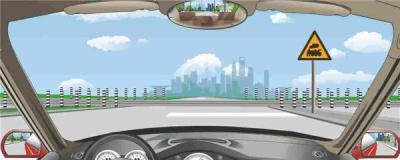
Answer:Y
5、When a motor vehicle approaches the exit of a tunnel the driver should firmly hold the steering wheel to prevent any harmful effects of a strong side wind.
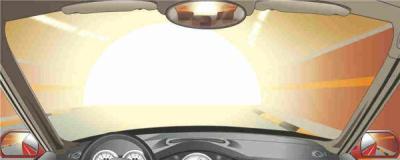
Answer:Y
6、What should be done to keep safe when a motor vehicle driver is overtaking in this condition?
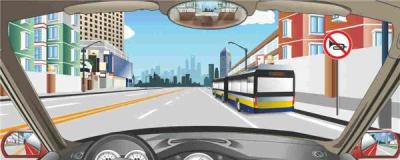
A、Reducing speed and keeping a safe distance
B、Continuously sounding the horn to indicate the vehicle in front
C、Accelerating to pass while keeping a certain distance
D、Overtaking by occupying the opposite lane
Answer:A
7、The sign on the right indicates that vehicles from the primary road have priority.
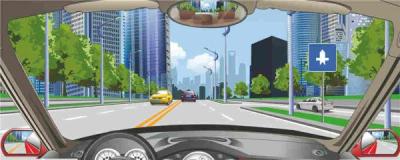
Answer:Y
8、How should lamps be used by the motor vehicle driver who follows a vehicle on a road section where he street light condition is good?
A、Turn off the headlamp
B、Use high-beam
C、Turn off all lamps
D、Use low-beam
Answer:D
9、The sign on the right indicates that overtaking is allowed on the section ahead.
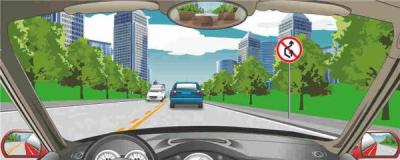
Answer:N
10、What should the driver do to ensure the motor vehicle passes the level crossing safely?
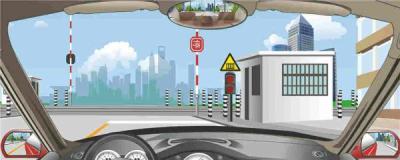
A、Change to neutral gear and slide over
B、Stop, look, and pass
C、Speed up, look and pass rapidly
D、Slow down, look and pass slowly
Answer:C
11、How many kinds of law-breaking acts are displayed in flash 5?
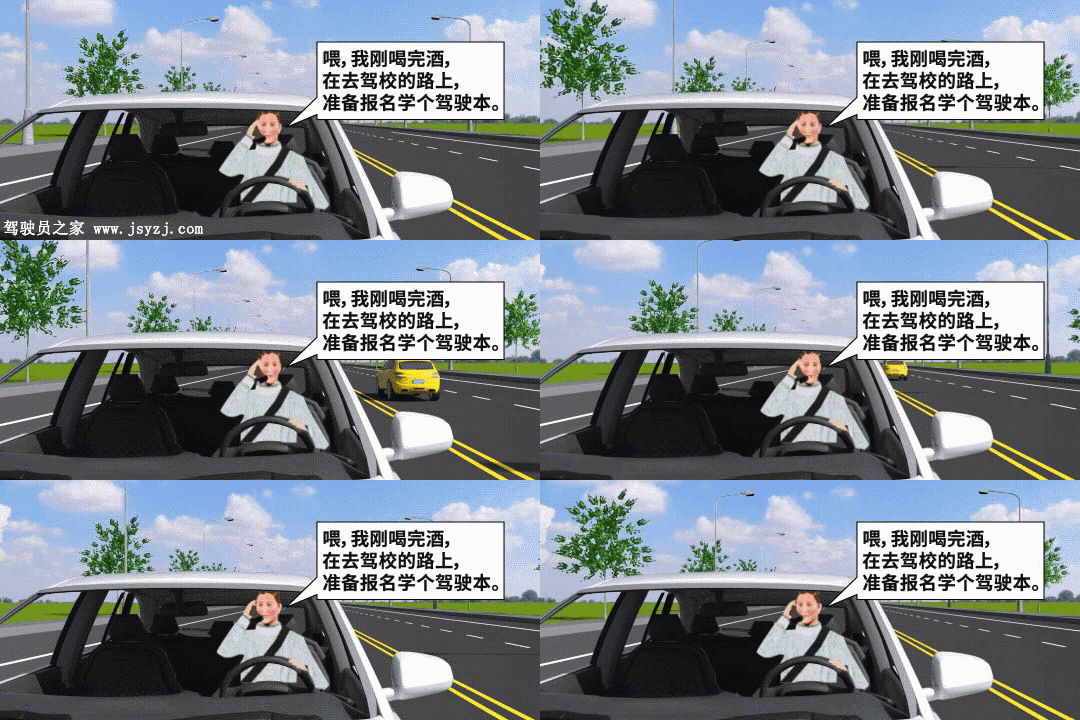
A、One
B、Two
C、Three
D、Four
Answer:C
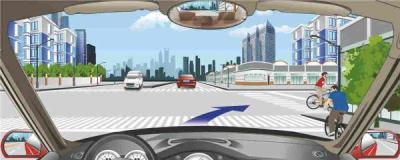
12、The driver should yield to other non-motor vehicles when the motor vehicle turns right at this Intersection.
Answer:Y
13、The white solid line on the right side of the road indicates the boundary of a driving lane and crosswalk.
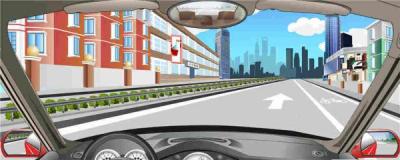
Answer:N
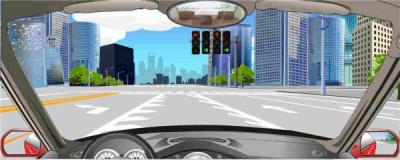
14、Motor vehicles should accelerate when driving into an intersection with this traffic signal.
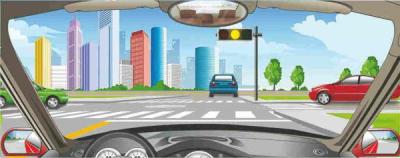
Answer:N
15、When driving into the traffic flow on a main road from a relief road, drivers should speed up.
Answer:N
16、When a motor vehicle deviates from the normal direction due to steering failure and an accident is unavoidable, what should the driver do?
A、Apply emergency brake
B、Immediately steer and adjust
C、Immediately steer to the side where there is no obstacle and evade
D、Immediately steer to the side where there is an obstacle and evade
Answer:A
17、After setting off from the roadside, motor vehicle drivers should speed up as soon as possible and make a sharp left-turn in order to drive into the normal lane.
Answer:N
18、What's the meaning of the sign on the right?
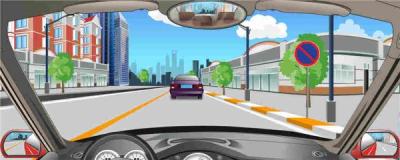
A、Long-time parking permitted
B、Temporary parking permitted
C、Long waiting for passengers permitted
D、No parking
Answer:B
19、Under such circumstances, what should motor vehicle drivers do?
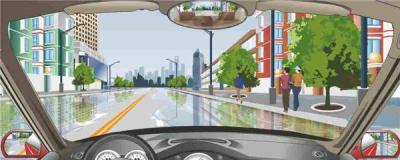
A、Pass slowly at a lower speed
B、Speed up and pass
C、Continuously sound the horn and pass
D、Pass at a normal speed
Answer:A
20、When driving on a snowy day, drivers should follow the tracks on the road before them.
Answer:Y
21、Drivers may turn left when traffic police give these hand signals.
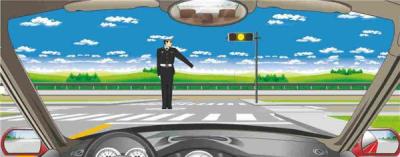
Answer:N
22、When a motor vehicle deviates from the normal direction due to steering failure, what should the driver do?
A、Immediately steer and adjust
B、Reduce speed and stop the vehicle as early as possible
C、Steer to the side where there is no obstacle to evade
D、Steer to the side where there is an obstacle to evade
Answer:B
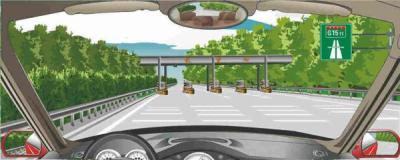
23、The sign on the left indicates that drivers should stop to take a pass card at the toll station ahead.
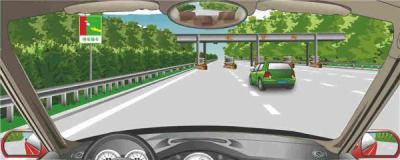
Answer:Y
24、Which one of the following statements is the safest measure for a motor vehicle driver to take on this kind of road?
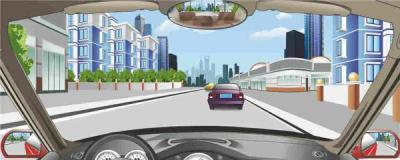
A、Accelerate to overtake the vehicle in front as soon as possible
B、Sound the horn to warn the vehicle in front to vield
C、Follow the vehicle in front and keep a certain distance
D、Overtake the vehicle in front from its righthand
Answer:C
25、If a motor vehicle has an accident on a foggy day and stops on an expressway, which of the following acts is dangerous?
A、Leaving the motor vehicle as soon as possible
B、Standing outside the guardrail as much as possible
C、Turning on the hazard lamp and fog lamp
D、Placing a warning sign behind the vehicle in the oncoming direction
Answer:D
26、What should a motor vehicle driver do to ensure safety when experiencing a breakdown at night?
A、Park in a safe place
B、Turn on hazard lamp
C、Turn on clearance lamp and tail lamp
D、Set up a warning sign in accordance with regulation
Answer:ABCD
27、When approaching the turning point of a road, in which of the following ways will motor vehicle drivers easily cause a traffic accident?
A、Driving ahead by occupying the opposite lane
B、Turning the steering wheel quickly when passing through the curve
C、Not reducing speed until driving onto the curve
D、Driving by the right side
Answer:ABC
28、vehicles to pass an intersection marked with this sign?
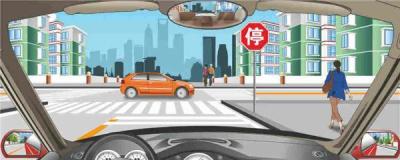
A、Stopping and observing the traffic situation around the intersection
B、Approaching the intersection by speeding up
C、Approaching the intersection at a reduced speed
D、Observing the traffic situation on the left rear side
Answer:A
29、When finding a tire burst on the road, the driver should use emergency braking while controlling the direction of the vehicle at the same time to stop the vehicle qulckly.
Answer:N
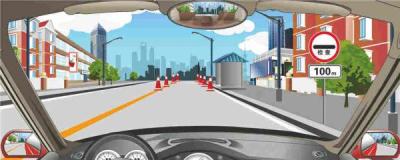
30、The sign on the right indicates an inspection station 100 meters ahead.
Answer:Y
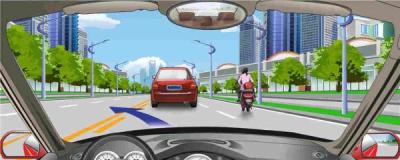
31、Drivers may temporarily cross these central broken and solid yellow lines when overtaking.
Answer:Y
32、If a motor vehicle breaks down or causes a traffic accident on the expressway and cannot run normally the vehicle may be towed by any accompanying motor vehicles.
Answer:N
33、When a motor vehicle slides sideways on a road covered by ice and snow, the driver should violently turn the steering wheel to adjust the direction.
Answer:N
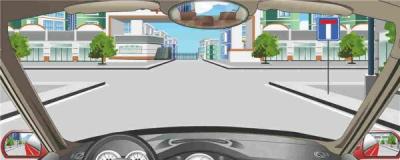
34、The sign on the right indicates a T-shaped intersection head.
Answer:N
35、What should the motor vehicle driver do when the motor vehicle encounters the crosswalk in thissituation?
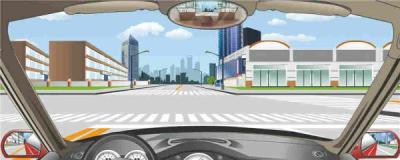
A、Slow down and pass
B、Speed up and pass
C、Sound the horn and pass
D、Stop immediately
Answer:A
36、What should the driver do if he/she wants to turn right at this intersection?
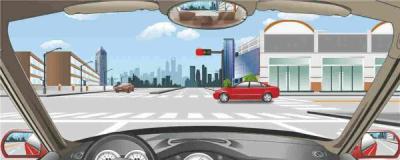
A、Turn right along the straight-going lane
B、Wait behind the stop line
C、Turn right along the right lane
D、Borrow the non-motor vehicle lane and turn right
Answer:C
37、The guide line of a changeable lane indicates that drivers can choose their direction at will.
Answer:N
38、The sign on the right is an advance announcement of the highway destination.
Answer:N
39、As shown in this picture, the intersection guide line is designed to help drivers make turns.
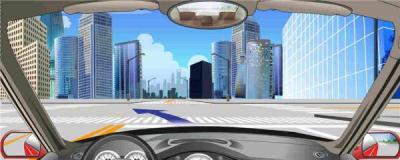
Answer:Y
40、The sign in front indicates a temporary parking lot on the right side of the highway.
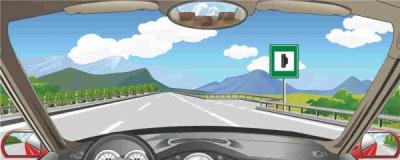
Answer:N
41、Drivers may go straight and pass through when traffic police give these hand signals
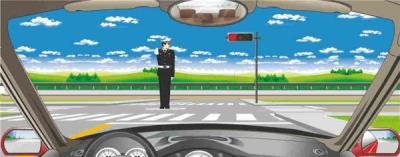
Answer:N
42、When driving, besides paying attention to keeping a safe distance from the vehicle in front, drivers should also be prudent when braking so as to avoid a rear-end collision caused by a vehicle behind.
Answer:Y
43、What should the driver do on this kind of curving mountain road?
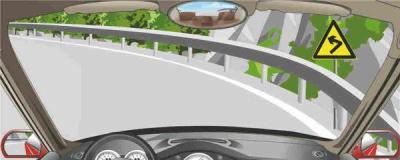
A、Borrow the opposite lane
B、Slow down and drive on the right
C、Stick to the central line of the road
D、Drive close to the right side
Answer:B
44、When a motor vehicle catches fire on the expressway the driver should drive the motor vehicle to the service area or the parking lot to extinguish the fire.
Answer:N
45、What does this sign on the fly-over junction indicate?
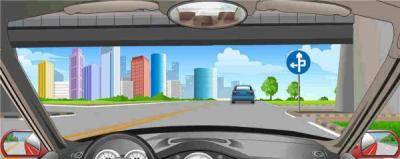
A、Turn right
B、Drive straight or turn left
C、Drive straight or turn right
D、Take a U-turn under bridge
Answer:B
46、The sign on the left indicates vehicles are allowed to drive on the section ahead.
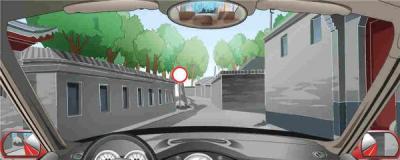
Answer:N
47、When a vehicle encounters a strong side wind, the driver should firmly hold the steering wheel and press the brake urgently if he feels the vehicle deviates horizontally from the normal direction.
Answer:N
48、In which ones of the following ways can motor vehicle drivers effectively prevent braking failure?
A、Maintaining the braking system periodically
B、Checking the free brake pedal travel before driving
C、Using the braking system correctly to avoid brake-fade
D、For vehicles with hydraulic braking system, checking if the brake fluid leaks before driving
Answer:ABCD
49、What should be done by the driver who intends to overtake but finds that the vehicle in front is also overtaking?
A、Following the vehicle in front closely and finding a chance to overtake it
B、Accelerating to overtake forcefully
C、Continuously sounding the horn to urge the vehicle in front to yield
D、Refraining from overtaking and letting the vehicle in front overtake first
Answer:D
50、What should the driver do when seeing these hand signals?
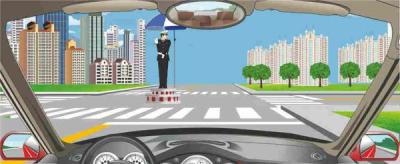
A、Go straight and pass through the intersection
B、Stop and wait
C、Turn right at the intersection
D、Turn left at the intersection
Answer:B
- 科目四考试英文版 相关内容
- 山东驾照考试科目四英文版 吉林2025科目一考试英文 天津英文驾考科目4 北京英文驾考科目4 青海科目一考试英文版 内蒙古驾照科目一英文版题库 内蒙古驾照科目四英文版题库 黑龙江外国人考驾照科目四 上海科目一英文版模拟 山西科目四英文版练习题库 青海驾考英语版PDF题库 福建驾考英语版PDF题库 浙江英文驾考PDF题库 广东驾考英语 西藏驾考英语版PDF题库 老外在中国考驾照怎么考试的
Copyright © 2025 驾考 版权所有