
- 科目一考试
- 顺序练习
- 随机练习
- 强化练习
- 模拟考试
- 科目四考试
- 顺序练习
- 随机练习
- 强化练习
- 模拟考试
- 外国语言版题库
- 英语题库
- 德语题库
- 韩语题库
- 日语题库
- 俄语题库
- 法语题库
- 西班牙语题库
- 阿拉伯语题库
- 摩托车英文题
内蒙古科目四英文版题目
-
1、The sign on the right indicates an inspection station 100 meters ahead.
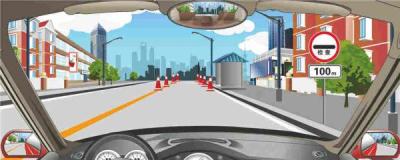
Answer:Y
2、This sign warns of an intersection of railways and highways ahead.
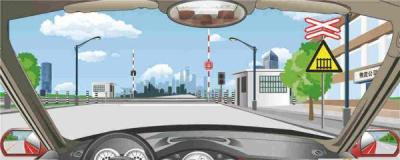
Answer:Y
3、Drivers neednt yield to pedestrians who display such behavior.
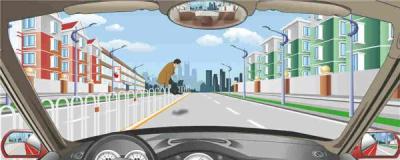
Answer:N
4、The broken white line rectangle area on the right side of the road indicates that long stopping is permitted here.
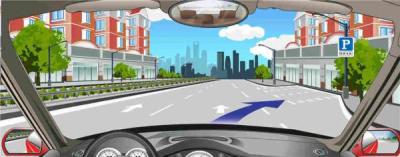
Answer:N
5、What should the driver pay attention to when the motor vehicle passes a school?
A、Observe the traffic signs and markings
B、Slow down and pass slowly
C、Prohibited from sounding the horn
D、Pass rapidly
Answer:ABC
6、The sign on the right warns for disabled people ahead.
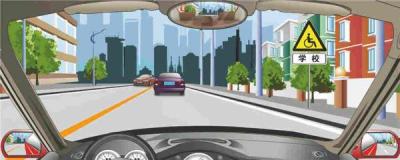
Answer:Y
7、In the condition of low visibility, drivers should turn on the low-beam when setting off
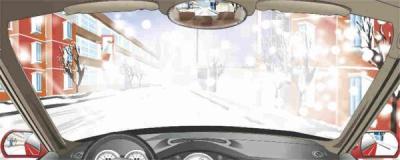
Answer:Y
8、The driver may turn right directly at this intersection.
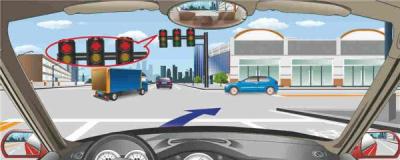
Answer:N
9、The main impact of muddy roads on safe driving is that the wheels may easily spin and skid
Answer:Y
10、Which is the wrong measure to avoid tire burst?
A、Reduce tire pressure
B、Check tires regularly
C、Remove foreign matters from the tire tread grooves timely
D、Replace tires that have cracks or deep cuts
Answer:A
11、For evading an emergency on an expressway, which of the following principles should drivers stick to?
A、Evading vehicles first and objects later
B、Evading people first and objects later
C、Evading vehicles first and people later
D、Evading objects first and people later
Answer:B
12、Under the circumstances shown in the flash, what should the driver do?
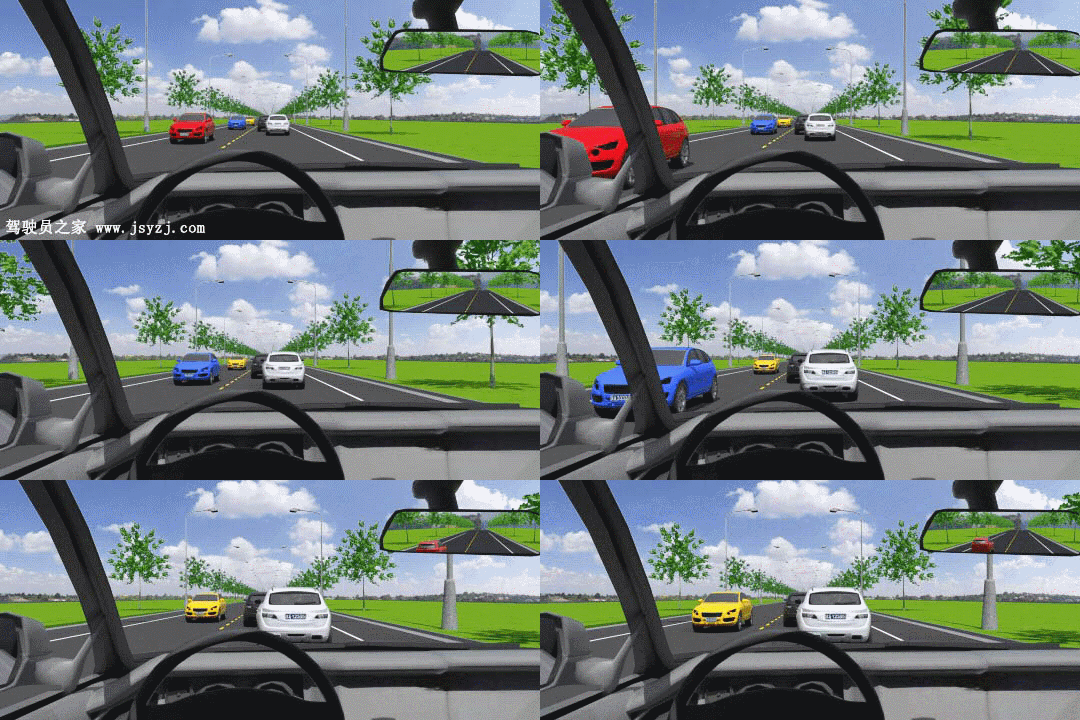
A、Find a chance to overtake the vehicle in front
B、Weave through motor vehicles ahead and pass
C、Reduce speed, stop, and wait in line
D、Sound the horn to urge vehicles in front
Answer:C
13、When driving on this section of the road, drivers should observe closely and prepare to yield to the animals crossing the road.
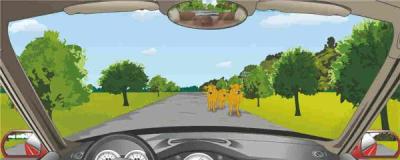
Answer:Y
14、If a motor vehicle breaks down or causes a traffic accident on the expressway and cannot run normally the vehicle may be towed by any accompanying motor vehicles.
Answer:N
15、If a motor vehicle misses an exit on the expressway, the driver may reverse along the road shoulder.
Answer:N
16、As shown in this flash, what should the motor vehicle driver do when encounters this situation?
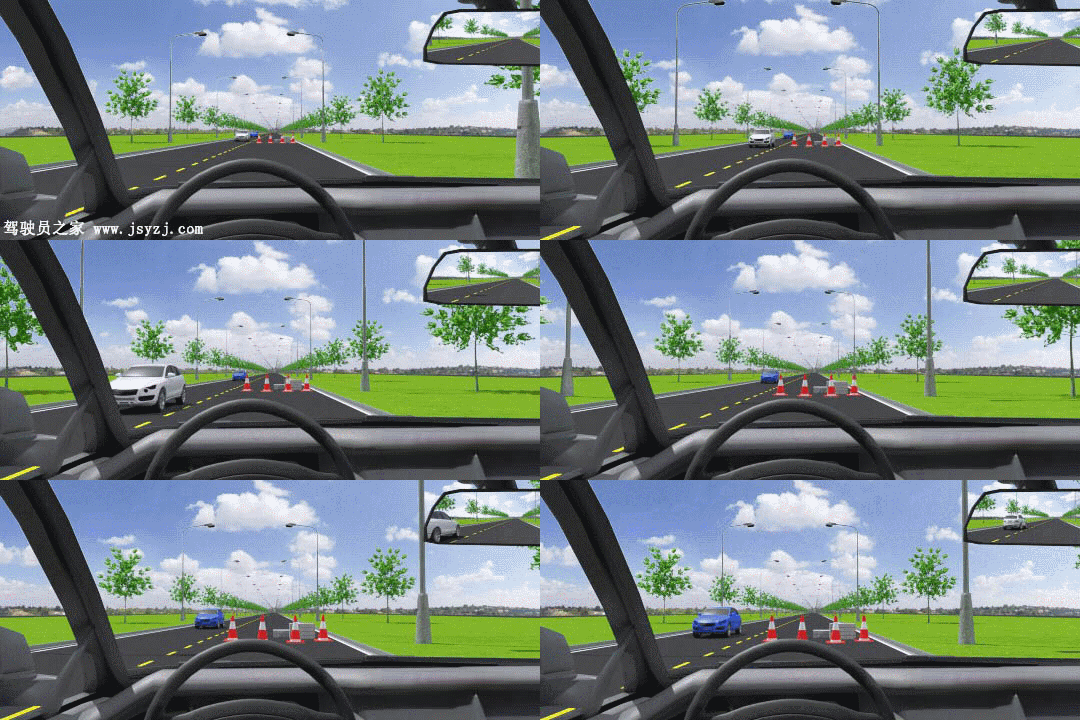
A、Use the mergency brake
B、Turn sharply and pass rapidly
C、Slide over rapidly without encountering collision
D、Stop smoothly
Answer:D
17、Motor vehicle drivers are allowed to overtake on this road section.
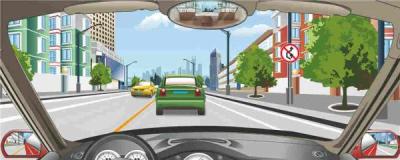
Answer:N
18、When rescuing a wounded person suffering blood loss in an emergency, it is necessary to first stop the bleeding by compression before other treatments are taken in accordance with the conditions of bleeding.
Answer:Y
19、When the engine suddenly stalls on the road, what should the driver do?
A、Stop the vehicle and overhaul it immediately
B、Immediately turn on the hazard lamps
C、Move the vehicle to a place where it will not obstruct the traffic flow
D、Set up a breakdown warning sign
Answer:BCD
20、Motor vehicle drivers may make a U-turn in the broken line area as long as it will not affect the normal traffic flow.
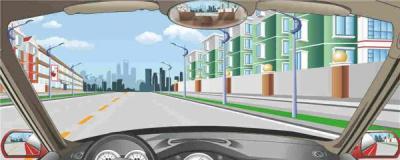
Answer:Y
21、The motor vehicle should slow down and pass slowly in this situation.
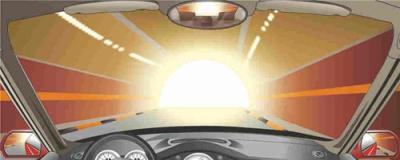
Answer:Y
22、When a tire suddenly bursts on the road, in which of the following ways can motor vehicle drivers keep safe?
A、Applying emergency braking and pulling over
B、Firmly holding the steering wheel and keeping the vehicle going straight
C、Immediately releasing the accelerator pedal
D、Gently depressing the brake pedal
Answer:BCD
23、When braking failure happens to a fast-moving motor vehicle, what should be done by the driver to brake?
A、Continuously depressing the brake pedal
B、Immediately changing to a low gear to reduce speed and using the handbrake
C、Swiftly depressing the clutch pedal
D、Swiftly pulling up the handbrake
Answer:B
24、The road marker on the right side indicates that drivers may overtake by borrowing this road.
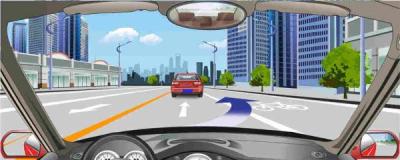
Answer:N
25、The sign in front gives information about the direction of road exits.
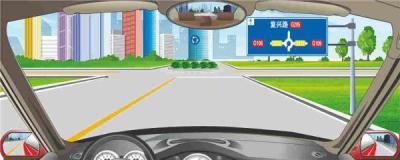
Answer:Y
26、What caused this drivers death in an accident?
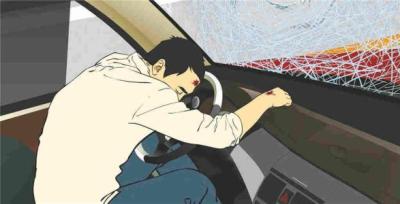
A、Failing to fasten seatbelt
B、Positioned too close to the steering wheel
C、Failing to hold the steering wheel
D、Failing to turn on SRS
Answer:A
27、When driving on an expressway, what should the driver do if he/she has missed an exit but the next exit is far away?
A、Reverse along the road shoulder
B、Continue on
C、Stop immediately
D、Make a U-turn at the current location
Answer:B
28、When finding a tire burst on the road, the driver should use emergency braking while controlling the direction of the vehicle at the same time to stop the vehicle qulckly.
Answer:N
29、How should lamps be used when setting off in this situation?
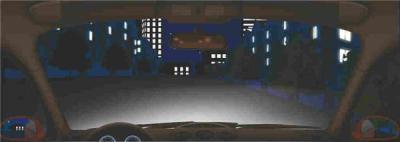
A、Turn on the high-beam
B、Turn on the left indicator only
C、Turn on the left indicator and low-beam
D、Turn on hazard lamp
Answer:C
30、When driving on a muddy road, the driver should hold the steering wheel firmly and speed up to pass through.
Answer:N
31、Mr. Zhou drove a light van (with 22 passengers) on the Bingcha Highway. At the spot of 79 kilometers mark by 150 meters of the highway, the van fell into the valley on one side, killing 12 people and injuring 10. What's the main illegal act committed by Mr.Zhou?
A、Driving a motor vehicle having failed to accept inspection in time
B、Carrying passengers on a freight motor vehicle
C、Speeding
D、Fatigued driving
Answer:B
32、When driving in thick fog causing poor visibility on the expressway, the driver should apply emergency braking to stop at once.
Answer:N
33、The sign on the right warns of children on the section ahead.
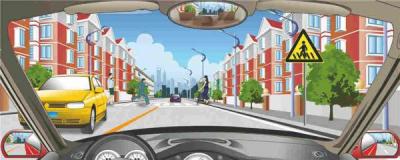
Answer:N
34、The sign on the right warns of an unguarded railway crossing 150 meters ahead.
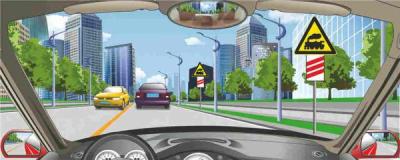
Answer:Y
35、Which lamp should be turned on when motor vehicles pass through a road section at night where the street light condition is good?
A、Front and rear fog lamps
B、Low-beam
C、High-beam
D、Hazard lamp
Answer:B
36、The sign on the left indicates vehicles are allowed to drive on the section ahead.
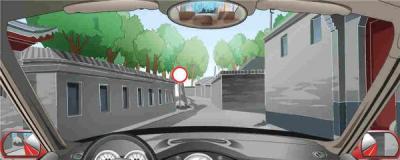
Answer:N
37、The guide arrow on the road surface of this lane indicates that only left and right turns are permitted on the lanes ahead.
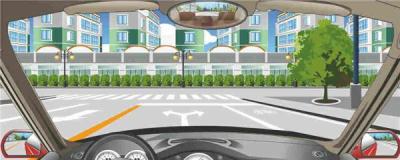
Answer:Y
38、The sign on the right warns of a widened right-hand road ahead.
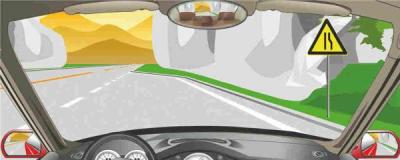
Answer:N
39、When encountering such pedestrians while driving, a longer safety distance should be kept by drivers.
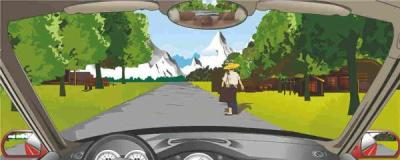
Answer:Y
40、what should motor vehicle drivers do under the circumstances shown in the flash?
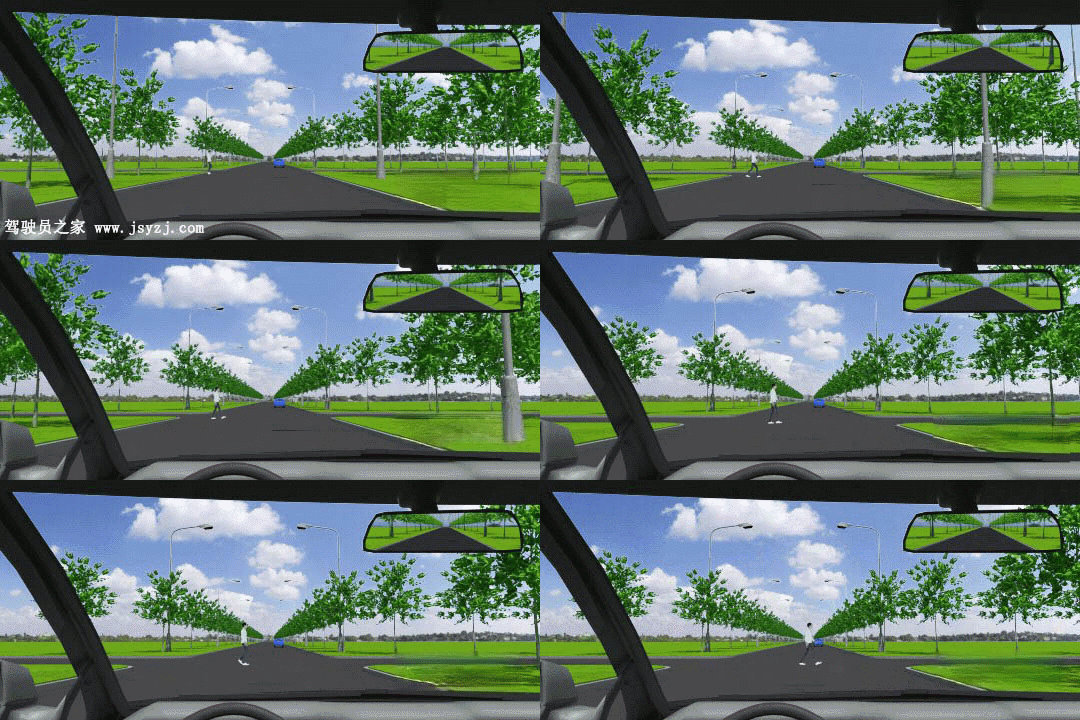
A、Reduce speed or stop to yield
B、Sound the horn to warn the pedestrians to yield
C、Pass before the pedestrians
D、Immediately change to another lane to bypass the pedestrians
Answer:A
41、When finding a tire burst on the road, the driver should gently depress the brake pedal, reduce speed and stop the vehicle slowly.
Answer:Y
42、When driving in a strong wind, drivers should abruptly turn the steering wheel to return to the original direction if they feel the vehicle deviates horizontally due to a strong gale.
Answer:N
43、What should the driver do when the motor vehicle encounters this situation in front of a school?
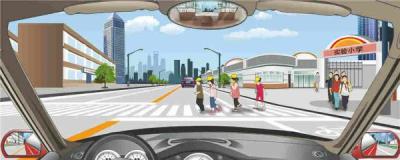
A、Bypass before the queue
B、Slow down and pass slowl
C、Stop promptly and yield
D、Go through in the spaces between the queues
Answer:C
44、How many kinds of law-breaking acts are displayed in flash 7?
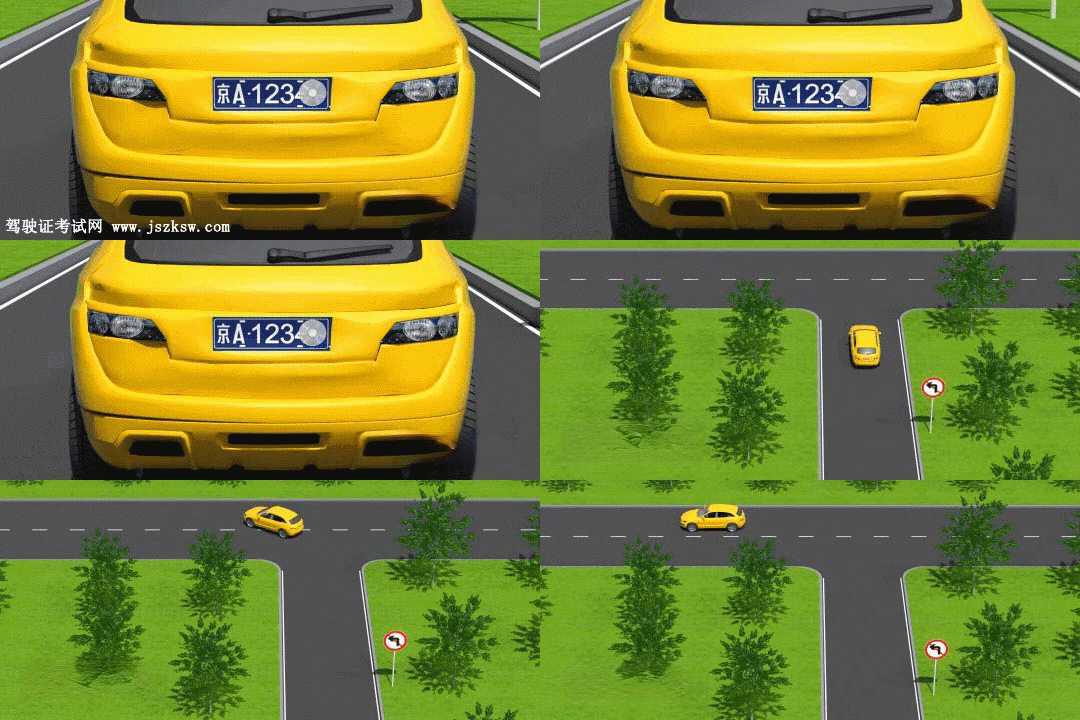
A、One
B、Two
C、Three
D、Four
Answer:B
45、A driver should accelerate in advance to overtake then it is likely to meet with oncoming vehicles.
Answer:N
46、What should motor vehicle drivers do when going straight and passing through the intersection ahead?
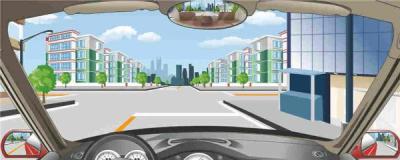
A、Reduce speed when approaching the intersection
B、Reduce speed after entering the intersection
C、May pass through the intersection without speed reduction
D、Accelerate in advance to pass through the intersection
Answer:A
47、The sign on the left indicates U-turn is allowed here.
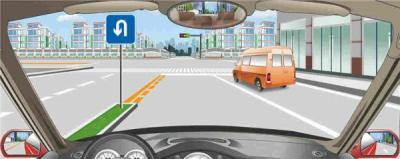
Answer:Y
48、When encountering an emergency on a highway, the driver should not drastically turn to evade.
Answer:Y
49、What matters need attention when driving on a rainy day?
A、Avoid using the emergency brake or making sharp turns
B、Keep a safe enough distance
C、Observe the traffic situation of non-motor vehicles and surrounding pedestrians
D、Drive at a safe speed
Answer:ABCD
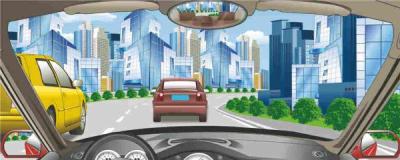
50、When encountering a situation like changing to a left lane, motor vehicle drivers should vield.
Answer:Y
- 内蒙古科目四英文版题目 相关内容
- 老外驾考电脑版下载 吉林外国人考科目一 英文 广西2025驾考英文题库 驾考科目四英语版书 宁夏驾照考试科目四英文版 吉林英文驾考题库PDF电子版 外国学驾照流程图 四川科目一考试英文版 浙江2025英文驾考PDF题库 上海英文版驾考 安徽科目四有英文版吗 山西驾考英文版题库 四川科目一有英文版吗 考驾照科目四有英文版 天津驾考英语版PDF题库 甘肃驾考科目四英语版PDF
Copyright © 2025 驾考 版权所有