
- 科目一考试
- 顺序练习
- 随机练习
- 强化练习
- 模拟考试
- 科目四考试
- 顺序练习
- 随机练习
- 强化练习
- 模拟考试
- 外国语言版题库
- 英语题库
- 德语题库
- 韩语题库
- 日语题库
- 俄语题库
- 法语题库
- 西班牙语题库
- 阿拉伯语题库
- 摩托车英文题
山东科目四英文版模拟
-
1、The road marker indicates that vehicles are only allowed to turn right at the intersection ahead.
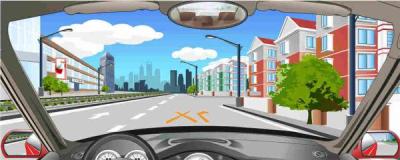
Answer:N
2、The sign on the right warns of a dangerous mountainside road ahead.
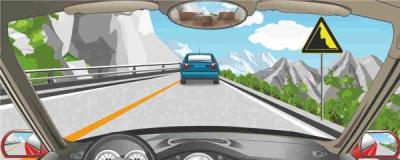
Answer:Y
3、When a fast-moving vehicle encounters an emergency the driver should turn to evade first and then brake to slow down so as to mitigate the damage.
Answer:N
4、The broken yellow line in the center of the road indicates that bypassing by crossing the line is prohibited in any condition.
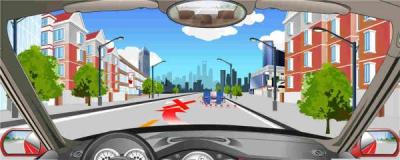
Answer:N
5、Rescue personnel should check the breath of the unconscious person before applying any other emergency treatment.
Answer:Y
6、How should lamps be used when motor vehicle drivers pass through a two-way tunnel?
A、Turn on the hazard lamps
B、Turn on the high-beam
C、Turn on the fog lamp
D、Turn on the low-beam
Answer:D
7、Before a motor vehicle enters a tunnel, the driver should adjust the speed in accordance with the indication of the traffic sign at the entrance of the tunnel.
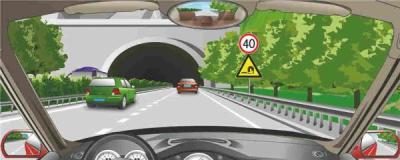
Answer:Y
8、What should the driver do when seeing these hand signals?
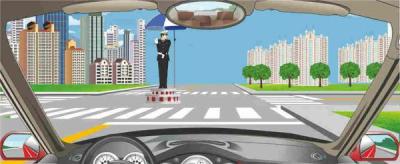
A、Go straight and pass through the intersection
B、Stop and wait
C、Turn right at the intersection
D、Turn left at the intersection
Answer:B
9、Which one of following ways is the safest when driving a motor vehicle on this road?
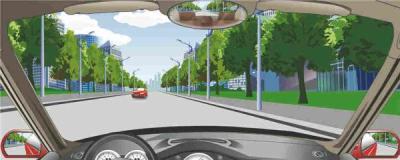
A、Driving along the central line of the road
B、Driving along the right side of the road
C、Driving at the middle of the road
D、Driving along the left side of the road
Answer:B
10、It is safest for a motor vehicle driver to overtake the vehicle in front from its righthand on this kind of road.
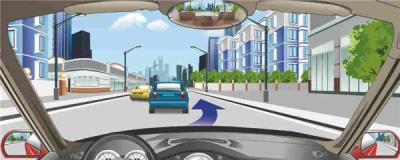
Answer:N
11、The sign in front indicates a 2-kilometer distance from the destination of the highway ahead.
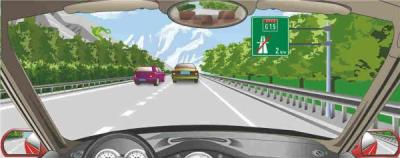
Answer:Y
12、The sign in the red circle indicates that the left road is only for small vehicles.
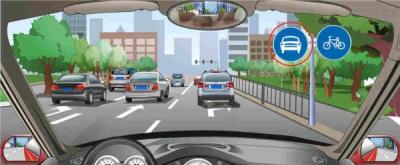
Answer:N
13、The guide arrow on the road surface of this lane indicates that only left turns are permitted at the intersection ahead.
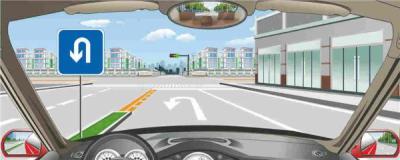
Answer:N
14、In such circumstances, which one of the following statements is the safest measure for a motor vehicle driver to take?
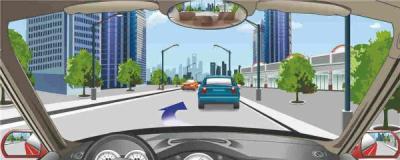
A、Accelerate to overtake the vehicle in front as soon as possibl
B、Voluntarily reduce speed and refrain from overtaking
C、Sound the horn to warn the vehicle in front to yield
D、Turn on the headlamp to warn the oncoming vehicle to yield
Answer:B
15、How will the adhesive force of road change when speed increases on a damp and slippery road?
A、Increase sharply
B、increase gradually
C、decrease sharply
D、No change
Answer:C
16、During normal driving, the driver should do his/her best to run close to or on the central line so as not to allow oncoming vehicles any opportunity to occupy his own route.
Answer:N
17、When a motor vehicle reaches a muddy or burst-and-muddy section of the road, the driver should stop, observe and select a level and solid section or a section with vehicle tracks.
Answer:Y
18、How many kinds of law-breaking acts are displayed in flash 6?
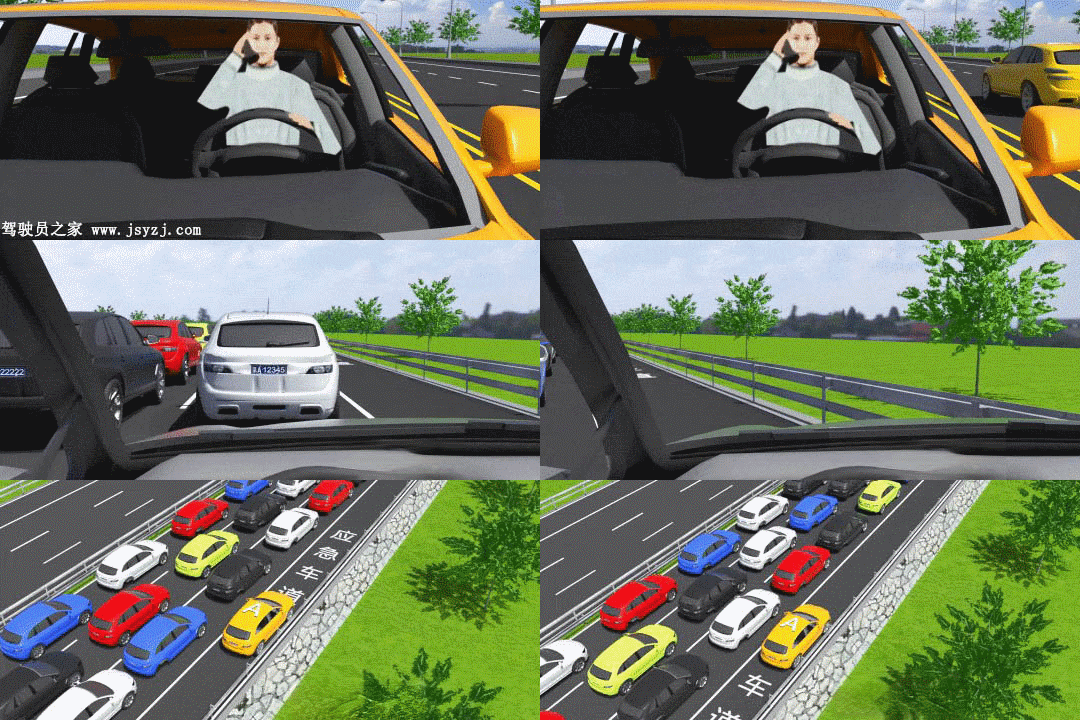
A、One
B、Two
C、Three
D、Four
Answer:C
19、Under such circumstances, motor vehicle drivers lould follow the vehicle in front and drive into the Intersection to wait.
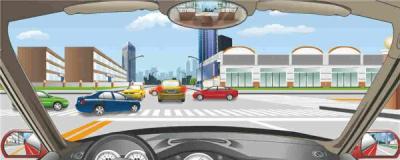
Answer:N
20、As shown in this flash, what should the motor vehicle driver do when encounters this situation?
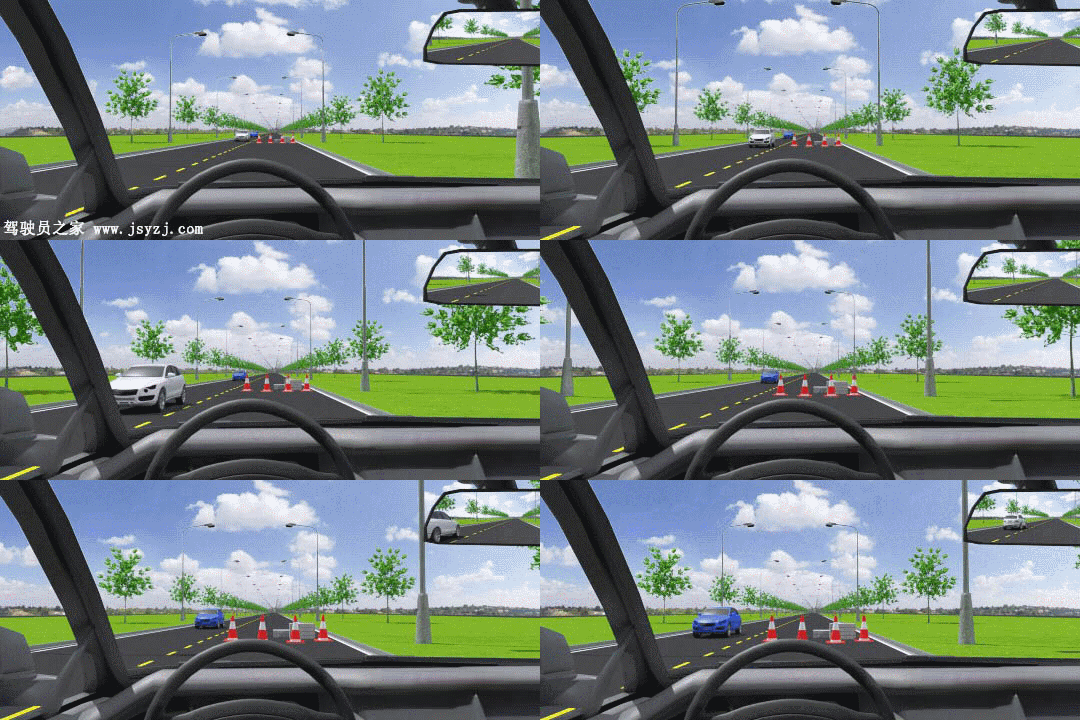
A、Use the mergency brake
B、Turn sharply and pass rapidly
C、Slide over rapidly without encountering collision
D、Stop smoothly
Answer:D
21、The sign on the right indicates that overtaking is allowed on the section ahead.
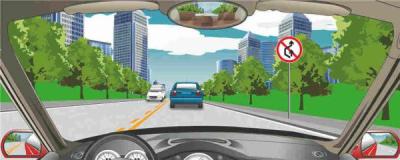
Answer:N
22、The sign on the left indicates U-turn is allowed here.
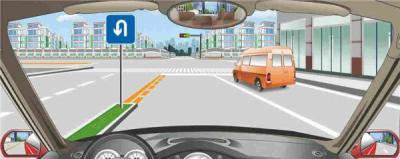
Answer:Y
23、What should the driver do when the motor vehicle counters this situation?
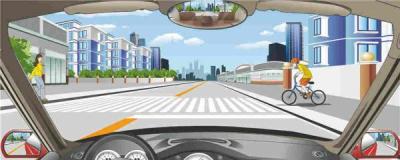
A、Sound the horn continuously to warn
B、Speed up and bypass from the front
C、Slow down when encountering any risks
D、Slow down voluntarily and yield
Answer:D
24、Motor vehicles should stop and yield rapidly when encountering this situation at a bus station.
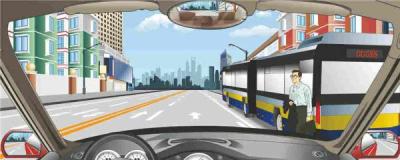
Answer:Y
25、What should the driver do if he/she encounters pedestrians in this situation at an intersection?
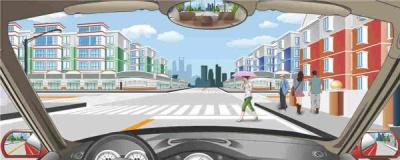
A、Slow down promptly and stop to yield
B、Sound the horn to warn the pedestrians to yield
C、Speed up and pass in front of the pedestrians
D、Turn on the headlamps to warn the pedestrians to yield
Answer:A
26、When approaching the turning point of a road, in which of the following ways will motor vehicle drivers easily cause a traffic accident?
A、Driving ahead by occupying the opposite lane
B、Turning the steering wheel quickly when passing through the curve
C、Not reducing speed until driving onto the curve
D、Driving by the right side
Answer:ABC
27、When a motor vehicle enters an expressway from the ramp, which of the following lamps should be turned on?
A、The left-turn indicator
B、The right-turn indicator
C、The hazard warning lamp
D、The headlamp
Answer:A
28、The right-front sign indicates a time-regulated pedestrian area.
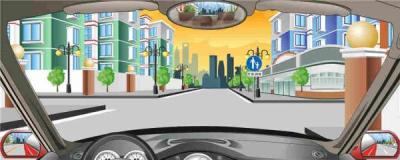
Answer:Y
29、Which one of the following is the safest way when driving a motor vehicle on this kind of road surface?
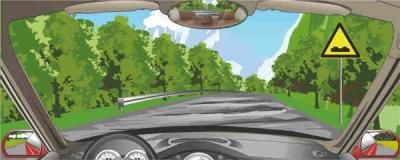
A、Slide over by using neutral gear
B、Pass with a high speed
C、Pass by speeding up
D、Pass with a low speed
Answer:D
30、What should be done by motor vehicle drivers in order to yield politely to such pedestrians?
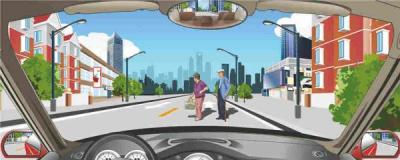
A、Speed up and bypass in front of the pedestrians
B、Speed up and bypass from behind the pedestrians
C、Reduce speed or stop to yield
D、Continuously sound the horn to alert the pedestrians
Answer:C
31、Under such circumstances, what should motor vehicle drivers do?
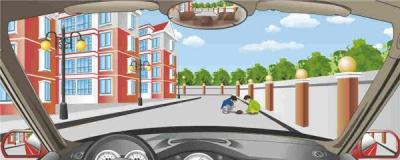
A、Continuously sound the horn
B、Pass quickly
C、Pass at a lower speed
D、Bypass from either side
Answer:C
32、The sign on the right indicates right-hand turn only.
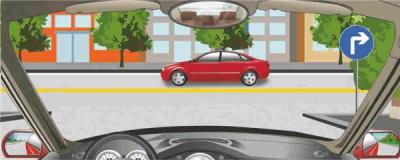
Answer:Y
33、What should the driver do to follow other motor vehicles on a mountain road?
A、Closely follow the vehicle in front
B、Increase the safety distance
C、Reduce the vertical distance between vehicles
D、Try to overtake the vehicle in front as soon as possible
Answer:B
34、For a temporary stop on a foggy day, the driver should only turn on the fog lamp and the low-beam
Answer:N
35、Under such circumstances, motor vehicle drivers may sound the horn at the proper time and speed up to pass through.
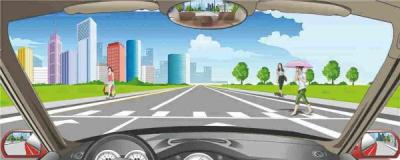
Answer:N
36、When parking temporarily on a snowy day, drivers should turn on the headlamp and fog lamp.
Answer:N
37、The motor vehicle may promptly overtake the vehicle in front from the left side in this situation.
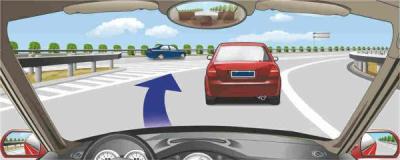
Answer:N
38、When the tire pressure is too low, what will happen if the tire changes its shape in waves and increases in temperature due to fast movement?
A、Unstable tire pressure
B、Even lower tire pressure
C、Driving resistance increases
D、Tire burst
Answer:D
39、Dangerous chemicals possess the characteristics of explosion, inflammation, poison, erosion and radiation.
Answer:Y
40、As shown in this picture, the vehicles intending to turn left are not allowed to drive into left-turn waiting area directly to wait for green light.
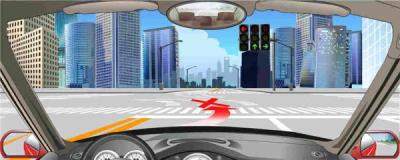
Answer:N
41、Motor vehicles are permitted to follow the guidance of the arrow in this picture and enter the lane of an expressway.
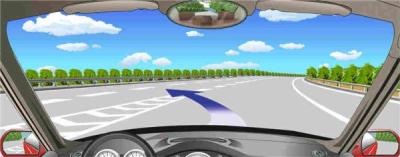
Answer:N
42、When driving a motor vehicle equipped with power steering, the driver should firmly hold the steering wheel and drive slowly if he/she suddenly finds that steering is difficult.
Answer:N
43、Which one of the following measures is correct when a motor vehicle intends to overtake but the vehicle infront refuses to yield?
A、Use a long-sounding horn
B、Follow the vehicle in front while turning high-beam
C、Wait for it to yield while keeping a safe distance
D、Use high-beam and low-beam alternatively
Answer:C
44、The sign on the right indicates a bypass route at the intersection ahead.
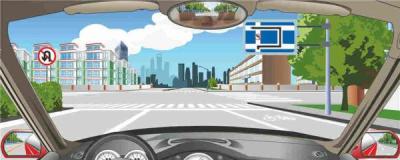
Answer:Y
45、When a wounded person is beneath the wheel or cargo, we should help him/her out immediately by pulling the limbs of the wounded.
Answer:N
46、The sign in front gives information about the direction of road exits.
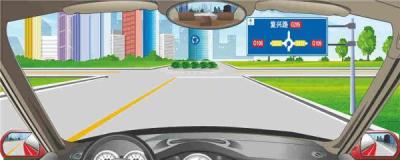
Answer:Y
47、In which of the following ways can motor vehicles avoid a tire burst?
A、Lowering tire pressure
B、Checking tires regularly
C、Removing foreign matters from the tire tread grooves timely
D、Replacing the tires that have cracks or deep cuts
Answer:BCD
48、When there is a braking failure, the driver should first control the direction and then try to control the speed.
Answer:Y
49、When a wounded person is unable to get off the vehicle by himself/herself, he/she should be removed from the vehicle so as to avoid a secondary injury.
Answer:Y
50、After a tire bursts and before the driver can control the speed of the vehicle, he/she should not risk using the foot brake to stop the vehicle. Otherwise, a horizontal swing of the vehicle can cause greater danger.
Answer:Y
- 山东科目四英文版模拟 相关内容
- 外国人驾照考试题库下载安装手机版 云南科目四英文版题目 云南科目四英文版 云南考驾照科目一有英文版 河南英文考驾照用语 广东考驾照的英文单词 河南驾照科目四英文版题库 江西外国人考科目一 英文 重庆驾考英文版题库 上海科目四英文版 上海驾照考试科目一英文版 北京驾考科目四英文版题库 广东科目四英文版题目 广西驾考科目一英文版题库 内蒙古只认识英文可以考科目一吗
Copyright © 2025 驾考 版权所有