
- 科目一考试
- 顺序练习
- 随机练习
- 强化练习
- 模拟考试
- 科目四考试
- 顺序练习
- 随机练习
- 强化练习
- 模拟考试
- 外国语言版题库
- 英语题库
- 德语题库
- 韩语题库
- 日语题库
- 俄语题库
- 法语题库
- 西班牙语题库
- 阿拉伯语题库
- 摩托车英文题
海南考驾照科目四有英文版
-
1、Which one of the following is the safest way when driving a motor vehicle on this road?
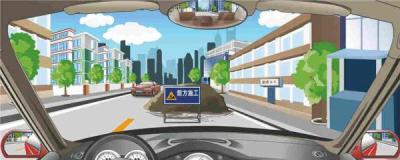
A、Speed up and bypass the obstacle
B、Take the opposite lane and compel the other vehicle to yield
C、Stop and yield to the oncoming vehicle
D、Sound the horn or turn on the headlamp
Answer:C
2、Having driven his truck at 90km/hour on an urban road without road lamps, Mr. Zhou is passing a narrow road using the high-beam and cutting off the way of an oncoming passenger car that runs into the right guardrail as a consequence. Which of the following law-breaking acts did Mr Zhou commit?
A、Speeding
B、Approaching a vehicle not in accordance with related regulations and rules
C、Fatigued driving
D、Using lamps not in accordance with related regulations and rules
Answer:ABD
3、Which lamp should be turned on when motor vehicles pass through a road section at night where the street light condition is good?
A、Front and rear fog lamps
B、Low-beam
C、High-beam
D、Hazard lamp
Answer:B
4、The sign on the right warns of a widened right-hand road ahead.
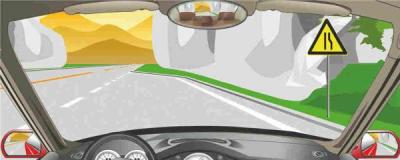
Answer:N
5、The sign on the left indicates that drivers should stop to take a pass card at the toll station ahead.
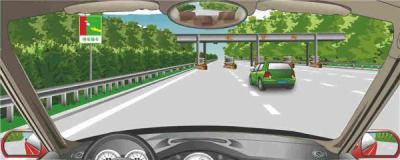
Answer:Y
6、When encountering such pedestrians, motor vehicle drivers may continuously sound the horn to alert them to yield.
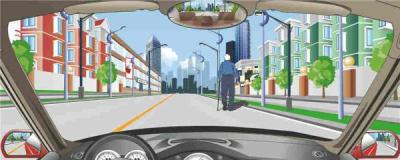
Answer:N
7、The sign in front indicates a one-kilometer distance from the highway entry.
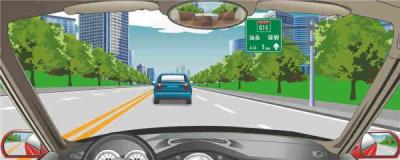
Answer:Y
8、Motor vehicle drivers should use the windscreen wiper when setting off on a rainy day
Answer:Y
9、The guide arrow on the road surface of this lane indicates that only left turns are permitted at the intersection ahead.
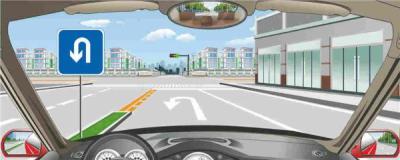
Answer:N
10、This sign warns to bypass from the left side to avoid the roadblock.
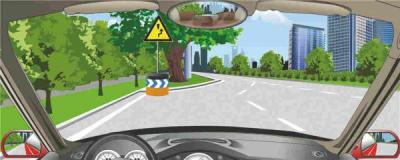
Answer:N
11、What's the meaning of the sign on the right?
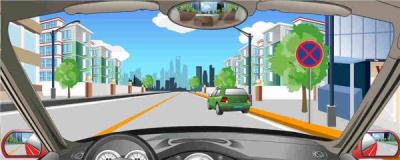
A、Parking prohibited
B、Temporary parking permitted
C、Picking up or dropping off passengers permitted
D、Stopping to unload permitted
Answer:A
12、When the vehicle engine catches fire, what should the driver do first?
A、Turn off the engine as soon as possible
B、Extinguish the fire with water
C、Open the hood to extinguish the fire
D、Extinguish the fire from the leeward direction
Answer:A
13、Under this circumstance, motor vehicle drivers should give the right of way to oncoming vehicle.
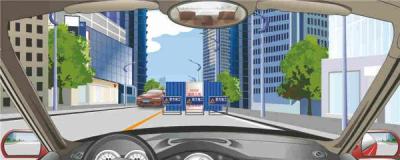
Answer:Y
14、When a motor vehicle catches fire, the driver should te to park the vehicle in an open place far away from urban areas, buildings, trees, other motor vehicles and flammable materials.
Answer:Y
15、The sign in front indicates that vehicles except large passenger vehicles are not allowed to drive on the right lane.
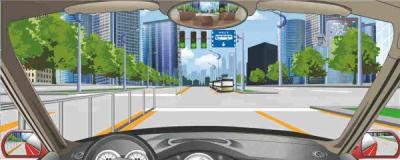
Answer:N
16、The sign on the right warns of a wet road surface ahead.
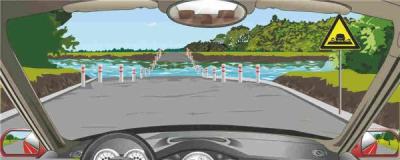
Answer:Y
17、When driving in a heavy rain, drivers should contro their speed to prevent their vehicles from sliding.
Answer:Y
18、After a tire bursts and before the driver can control the speed of the vehicle, he/she should not risk using the foot brake to stop the vehicle. Otherwise, a horizontal swing of the vehicle can cause greater danger.
Answer:Y
19、The sign on the right indicates a bypass flow intersection ahead.
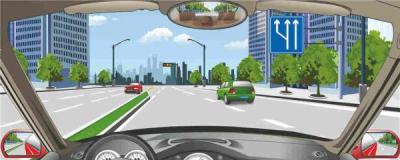
Answer:N
20、Drivers may turn left when seeing these hand signals.
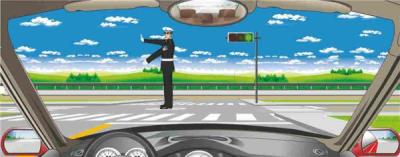
Answer:Y
21、Which one of the following is the safest way to pass the oncoming vehicle on this road?
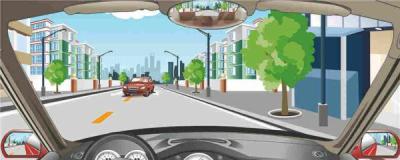
A、Driving along the central line
B、Driving with headlamp on
C、Yielding by the right side of the road
D、Yielding by the left side of the oncoming vehicle
Answer:C
22、When encountering this situation around a school, the driver should speed up and pass as quickly as possible.
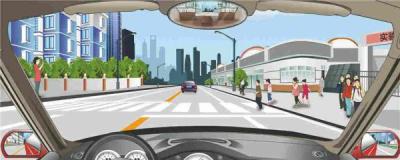
Answer:N
23、The right-front sign indicates a time-regulated pedestrian area.
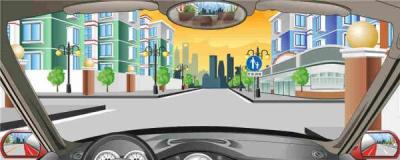
Answer:Y
24、How should motor vehicle drivers make a U-turn at the intersection ahead?
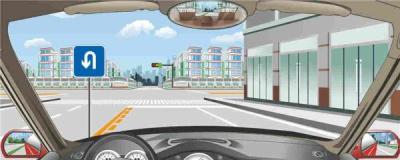
A、Make a U-turn in the waiting area for turning left
B、Make a U-turn at the broken line area of the Intersection
C、Wait until the left-turn indicator is on
D、Wait until the straight-going signal is on
Answer:B
25、What should drivers keep in mind when driving on amountainous road?
A、Keep a safe distance
B、Avoid occupancy of another lane when making a turn
C、Downshift in advance when ascending an abrupt slope
D、Taking full advantage of engine braking when descending a long slope
Answer:ABCD
26、Motor vehicles are prohibited from stopping on the ramp of an expressway.
Answer:Y
27、When parking for a long time on a downward slope due to breakdown on the road, drivers should use this method to stop up wheels.
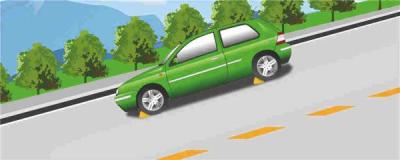
Answer:Y
28、When braking, side skid or tail swing may occur if the rear wheels are blocked.
Answer:Y
29、Which one of the following statements is correct in this situation?
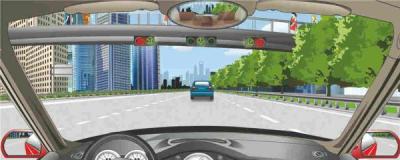
A、Vehicles are prohibited from passing in the lanes on either side
B、Move into the lane on either side at a reduced speed
C、Move into the lane on the right side
D、Move into the lane on either side at an increased speed
Answer:A
30、Mr Hao drove a heavy dump truck with 84.84 tons of cargo (truck allowing for 15.58 tons). When he drove on the No 262 provincial highway in Luanxian County, at the spot of 34 kilometers mark by 623 meters, his truck overturned onto the sideway after a rear-end collision with another truck in front carrying 45.85 tons of cargo(a truck allowing for 1. 71 tons). As a result of this accident, 19 people were killed and 17 injured. What's the common illegal act of the two drivers?
A、Speeding
B、Overloaded
C、Fatigued driving
D、Driving after drinking
Answer:B
31、When encountering a situation like changing to a left lane, motor vehicle drivers should vield.
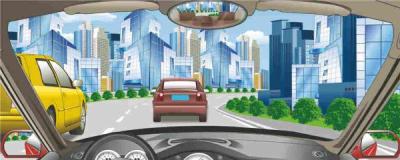
Answer:Y
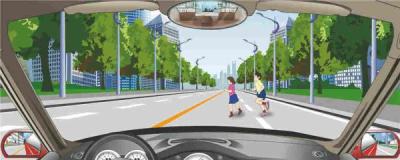
32、When such circumstances happen suddenly, drivers should reduce speed in a timely fashion or stop to yield.
Answer:Y
33、When approaching a vehicle on a narrow slope, which one of the following ways is correct?
A、The descending vehicle yields to the ascending
B、The vehicle which is further from the slope crest should yield
C、The ascending vehicle yields to the descending
D、If the descending vehicle has reached the midpoint while the ascending vehicle has not yet set out, the descending vehicle must yield.
Answer:A
34、When driving on a road covered with ice and snow, drivers tend to encounter glare caused by reflection of light rays from the road surface.
Answer:Y
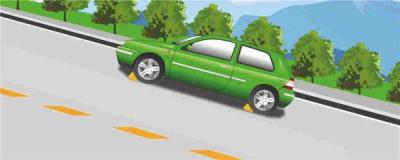
35、When parking for a long time on an upward slope due to breakdown on the road, drivers should use this method to stop up wheels.
Answer:N
36、When a motor vehicle moves through water, the driver should try to maintain a constant speed and sufficient power and pass through without stopping.
Answer:Y
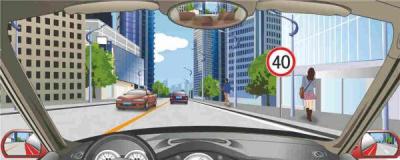
37、The sign on the right indicates that the speed limit of 40km/hour is lifted on the road ahead.
Answer:N
38、When the driver discovers a tire is leaking and steers the vehicle off the main driving lane, he/she should refrain from applying emergency braking so as to avoid a vehicle turnover or a rear-end collision arising from the late braking of the vehicle behind.
Answer:Y
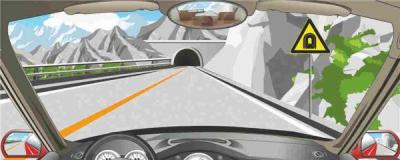
39、The sign on the right warns of a one-way tunnel ahead.
Answer:N
40、Which one of the following is the safest way when driving a motor vehicle on this road?
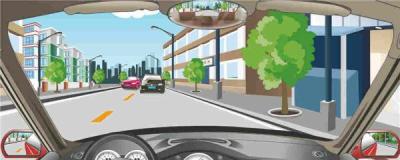
A、Cutting speed or stopping to yield
B、Driving along the center of the road
C、Keeping a normal speed
D、Approaching vehicles by taking the opposite lane
Answer:A
41、When parking temporarily in this situation, motor vehicle drivers are allowed to turn the steering wheel right to avoid sliding.
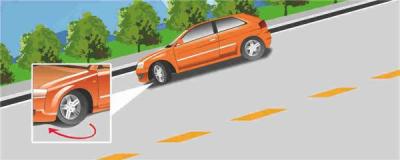
Answer:Y
42、What should the driver do upon finding that one ofthe right tires is leaking while driving?
A、Brake swiftly to slow down
B、Brake slowly to slow down
C、Turn to the left side swiftly
D、Apply emergency braking
Answer:B
43、What should the driver do to follow other motor vehicles on a mountain road?
A、Closely follow the vehicle in front
B、Increase the safety distance
C、Reduce the vertical distance between vehicles
D、Try to overtake the vehicle in front as soon as possible
Answer:B
44、When removing a wounded person suffering spinal fracture, the rescuer should never help the wounded person to walk. He may be carried away with a soft stretcher.
Answer:N
45、What should the driver do to ensure the motor vehicle passes the level crossing safely?
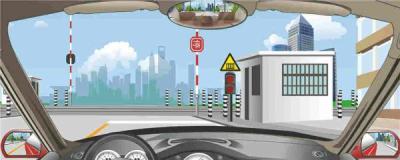
A、Change to neutral gear and slide over
B、Stop, look, and pass
C、Speed up, look and pass rapidly
D、Slow down, look and pass slowly
Answer:C
46、The sign on the right indicates to stop and yield for oncoming vehicles approaching on the road ahead.
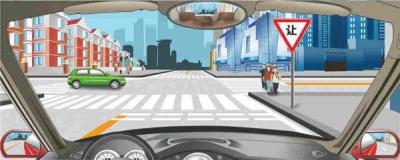
Answer:N
47、What action is important on this kind of mountain road?
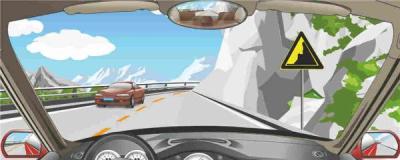
A、Take care of the dangerous hillside road on the left
B、Drive on the left
C、Drive along the central line of the road
D、Drive on the right side and pass slowly
Answer:D
48、When encountering an emergency on a highway, the driver should not drastically turn to evade.
Answer:Y
49、The sign on the right warns of a ferry crossing 100 meters after turning right at the intersection ahead.
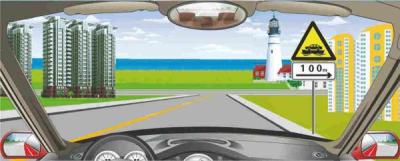
Answer:Y
50、If a motor vehicle deviates from the straight direction due to steering failure, what should be done by thedriver in order to reduce speed and stop the vehicle as soon as possible?
A、Gently depressing the brake pedal
B、Pulling up the handbrake
C、Immediately changing to a low gear to reduce speed
D、Decisively and continuously depressing and releasing the brake pedal
Answer:D
- 海南考驾照科目四有英文版 相关内容
- 青海驾校一点科目一英文版 云南驾照考试科目一英文版 云南驾考科目四英文版题库 吉林驾考英语版PDF题库 西藏2025英文驾考PDF题库 福建2025科目四考题英文版 山东驾考科目一英语 重庆英语c1科目四考试 外国人考中国驾照科目一英文怎么说 湖北英文驾考题库PDF电子版 贵州科目四英文版在哪里找 江苏考驾照的英文单词 黑龙江考驾照科目四有英文版 安徽外国人考驾照英文模拟试题 海南英文驾考书 海南科目四英文版题目
Copyright © 2025 驾考 版权所有