
- 科目一考试
- 顺序练习
- 随机练习
- 强化练习
- 模拟考试
- 科目四考试
- 顺序练习
- 随机练习
- 强化练习
- 模拟考试
- 外国语言版题库
- 英语题库
- 德语题库
- 韩语题库
- 日语题库
- 俄语题库
- 法语题库
- 西班牙语题库
- 阿拉伯语题库
- 摩托车英文题
贵州外国人考驾照科目四
-
1、When a motor vehicle passes over an inundated road, what should the driver do for safe driving?
A、Slow down and drive with special care
B、Speed up and pass rapidly
C、Maintain a normal speed and pass through
D、Change to a low gear and speed up to pass
Answer:A
2、When encountering a road like this, motor vehicle drivers should downshift in advance and- control speed by braking the engine.
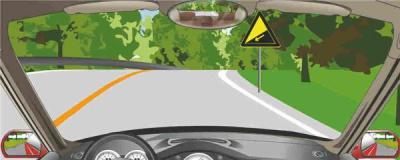
Answer:Y
3、When rescuing a wounded person suffering from bone fracture, which of the following should be kept in mind?
A、Immediately send him/her to the hospital on a stretcher
B、Properly change the original posture when the injured person wounded
C、Dress the fracture with a bandage
D、Do not move the fractured body-part
Answer:D
4、The driver should turn on the left-turn indicator after entering the acceleration lane on an expressway.
Answer:N
5、When driving on a long downhill road, which is the best way to control the speed?
A、Coast in neutral gear
B、Take a low gear
C、Depress the clutch
D、Pull up the handbrake
Answer:B
6、Under such circumstances, what should motor vehicle drivers do?
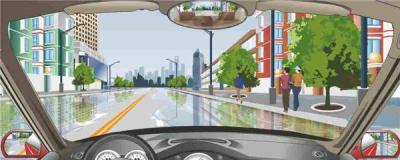
A、Pass slowly at a lower speed
B、Speed up and pass
C、Continuously sound the horn and pass
D、Pass at a normal speed
Answer:A
7、When a motor vehicle encounters a group of youngsters bypassing the motor vehicles parking beside the road, the driver should slow down voluntarily and yield.
Answer:Y
8、What should drivers keep in mind when driving on amountainous road?
A、Keep a safe distance
B、Avoid occupancy of another lane when making a turn
C、Downshift in advance when ascending an abrupt slope
D、Taking full advantage of engine braking when descending a long slope
Answer:ABCD
9、Which is the wrong measure to avoid tire burst?
A、Reduce tire pressure
B、Check tires regularly
C、Remove foreign matters from the tire tread grooves timely
D、Replace tires that have cracks or deep cuts
Answer:A
10、Which of the following acts are prohibited when passing through a tunnel?
A、Overtaking
B、Stopping
C、Making a U-turn
D、Reversing
Answer:ABCD
11、Those traffic police signals mean turning right.
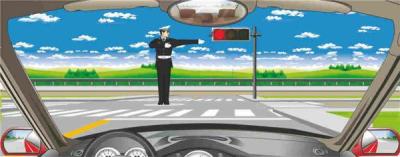
Answer:N
12、What should the driver do upon finding that one ofthe right tires is leaking while driving?
A、Brake swiftly to slow down
B、Brake slowly to slow down
C、Turn to the left side swiftly
D、Apply emergency braking
Answer:B
13、The sign on the right indicates a bypass route at the intersection ahead.
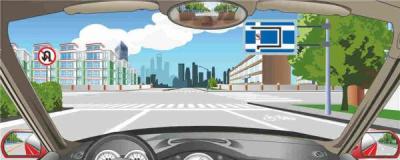
Answer:Y
14、Sounding the horn on a foggy daY can arouse the attention of the opposite side. After hearing the horn from the opposite side, the driver should also sound their own horn to respond.
Answer:Y
15、How should lamps be used by the motor vehicle driver who follows a vehicle on a road section where he street light condition is good?
A、Turn off the headlamp
B、Use high-beam
C、Turn off all lamps
D、Use low-beam
Answer:D
16、What's the meaning of the sign on the right?
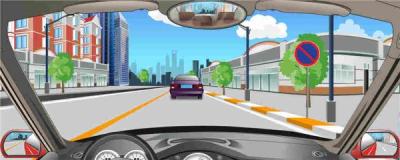
A、Long-time parking permitted
B、Temporary parking permitted
C、Long waiting for passengers permitted
D、No parking
Answer:B
17、Drivers may cross these central solid and broken yellow lines when overtaking.
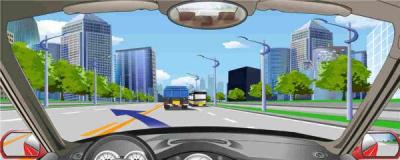
Answer:N
18、The sign on the right warns of a widened right-hand road ahead.
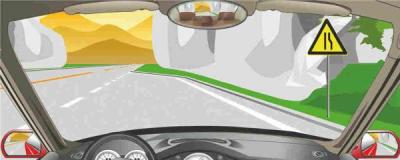
Answer:N
19、As shown in this picture, the intersection guide line is designed to help drivers make turns.
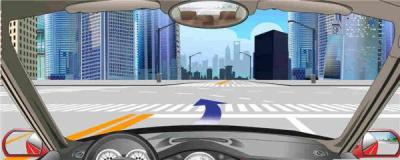
Answer:Y
20、When a motor vehicle turns at an excessively high speed, it can easily slide sideways.
Answer:Y
21、Mr Hao drove a heavy dump truck with 84.84 tons of cargo (truck allowing for 15.58 tons). When he drove on the No 262 provincial highway in Luanxian County, at the spot of 34 kilometers mark by 623 meters, his truck overturned onto the sideway after a rear-end collision with another truck in front carrying 45.85 tons of cargo(a truck allowing for 1. 71 tons). As a result of this accident, 19 people were killed and 17 injured. What's the common illegal act of the two drivers?
A、Speeding
B、Overloaded
C、Fatigued driving
D、Driving after drinking
Answer:B
22、When driving in a heavy rain, drivers should contro their speed to prevent their vehicles from sliding.
Answer:Y
23、Turning on the high-beam is an effective way to improve visibility in fog weather.
Answer:N
24、One day, Mr. Yang drove a large bus with 57 passengers(bus capacity 55 people)from 7 pm to 1 am the following morning. At the spot of 3008 kilometers mark by 110 meters on the No. 050 National Road in Jin Chengjiang District, the bus had a malignant traffic accident caused by front left tire burst, killing12 people and injuring 22. What's the main illegal act committed by Mr Yang?
A、Fatigued driving
B、Carrying more passengers than permitted
C、Speeding
D、Misoperation
Answer:AB
25、The sign on the right warns of an embankment road 200 meters ahead.
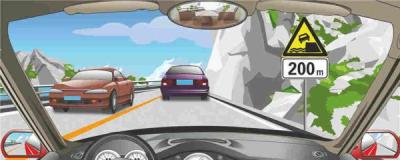
Answer:Y
26、The sign in front indicates a one-kilometer distance from the next left exit.
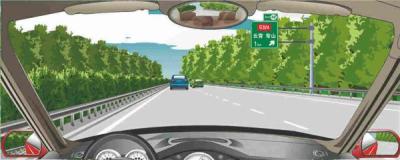
Answer:N
27、The sign on the right warns of a guarded railway intersection ahead.
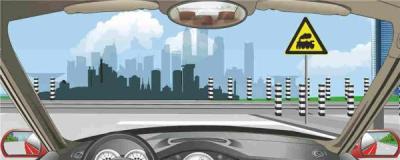
Answer:N
28、When encountering such pedestrians, motor vehicle drivers may continuously sound the horn to alert them to yield.
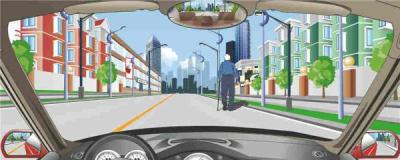
Answer:N
29、When encountering a school bus which stops at the right roadside and students are embarking or disembarking, what should motor vehicle drivers do?
A、If there is only one motor vehicle lane in each direction, motor vehicle drivers behind the bus should stop and wait.
B、If there are two motor vehicle lanes in each direction, motor vehicle drivers in the left lane behind the bus may overtake the bus at a lower speed
C、If there are three motor vehicle lanes in each direction, motor vehicle drivers in the middle lane behind the bus should stop and wait
D、If there are three motor vehicle lanes in each direction, motor vehicle drivers in the left lane behind the bus may pass at a lower speed
Answer:ACD
30、Which lamp should be used when motor vehicles pass hrough an intersection at night where there is no traffic light signal?
A、High-beam
B、Low-beam
C、Hazard lamps
D、High-beam and low-beam should be used alternatively
Answer:D
31、How to pass the intersection when running straight
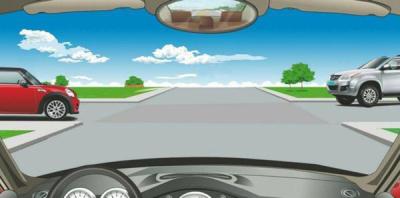
A、turn on the hazard lights and pass
B、directly speed up and pass straight
C、yield to the vehicle from the right road
D、yield to the vehicle from the left road
Answer:C
32、Drivers are not allowed to cross these lane-dividing lines when overtaking in the same direction.
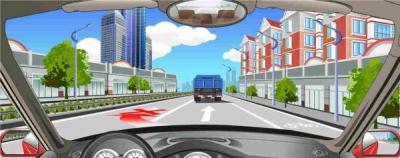
Answer:Y
33、When a motor vehicle on an expressway stops in an emergency due to breakdown or an accident, what should the driver and the passengers do?
A、Stand in front of the motor vehicle
B、Wait in the motor vehicle for rescue
C、Stand behind the motor vehicle
D、Promptly move to the road shoulder on the right side or the emergency lane
Answer:D
34、Where is the proper parking place for motor vehicles driving on an expressway?
A、On the expressway ramp
B、In the acceleration lane
C、In the deceleration lane
D、In a service area
Answer:D
35、When a motor vehicle accidentally hits a guardrail of a highway, the driver should stabilize and adjust the steering wheel properly, and refrain from turning the steering wheel drastically.
Answer:Y
36、Motor vehicles drivers may overtake by borrowing the opposite lane on this kind of road.
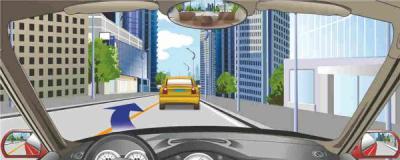
Answer:N
37、The sign on the right warns of a guarded crossing 150 meters ahead.
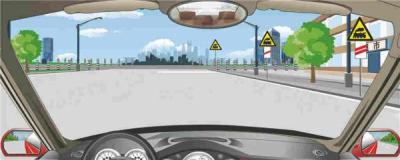
Answer:N
38、The crosswalk of the intersection warns that pedestrians have priority.
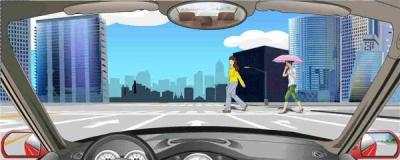
Answer:Y
39、The guide arrow on the road surface of this lane indicates that only left turns are permitted at the intersection ahead.
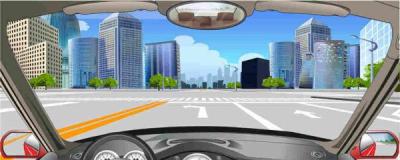
Answer:Y
40、What should the driver do if he/she encounters pedestrians in this situation at an intersection?
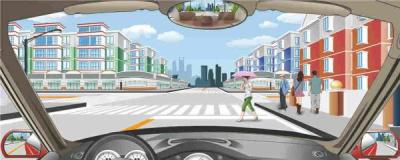
A、Slow down promptly and stop to yield
B、Sound the horn to warn the pedestrians to yield
C、Speed up and pass in front of the pedestrians
D、Turn on the headlamps to warn the pedestrians to yield
Answer:A
41、When a vehicle encounters a strong side wind, the driver should firmly hold the steering wheel and press the brake urgently if he feels the vehicle deviates horizontally from the normal direction.
Answer:N
42、What is the best way to make turns on this kind of curving mountain road?
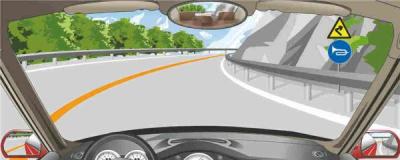
A、Drive along the outer side of the curve
B、Slow down, sound the horn and drive on the right
C、Borrow the opposite lane
D、Drive along the central line of the road
Answer:B
43、When a motor vehicle passes over an inundated road what should the driver do?
A、Stop and look at the situation
B、Make sure it's safe and pass over at a low speed
C、Intermittently and gently depress the brake pedal then wading across the water
D、Continuously but gently depress the brake pedal then wading across the water
Answer:ABC
44、Mr. He drove his large bus with 53 passengers (permitted carrying capacity 47) to 454 km mark by 100m along the Yining-hefei Expressway in Nanjing jurisdiction, where he was tailgated by a heavy-type semitrailer tractor. The bus left the road, breaking through the guardrail and catching fire. 17 people were killed and 27 injured. Which of the following law-breaking acts did Mr. He commit?
A、Speeding
B、Exceeding the carrying capacity of the motor bus
C、Driving a motor vehicle overdue for annual inspection
D、Improper operation
Answer:B
45、Motor vehicle drivers may reverse at an intersection.
Answer:N
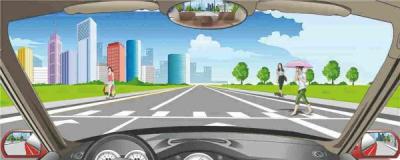
46、Under such circumstances, motor vehicle drivers may sound the horn at the proper time and speed up to pass through.
Answer:N
47、When the motor vehicle stops on an uphill section, how should the driver use the foot brake?
A、Earlier than on a level road
B、Later than on a level road
C、As timely as on a level road
D、Strongly depress the foot brake pedal
Answer:B
48、When driving on a damp and slippery road, drivers should avoid using the emergency brake to his/her best ability.
Answer:Y
49、When the driver discovers a tire is leaking and steers the vehicle off the main driving lane, he/she should refrain from applying emergency braking so as to avoid a vehicle turnover or a rear-end collision arising from the late braking of the vehicle behind.
Answer:Y
50、When driving a vehicle equipped with power steering what should the driver do upon finding that steering is difficult?
A、Stop and identify the cause
B、Control the steering and drive slowly
C、Drive at a lower speed
D、Keep the vehicle going straight
Answer:A
- 贵州外国人考驾照科目四 相关内容
- 天津英文驾考科目4 重庆外国人考驾照科目四 上海外国人考驾照英文模拟试题 黑龙江科目一考试英文版 浙江驾考科目四英语版书 山东科目四英文版在哪里找 海南驾考英文版题库 陕西驾考科目四英语 河北驾考科目四英语版书 外国人学驾照需要些哪样证件和材料 外国人学车本去哪里 驾考英语版题库book 内蒙古英文驾考题库PDF电子版 陕西驾照考试科目四英文版 外国人在中国学车需要什么证件 driving licence test
Copyright © 2025 驾考 版权所有