
- 科目一考试
- 顺序练习
- 随机练习
- 强化练习
- 模拟考试
- 科目四考试
- 顺序练习
- 随机练习
- 强化练习
- 模拟考试
- 外国语言版题库
- 英语题库
- 德语题库
- 韩语题库
- 日语题库
- 俄语题库
- 法语题库
- 西班牙语题库
- 阿拉伯语题库
- 摩托车英文题
广西2025科目四英文版
-
1、When driving in thick fog causing poor visibility on the expressway, the driver should apply emergency braking to stop at once.
Answer:N
2、Drivers are not allowed to cross these lane-dividing lines when overtaking in the same direction.
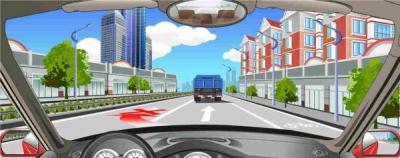
Answer:Y
3、The sign on the left warns that there are vehicles converging into the intersection on the left.
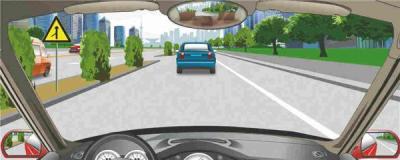
Answer:Y
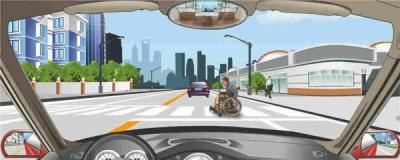
4、When encountering such pedestrians, what should motor vehicle drivers do?
A、Bypass in front of the pedestrians
B、Bypass from behind the pedestrians
C、Sound the horn to alert the pedestrians
D、Voluntarily stop and yield
Answer:D
5、Drivers may turn left when traffic police give these hand signals.
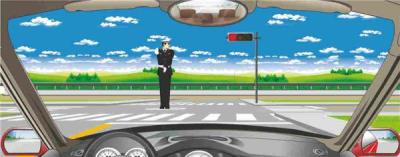
Answer:N
6、When a vehicle encounters a strong side wind, the driver should firmly hold the steering wheel and press the brake urgently if he feels the vehicle deviates horizontally from the normal direction.
Answer:N
7、How should lamps be used when a motor vehicle meets an oncoming bicycle on a narrow road or a narrow bridge at night?
A、Continuously change between low-beam and high-beam
B、Use clearance lamp
C、Use high-beam
D、Use low-beam
Answer:D
8、When encountering this situation in a residential area, the driver should follow them closely.
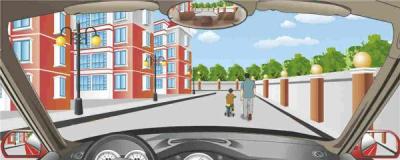
Answer:N
9、The sign in front indicates a one-kilometer distance from the next left exit.
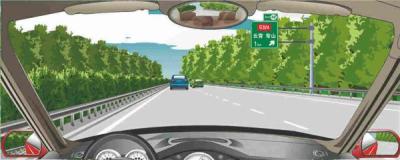
Answer:N
10、When encountering such a situation, the motor vehicle driver should change to the left lane rapidly.
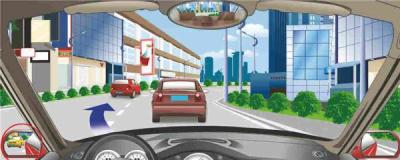
Answer:N
11、When driving on an expressway, drivers should not frequently change lanes.
Answer:Y
12、When evading an emergency, except for being calm what principle should be held by drivers?
A、Evading people first and then objects
B、Evading objects first and then vehicles
C、Evading vehicles first and then people
D、Evading objects first and then people
Answer:A
13、When the tire pressure is too low, what will happen if the tire changes its shape in waves and increases in temperature due to fast movement?
A、Unstable tire pressure
B、Even lower tire pressure
C、Driving resistance increases
D、Tire burst
Answer:D
14、When reversing in this condition, in which of the following ways can motor vehicle drivers keep safe?
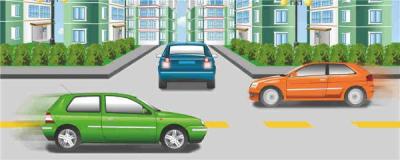
A、Reverse at a lower speed
B、Voluntarily stop and yield
C、Continuously sound the horn to alert
D、Reverse in a clockwise direction
Answer:B
15、Before making a U-turn at the intersection ahead, motor vehicle drivers should drive to the lane for turning left and going straight.
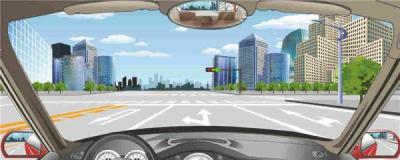
Answer:N
16、Motor vehicles should stop and wait when encountering two red lights flashing alternately at evel crossings.
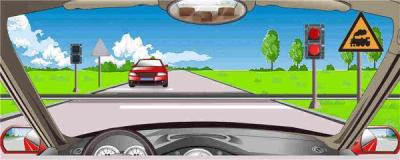
Answer:Y
17、Under such circumstances, the motor vehicle driver should voluntarily reduce speed and let the vehicle behind overtake.
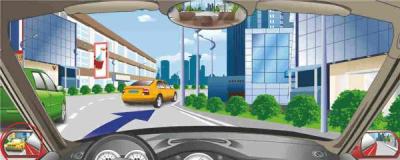
Answer:Y
18、It is not a bad habit for a driver to frequently change lanes.
Answer:N
19、When the motor vehicle stops on an uphill section, how should the driver use the foot brake?
A、Earlier than on a level road
B、Later than on a level road
C、As timely as on a level road
D、Strongly depress the foot brake pedal
Answer:B
20、What should be checked before driving?
A、No parts need to be checked
B、Whether the tires have been cleaned
C、Where the spare tire is placed
D、The fastening and air pressure of tires
Answer:D
21、Motor vehicles are prohibited from driving straight or turning left in this situation.
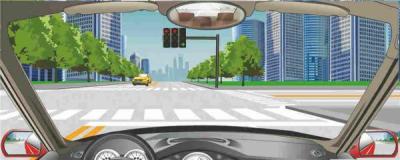
Answer:Y
22、When the vehicle engine catches fire, what should the driver do first?
A、Turn off the engine as soon as possible
B、Extinguish the fire with water
C、Open the hood to extinguish the fire
D、Extinguish the fire from the leeward direction
Answer:A
23、Motor vehicles are permitted to follow the guidance of the arrow in this picture and enter the lane of an expressway.
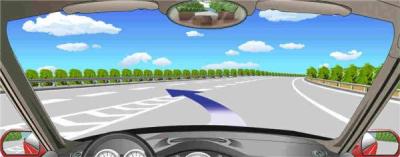
Answer:N
24、When approaching another vehicle at night, why should the driver alternate between high-and-low-beam at a distance more than 150 meters?
A、Warn each other before passing
B、Driving habit
C、Easy to observe the situation ahead from either side
D、Courtesy
Answer:C
25、The sign in front indicates a one-way lane after turning right.
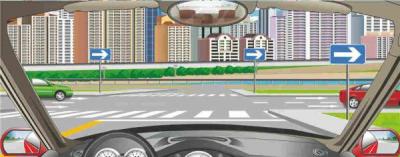
Answer:Y
26、What should the driver do when the motor vehicle encounters this situation in front of a school?
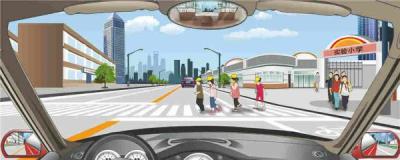
A、Bypass before the queue
B、Slow down and pass slowl
C、Stop promptly and yield
D、Go through in the spaces between the queues
Answer:C
27、As shown in this picture, the vehicles intending to turn left are not allowed to drive into left-turn waiting area directly to wait for green light.
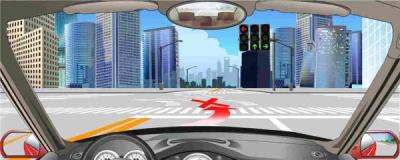
Answer:N
28、When driving on an expressway, what should the driver do if he/she has missed an exit but the next exit is far away?
A、Reverse along the road shoulder
B、Continue on
C、Stop immediately
D、Make a U-turn at the current location
Answer:B
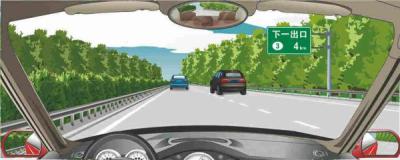
29、The sign in front indicates a 4-kilometer distance from the next exit.
Answer:Y
30、When carrying a wounded person in a coma, rescue personnel should try to let the unconscious person remain in the supine position.
Answer:N
31、When an erosive material catches fire, it should not be put out with water cannon.
Answer:Y
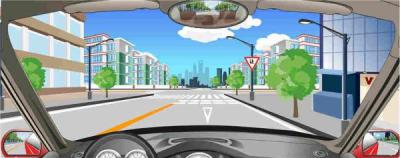
32、The slow-down-and-yield line at the intersection ahead indicates that vehicle drivers should stop and give the right of way to vehicles on the trunk road.
Answer:N
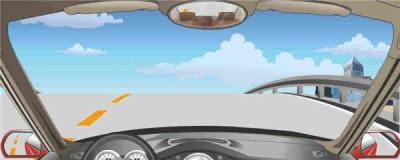
33、Motor vehicle drivers should rush to the top of the slope in this situation.
Answer:N
34、When finding a tire burst on the road, the driver should use emergency braking while controlling the direction of the vehicle at the same time to stop the vehicle qulckly.
Answer:N
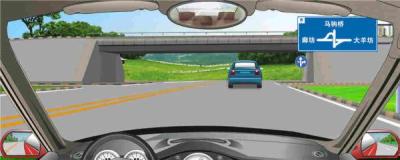
35、The sign in front is an advance announcement of the directions led by the interchange.
Answer:Y
36、How should lamps be used by the motor vehicle driver who follows a vehicle on a road section where he street light condition is good?
A、Turn off the headlamp
B、Use high-beam
C、Turn off all lamps
D、Use low-beam
Answer:D
37、When driving on an expressway, which of the following statements is correct?
A、Drives are not allowed to drive by riding or rolling on the lane dividing line
B、Drivers are prohibited from driving on road olders
C、Drivers may overtake on the ramp, the acceleration lane or the deceleration lane
D、Drivers are prohibited from learning to drive
Answer:C
38、When fixing the unexposed bones in position, it is necessary to exceed the upper and lower joints of the wounded body part.
Answer:Y
39、What should the driver do when seeing these hand signals?
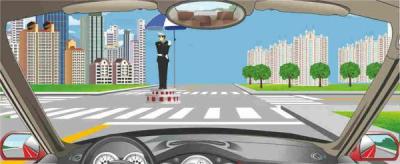
A、Turn left at the intersection
B、Stop and wait
C、Go straight at the intersection
D、Drive to the waiting area for turning left
Answer:B
40、When a fast-moving vehicle is likely to collide with the vehicle in front, what should the driver do?
A、Brake to reduce speed first, and then steer to evade
B、Turn the steering wheel quickly to the left side to evade
C、Turn the steering wheel quickly to the right side to evade
D、Steer to evade first, and then brake to reduce speed
Answer:A
41、How should lamps be used when motor vehicle drivers pass through a two-way tunnel?
A、Turn on the hazard lamps
B、Turn on the high-beam
C、Turn on the fog lamp
D、Turn on the low-beam
Answer:D
42、What should the driver do in this condition?
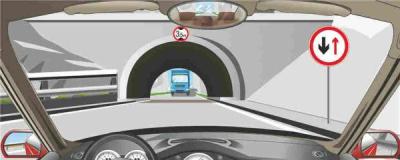
A、Go through normally on the right side
B、Sound the horn and speed up to go through the tunnel
C、Stop and yield to the oncoming vehicle
D、Turn on the headlamp to warn the oncoming vehicle to yield
Answer:C
43、What's the meaning of the sign on the right?
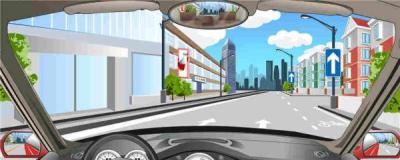
A、Drive on the right side of the road ahead
B、No entry ahead
C、One-way road ahead
D、Watch for the right-hand intersection ahead
Answer:C
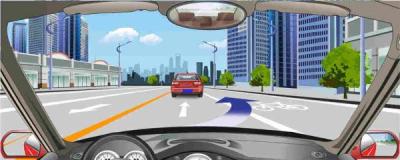
44、The road marker on the right side indicates that drivers may overtake by borrowing this road.
Answer:N
45、The guide arrow on the road surface of this lane indicates that drivers are only permitted to continue straight at the intersection ahead.
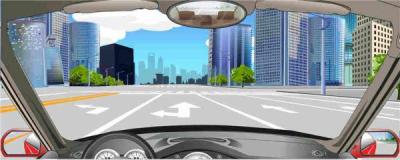
Answer:N
46、What is the function of ABS during emergency braking?
A、Shortening the braking distance
B、Keeping steering capacity of the motor vehicle
C、Relief the braking inertia
D、Controlling directions automatically
Answer:B
47、Which of the following is an inflammable solid material?
A、Matches
B、Gun powder
C、Calcium carbide
D、Explosives
Answer:A
48、The sign on the right warns of a narrowed road on both sides ahead.
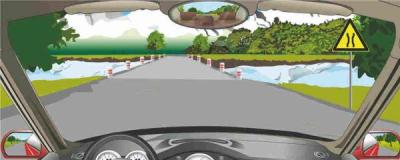
Answer:N
49、What should the driver do when the motor vehicle counters this situation?
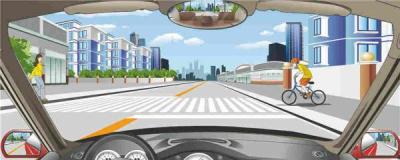
A、Sound the horn continuously to warn
B、Speed up and bypass from the front
C、Slow down when encountering any risks
D、Slow down voluntarily and yield
Answer:D
50、In the condition of low visibility, drivers should turn on the low-beam when setting off
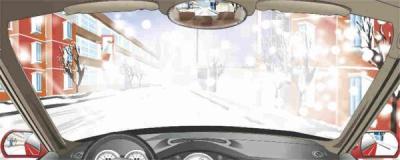
Answer:Y
- 广西2025科目四英文版 相关内容
- 安徽英文驾考题库PDF电子版 河南英文驾考app 陕西外国人考驾照英文模拟试题 广西英文驾考科目四app 英文考驾照用语 天津科目四英文版练习题库 广东科目四英文版模拟 江苏只认识英文可以考科目一吗 重庆驾考英语版书 宁夏英文驾考科目四题库PDF电子版 四川驾考有英文版吗 云南英语c1考试 国外驾照怎么考科目一 天津科目一有英文版吗 江苏科目四英文版 吉林只认识英文可以考科目四吗
Copyright © 2025 驾考 版权所有