
- 科目一考试
- 顺序练习
- 随机练习
- 强化练习
- 模拟考试
- 科目四考试
- 顺序练习
- 随机练习
- 强化练习
- 模拟考试
- 外国语言版题库
- 英语题库
- 德语题库
- 韩语题库
- 日语题库
- 俄语题库
- 法语题库
- 西班牙语题库
- 阿拉伯语题库
- 摩托车英文题
上海科目四英文版
-
1、The sign on the right warns that there are vehicles converging into the intersection on the right.
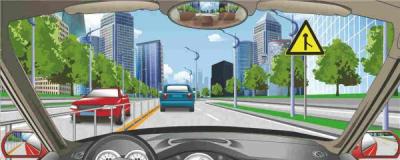
Answer:Y
2、The sign in front indicates the name and number of the highway.
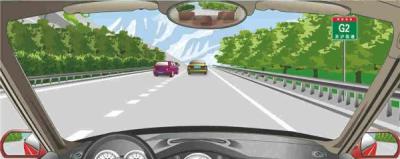
Answer:Y
3、When a motor vehicle breaks down and has to be stopped on the highway, what should the driver do?
A、Set up a breakdown warning sign 150 meters behind the vehicle
B、Set up a breakdown warning sign 100 meters behind the vehicle
C、If it happens at night, turn on the clearance lamp and rear position lamp
D、Turn on the hazard lamps
Answer:ACD
4、When driving on an expressway, what should the driver do if he/she has missed an exit but the next exit is far away?
A、Reverse along the road shoulder
B、Continue on
C、Stop immediately
D、Make a U-turn at the current location
Answer:B
5、The road marker on the right side indicates that drivers may overtake by borrowing this road.
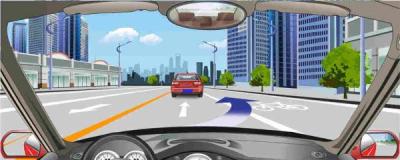
Answer:N
6、When driving on a road covered with ice and snow, drivers tend to encounter glare caused by reflection of light rays from the road surface.
Answer:Y
7、Which one of the following is the safest way when driving a motor vehicle on this kind of road surface?
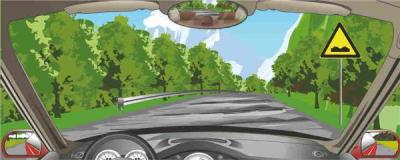
A、Slide over by using neutral gear
B、Pass with a high speed
C、Pass by speeding up
D、Pass with a low speed
Answer:D
8、Drivers may turn right at the intersection when traffic police give these hand signals.
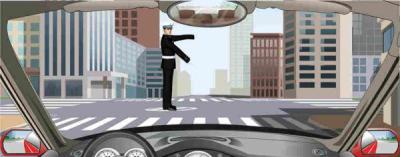
Answer:Y
9、When driving on a foggy day, what kind of lamps should the driver turn on?
A、Fog lamp and hazard lamp
B、Fog lamp and indicator
C、Fog lamp and high-beam
D、Fog lamp and low-beam
Answer:A
10、The sign on the right warns drivers to yield for oncoming motor vehicles.
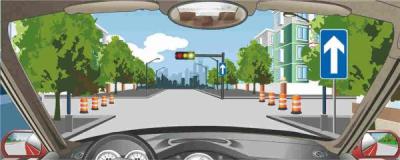
Answer:N
11、A driver should accelerate in advance to overtake then it is likely to meet with oncoming vehicles.
Answer:N
12、The red car is allowed to drive on this lane.
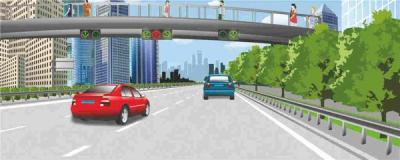
Answer:N
13、The stop-and-yield line at the intersection ahead indicates that vehicle drivers should reduce speed and give the right of way to vehicles on the trunk road.
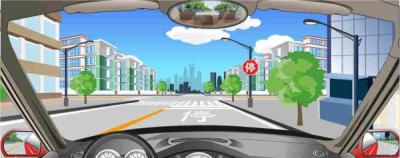
Answer:N
14、The sign on the left warns that there are vehicles converging into the intersection on the left.
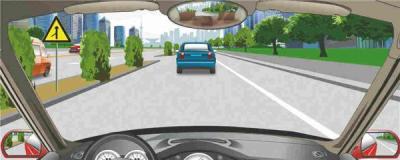
Answer:Y
15、The cross-hatched marking indicates an area where vehicle drivers are allowed to stop and wait.
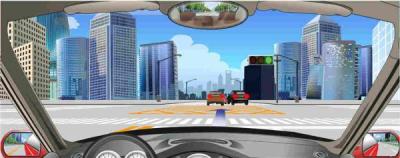
Answer:N
16、Under such circumstances, motor vehicle drivers should reduce speed by the right side swiftly and yield.
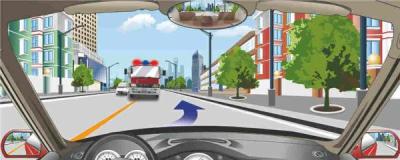
Answer:Y
17、When carrying a wounded person in a coma, rescue personnel should try to let the unconscious person remain in the supine position.
Answer:N
18、When encountering such pedestrians, what should motor vehicle drivers do?
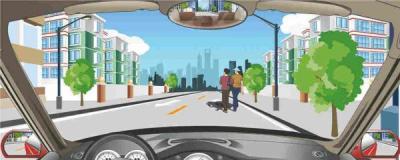
A、Go ahead along the middle line of the road
B、Continuously sound the horn
C、Speed up and overtake
D、Pay attention to the actions of such pedestrians
Answer:D
19、When there is bleeding at the bone fracture of a wounded person, the first thing to do is to fix the wounded part in position, then stop the bleeding and dress the wound.
Answer:N
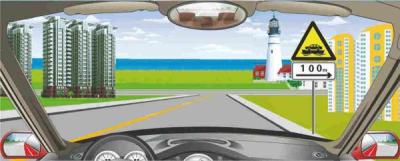
20、The sign on the right warns of a ferry crossing 100 meters after turning right at the intersection ahead.
Answer:Y
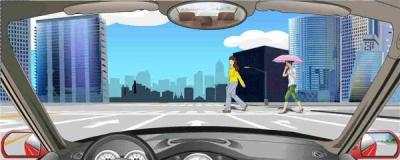
21、The crosswalk of the intersection warns that pedestrians have priority.
Answer:Y
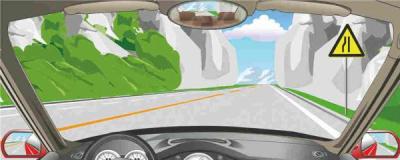
22、The sign on the right warns of a widened left-hand road ahead.
Answer:N
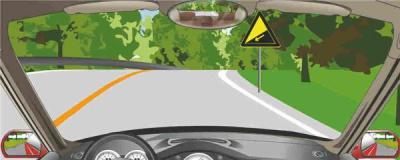
23、When encountering a road like this, motor vehicle drivers should downshift in advance and- control speed by braking the engine.
Answer:Y
24、Motor vehicle drivers are allowed to make a U-turn at this intersection.
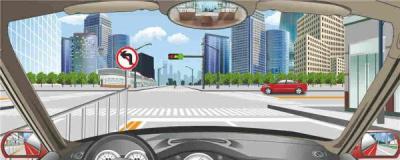
Answer:N
25、Which of the following is a safe way for motor vehicles to pass the intersection marked with this sign?
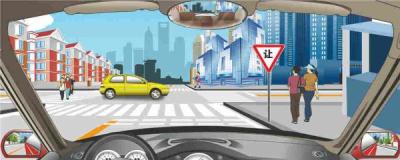
A、Stop and observe the traffic situation around the intersection
B、Approach the intersection by speeding up
C、Observe the traffic situation on the left rear side
D、Approach the intersection at a reduced speed
Answer:D
26、Which one of the following statements is correct in this situation?
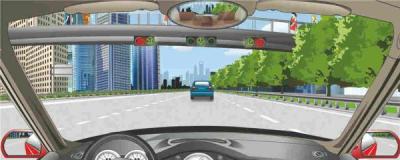
A、Vehicles are prohibited from passing in the lanes on either side
B、Move into the lane on either side at a reduced speed
C、Move into the lane on the right side
D、Move into the lane on either side at an increased speed
Answer:A
27、When a wounded person suffering bone fracture in the thigh, shank or spine, moving the wounded person is usually prohibited.
Answer:Y
28、When a motor vehicle temporarily stops in fog, which lamp should be turned on?
A、Hazard lamp, clearance lamp and rear position lamp
B、Left-turn indicator, clearance lamp and rear position amp
C、Headlamp, clearance lamp and rear position lamp
D、Reverse lamp, clearance lamp and rear position lamp
Answer:A
29、Under this circumstance, motor vehicle drivers should give the right of way to oncoming vehicle.
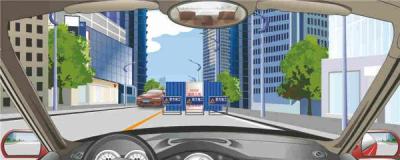
Answer:Y
30、When driving on a muddy road, the driver should hold the steering wheel firmly and speed up to pass through.
Answer:N
31、What should the driver pay attention to when the motor vehicle passes a school?
A、Observe the traffic signs and markings
B、Slow down and pass slowly
C、Prohibited from sounding the horn
D、Pass rapidly
Answer:ABC
32、One day, Mr. Yang drove a large bus with 57 passengers(bus capacity 55 people)from 7 pm to 1 am the following morning. At the spot of 3008 kilometers mark by 110 meters on the No. 050 National Road in Jin Chengjiang District, the bus had a malignant traffic accident caused by front left tire burst, killing12 people and injuring 22. What's the main illegal act committed by Mr Yang?
A、Fatigued driving
B、Carrying more passengers than permitted
C、Speeding
D、Misoperation
Answer:AB
33、If a motor vehicle is unable to drive in heavy fog on an expressway due to an accident, what should the driver do?
A、The driver and all passengers should promptly get off the motor vehicle from the left side door
B、Set up a warning sign 100 meters behind the vehicle in the oncoming direction
C、Turn on the hazard lamp and the high-beam
D、Stand in a safe place outside the guardrail
Answer:D
34、The sign on the right warns for disabled people ahead.
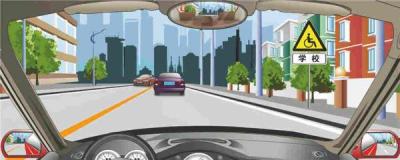
Answer:Y
35、Which of the following is a bad driving habit?
A、Using lights in accordance with relevant rules
B、Carrying both vehicle and driving license
C、Discarding rubbish from the side window
D、Follow the guidance of the traffic signals
Answer:C
36、The sign in front indicates that vehicles except large passenger vehicles are not allowed to drive on the right lane.
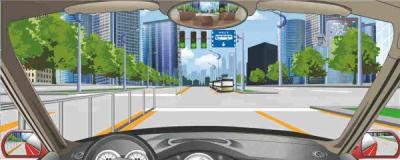
Answer:N
37、A motor vehicle should slow down and stop at this level crossing.
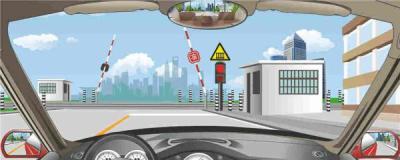
Answer:Y
38、The sign on the right indicates that driving along left side only.
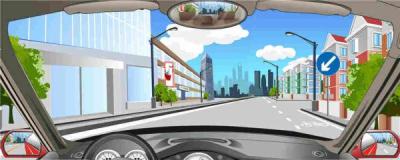
Answer:Y
39、When rescuing a person sustaining full-body burns the rescue personnel may spray cool water to his body to put out the fire.
Answer:Y
40、Mr Peng drove a heavy semi-trailer tractor with 37.7 tons of cargo(capacity 25 tons). When descending a slope on the Daguang Expressway, the tractor had a rear-end collision with Mr. Li's heavy dump truck ( carrying 3.17 cubes of loess and 24 passengers in the container)occupying the emergency lane. As a result of this accident, 16 people were killed and 13 injured What are the main illegal acts in this case?
A、Mr Peng exceeded the speed limit
B、Mr. Peng's tractor carried more cargo than limited
C、Mr Li illegally drove in the emergency lane
D、Mr. Li's truck illegally carried passengers in the container
Answer:BCD
41、The sign on the right warns of a hump bridge right ahead.
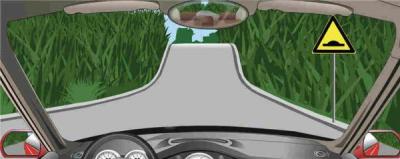
Answer:N
42、Which of the following is a basic requirement for rescuing the injured at the scene of a traffic accident?
A、Treat wounds first and safe life later
B、Save life first and treat wounds later
C、Help lightly wounded persons first
D、Help seriously wounded persons later
Answer:B
43、When encountering an emergency on a highway, the driver should not drastically turn to evade.
Answer:Y
44、When encountering such pedestrians, what should motor vehicle drivers do?
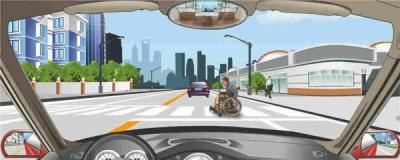
A、Bypass in front of the pedestrians
B、Bypass from behind the pedestrians
C、Sound the horn to alert the pedestrians
D、Voluntarily stop and yield
Answer:D
45、What matters need attention when driving on a rainy day?
A、Avoid using the emergency brake or making sharp turns
B、Keep a safe enough distance
C、Observe the traffic situation of non-motor vehicles and surrounding pedestrians
D、Drive at a safe speed
Answer:ABCD
46、What should the driver do when he/she sees this sign on the road?
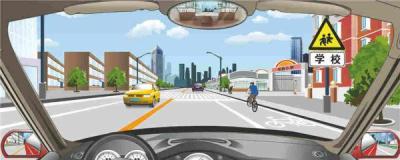
A、Use emergency braking
B、Slow down and take a look
C、Sound the horn intermittently
D、Prepare to bypass
Answer:B
47、The sign on the right indicates a left-turn bypass route at the intersection ahead.
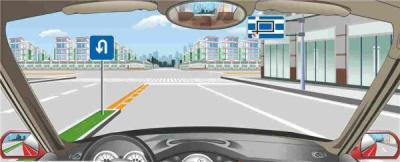
Answer:Y
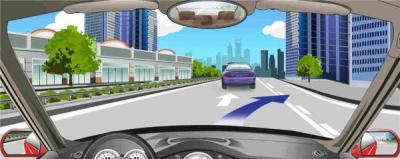
48、The broken and solid white line on the road indicates that crossing is allowed on the solid line side.
Answer:N
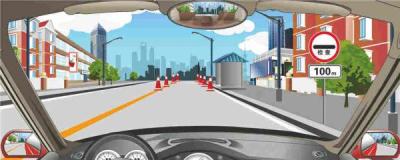
49、The sign on the right indicates an inspection station 100 meters ahead.
Answer:Y
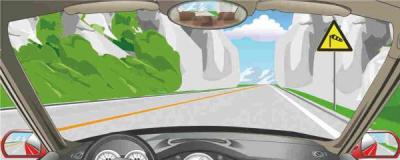
50、The sign on the right side warns of crosswind on the mountain pass ahead.
Answer:Y
- 上海科目四英文版 相关内容
- 上海外国人考驾照科目一 吉林科目一英文版在哪里找 贵州科目一考题英文版 重庆2025科目四考试英文 外国在中国考驾照 辽宁外国人考驾照科目一 青海2025科目一考试英文 河北2025科目四考题英文版 贵州驾照考试科目四英文版 科目一有英文版吗 广东科目四英文版在哪里找 海南外国人考驾照科目一 云南驾考英语版题库book 河北英文考驾照用语 吉林驾考英语版题库book 江西驾考科目一英文版题库
Copyright © 2025 驾考 版权所有