
- 科目一考试
- 顺序练习
- 随机练习
- 强化练习
- 模拟考试
- 科目四考试
- 顺序练习
- 随机练习
- 强化练习
- 模拟考试
- 外国语言版题库
- 英语题库
- 德语题库
- 韩语题库
- 日语题库
- 俄语题库
- 法语题库
- 西班牙语题库
- 阿拉伯语题库
- 摩托车英文题
江苏外国人考科目四 英文
-
1、Crossing the broken white line on the right edge of the road is allowed.
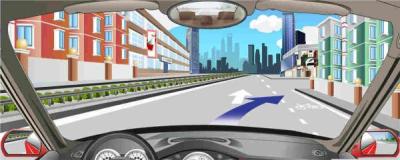
Answer:Y
2、The main impact of muddy roads on safe driving is that the wheels may easily spin and skid
Answer:Y
3、When such circumstances happen suddenly, what should the driver do?
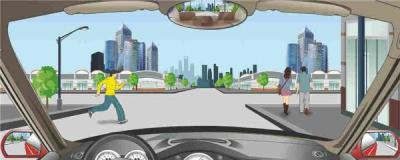
A、Reduce speed or stop to yield
B、Bypass in front of the pedestrians
C、Continuously sound the horn to alert the pedestrians
D、Bypass from behind the pedestrians
Answer:A
4、When passing an intersection, vehicle motor drivers are not allowed to overtake.
Answer:Y
5、When a motor vehicle passes over an inundated road the driver should change to a low gear and pass at a constant speed.
Answer:Y
6、When a motor vehicle needs to stop for inspection after having an accident on an expressway, where should the driver park?
A、On the far outer lane
B、On the inner lane
C、On the emergency lane
D、In the triangle area on the ramp
Answer:C
7、When this signal is constantly flashing, how should a driver react?
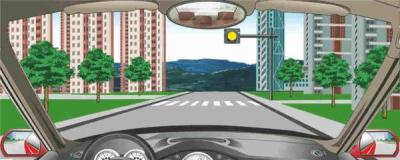
A、Speed up as soon as possible
B、Pull over and wait
C、Observe the traffic situation around to make sure of safe driving
D、Refrain from passing
Answer:C
8、The sign on the right warns for children on the section ahead.
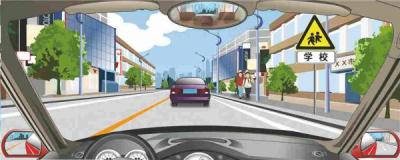
Answer:Y
9、The sign on the right indicates that vehicles from the primary road have priority.
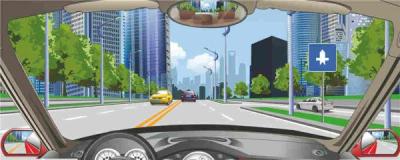
Answer:Y
10、On which of the following roads may the wheels be most easily locked when braking?
A、Concrete road
B、Dirt road
C、Road covered by ice and snow
D、Sand road
Answer:C
11、Under such circumstances, what should be done by the motor vehicle driver?
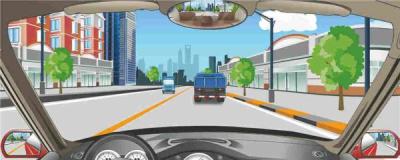
A、Overtaking the vehicle in front on its left
B、Overtaking by occupying the opposite lane
C、Overtaking the vehicle in front on its right
D、Following the vehicle in front
Answer:D
12、The broken and solid white line on the road indicates that crossing is allowed on the solid line side.
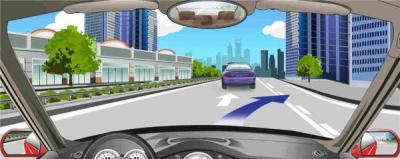
Answer:N
13、When approaching each other at night in this situation, drivers should watch for the danger where the two motor vehicles headlamps meet(the sight dead zone).
Answer:Y
14、As shown in the flash, what should the driver do when the motor vehicle encounters this situation?
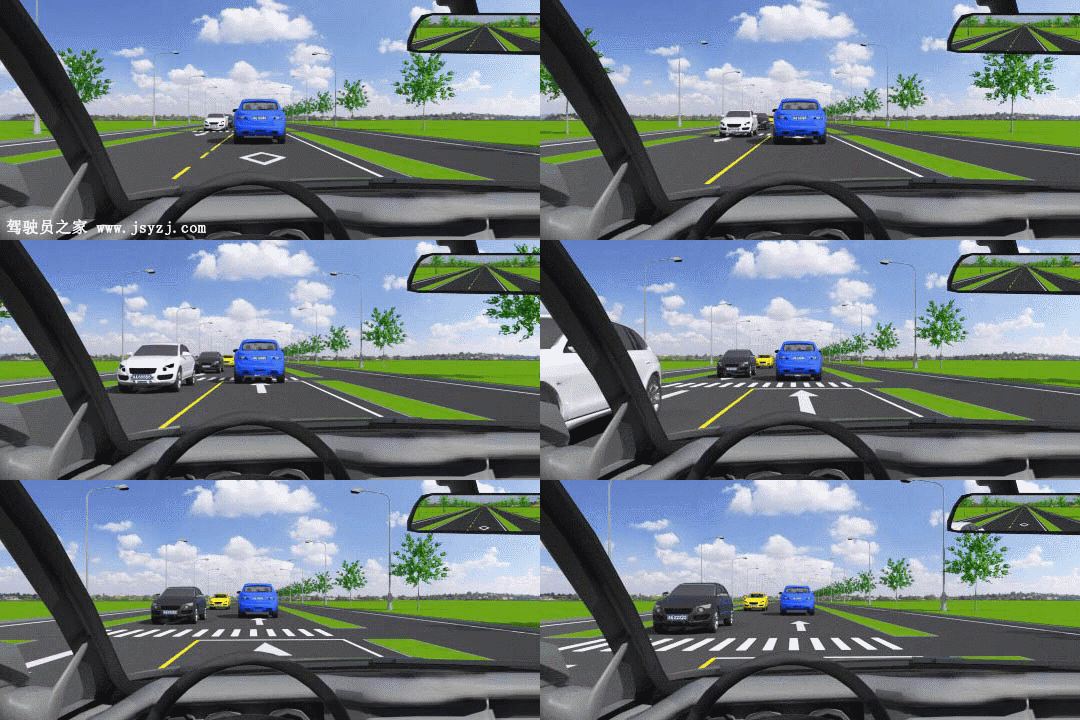
A、Speed up and pass rapidl
B、Stop immediately
C、Sound the horn to indicate the pedestrians to yield
D、Observe the movement of pedestrians and non-motor vehicles before passing
Answer:D
15、If a motor vehicle encounters a strong side wind when it leaves the opening of an expressway tunnel, what will happen?
A、A feeling of deceleration
B、A feeling of acceleration
C、A feeling of pressure
D、Deviation in direction
Answer:D
16、Motor vehicles are prohibited from stopping on the ramp of an expressway.
Answer:Y
17、When a fast-moving vehicle is likely to collide with the vehicle in front, what should the driver do?
A、Brake to reduce speed first, and then steer to evade
B、Turn the steering wheel quickly to the left side to evade
C、Turn the steering wheel quickly to the right side to evade
D、Steer to evade first, and then brake to reduce speed
Answer:A
18、How to run when encountering this situation at the intersection?
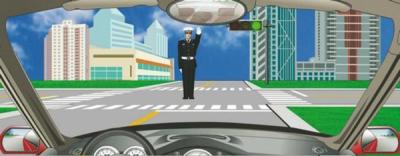
A、stop and wait
B、obey the traffic lights
C、run straight on the right side
D、may turn right
Answer:A
19、When rescuing a wounded person who has been poisoned by toxic gas, the first measure is to send him/her to a place with fresh air so that he/she will not continue to be poisoned.
Answer:Y
20、What should the driver do when seeing these hand signals?
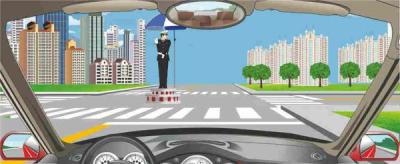
A、Go straight and pass through the intersection
B、Stop and wait
C、Turn right at the intersection
D、Turn left at the intersection
Answer:B
21、After a tire bursts and before the driver can control the speed of the vehicle, he/she should not risk using the foot brake to stop the vehicle. Otherwise, a horizontal swing of the vehicle can cause greater danger.
Answer:Y
22、When driving on an expressway in rain, the driver should slow down to avoid steering failure arising from "water slide"
Answer:Y
23、What should the driver do when seeing these hand signals.
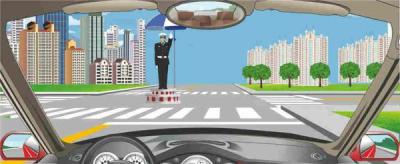
A、Stop and wait
B、Go straight and pass through the intersection
C、Turn right at the intersection
D、Turn left at the intersection
Answer:A
24、Which of the following is a bad driving habit?
A、Using lights in accordance with relevant rules
B、Carrying both vehicle and driving license
C、Discarding rubbish from the side window
D、Follow the guidance of the traffic signals
Answer:C
25、What should the driver do if he/she encounters pedestrians in this situation at an intersection?
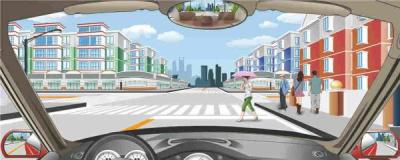
A、Slow down promptly and stop to yield
B、Sound the horn to warn the pedestrians to yield
C、Speed up and pass in front of the pedestrians
D、Turn on the headlamps to warn the pedestrians to yield
Answer:A
26、When driving on an expressway, where should the driver park?
A、The service area
B、The acceleration lane
C、The deceleration lane
D、On the ramp
Answer:A
27、If a fast moving vehicle has a steering failure, using emergency braking can easily cause an overturn.
Answer:Y
28、Motor vehicles are permitted to follow the guidance of the arrow in this picture and enter the lane of an expressway.
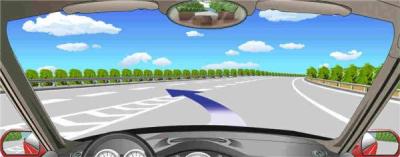
Answer:N
29、Motor vehicle drivers may reverse at an intersection.
Answer:N
30、The sign indicates no overtaking on the section ahead.
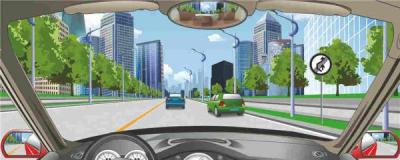
Answer:N
31、This sign indicates the traffic broadcast and radio television channel of highway.
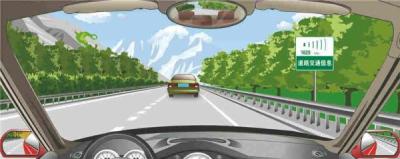
Answer:N
32、When driving on road sections where safe sight distance is affected, such as the top of a ramp, what should drivers do to ensure safety?
A、Rush through
B、Use hazard lamp
C、Cut speed and sound the horn
D、Drive at will
Answer:C
33、When there is no bandage for rescuing a wounded person, which of the following measures is wrong?
A、Dress the wounds with a handkerchief
B、Dress the wounds with a towe
C、Dress the wounds with cotton clothes
D、Dress the wounds with string
Answer:D
34、Under such circumstances, what should be done by a motor vehicle driver in order to yield out of courtesy?
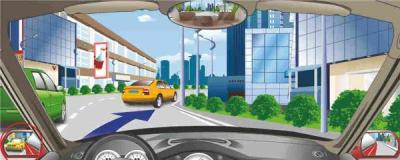
A、Driving at a higher speed
B、Closely following the vehicle in front
C、Driving at a higher speed by the right side
D、Driving at a lower speed by the right side
Answer:D
35、When a motor vehicle leaves an expressway, which of the following lamp should be turned on?
A、The left-turn indicator
B、The right-turn indicator
C、The hazard warning lamp
D、The headlamp
Answer:B
36、The sign on the right indicates that drivers should choose their lanes in accordance withthe directions indicated by arrows.
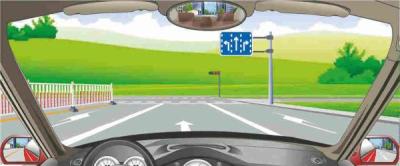
Answer:Y
37、What should drivers do when encountering a rainstorm on a common road and the windscreen-wiper fails to make sight clear?
A、Drive at a reduced speed
B、Drive carefully
C、Cut speed in time and pull over
D、Drive at a normal speed
Answer:C
38、Under such circumstances, the motor vehicle is allowed to overtake.
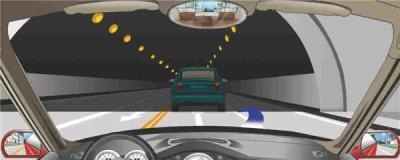
Answer:N
39、When driving on a road covered with ice and snow, drivers tend to encounter glare caused by reflection of light rays from the road surface.
Answer:Y
40、When approaching motor vehicles ahead running at a normal speed on the highway, drivers behind may find a chance and weave through them swiftly.
Answer:N
41、When there is a braking failure, the driver should first control the direction and then try to control the speed.
Answer:Y
42、What's the meaning of the sign on the right?
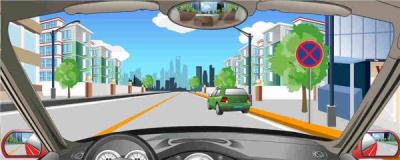
A、Parking prohibited
B、Temporary parking permitted
C、Picking up or dropping off passengers permitted
D、Stopping to unload permitted
Answer:A
43、Mr Hao drove a heavy dump truck with 84.84 tons of cargo (truck allowing for 15.58 tons). When he drove on the No 262 provincial highway in Luanxian County, at the spot of 34 kilometers mark by 623 meters, his truck overturned onto the sideway after a rear-end collision with another truck in front carrying 45.85 tons of cargo(a truck allowing for 1. 71 tons). As a result of this accident, 19 people were killed and 17 injured. What's the common illegal act of the two drivers?
A、Speeding
B、Overloaded
C、Fatigued driving
D、Driving after drinking
Answer:B
44、Mr Ran drove his car from 6am until 11 am without rest, falling down a steep 85-meter ridge at one side of a highway 1 km from Xunan Road in Xuahan County,killing 13 people and injuring 9. Which of the following law-breaking acts did Mr Ran commit?
A、Speeding
B、Driving not in accordance with the traffic markings
C、Exceeding carrying capacity
D、Fatigued driving
Answer:D
45、The sign on the right indicates right-hand turn only.
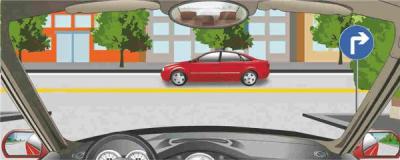
Answer:Y
46、Motor vehicles are prohibited from turning left in this situation.
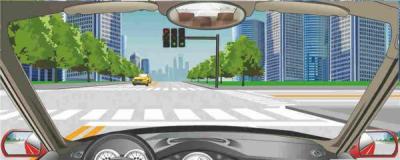
Answer:Y
47、The sign on the right indicates to stop and yield for oncoming vehicles approaching on the road ahead.
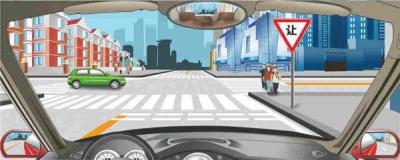
Answer:N
48、The road marker indicates that vehicles are not allowed to make a U-turn at the intersection ahead.
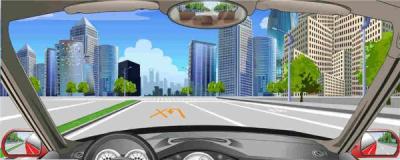
Answer:Y
49、When driving on a muddy road, what should drivers do to pass at an even speed without stopping?
A、Use the handbrake
B、Press the clutch pedal
C、Press the brake pedal
D、Use the accelerator pedal
Answer:D
50、The sign in front indicates that vehicles except public buses are not allowed to drive in this lane.
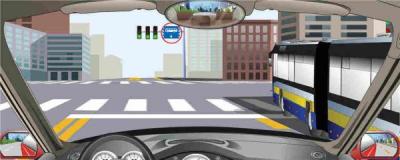
Answer:Y
- 江苏外国人考科目四 英文 相关内容
- 重庆驾考科目一英语 北京科目四英文版 辽宁考驾照的英文单词 湖北英文驾考科目四题库PDF电子版 云南2025科目四英文版 外国驾照考试科目有哪些内容 广西外国人考科目四 英文 吉林科目一英文版模拟 云南科目四考试英文版 山东英文驾考题库PDF电子版 吉林驾照科目四英文版题库 江西科目一英文版在哪里找 陕西驾考科目四英文版题库 老外驾考电脑版下载 河南科目一考试英文版 福建只认识英文可以考科目一吗
Copyright © 2025 驾考 版权所有