
- 科目一考试
- 顺序练习
- 随机练习
- 强化练习
- 模拟考试
- 科目四考试
- 顺序练习
- 随机练习
- 强化练习
- 模拟考试
- 外国语言版题库
- 英语题库
- 德语题库
- 韩语题库
- 日语题库
- 俄语题库
- 法语题库
- 西班牙语题库
- 阿拉伯语题库
- 摩托车英文题
滁州摩托车科目四英文题库
-
1、When a wounded person is unable to get off the vehicle by himself, he should be removed from the vehicle so as to avoid a secondary injury.
Answer:Y
2、When a motor vehicle encounters a burning phenomenon, it should leave the vehicle quickly so as not to cause injury or asphyxia to the respiratory tract.
Answer:Y
3、Which of the following method is correct to rescue an unconscious person?
A、Apply cardio-pulmonaryresuscitation immediately
B、Press the philtrum of the wounded person with force
C、Continuously slap the face of the wounded person
D、Check the breath of the wounded person before other emergency treatments
Answer:D
4、Which one of the following measures is correct when a motor vehicle intends to overtake but the vehicle infront refuses to yield?
A、Use a long-sounding horn
B、Follow the vehicle in front while turning high-beam
C、Wait for it to yield while keeping a safe distance
D、Use high-beam and low-beam alternatively
Answer:C
5、It is illegal to change lanes without turning on indicators.
Answer:Y
6、When rescuing the injured, it is necessary to ________.
A、Save life first and treat the wounds later
B、Treat the wounds first and safe life later
C、Help the slightly wounded persons first
D、Help the seriously wounded persons later
Answer:A
7、What is the meaning of this sign?
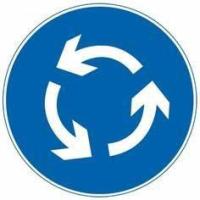
A、Passing by the right side
B、Passing by the left side
C、Running to right side
D、Running the roundabout
Answer:D
8、What is the meaning of this sign?
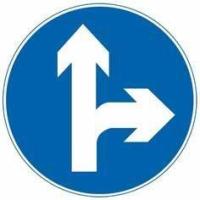
A、Going straight and left turn
B、Going straight and right turn
C、No going straight and no right turn
D、Left turn and right turn only
Answer:B
9、There is a risk of overtaking when driving a motor vehicle approaches the top of the slope on a mountainous road, because _____.
A、When approaching the top of the slope, the line of sight is blocked and it is impossible to observe the traffic situation.
B、When approaching the top of the slope, the line of sight is blocked. It is impossible to observe whether there are obstacles behind the top of the slope.
C、The speed is slower when approaching the top of the slope.
D、When approaching the top of the slope, the line of sight is blocked and the road direction behind the top of the slope can not be observed.
Answer:ABD
10、When following other vehicles on the uphill section of a mountain road, what should the driver do if the vehicle in front stops?
A、Overtake from either side of the front vehicle
B、Stop close to the vehicle in front
C、Stop with a larger space from the vehicle in front
D、Sound the horn continuously to warn the other driver
Answer:C
11、The wrong method about parking is to _______.
A、Parking on a railway crossing
B、Parking on a level crossing
C、Parking on a parking lot
D、Parking on rocky sections in Mountainous Areas
Answer:ABD
12、Which of the following is a safe way for motor vehicles to pass the intersection marked with this sign?
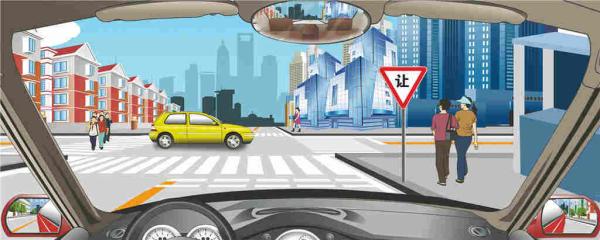
A、Stop and observe the traffic situation around the intersection
B、Approach the intersection by speeding up
C、Observe the traffic situation on the left rear side
D、Approach the intersection at a reduced speed
Answer:D
13、When the vehicles cross each other at night, what should the driver do if the vehicle coming in the opposite direction don’t turn off the high beam light?
A、Reduce speed for yield or stop on the right side.
B、Continuous change lights to remind the vehicle coming in the opposite direction
C、Turn on the high lights and force the coming car to change the lights
D、Move his sight to the right side to evade the light
Answer:ABD
14、When a motorcycle wades across the water, the braking efficiency of the brake does not change.
Answer:N
15、Whats the meaning of the double white solid lines in far front of the intersection?
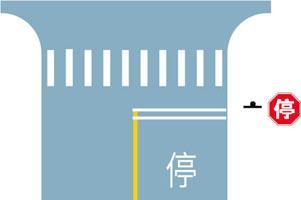
A、Stopping and yield line
B、Slowdown and yield line
C、Left-turn waiting line
D、Waiting to run line
Answer:A
16、What is the meaning of this sign?
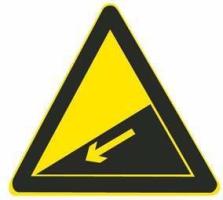
A、Embankment road
B、Steep uphill road
C、Continuous up slopes
D、Steep downhill road
Answer:D
17、What is the meaning of this sign?
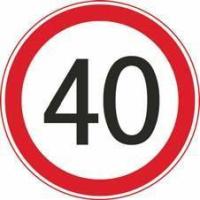
A、Reducing speed 40m ahead
B、Minimum speed is 40km/hr
C、Axle weight limit is 40 tons
D、Maximum speed limit is 40km/hr
Answer:D
18、When encountering dangerous and complicated circumstance, the driver should keep medium or low speed and keep the balance of the motorcycle to pass it cautiously.
Answer:Y
19、What are the hazards of drivers using cellphones or texting while driving?
A、Influencing driving operation
B、Influencing the rest of passengers
C、Failure to respond to emergencies
D、Distracted driving
Answer:ACD
20、Under such circumstances, the driver should stop the vehicle and yield to pedestrians.
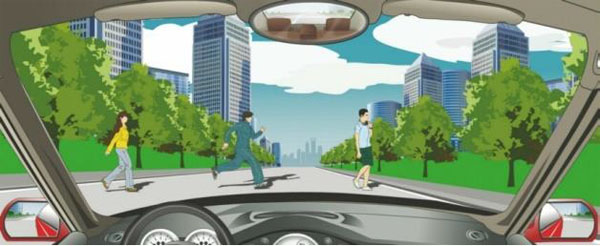
Answer:Y
21、Which of the following is a bad habit when changing lanes?
A、Turning on the indicator in advance
B、Observing closely before changing a lane
C、Change lanes at will
D、Not obstructing the passing of other normally moving vehicles
Answer:C
22、When a motorcycle passing through an interchange discovers it has chosen a wrong route, it should immediately make a U turn from where it is or reverse to change route.
Answer:N
23、What is the meaning of this sign?
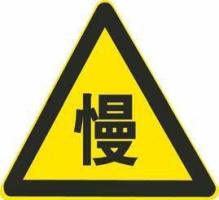
A、More vehicles section
B、Passing slowly
C、Jammed section
D、Construction section
Answer:B
24、When driving on a snowy day, drivers should follow the tracks on the road before them.
Answer:Y
25、When a motor vehicle passes over an overflowing bridge, what should the driver do after stopping and observing closely?
A、Change to a high gear and pass rapidly
B、Constantly observe the changes of the flow
C、Prepare to stop at any time
D、Change to a low gear and pass through at a constant speed
Answer:D
26、What is the meaning of this sign?
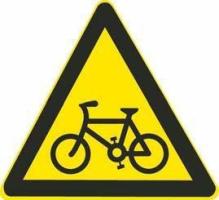
A、The lane for non-motorized vehicles
B、Yield non-motorized vehicles
C、No passing for non-motorized vehicles
D、Watch for non-motorized vehicles
Answer:D
27、When driving in a strong wind, drivers should abruptly turn the steering wheel to return to the original direction if they feel the vehicle deviates horizontally due to a strong gale.
Answer:N
28、When a fast-moving vehicle encounters an emergency the driver should turn to evade first and then brake to slow down so as to mitigate the damage.
Answer:N
29、When encountering a vehicle in front ascending on a mountainous road covered with ice and snow, what should the motor vehicle driver do?
A、Ascend after the vehicle in front passes the slope
B、Overtake the vehicle in front swiftly and drive on
C、Overtake the vehicle in front with a slow speed and drive on
D、Follow the vehicle in front closely
Answer:A
30、What should driver do when students crossing the road in line?
A、Speed up and pass in the front of the students
B、Sound the horn to warn the students to yield
C、Slow down and pass
D、Stop and wait until the students pass
Answer:D
31、What are the main reason for slow driving of motorized vehicles on rainy days?
A、Braking distance will increase
B、The driver’s view is limited
C、Emergency braking can easily cause side skidding
D、Fast driving increases fuel consumption
Answer:ABC
32、What is the meaning of this sign?
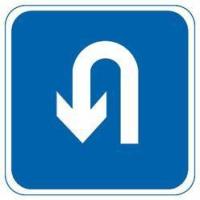
A、U turn
B、Reversing
C、Left turn
D、Bypassing
Answer:A
33、When evading an emergency, except for being calm what principle should be held by drivers?
A、Evading people first and then objects
B、Evading objects first and then vehicles
C、Evading vehicles first and then people
D、Evading objects first and then people
Answer:A
34、What is the meaning of this sign?
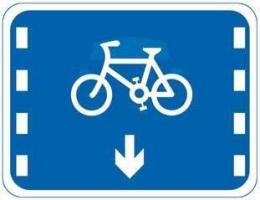
A、No entry for bicycles
B、Lane for non-motorized vehicles
C、Special lane for bicycles
D、Bicycle stopping area
Answer:B
35、When encountering non-motorized vehicles cutting in on the road, the driver should ________.
A、Honk to warn
B、Speed up and bypass from the front
C、Voluntarily reduce speed and yield
D、Suddenly speed up when approaching
Answer:C
36、What should the driver do when the motor vehicle counters this situation?
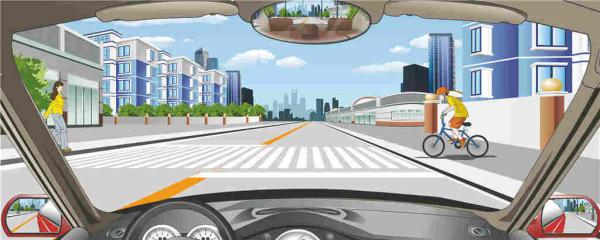
A、Sound the horn continuously to warn
B、Speed up and bypass from the front
C、Slow down when encountering any risks
D、Slow down voluntarily and yield
Answer:D
37、When rescuing a wounded person suffering spinal fracture, it is necessary to ___________.
A、Take warm-keeping measure
B、Use soft stretcher to carry
C、Use sling to keep in position
D、Help the wounded person to move
Answer:C
38、What is the meaning of this sign?
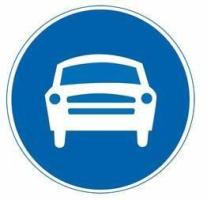
A、No passing for small vehicle
B、Passing for small vehicle only
C、Passing for motorized vehicle
D、No passing for small vehicle
Answer:C
39、When passing a sharp curve, motor vehicle drivers may overtake if there are few other vehicles on the road.
Answer:N
40、During normal driving, the driver should do his/her best to run close to or on the central line so as not to allow oncoming vehicles any opportunity to occupy his own route.
Answer:N
41、When seeing this sign, the driver should reduce speed and observe the road conditions.
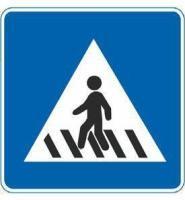
Answer:Y
42、How will the adhesive force of road change when speed increases on a damp and slippery road?
A、Increase sharply
B、Increase gradually
C、Decrease sharply
D、No change
Answer:C
43、When driving on a road covered with ice and snow drivers should not use the emergency brake but can apply a sharp turn.
Answer:N
44、When there is bleeding at the bone fracture of a wounded person, the first thing to do is to fix the wounded part in position, then stop the bleeding and dress the wound.
Answer:N
45、Speeding up to go though the intersection before the light turns to red in this case.
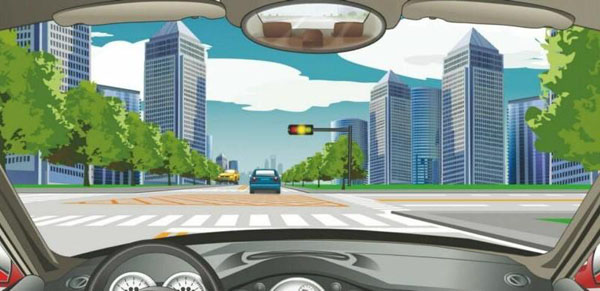
Answer:N
46、What is the meaning of this sign?
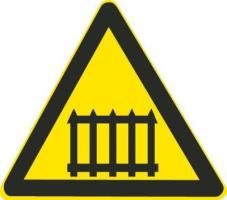
A、A manned level crossing
B、Multi-crossing of railway and road
C、Grade separation level crossing
D、An unmanned level crossing
Answer:A
47、Under such circumstances, motor vehicle drivers should slow down and yield
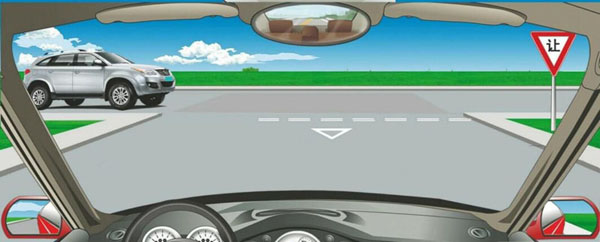
Answer:Y
48、When approaching a vehicle on a narrow slope, which one of the following ways is correct?
A、The descending vehicle yields to the ascending
B、The vehicle which is further from the slope crest should yield
C、The ascending vehicle yields to the descending
D、If the descending vehicle has reached the midpoint while the ascending vehicle has not yet set out, the descending vehicle must yield.
Answer:A
49、When approaching a sharp curve, motor vehicle drivers should reduce speed only after entering the curve.
Answer:N
50、Motor vehicle drivers may make a U-turn in this area as long as it will not affect the passing of pedestrians.
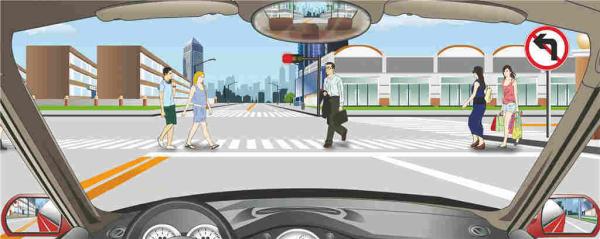
Answer:N
- 滁州摩托车科目四英文题库 相关内容
- 来宾摩托车驾考英语手机APP 黄冈摩托车驾照考试英文题库 淮南用英文考摩托车驾驶证 三门峡摩托车驾照考试科目四英语题 临夏摩托车科目四英文题库 周口摩托车科目四英文题库 江门摩托车驾照理论试题英语版 泰州摩托车驾照理论试题英语版 郑州摩托车驾照考试科目四英语题 淮南摩托车驾照考试科目四英语题 珠海摩托车驾照考试科目一英语题 安阳用英文考摩托车驾驶证 凉山州摩托车科目四英文题库 通辽摩托车驾照考试科目一英语题 兴义摩托车驾考英语手机APP 潮州摩托车驾照考试科目四英语题
Copyright © 2025 驾考 版权所有