
- 科目一考试
- 顺序练习
- 随机练习
- 强化练习
- 模拟考试
- 科目四考试
- 顺序练习
- 随机练习
- 强化练习
- 模拟考试
- 外国语言版题库
- 英语题库
- 德语题库
- 韩语题库
- 日语题库
- 俄语题库
- 法语题库
- 西班牙语题库
- 阿拉伯语题库
- 摩托车英文题
六安摩托车科目四英文题库
-
1、What needs attention when a motor vehicle drives on a road covered with ice and snow?
A、Braking length is extended
B、Anti-skating resistance will be greater
C、The adhesive force of the road will be greater
D、The braking length will be shorter
Answer:A
2、The traffic police may detain the motorcycle if its driver has falsified the license plate and vehicle license.
Answer:Y
3、What is the meaning of this sign?
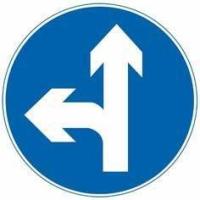
A、Going straight and right turn
B、Going straight and left turn
C、No going straight and no left turn
D、Right turn and left turn only
Answer:B
4、The wrong measure to use the brake of a motorcycle is to __________.
A、Simultaneously use the front and back brakes
B、Use the front brake first
C、Use the back brake first
D、Avoid using the front brake too early
Answer:B
5、Which one of the following measures is correct when a motor vehicle intends to overtake but the vehicle infront refuses to yield?
A、Use a long-sounding horn
B、Follow the vehicle in front while turning high-beam
C、Wait for it to yield while keeping a safe distance
D、Use high-beam and low-beam alternatively
Answer:C
6、A correct measure to avoid tire burst of motor vehicles is to lower the tire pressure.
Answer:N
7、When overtaking a motor vehicles on uphill sections of a mountain road, the driver should _____.
A、Honk in advance
B、Forward cars are allowed to overtake before overtaking.
C、Turn on the left-turn signal in advance
D、Speed up direct and overtake
Answer:ABC
8、When the driver discovers a tire is leaking and steers the vehicle off the main driving lane, he/she should refrain from applying emergency braking so as to avoid a vehicle turnover or a rear-end collision arising from the late braking of the vehicle behind.
Answer:Y
9、When such circumstances happen suddenly, drivers should reduce speed in a timely fashion or stop to yield.
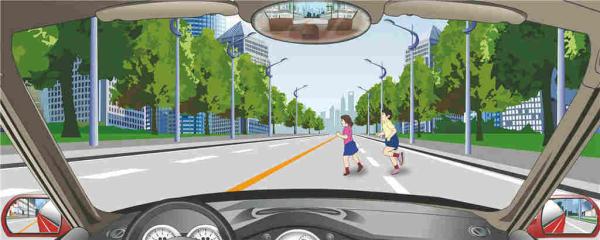
Answer:Y
10、What is the purpose of checking before driving?
A、Confirm whether the tyres of motor vehicles are damaged or not
B、Confirm whether there is a safety hazard near the vehicle.
C、Confirm whether there are obstacles around the vehicle
D、Confirm whether the road in front of the vehicle is safe
Answer:ABCD
11、What is the meaning of this sign?
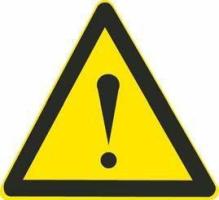
A、Reduce speed and go slowly
B、Watch for danger
C、Jammed section
D、Accident-prone section
Answer:B
12、When rescuing the persons who are losing blood, it is necessary to ______ first.
A、Observe
B、Dress the wounds
C、Stop bleeding
D、Inquire
Answer:C
13、Serious wave will appear when the front tire blows out; the driver should release the accelerator, firmly hold the steering wheel with both hands, quickly gradually break down, and stop to yield.
Answer:Y
14、Turning on the high-beam is an effective way to improve visibility in fog weather.
Answer:N
15、After a tire blows out and before the driver can control the speed of the vehicle, he should refrain from using the foot brake to stop the vehicle. Otherwise, a horizontal swing of the vehicle can cause greater danger.
Answer:Y
16、When there is bleeding at the bone fracture of a wounded person, the first thing to do is to keep it in position before stopping the bleeding and dress the wound.
Answer:N
17、Driving a motor vehicle in the downhill section of a mountain road avoids overtaking as much as possible because _______.
A、Vehicle resistance in downhill section is very high
B、Vehicles on downhill sections are more difficult to control than on flat roads due to gravity.
C、In downhill section, the front speed is faster and it is difficult to overtake.
D、Vehicles on downhill sections tend to be too fast due to gravity
Answer:BD
18、When the engine suddenly stalls on the road, what should the driver do?
A、Stop the vehicle and overhaul it immediately
B、Immediately turn on the hazard lamps
C、Move the vehicle to a place where it will not obstruct the traffic flow
D、Set up a breakdown warning sign
Answer:BCD
19、When driving in a strong wind, drivers should abruptly turn the steering wheel to return to the original direction if they feel the vehicle deviates horizontally due to a strong gale.
Answer:N
20、When encountering this situation at the gate of a school, the driver should prepare to stop.
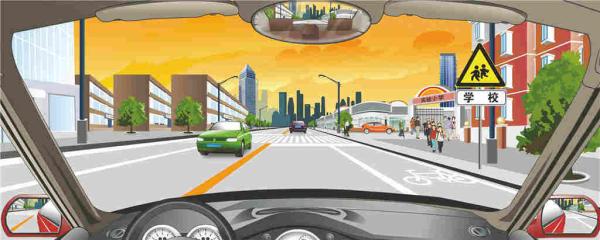
Answer:Y
21、When a motor vehicle encounters pedestrian is passing at a crosswalk, the driver must slow down and pass slowly.
Answer:N
22、What is the meaning of this sign?
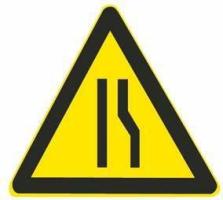
A、Road narrows on both sides
B、Road narrows on the right side
C、Road narrows on the left side
D、Bridge narrows
Answer:B
23、When driving on a damp and slippery road, drivers should avoid using the emergency brake to his/her best ability.
Answer:Y
24、The motor vehicle should speed up and pass rapidly under this situation.
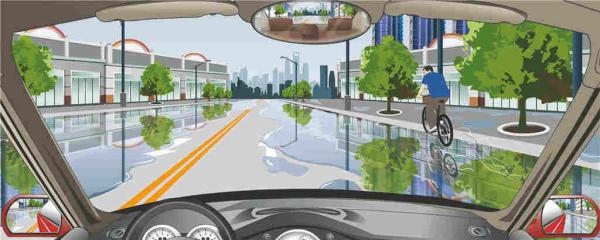
Answer:N
25、A driver should accelerate in advance to overtake then it is likely to meet with oncoming vehicles.
Answer:N
26、When a tire blowout on the road, the driver should swiftly depress the brake pedal to reduce speed, do all his can to control the steering wheel and stop the vehicle as soon as possible.
Answer:N
27、What is the meaning of this sign?
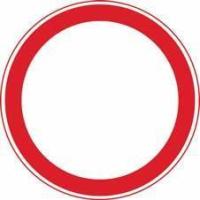
A、No passing
B、Driving at reduced speed
C、Time limit for entering
D、No entering
Answer:A
28、While driving a motorcycle, nothing is permitted to hang on the handlebars.
Answer:Y
29、What should be done by the driver who intends to overtake but the motor vehicle in front neither reduces its speed nor allows the right of way?
A、Continuously sounding the horn and accelerating to overtake
B、Accelerating and continuing to overtake
C、Refraining from overtaking
D、Following the vehicle in front closely and finding a chance to overtake
Answer:C
30、When removing a wounded person suffering spinal fracture, the rescuer should never help the wounded person to walk. He may be carried away with a soft stretcher.
Answer:N
31、What is the meaning of this sign?
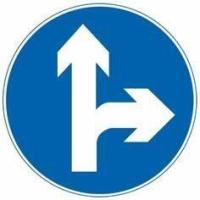
A、Going straight and left turn
B、Going straight and right turn
C、No going straight and no right turn
D、Left turn and right turn only
Answer:B
32、When a motor vehicle passes over an inundated road drivers should change to a high gear and pass rapidly.
Answer:N
33、When the motor vehicle encounters a crosswalk in this situation, the driver may speed up and pass rapidly.
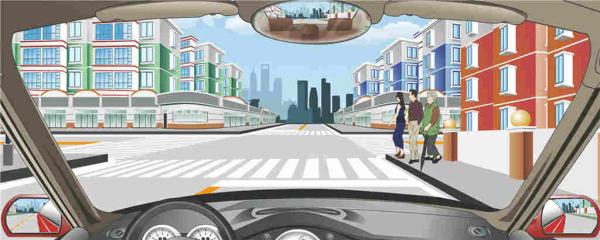
Answer:N
34、When driving a motor vehicle ready to enter a congested roundabout, the wrong measure is to ______.
A、Honk to indicate another vehicle to yield
B、Stop to yield
C、Driving into the congested intersection
D、Drive fast into the intersection
Answer:ACD
35、According to regulations, motorcycle driver and passenger should wear helmets.
Answer:Y
36、How to reduce speed or stop when driving on a road covered with snow and ice?
A、Take full advantage of driving brake
B、Take full advantage of the control power from engine
C、Take full advantage of parking brake
D、Take full advantage of speed retarder
Answer:B
37、When driving on a road covered with ice and snow drivers should not use the emergency brake but can apply a sharp turn.
Answer:N
38、What marking is the road mark?

A、Crosswalk ahead
B、Intersection ahead
C、Reduce speed and yield ahead
D、Stop to yield ahead
Answer:A
39、Drivers who ride motorcycles are able to not wear safety helmets.
Answer:N
40、What is the meaning of this sign?
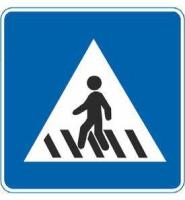
A、Crosswalk
B、Students’ passage
C、Watch for pedestrians
D、Children’s passage
Answer:A
41、Whats the meaning of the double white solid lines in far front of the intersection?
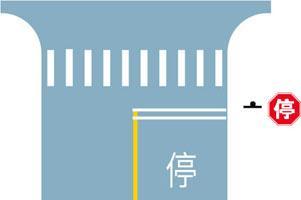
A、Stopping and yield line
B、Slowdown and yield line
C、Left-turn waiting line
D、Waiting to run line
Answer:A
42、What should the driver do when the motor vehicle encounters this situation in front of a school?
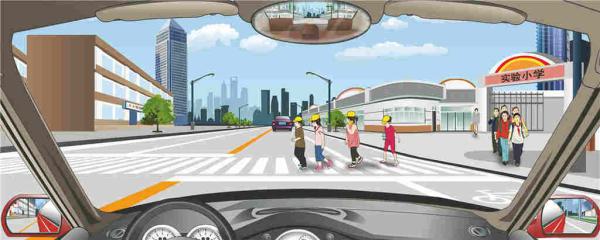
A、Bypass before the queue
B、Slow down and pass slowl
C、Stop promptly and yield
D、Go through in the spaces between the queues
Answer:C
43、When driving a motor vehicle crosses each other on a hump bridge, what should the driver do?
A、Rush to pass
B、Reduce speed
C、Honk to indicate the vehicle
D、Go on the right side
Answer:BCD
44、What are the driving behaviors that cause accidents when a motor vehicle turns to a turning road?
A、Vehicles occupy opposite lanes
B、Turn the steering wheel sharply in the bend
C、Do not slow down before turning
D、Motor vehicles drive on the right side of the road
Answer:ABC
45、It is illegal to change lanes without turning on indicators.
Answer:Y
46、The main impact of muddy roads on safe driving is that the wheels may easily spin and skid
Answer:Y
47、When a motor vehicle temporarily stops at night, which lamp should be turned on?
A、Front and rear fog lamp, clearance lamp and rear position lamp
B、Head lamp, clearance lamp and rear position lamp
C、Hazard lamp, clearance lamp and rear position lamp
D、Reverse lamp, clearance lamp and rear position lamp
Answer:C
48、When a motorcycle passing through an interchange discovers it has chosen a wrong route, it should immediately make a U turn from where it is or reverse to change route.
Answer:N
49、When a motor vehicle encounters a burning phenomenon, it should leave the vehicle quickly so as not to cause injury or asphyxia to the respiratory tract.
Answer:Y
50、What is the meaning of this sign?
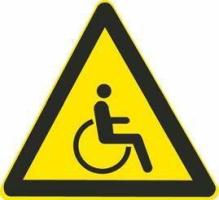
A、Exit and entry for disabled people
B、Watch for disabled people
C、Rest area for disabled people
D、Special passage for disabled people
Answer:B
- 六安摩托车科目四英文题库 相关内容
- 包头摩托车英语考试题 丽江用英语考摩托车驾照科目四 宣城摩托车驾照考试英文题库 六盘水摩托车考试英语理论试题 都匀摩托车驾照考试英文题库 新乡摩托车英语考试题 毫州外国人考摩托车驾照 迪庆摩托车英语考试题 衢州摩托车驾考英语手机APP 日照外国人考摩托车驾照 保山用英文考摩托车驾驶证 太原外国人考摩托车驾照 广元摩托车考试英语理论试题 都匀用英语考摩托车驾照科目四 合肥摩托车科目四英文题库 徐州摩托车驾照考试英文题库
Copyright © 2025 驾考 版权所有